
Lessons
Lessons from Das Kapital
Six lessons from this classic work, traced chapter by chapter.
0:00 / 0:00
A linen coat hangs in a draper's window. Twenty yards of linen, Marx says, equal one coat, and both equal a certain quantity of human labour. That is where Das Kapital begins: not with a manifesto and not with a factory fire, but with an ordinary commodity that looks like a thing and turns out to be a social relationship wearing a price tag. It is 1867. Volume 1 of Capital is published in Hamburg. Marx has spent years in the British Museum reading room, working through factory inspectors' reports, parliamentary blue books, and the political economists who thought they had already explained the system.
Continue the summary
The discovery he builds everything on is surplus value. A worker does not sell work. She sells labour-power, the capacity to work for a day, and that capacity produces more value than it costs to keep her alive and returning tomorrow. The first hours replace her wage. The hours after that belong to the owner. Profit, rent, interest, and the next round of accumulation all flow from that gap. The contract looks free because nobody holds a whip at the factory gate. Marx's point is that the freedom is real enough to sign the paper and false enough that she cannot opt out of selling herself. Kind employers do not escape the logic. The owner who pays generously and works shorter hours loses to the owner who does not.
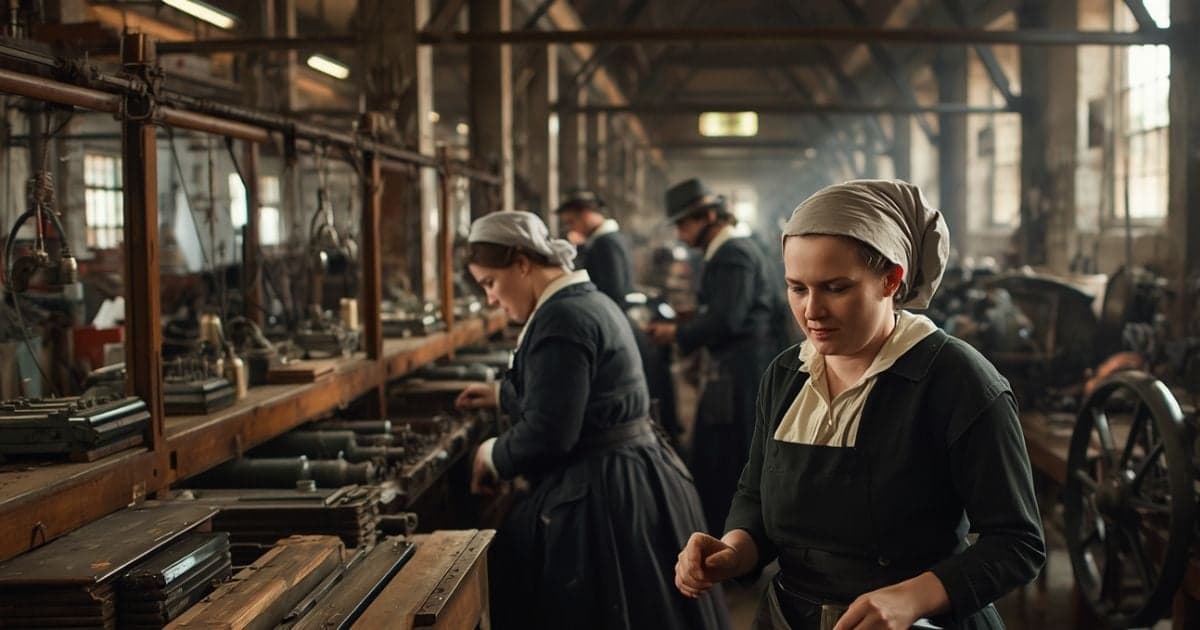
The middle of the book is the factory floor. The working day becomes a battlefield: capital lengthens hours, workers push back through exhaustion, law, and the Factory Acts. Manufacture breaks a craft into fragments until a person is excellent at one motion and useless at the whole. Machinery arrives promising liberation and often delivers a faster pace, child labour at the machine, and a reserve army waiting outside the gate. Wages look like payment for a full day's work. They are payment for labour-power. The difference is the whole book.
Then Marx turns the history over. The system did not begin with thrifty savers and empty land. Primitive accumulation is the name he gives the original dispossession: commons enclosed, peasants driven off, colonies cleared, and a class created that owns nothing it can live on except its ability to work. He writes that capital comes into the world dripping from head to foot, from every pore, with blood and dirt. Volume 1 ends in the colonies, where Wakefield's own theory admits the secret: if workers can still claim land, they will not stay wage-labourers. The system requires manufactured dependency, then it calls the resulting contract a choice.
Six lessons run through the argument, each pinned to a scene already on the page. Seeing labour behind commodities starts at the shop window, where the coat and the twenty yards of linen turn out to be hours wearing a price tag. Understanding surplus value follows the spinner through twelve hours, where the wage replaces itself early and the remainder becomes profit nobody prints on the stub. The working day names the fight over the clock itself, from the Factory Acts to a machine that sets a faster pace than any craft calendar allowed. Alienation shows what manufacture does to the person: a craft broken into a single motion, a job that pays on time and still leaves you outside the object you made. Class interests reads the mill floor as two claims on the same day, not a cast of villains, since a decent owner and a decent spinner can still collide on hours. Primitive accumulation runs the tape backward, into the enclosed commons and the colony where Mr. Peel arrives with capital and finds no one left to fetch his water.
The pattern under all six lessons is one most people meet at work before they have a name for it: a system that looks like a string of free choices can still produce outcomes nobody in the room would vote for. Wide Reads covers all 33 chapters with summaries, quotes, and audio, following the argument from the coat and the linen in the shop window to the enclosure that built the market that made the shop possible.
Why this matters
People still meet this argument at work before they have a name for it: a payslip that looks fair, a shift that leaves you drained anyway, a round of layoffs explained as the market rather than a decision someone signed. Marx does not ask readers to take his word for it. He sets the factory inspectors' own numbers beside the economists' defence of the system and lets readers watch the two accounts stop agreeing. This guide keeps that argument tied to the coat in the shop window, the spinner's twelve hours, and the colony where the whole arrangement had to be built by force before it could be called natural.
Theme breakdowns
Explore the lessons
Das Kapital is a case about a coat that will not stay a coat: a linen bolt and a garment declared equal by hours nobody prints on the price tag, a spinner's twelve-hour day split into a wage that pays for itself and a remainder that does not, a working day fought hour by hour through the Factory Acts, and a colony where a man named Peel arrives with capital and finds no one left to fetch his water.
Each card traces a pattern through named chapters — summaries, quotes, and key insights tied to the scenes that prove it. Start with the featured lessons, then open the deep dives below.
Deep dives
Chapter-by-chapter breakdowns
Reading the Working Day
Treat hours, overtime, and speed-ups as a fight over who keeps the value produced in that time, not as a schedule you were given.
Between equal rights force decides
Recognizing Alienation
Identify when work separates you from the product, the process, and other workers, even when the pay packet arrives on time.
the productive power developed by the labourer when working in co-operation, is the productive power of capital
Analyzing Class Interests
Read opposing pressures between workers and owners as structural, not personal, including when decent people still produce harsh outcomes.
Between equal rights force decides
Tracing Primitive Accumulation
See how today's labour market was built by dispossession first, then explained as a free contract after the alternatives were gone.
In actual history it is notorious that conquest, enslavement, robbery, murder, briefly force, play the great part
Continue Exploring
Guides, life skills, and the full library.More ways to read Das Kapital: guides, life skills, and the wider library.