
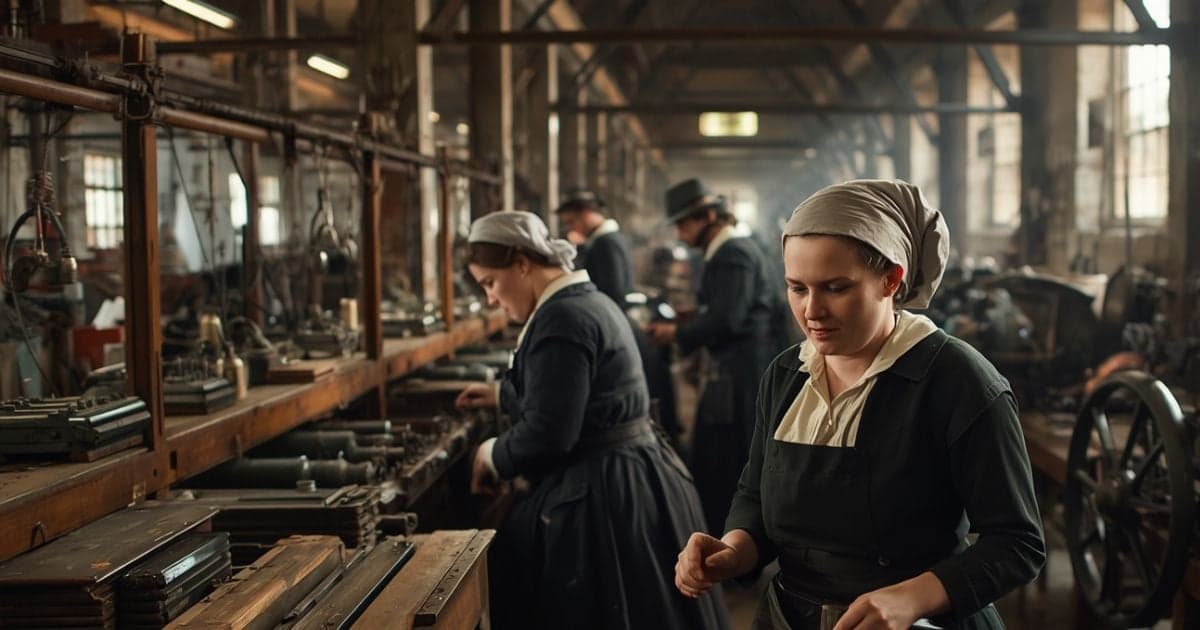
Chapter 10 is the chapter people remember: mill children, night shifts, inspectors who write down what owners would rather leave unofficial. Marx will not call the working day a timetable. The worker has a right to a life that can be lived again tomorrow. The owner has a right to consume what he bought. Between equal rights force decides. Dead labour lives vampire-like by sucking living labour. The Factory Acts are treaties, not weather.
When the law finally caps hours, the fight changes shape. The instrument of labour strikes down the labourer. Machinery packs more output into the same clock. Intensity replaces length. Children fit the apparatus. Night work becomes thinkable. A shorter official day can still be a denser one. Relative surplus value is the preferred door after the Acts.
Hourly pay then finishes the disguise by making time look fully priced. The rate is a story about the clock, not an account of what the hour produced at what pace. Reading the working day means asking, of every extra hour and every faster minute, who keeps the value that time produced, and whether the limit you live under was granted or won.
The Central Lesson
The working day is not a schedule you were given. It is the ground of a fight between two legal claims, settled by force, then revised by machinery when the law says stop. Between equal rights, vampire-like dead labour, an instrument that strikes down the labourer, and an hourly rate that hides density: these are Marx's clock. Reading it means asking, of every extra hour and every faster pace, who keeps the value that time produced.
Applying This to Your Life
Name the Two Rights Before You Call It Fair
Your need to recover and the firm's need to consume the day you sold can both be 'legal' and still collide. Marx's line is that force decides. If a schedule feels non-negotiable, ask which right already won, and whether you were in the room.
Watch the Hour After the Law Caps the Day
A posted limit is not the end of extraction. Pace, unpaid prep, and a machine that does not tire can stuff the minute. If you are more exhausted in a shorter official day, the second door has opened.
Treat the Clock as a Treaty, Not Weather
Limits on work time were products of a protracted fight. Before you accept overtime as culture, ask who keeps what that extra hour produces. Reading the day is a class skill, not a time-management tip.
Other lessons in this book
More life-skill deep dives from the same classic.
Analyzing Class Interests
Read opposing pressures between workers and owners as structural, not personal, including when decent people still produce harsh outcomes.
4 chapters·Explore AnalysisRecognizing Alienation
Identify when work separates you from the product, the process, and other workers, even when the pay packet arrives on time.
4 chapters·Explore AnalysisSeeing Labor Behind Commodities
Recognise the human work hidden behind every product you buy, from the coat on the rack to the wage that looks like a full day's pay.
4 chapters·Explore AnalysisTracing Primitive Accumulation
See how today's labour market was built by dispossession first, then explained as a free contract after the alternatives were gone.
5 chapters·Explore AnalysisUnderstanding Surplus Value
See how profit comes from the gap between what labour-power produces and what it costs to hire, and why that gap returns as more capital.
5 chapters·Explore Analysis
Continue exploring
The same lessons in other books
See how other books teach the same life skills.

North and South
Acting on Conscience When It Costs YouWatch Hale leave the church, Margaret lie at the station for Frederick, and Thornton refuse a speculation that would save him.North and South
Navigating Class and Economic PowerTrace Milton from imported Irish hands and Boucher's brook to the inheritance that buys a partnership, not a husband.
Paradise Lost
When Pride Sounds Like PrincipleHear Satan on the burning lake and at Eden's edge: wounded dignity reframed as liberty, and a no that is only a refusal to be second.
Where the lesson lives in the book
Between Equal Rights, Force Decides
The worker has a right to a day that can be lived again tomorrow. The owner has a right to consume the commodity he bought: labour-power, for as long as a body will stand. Marx will not pretend the lawbook settles it. Between equal rights force decides. Dead labour, vampire-like, lives only by sucking living labour. The Factory Acts are not a gift from a humane age. They are a treaty after a fight.
Key Insight:
Every hour on the clock is a claim on value. Limits on work time were won, not weather. If the day feels natural, someone already won a round you did not see.
“Between equal rights force decides”
The Instrument Strikes Down the Labourer
The instrument of labour strikes down the labourer. Machinery promises to spare the body and often seizes the tempo instead. The machine does not get tired, so the person beside it is asked not to either. Children fit the new apparatus. Night work becomes thinkable. Factory legislation is the first conscious reaction of society, under penalty of death, to a pace the old craft calendar cannot survive.
Key Insight:
When the machine sets the pace, a shorter official day can still be a longer working day. Technology under this system frequently densifies the hour rather than freeing it.
“The instrument of labour strikes down the labourer”
Two Doors into the Same Remainder
If the law caps the day, capital intensifies the hour. Absolute surplus value lengthens time. Relative surplus value packs more output into the same clock. That labourer alone is productive who produces surplus-value. After the Acts, the second door becomes the preferred one. The clock looks civilized. The minute has been stuffed.
Key Insight:
A shorter posted day is not the end of the fight. Ask whether the pace, the second screen, or the unpaid preparation has moved into the hour the law thought it had closed.
“That labourer alone is productive, who produces surplus-value for the capitalist”
The Story Hourly Pay Tells
Hourly wages look transparent: time for money. Marx shows how the form conceals intensity and the fiction that the rate prices the whole of what the hour produced. Piece-work later makes the same hide in a different costume. The clock appears fully priced because the form will not print density.
Key Insight:
An hourly rate is a story about time, not a full account of value. Ask what the hour created, and at what pace, before you decide the rate was the whole bargain.