
Crime and Punishment
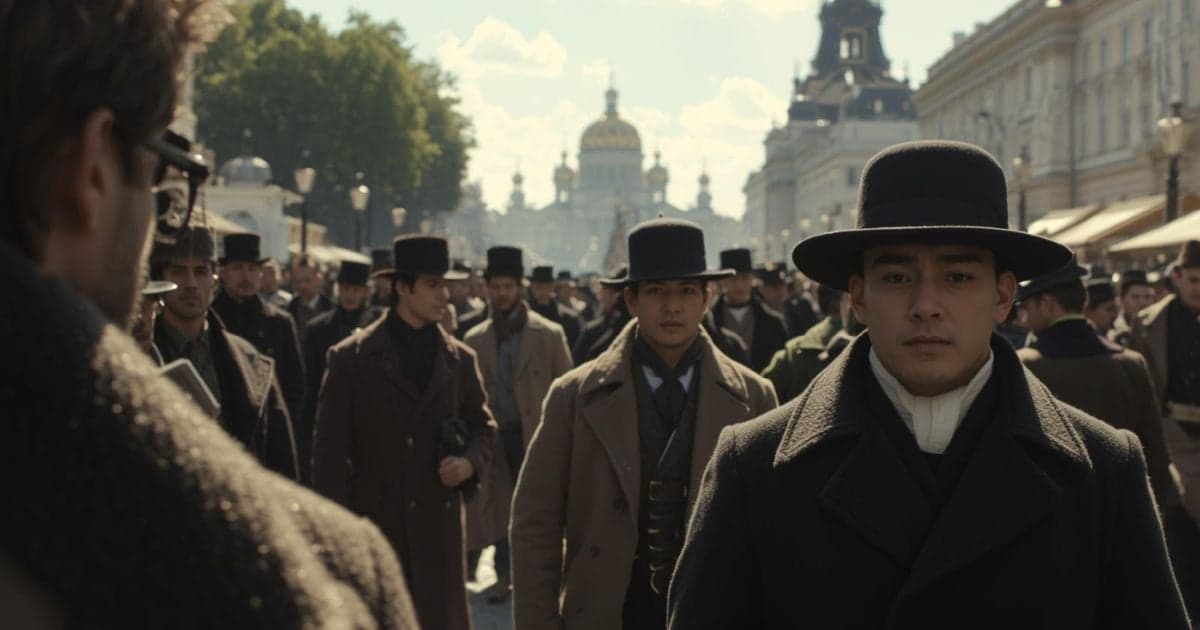
Fyodor Dostoevsky
Essential truths through Crime and Punishment
Recognizing Dangerous Rationalization
Identify when intellectual justifications are masking harmful behavior before thought becomes action
Understanding the Psychology of Guilt
See how conscience operates through lived experience, not abstract principles
Rodion Raskolnikov slips out of a coffin-like garret on a suffocating July evening in St. Petersburg. He is a former law student, behind on rent, and half-starved. Isolation has given him a theory: extraordinary people may break moral law for a greater purpose, the way Napoleon did. He counts seven hundred thirty steps to Alyona Ivanovna, the pawnbroker, pawns his father's watch, and asks whether her gentle sister Lizaveta will be home. Weeks earlier in a tavern he overheard a student make the same arithmetic already living in his head: one worthless life against thousands saved. A dream of peasants beating a mare to death almost stops him. Then he sews a loop into his coat, takes an axe, and murders Alyona. Lizaveta walks in with a bundle. She does not raise a hand. The second blow was never in the plan.
He hides the purse and pledges under a stone in a courtyard and never even opens the money. Fever and guilt arrive faster than the police. His friend Razumihin tries to pull him back into ordinary work. A letter from his mother Pulcheria tells him that his sister Dunya will marry the pompous Luzhin to save the family, and the news sharpens his shame. In a tavern he meets Marmeladov, a ruined clerk who drinks while his daughter Sonya walks the streets to feed the children. When a carriage crushes Marmeladov, Raskolnikov gives the widow the last of his coins. Detective Porfiry Petrovich has read Raskolnikov's article on extraordinary men. He does not chase clues so much as conscience. Every conversation becomes a trap for self-deception.
Sonya Marmeladova, forced into prostitution to keep her stepmother's children alive, reads him the raising of Lazarus in a rented room on the canal. Luzhin tries to buy Dunya, then plants a hundred-rouble note on Sonya at a memorial dinner to ruin her. Raskolnikov exposes the trick, walks to Sonya's room, and makes her guess who killed Lizaveta. What have you done to yourself, she asks, and tells him to confess. Porfiry names him in his own room and waits. Svidrigailov, Dunya's former employer, has listened at the door. He is the darker ending of the same theory: a man who does what he wants and calls it freedom. He corners Dunya. She fires a revolver and grazes him. He lets her go, leaves Sonya money for the road to Siberia, and shoots himself at a watchtower in the rain.
Dostoevsky published Crime and Punishment in 1866, writing in bursts while fleeing creditors. The novel has six parts and an epilogue. It is not a whodunit. You know the killer from the first week. The question is whether a mind that can justify murder can also tell the truth. Raskolnikov takes Sonya's wooden peasant cross, kneels in the Hay Market, and kisses the earth. At the police station he says he killed the old pawnbroker and her sister Lizaveta with an axe. The trial is short. Evidence that he once helped a consumptive student and pulled children from a fire, plus the confession itself, cuts the sentence to eight years. Sonya follows him to the camp. Pride keeps him sicker than the fetters. He still calls the crime a blunder and the theory no stranger than others. After Easter, on a riverbank by an alabaster kiln, he falls at Sonya's feet. Life steps into the place of theory. The New Testament she gave him, the book of Lazarus, has waited unopened until now.
Wide Reads presents six life lessons still relevant today, each one traced back to the moment Dostoevsky wrote it first. Rationalization is the place to start: the garret, the tavern arithmetic, and Napoleon-talk turn an axe into a problem of numbers, and you can watch the same habit survive the second blow because the theory has to stay intact. Guilt comes next, because the purse under the stone is never opened, the body runs a fever the mind will not admit, and Porfiry talks until conscience answers for him. Redemption teaches a slower lesson: Lazarus in Sonya's room, the bow in the Hay Market, and the river after Easter all require a truth spoken without a better excuse attached. Isolation carries its own warning: a coffin-like room and a city walked alone can make a terrible plan feel like proof simply because no one is there to test it. Consequences show what theory cannot hold: Lizaveta in the doorway, Marmeladov under the wheels, and a fortune left uncounted because living the act is nothing like imagining it. And pride closes the list, because for months Raskolnikov would rather be a failed Napoleon than a man who says the words, and even in Siberia the fetters hurt less than the story he still tells about himself.
The pressure underneath all of it is one most people meet too late: a theory that makes you exceptional will keep explaining the wreck until you need the theory more than you need the truth. You'll learn to catch the moment intelligence starts silencing instinct, to treat guilt in the body as data rather than a problem to out-argue, to notice when solitude has stopped being rest and started being a closed court, to stop rehearsing outcomes you have never paid for, and to say the true sentence even when pride would rather keep the performance going.
Wide Reads walks all 41 chapters with summaries, quotes, and audio, and threads each deep dive back to the exact scenes where Raskolnikov takes the axe, hides the purse, and finally kneels in the Hay Market.
The Essential Truths through Crime and Punishment
Theme-by-theme chapter breakdowns of the essential life skills in this classic novel.
Recognizing Dangerous Rationalization
The garret, the tavern arithmetic, and Napoleon-talk turn an axe into a problem of numbers. Four chapters trace how a brilliant mind builds a theory that has to stay intact even after the second blow, because admitting the framework was wrong would cost more than the crime already has.
Understanding Guilt and Conscience
The purse under the stone is never opened. Four chapters follow the fever the mind will not admit, the stranger who says murderer in the street, and a prisoner who still calls the crime a blunder.
The Path to Redemption Through Truth
4 chapters from Lazarus in Sonya's room to the river after Easter, and why a better excuse is not the same as a true sentence.
Reading the Warning Signs of Isolation
4 chapters on the coffin-like garret, the fever after the axe, and how a closed room turns a terrible plan into proof.
Confronting Consequences vs. Theorizing Them
4 chapters from tavern arithmetic to Lizaveta in the doorway, and why living the act is nothing like imagining it.
When Pride Prevents Confession
4 chapters from Porfiry's office to the Hay Market, and the months he would rather stay a failed Napoleon than say the words.
Table of Contents
The Garret
Isolation and poverty can twist a sharp mind until a terrible plan starts to feel like proof of geni...
Marmeladov's Confession
After the pawnbroker visit, Raskolnikov does something he rarely does: he wants company. He stays in...
The Letter
Raskolnikov wakes late in his coffin-sized room, bilious and irritable, relieved only by the squalor...
Dunya's Sacrifice
Raskolnikov reads his mother's letter and decides instantly: Dunya will not marry Luzhin while he li...
The Dream of the Mare
Raskolnikov catches himself planning a visit to Razumihin not today but on the day after It, when ev...
Overhearing Fate
The chapter opens with a flashback that Raskolnikov later reads as fate. Weeks after pawning his rin...
The Deed
The door opens a crack, and Alyona Ivanovna's suspicious eyes stare out. Raskolnikov forces his way ...
About Fyodor Dostoevsky
Published 1866
Fyodor Dostoevsky (1821-1881) was a Russian novelist, philosopher, and journalist whose exploration of human psychology, morality, and suffering revolutionized literature. Born in Moscow to a strict military doctor father, he experienced extreme swings between privilege and poverty throughout his life. His father's murder by serfs when Dostoevsky was eighteen profoundly shaped his thinking about violence, guilt, and justice.
In 1849, Dostoevsky was arrested for participating in a progressive literary circle and sentenced to death by firing squad. He stood before the execution wall, facing his final moments, when a last-minute reprieve arrived. The execution was staged psychological torture designed to terrify political prisoners. This mock execution, followed by four years of brutal hard labor in Siberian prison camps, transformed his worldview. He emerged with deep insights into human suffering, redemption, and the psychology of criminals that would inform Crime and Punishment.
Crime and Punishment, published in 1866 during a desperate period when Dostoevsky was fleeing creditors and gambling away his money, was written in intense bursts under crushing financial pressure. This urgency infuses the novel with raw psychological power. The book established him as a master of psychological realism, with an ability to depict consciousness in crisis with unprecedented depth and honesty. His influence extends beyond literature into psychology, philosophy, and existentialism, making him essential reading for understanding the darker corners of human nature.
Why This Author Matters Today
Reading Fyodor Dostoevsky is an act of self-discovery — one that tends to be more unsettling, and more rewarding, than you expect. Their work doesn't offer easy answers. It offers something rarer: the right questions. Questions about what we owe each other, what we owe ourselves, and what kind of person we are quietly becoming through the choices we make every day.
What makes Fyodor Dostoevsky indispensable isn't just their insight into human nature — it's their honesty about its contradictions. They understood that people are capable of extraordinary courage and ordinary cowardice, often in the same breath. That we can hold convictions firmly and abandon them the moment they cost us something. That the gap between who we think we are and who we actually are is where most of life's real drama lives.
In an age of noise, distraction, and the constant pressure to perform certainty we don't feel,Fyodor Dostoevsky is a corrective. Their pages slow you down and ask you to look more carefully — at the world, yes, but especially at yourself. Few writers have done more to show us that thinking well is not an academic exercise but a survival skill, and that the examined life is not a luxury but the only honest way to live.
More by Fyodor Dostoevsky in Our Library

Wide Reads is different.
not a sparknotes, nor a cliffnotes
Two ways in
Read & listen to the summary
Walk with the characters. Hear the story told completely — chapter by chapter, with audio. Feel what they feel. The meaning arrives because you experienced it, not because someone listed bullet points. Every chapter has a summary that speaks.
Start with this.
Read the original text
The manuscript. The actual words the author wrote. Every book on Wide Reads includes the original text alongside the summary — so you can read Austen as Austen wrote her, Dostoevsky as he wrote his. Use the summary as a guide, then step into the source.
Then step into the source.
Either way, the door opens inward.
As you enter the realm — each chapter goes deeper
— and most of all, Why does this matter?
Get the Full Book
Purchase the complete book to access all chapters and support classic literature
Available in paperback, hardcover, and e-book formats
You Might Also Like
Free to read • No account required
