
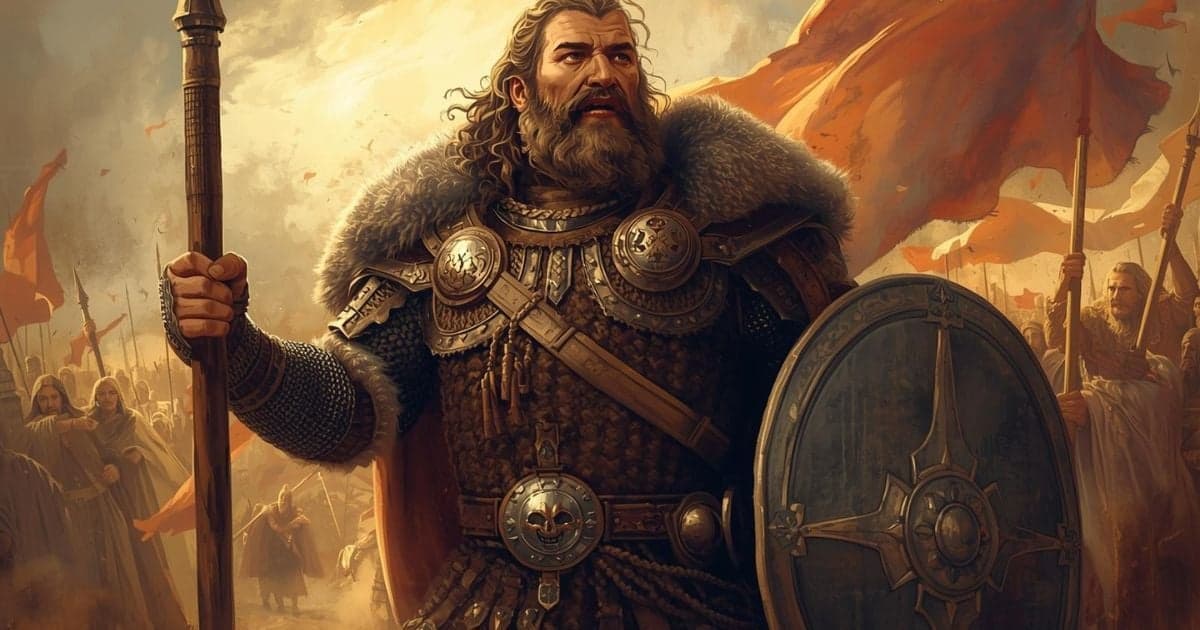
Midnight in Heorot, Beowulf has already sent his men to sleep and laid the sword aside. Grendel does not fight with steel, so the Geat will not either. That choice is the poem's first hard picture of heroism: not a landing speech, but a method accepted in the dark. Earlier in the evening Unferth tried to make the stranger small with a swimming-match retold as failure. Beowulf closed it with nickers on the strand and brothers Unferth cannot explain, then pledged the people's will. The insult is over. The night is not.
The arm comes off at the shoulder and hangs where the hall can see it. Hrothgar stands by the pillar, thanks the Wielder, and names the Geat a son. Comfort returns to a building that had been gory. They sleep as if the work were finished. An avenger outlives the loathed one. Grendel's mother takes the retainer the king loved most. Beowulf is not in the room. He could call the original bargain paid. He volunteers for water no one has entered.
Heroism here is not the mood of a man who never flinches. It is the refusal to stop at a result the hall is already celebrating. Credentials at the shore, record in the feast, grip in the dark, dive when the contract looks complete. Each gate is a different distance. The only way through is the next one, taken while stopping would still look reasonable.
The Central Lesson
Heroism in Beowulf is a sword left off the bench because the enemy uses none, an Unferth story answered with the record, an arm hung for the hall to see, and a dive into water after the feast has already called the night won. The poem does not praise a man who never feels fear. It traces a man who will not treat a celebration as a closed account. Stopping at enough is the real opposite of the deed.
Applying This to Your Life
Earn the Gate Before You Demand the Fight
Beowulf does not walk past the coast-guard on reputation alone. He states lineage, errand, and limit. When you arrive as the person who can fix what the room could not, say who sent you and what you came to do. Capability without a clean introduction looks like invasion.
Answer the Public Challenge with the Record
Unferth is not Grendel. He is the person already in the hall who needs you to fail in language first. Name the facts. Name the hypocrisy if it is real. Then return to the work. Rage that wins the minute can still lose the night.
Go Back In When the Contract Looks Paid
Grendel's mother was not in the original speech on the shore. After a win, ask what the win disturbed and who still lives to answer it. The heroic choice is often unpaid: the second visit, the harder water, the problem that only appeared because the first one ended.
Other lessons in this book
More life-skill deep dives from the same classic.
Stepping Up When Others Run
Stay when the room flees: crisis reveals who actually has the will to lead
5 chapters·Explore AnalysisThe Dragon at the End
Face mortality when strength fades and transfer what matters before the end
9 chapters·Explore AnalysisThe Earned Authority Loop
Build real authority through action, generosity, and proving yourself when action is costly
13 chapters·Explore AnalysisWhat You Leave Behind
Distinguish legacy from reputation: what people do differently because you existed
8 chapters·Explore AnalysisWhen Victory Opens the Next Threat
Recognise how winning creates the conditions for your next failure if you stop paying attention
10 chapters·Explore Analysis
Continue exploring
Explore this theme
The same lessons in other books
See how other books teach the same life skills.
Hamlet
Distinguishing Truth from DeceptionTest a ghost, a play within a play, and a story that only Horatio will carry out.Hamlet
Paralysis in Decision-MakingWatch the ghost's charge, the play that proves the king, and the prayer Hamlet will not interrupt.
The Consolation of Philosophy
Reading Fortune's TermsHear Book II name the job: Fortune gives and takes, and a wheel that only rose would not be a wheel.
Where the lesson lives in the book
The Call Across the Sea
While Hrothgar's court meets in vain council and turns to idols that cannot answer, word reaches Geatland that the Danish hall has been a slaughterhouse for twelve winters. Beowulf has faced monsters before. He chooses the voyage anyway, not because the reward is certain but because the problem has a name and he can act on it.
Key Insight:
Heroism often starts as a decision made elsewhere: you hear that a room is failing and you choose to be the person who shows up before anyone guarantees you a seat.
“twelve-winters' time torture suffered”
The Gate Before the Monster
The guard on the cliff sees a boat of armed men and asks for names before anyone takes another step inland. Beowulf answers with lineage, Hygelac, and a job: the creature that has made the Danish hall unusable at night. He does not raise a spear and he does not sell a legend. The first proof is that a stranger can be understood at the gate.
Key Insight:
Heroism starts at the gate. The room that will need you later first has to believe you belong in it.
“We are sprung from the lineage of the people of Geatland”
Armour in the Hall
Beowulf and his band enter Hrothgar's palace in gleaming war-gear while the court watches. The display is not vanity. It is evidence that the men who claim they can answer Grendel are not empty talkers arriving from nowhere. They look like what they say they are before the night test begins.
Key Insight:
Credibility is often visual before it is verbal. Show the room you are equipped for the work you are about to name.
The Errand Named in Open Court
Hrothgar remembers Beowulf as a boy and his father Ecgtheow. Beowulf states plainly that he has come to help, that his youth is not ignorance, and that he will fight Grendel without fear. The king does not need to be persuaded with poetry. He needs a man who will still be in the building at midnight.
Key Insight:
The pitch that matters is not charisma. It is a clear offer of work the room has already failed to finish.
The Challenge Before the Dark
Unferth, seated in the hall that Grendel owns by night, tries to cut the stranger down with an old swimming story. Beowulf will answer at length in the next scene, but the move itself is the test: can the man who claims he will save the feast survive being shrunk in public first?
Key Insight:
Before the monster arrives, someone inside the room will try to make you small. Passing that test is part of the deed, not a distraction from it.
The Record, Not the Rage
Unferth, already in the hall that failed, tries to puncture the stranger's story before the night fight. Beowulf answers with the swimming-match, the nickers on the strand, and a charge Unferth cannot return: you killed your brothers. Then he says he will work the will of the people. The insult is not ignored. It is closed with evidence, and the work is named.
Key Insight:
A public challenge is a second gate. The hero who cannot hold the record in words will not be trusted with the door at midnight.
“Though with cold-blooded cruelty thou killedst thy brothers”
Sword Off, Watch On
Hrothgar leaves the hall to Beowulf. The Geat strips his armour, lays the sword aside, and declares he will match Grendel without steel because the monster uses none. His men sleep armed on the benches believing they may not see home again. One warrior stays awake while the dark approaches.
Key Insight:
Choosing the harder method on purpose is not theatre. It is aligning your tools with the problem so the victory cannot be dismissed as unfair.
“Hence I seek not with sword-edge to sooth him to slumber”
The Grip That Holds
Grendel seizes a sleeping man and Beowulf catches the hand that has never been caught. The hall becomes a wrestling chamber. Swords turned on the monster fail. What wins is the refusal to let go until the arm comes away at the shoulder.
Key Insight:
Some problems are not solved by better equipment. They are solved by holding longer than the thing trying to break you.
“His fingers crackled”
The Arm on the Roof-Beam
Hrothgar stands by the pillar and sees Grendel's hand on the gold-gleaming roof. He had given up comfort under heaven. Now he thanks the Wielder and tells Beowulf he will love him as a son. The victory is a body part nailed where the hall can see it. The relationship is the king's next move, not a speech about courage in general.
Key Insight:
The aftermath is part of the deed. A result that does not become a bond is only a night the hall will forget.
“I'll love thee in spirit”
The Mother in the Mere
They sleep as if the night were over. An avenger outlives the loathed one. Grendel's mother, mindful of vengeance, takes the retainer Hrothgar loved most. Beowulf is absent when the blow falls. He could call the contract paid. He volunteers for the cold water no one has entered, against a grief that was always waiting under the hall's first cheer.
Key Insight:
The defining act is going back in when the original deal is done. The first monster was the job. The mother is the test of whether you stop at enough.
“still an avenger Outlived the loathed one”
Only Thee Can I Look To
Hrothgar names Æschere dead and describes the fen where even hunted deer would rather die than shelter. He tells Beowulf that help can come from him alone now, and offers treasure again. The first fight bought a night. The second contract is harder water and a grief that was always under the cheer.
Key Insight:
When a leader admits the limit of his own hall, the heroic choice is not to negotiate the danger away. It is to accept the harder errand the win just opened.
“Now is help to be gotten From thee and thee only”
Grief Without Paralysis
After Æschere is taken, Hrothgar's sorrow could stop the court. Beowulf refuses that stall. He names the work, arms for the mere, and moves the king from mourning into motion. The second monster is not fought from a feast. It is fought from a decision taken while grief is still hot.
Key Insight:
Compassion for a wounded room does not require waiting. Sometimes the kindest act is to keep the mission moving before despair becomes policy.
The Edge of the Mere
Beowulf stands where the water boils with serpents and the hall watches from the cliff. He speaks to Hrothgar about what should happen if he does not return, then dives. The poem slows at the lip of the unknown because this is the moment courage becomes a body entering what everyone else will only look at.
Key Insight:
The visible act before the plunge is part of the deed. Name the stakes, then go in anyway.
The Blade in the Deep
In the underwater hall Beowulf's own sword fails against Grendel's mother. He finds an ancient giant-blade, kills her, and brings back Grendel's head. The victory costs more than the first fight and proves the mere was never a footnote to the contract on the shore.
Key Insight:
The second depth often requires a tool you did not plan on. Keep working the problem when your first method fails underwater.
Eleven Men, One Direction
Old Beowulf sets out with eleven warriors toward the dragon barrow. He knows this may be his last fight. He goes anyway, because the hall is already burning and the king who built his name on personal presence cannot send a substitute at the end.
Key Insight:
The last heroic walk is often the same pattern as the first: show up yourself when the room expects you to delegate the cost.
“as Fate decreeth”