Teaching The Wealth of Nations
by Adam Smith (1776)
Teaching Map
This guide is not only for literature teachers. Parents, tutors, book clubs, and anyone reading The Wealth of Nations together can use it to open conversation — not just recap plot. Each Why it matters note is a question-starter: ask toward a Collision (two views meet and something shifts), a Reframe (the same facts suddenly mean something different), or a Recognition (what was always there finally becomes visible). The map shows how the book breaks into stages, which anchor scenes to lean on, and where each Lesson fits — whether you are planning a term or a single evening.
Book I
Chapters 1–11 · Division of labor, exchange, prices
Pin bench and wool coat
“OF THE DIVISION OF LABOUR. The greatest improvements in the productive powers of labour, and the greater part of the…”
Why it matters
Ask a question — toward Collision, Reframe, or Recognition.
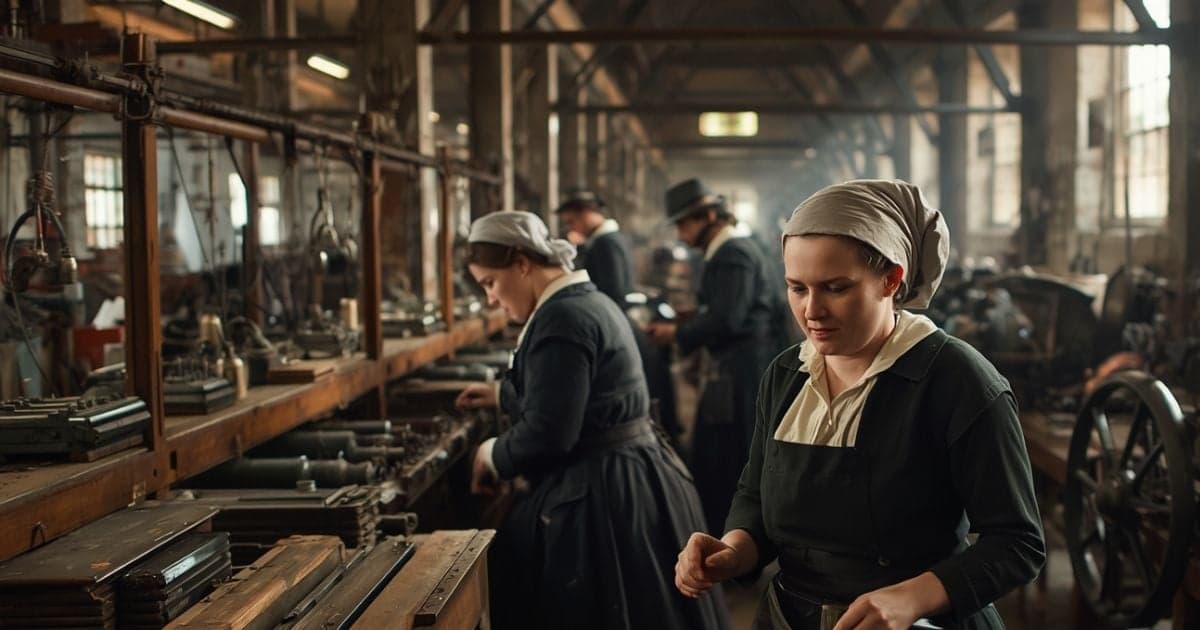
Teams often praise flexibility while quietly losing the gains that come from deep focus on one task. Smith's pin makers each repeat a single step and together produce what no one of them could make alone. Before you take on another general duty, ask which narrow skill would make you hardest to replace on your team.
Division of Labor & Specialization
“OF THE DIVISION OF LABOUR. The greatest improvements in the productive powers of labour, and the greater part of the…”
Why it matters
Ask a question — toward Collision, Reframe, or Recognition.
Teams often praise flexibility while quietly losing the gains that come from deep focus on one task. Smith's pin makers each repeat a single step and together produce what no one of them could make alone. Before you take on another general duty, ask which narrow skill would make you hardest to replace on your team.
Wealth Is Annual Produce
“OF THE DIVISION OF LABOUR. The greatest improvements in the productive powers of labour, and the greater part of the…”
Why it matters
Ask a question — toward Collision, Reframe, or Recognition.
Teams often praise flexibility while quietly losing the gains that come from deep focus on one task. Smith's pin makers each repeat a single step and together produce what no one of them could make alone. Before you take on another general duty, ask which narrow skill would make you hardest to replace on your team.
Dinner without a sermon
“TO THE DIVISION OF LABOUR. This division of labour, from which so many advantages are derived, is not originally the…”
Why it matters
Ask a question — toward Collision, Reframe, or Recognition.
Appeals to fairness or need often fail when the other person has nothing to gain. Smith's butcher, brewer, and baker serve customers because selling dinner pays them, not because they feel generous. Before you ask for a favor at work, state clearly what the other person gets if they help you.
Self-Interest & The Invisible Hand
“TO THE DIVISION OF LABOUR. This division of labour, from which so many advantages are derived, is not originally the…”
Why it matters
Ask a question — toward Collision, Reframe, or Recognition.
Appeals to fairness or need often fail when the other person has nothing to gain. Smith's butcher, brewer, and baker serve customers because selling dinner pays them, not because they feel generous. Before you ask for a favor at work, state clearly what the other person gets if they help you.
Markets & Human Coordination
“LIMITED BY THE EXTENT OF THE MARKET. As it is the power of exchanging that gives occasion to the division…”
Why it matters
Ask a question — toward Collision, Reframe, or Recognition.
People often blame themselves for failing to specialize when the real constraint is customer access. Smith's Highland nailer could make thousands of nails yet could not sell a day's work in a scattered village. Before you narrow your career, map how many paying buyers your location or platform actually lets you serve.
Meeting after the toast
“EMPLOYMENTS OF LABOUR AND STOCK. The whole of the advantages and disadvantages of the different employments of labour and stock,…”
Why it matters
Ask a question — toward Collision, Reframe, or Recognition.
Headline salary ignores what a job costs you in training, stigma, instability, or legal lock-in. Smith's butcher earns more because the work is brutal; his lawyer earns more only if he survives the long odds of entry. Compare total advantage, not just the number on the offer letter.
Funding Justice Without Capture
“EMPLOYMENTS OF LABOUR AND STOCK. The whole of the advantages and disadvantages of the different employments of labour and stock,…”
Why it matters
Ask a question — toward Collision, Reframe, or Recognition.
Headline salary ignores what a job costs you in training, stigma, instability, or legal lock-in. Smith's butcher earns more because the work is brutal; his lawyer earns more only if he survives the long odds of entry. Compare total advantage, not just the number on the offer letter.
Recognizing Special Interests
“EMPLOYMENTS OF LABOUR AND STOCK. The whole of the advantages and disadvantages of the different employments of labour and stock,…”
Why it matters
Ask a question — toward Collision, Reframe, or Recognition.
Headline salary ignores what a job costs you in training, stigma, instability, or legal lock-in. Smith's butcher earns more because the work is brutal; his lawyer earns more only if he survives the long odds of entry. Compare total advantage, not just the number on the offer letter.
Book II
Chapters 12–16 · Capital, money, and stock
No anchor scene or lesson keyed to this stretch — assign it as connective reading.
Book III
Chapters 17–20 · Town, country, and opulence
No anchor scene or lesson keyed to this stretch — assign it as connective reading.
Book IV
Chapters 21–29 · Mercantile system critiqued
Gold called wealth
“MERCANTILE SYSTEM. That wealth consists in money, or in gold and silver, is a popular notion which naturally arises from…”
Why it matters
Ask a question — toward Collision, Reframe, or Recognition.
Smith shows that nations can hold bullion yet stay poor when they stop producing what money buys. Policies obsessed with trade balances mistake the thermometer for the heat. When you judge prosperity by output, employment, and consumable plenty rather than metal in vaults, mercantile slogans lose their force.
The invisible hand, local and small
“FOREIGN COUNTRIES OF SUCH GOODS AS CAN BE PRODUCED AT HOME. By restraining, either by high duties, or by absolute…”
Why it matters
Ask a question — toward Collision, Reframe, or Recognition.
Smith shows that blocking imports can enrich one trade while shrinking what the nation produces overall. The right question is whether total industry and revenue grow, not whether a protected factory survives. When you hear buy-local or tariff slogans, ask who pays the hidden bill and where capital would have gone without the wall.
Book V
Chapters 30–32 · Revenue, taxation, and debt
Duties the bargain will not pay
“OF THE EXPENSES OF THE SOVEREIGN OR COMMONWEALTH. PART I. Of the Expense of Defence. The first duty of the…”
Why it matters
Ask a question — toward Collision, Reframe, or Recognition.
Smith maps how defence, justice, and public works grew from hunter self-defence to costly standing armies, salaried courts, and toll-funded infrastructure. Fee-taking judges and neglected toll roads show the same rule: whoever pays the official steers the outcome, for good or ill. When a government program underperforms, ask whether its revenue comes from the people it protects or from a narrow clientele that can capture it.
Public debt and the produce that must repay it
“OF PUBLIC DEBTS. In that rude state of society which precedes the extension of commerce and the improvement of manufactures;…”
Why it matters
Ask a question — toward Collision, Reframe, or Recognition.
Easy credit feels like freedom until the bill lands on someone who never voted for the purchase. Smith shows European governments spending peace revenue to the last penny, borrowing when war arrives, and rarely repaying principal except through bankruptcy or pretended payment. Before you accept a plan funded by debt, deferred fees, or tomorrow's budget, name who pays interest, who inherits the principal, and what discipline disappears today.
Why Teach The Wealth of Nations?
Adam Smith opens in a pin shop to show how division of labour multiplies output, then tracks how markets, wages, rent, and capital actually produce national wealth — not gold in a vault. Book IV attacks mercantilist ministers; Book V asks what a sovereign must fund without becoming the merchants' clerk or borrowing past what labour can repay.
Lessons from The Wealth of Nations
Six named pressures the book tests, each tied to a chapter and a deeper lesson page. Send students to one when a theme hooks them, then back to the scene that proves it.
Division of Labor & Specialization
Stand in chapter 1's pin shop: ten men, eighteen operations, and a wool coat no single craftsman could finish.
Funding Justice Without Capture
Follow Book V chapters 30 through 32: defense, justice, roads, education, and the debt a treasury cannot service when merchants write the tax code.
Markets & Human Coordination
Follow chapter 3's village that cannot specialize, then the coin in chapter 4 and the natural price the market keeps chasing.
Recognizing Special Interests
Sit with the petitions in chapters 22 and 25: a tariff praised as patriotism, a bounty paid so a merchant can undersell abroad.
Self-Interest & The Invisible Hand
Start with the butcher, brewer, and baker in chapter 2, then watch chapter 22 name the invisible hand on a man who prefers the home trade for his own security.
Wealth Is Annual Produce
Start with the wool coat in chapter 1 and the bullion fallacy in chapter 21: plenty is what labor makes, not what a vault holds.
Suggested Teaching Approach
1Before class: map the setup
Read Book I (Chapters 1–11) for the pin bench, the wool coat, the butcher and baker, and the natural price labor and rent keep chasing. You need Smith's definition of wealth before Book IV attacks the ministers who still count gold.
2Discussion starter: name the mechanism
Skip plot recall. Ask where students see this book's pressures play out in their own lives, from Pin bench and wool coat (Ch. 1) to Public debt and the produce that must repay it (Ch. 32). Tie every answer to a chapter number, not a theme label alone.
3Modern connections: use the six lessons
Six pressures repeat across the thirty-two chapters: division of labour at the pin bench; self-interest and the invisible hand in the butcher and baker; markets and coordination when villages cannot specialize; special interests in tariffs and bounties; wealth as annual produce not vault gold; and funding justice without letting merchants write the tax code. Each spoke ties named chapters to the pattern.
4Assessment: application, not recall
Essay prompts that work: compare Pin bench and wool coat (Ch. 1) to Gold called wealth (Ch. 21); trace how it pays off by the ending. Pair with a current-events angle, then require a scene from the book as counterweight. Assess application, not recall. AI cannot help with lived experience.
Chapter-by-Chapter Resources
How Breaking Work Into Pieces Creates Wealth
Why it matters: Teams often praise flexibility while quietly losing the gains that come from deep focus on one task. Smith's pin makers each repeat…
Why We Trade Instead of Beg
Why it matters: Appeals to fairness or need often fail when the other person has nothing to gain. Smith's butcher, brewer, and baker serve customers…
Markets Shape What Work We Can Do
Why it matters: People often blame themselves for failing to specialize when the real constraint is customer access. Smith's Highland nailer could make thousands of…
Why We Need Money
Why it matters: Money feels natural until barter fails because wants do not line up. Smith's butcher cannot trade meat for beer when the brewer…
The Real Cost of Everything
Why it matters: A bigger payslip can still mean a poorer life if prices rise faster than wages. Smith says the real cost of a…
The Three Pieces of Every Price
Why it matters: A sticker price hides who gets paid from each sale. Smith's loaf of bread pays the baker's workers, the owner's profit, and…
Natural vs Market Price
Why it matters: Plenty of people want what they cannot pay for, and markets ignore that want. Smith's poor man who dreams of a coach…
The Real Story of Wages
Why it matters: Your pay is not only a verdict on your talent; it is a power balance. Smith says masters can outwait workers in…
The Profit Game: How Money Makes Money
Why it matters: People defend their own gains and attack others' costs. Smith's merchants blame wages for expensive linen but never mention profit markups compounding…
Why Some Jobs Pay More Than Others
Why it matters: Headline salary ignores what a job costs you in training, stigma, instability, or legal lock-in. Smith's butcher earns more because the work…
The Nature of Rent
Why it matters: Ground rent feels like a bill you must pay, but Smith shows it is usually what is left after production already succeeded.
Understanding Your Money: Capital vs Consumption
Why it matters: Not every asset in your life is working capital. Smith shows that the home you occupy and the clothes you wear sustain…
Money as Society's Great Wheel
Why it matters: Cash and bank balances feel like wealth, yet Smith treats them as circulation plumbing, not the water itself. When notes replace bullion…
Productive vs. Unproductive Labor
Why it matters: Busy calendars can hide shrinking capital. Smith says only labour that leaves something sellable replaces the fund that pays future workers, while…
The Two Faces of Borrowing
Why it matters: Not all borrowing is alike. Smith says a loan used to hire productive workers can repay itself from new value, while one…
Four Ways to Use Money Wisely
Why it matters: Smith shows that where money is employed matters as much as how much is saved. A society that starves farms to chase…
The Natural Order of Economic Growth
Why it matters: Smith shows that town and country prosper together only when surplus agriculture comes first. Skipping that foundation to chase manufactures or distant…
Why Big Landowners Don't Improve
Why it matters: Smith shows that land abundance means little when law concentrates ownership and strips cultivators of upside. Inheritance rules, tenure insecurity, and taxes…
How Cities Broke Free from Feudalism
Why it matters: Smith shows that medieval freedom began as negotiated corporate privilege, not natural right. Towns that pooled taxes and offered kings reliable allies…
How Cities Transformed the Countryside
Why it matters: Smith shows that rural liberty often followed lords chasing luxuries, not benevolent design. Markets, merchant landlords, and dismissed retainers reshaped Europe while…
The Money Trap: Why Nations Chase Gold
Why it matters: Smith shows that nations can hold bullion yet stay poor when they stop producing what money buys. Policies obsessed with trade balances…
The Hidden Costs of Trade Protection
Why it matters: Smith shows that blocking imports can enrich one trade while shrinking what the nation produces overall. The right question is whether total…
Trade Wars and Economic Myths
Why it matters: Smith shows that buying more from a country than you sell to it does not automatically make your nation poorer. Anglo-French tariffs…
When Government Gives Money Back
Why it matters: Smith shows that refunding duties on export can be sound policy when it only removes a tax penalty exporters would otherwise bear.
Government Handouts and Market Manipulation
Why it matters: Smith shows that paying merchants to export does not create trade that would not exist at ordinary profit; it taxes the public…
Trade Deals and Hidden Costs
Why it matters: Smith shows that when one country grants another lower duties or exclusive access, foreign merchants gain a monopoly while domestic buyers pay…
The Colonial System Exposed
Why it matters: Smith shows that empires marketed as national glory often function as merchant monopolies that depress industry at home and abroad. North American…
The Mercantile System's Hidden Costs
Why it matters: Smith closes the mercantile system by proving that production exists to serve consumption, yet statute after statute inverts that order. Wool growers…
The Agricultural System Debate
Why it matters: Smith dismantles the physiocratic claim that only farmers create wealth while merchants and manufacturers merely maintain capital. Colbert had overfavoured towns; Quesnay's…
The State's Essential Duties
Why it matters: Smith maps how defence, justice, and public works grew from hunter self-defence to costly standing armies, salaried courts, and toll-funded infrastructure. Fee-taking…
How Governments Fund Themselves
Why it matters: Smith separates sovereign property from taxation and shows why crown estates and trading companies usually underperform private management while the post office…
The Debt Trap Nations Fall Into
Why it matters: Easy credit feels like freedom until the bill lands on someone who never voted for the purchase. Smith shows European governments spending…
Start with one chapter
Assign Chapter 1 with the summary and audio, then open discussion with a life-skill question instead of a plot question. Expand chapter by chapter from there.