
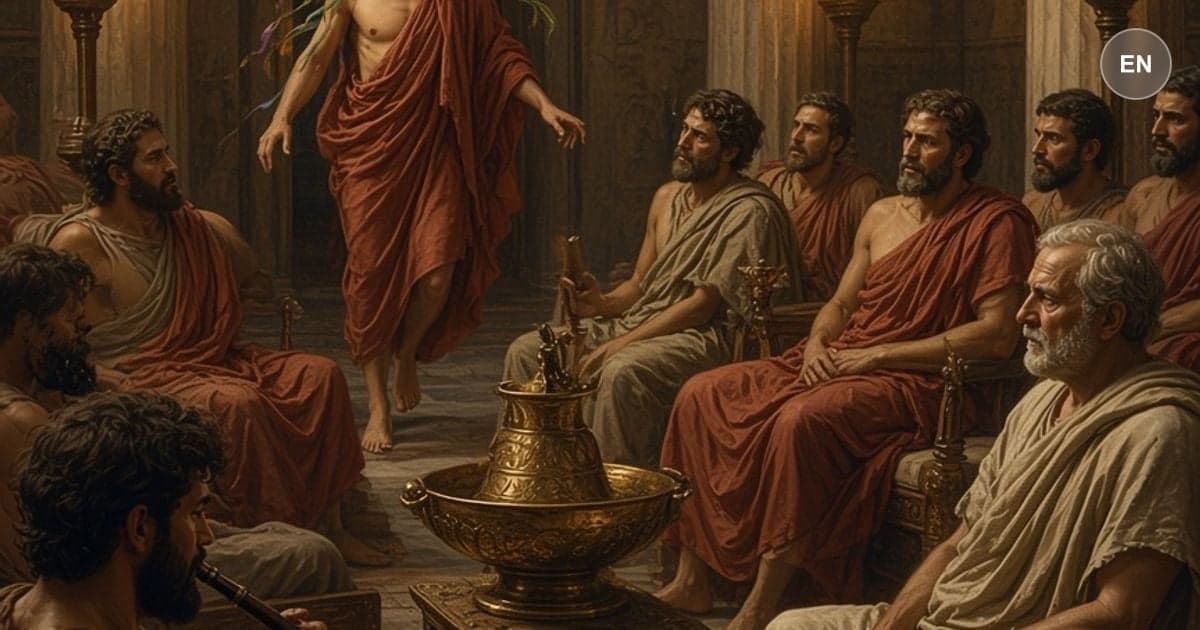
Phaedrus opens the praises by making Love a test of nerve. An army of lovers would not desert. Alcestis dies for another. Orpheus is not counted the same. Achilles chooses death for a friend already slain, and the gods honour that choice above Alcestis. The speech is not soft. It says love is proven when shame in front of a beloved person would be worse than death.
Alcibiades returns the test to a living man. At Potidaea the frost is tremendous. Everyone else is dressed for it. Socrates walks on the ice in ordinary dress and marches better than the men with shoes. When the generals want to give Alcibiades the prize of valour, Socrates, who saved his life and his arms, pushes the honour back. The courage Phaedrus praised in myth is standing in the room, and it will not be owned.
Do not take a fine account of love as proof that the speaker will pay the cost. Watch the ice, the rescue, and the refused prize. Love that asks for courage is visible in what a person will endure, and in what honour they will not keep.
The Central Lesson
Phaedrus says Love is the eldest god because it makes people dare death rather than shame. Alcibiades then shows the same test without a myth: bare feet on the ice at Potidaea, a rescue, and a prize of valour pushed back onto the man who was saved. Plato will not leave courage as a speech about other people's heroes. He puts it on a body in a frost, and he makes that body refuse the prize.
Applying This to Your Life
Ask Who Is Watching
Phaedrus thinks a lover will not act basely if the beloved can see it. Name the person whose disappointment would actually change what you do. If no one is in that seat, the speech is cheaper than it sounds.
Look at the Feet
The others are well shod. Socrates is not. A claim about endurance is easier to test in a frost than in a toast. Watch the ordinary dress, not the toast.
Notice the Refused Prize
Socrates ought to have received the prize of valour. He insists Alcibiades keep it. Courage that collects every honour is a different habit from courage that can push a prize back.
Other lessons in this book
More life-skill deep dives from the same classic.
Climbing Past Possession
The Vast Sea of Beauty
Follow birth in beauty and the ladder, then Alcibiades, who wanted Socrates and did not get him.
3 chapters·Explore AnalysisHearing a Story at Second Hand
What Seemed Worth Remembering
Follow Apollodorus on the road from Phalerum, and the half-asleep witness at dawn, and name who was in the room.
3 chapters·Explore AnalysisThe Missing Half
Like a Flat Fish
Stay with Aristophanes' cut, then with the speeches that will not let that myth be the last word.
3 chapters·Explore AnalysisTwo Kinds of Desire
Two Goddesses, Two Loves
Hear Pausanias refuse a single Love, then watch Eryximachus carry the split into the body and the seasons.
2 chapters·Explore AnalysisWanting What You Lack
Socrates Is Easily Refuted
Watch Agathon's praise fail one question, then hear Diotima refuse to call Love a god.
3 chapters·Explore Analysis
Continue exploring
Explore this theme
The same lessons in other books
See how other books teach the same life skills.
The Idiot
Maintaining Goodness Without NaivetySit with Myshkin on the train in chapter 1: honesty with no angle, and a city that can only call it idiocy.
Northanger Abbey
Separating Fiction from RealityStop letting Gothic plots supply the story: laundry bills become clues, an old abbey becomes a crime scene, and real cruelty arrives without a villain's mask.
The Blue Castle
Building a Life of Your OwnLeave Elm Street for Mistawis, lock a house that is yours, and keep the Blue Castle after the excuse to live is withdrawn.
Where the lesson lives in the book
Phaedrus Praises Love as Courage
Phaedrus calls Love the eldest of the gods and the source of virtue. An army of lovers would not desert. Alcestis dies for her husband and is honoured. Orpheus is sent back empty-handed. Achilles chooses to die for the slain friend, and the gods honour him even above Alcestis. The speech treats love as a dare in front of a watcher, not as a mood.
Key Insight:
Phaedrus measures love by what a person will do when someone is watching. Praise that never risks a cost is not the courage he is naming.
“These are my reasons for affirming that Love is the eldest and noblest and mightiest of the gods”
Alcibiades Praises Socrates
Alcibiades has already failed to buy Socrates. On the campaign at Potidaea the winter is severe. The others are well shod, feet swathed in felt. Socrates marches with bare feet on the ice, in his ordinary dress. Later he will not take the prize of valour the generals wanted to confer, though he had rescued Alcibiades and his arms.
Key Insight:
Courage here is not a speech about lovers who would not desert. It is a man who can endure frost and still refuse a prize he could have kept.
“Socrates with his bare feet on the ice and in his ordinary dress marched better than the other soldiers who had shoes”