
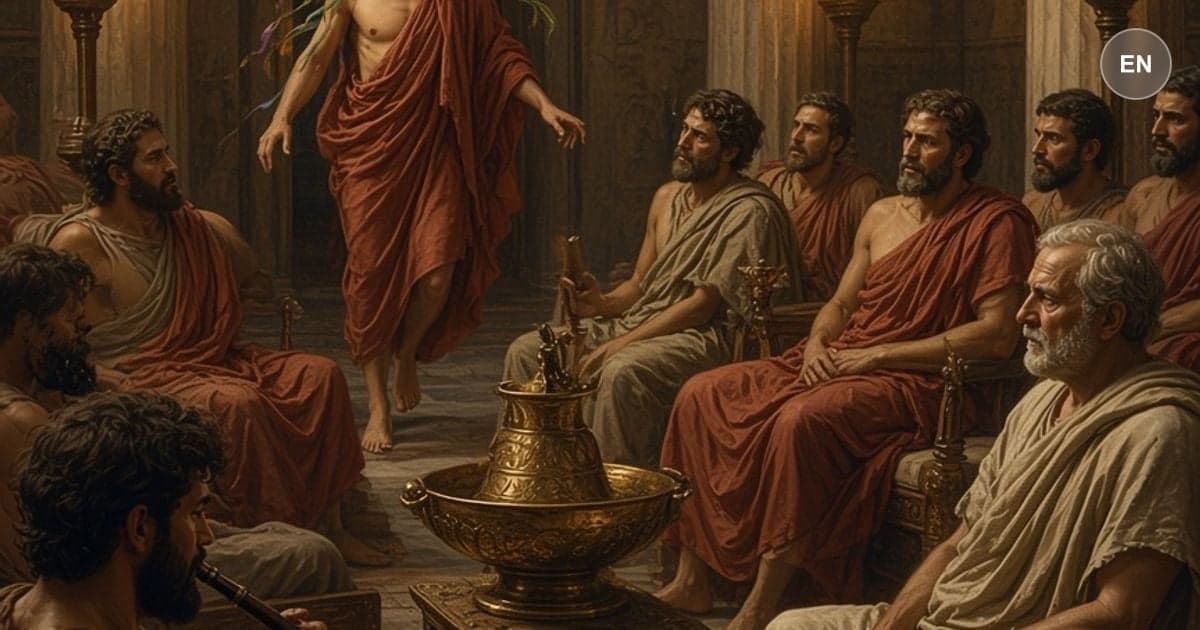
Phaedrus praised Love as one god. Pausanias stops the room. If there were only one Aphrodite, there would be only one Love. There are two goddesses, so there are two Loves. The common one wants the body and does not last. The heavenly one wants the soul, and he ties it to a lasting care for improvement. He will not let a toast cover both.
Eryximachus agrees, then enlarges the split until it covers his own art. Medicine, music, and the seasons each have a healthy love and a disordered one. The physician's confidence is the warning. A true distinction can become a tool that makes every field look like the doctor's field. Aristophanes is told he will be called to account. The next speech will not stay inside the split.
When someone uses one word for want, ask which want they mean, and how long it is supposed to last. Then ask whether they have stretched that split so far that it explains the weather. A useful distinction still has an edge.
The Central Lesson
Pausanias refuses to praise one Love. Two goddesses mean two desires: one common, one heavenly, and only the second is of great price because it lasts and improves. Eryximachus then carries that split into the body, the bow and the lyre, and the seasons. Plato lets the distinction stand, and he also lets the physician's reach show the risk. Split the name. Then notice when the split has become a map of everything the speaker already knows how to treat.
Applying This to Your Life
Refuse the Single Name
Pausanias will not praise Love until the room says which one. If a person calls every pull the same virtue, ask whether it wants the body for a season or a soul for a longer work.
Test the Lasting Kind
The heavenly love, in his account, makes both people eager in the work of their own improvement. If the desire does not survive a demand to get better, it is the other kind, whatever name it is wearing.
Watch the Expert Enlarge It
Eryximachus finds the split in the bow and the lyre, then in the seasons. A specialist can be right about a difference and still be wrong to make the difference the shape of the world.
Other lessons in this book
More life-skill deep dives from the same classic.
Climbing Past Possession
The Vast Sea of Beauty
Follow birth in beauty and the ladder, then Alcibiades, who wanted Socrates and did not get him.
3 chapters·Explore AnalysisHearing a Story at Second Hand
What Seemed Worth Remembering
Follow Apollodorus on the road from Phalerum, and the half-asleep witness at dawn, and name who was in the room.
3 chapters·Explore AnalysisLove That Asks for Courage
Bare Feet on the Ice
Sit with Phaedrus on Alcestis, Orpheus, and Achilles, then with Alcibiades on the ice at Potidaea.
2 chapters·Explore AnalysisThe Missing Half
Like a Flat Fish
Stay with Aristophanes' cut, then with the speeches that will not let that myth be the last word.
3 chapters·Explore AnalysisWanting What You Lack
Socrates Is Easily Refuted
Watch Agathon's praise fail one question, then hear Diotima refuse to call Love a god.
3 chapters·Explore Analysis
Continue exploring
Explore this theme
The same lessons in other books
See how other books teach the same life skills.
The Idiot
Maintaining Goodness Without NaivetySit with Myshkin on the train in chapter 1: honesty with no angle, and a city that can only call it idiocy.
Northanger Abbey
Separating Fiction from RealityStop letting Gothic plots supply the story: laundry bills become clues, an old abbey becomes a crime scene, and real cruelty arrives without a villain's mask.
The Blue Castle
Building a Life of Your OwnLeave Elm Street for Mistawis, lock a house that is yours, and keep the Blue Castle after the excuse to live is withdrawn.
Where the lesson lives in the book
Pausanias Names Two Loves
Aristodemus forgot the speeches between Phaedrus and Pausanias. Pausanias says the company should not praise Love as if there were only one. There are two goddesses, so there are two Loves. One is common. One is heavenly, and of great price to people and cities because it makes lover and beloved eager to improve. He offers the speech to Phaedrus as the best he could make without preparing.
Key Insight:
A single word for desire hides a choice. Pausanias will not let the room praise Love until it says which Love it means.
“if there were only one Aphrodite there would be only one Love; but as there are two goddesses there must be two Loves.”
Eryximachus Treats Love as Harmony
A hiccough delays Aristophanes, so the physician takes the turn. Eryximachus carries Pausanias's split out of the bedroom. He finds a healthy love and a diseased love in the body, then in music, then in the seasons. Harmony is not discord smoothed over. It is a skill that knows which desire to feed. He warns Aristophanes that the comic turn will still be called to account.
Key Insight:
Once you split desire into two, a specialist will try to make the split explain the whole world. Ask whether the map still fits the room, or only the trade of the person drawing it.
“harmony of the bow and the lyre”