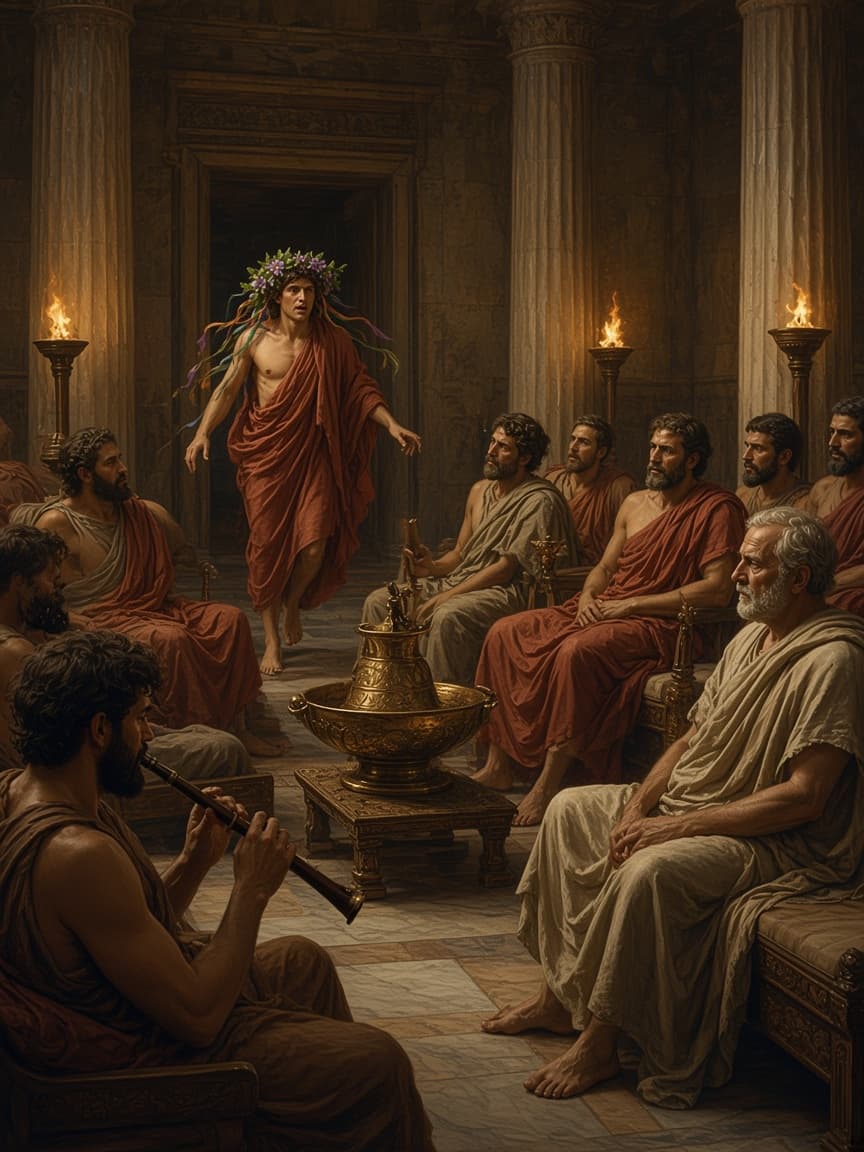
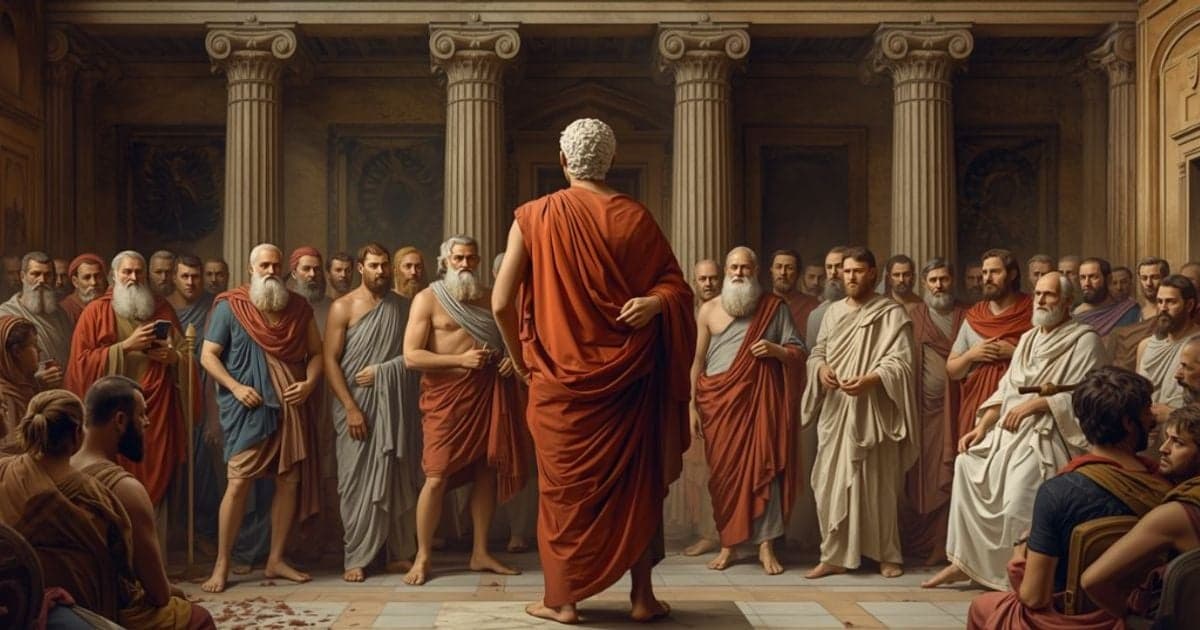
The speeches in praise of Love have just ended in applause when a drunken arrival breaks the form of the night. Alcibiades comes crowned to honour Agathon and finds Socrates already beside him on the couch. Socrates asks protection from a jealousy that will not let him look at anyone else. Alcibiades crowns both, makes himself master of the feast, and drinks without being touched by it. Eryximachus puts him back under the evening's rule. The others have praised Love. He must speak, and he will praise no one but Socrates.
The figure he chooses is a Silenus bust that opens onto images of gods, and Marsyas, whose flute takes hold of the soul. Socrates needs no instrument. Even broken scraps of his talk possess whoever hears them. Alcibiades weeps, confesses that he neglects his soul for the business of Athens, and runs. No one else produces that shame. He wishes Socrates dead and knows he would be sorrier if Socrates died. The outer manner looks amorous and mocking. Opened, it despises beauty, wealth, and honour, and holds images so strong that Alcibiades was ready to obey at once.
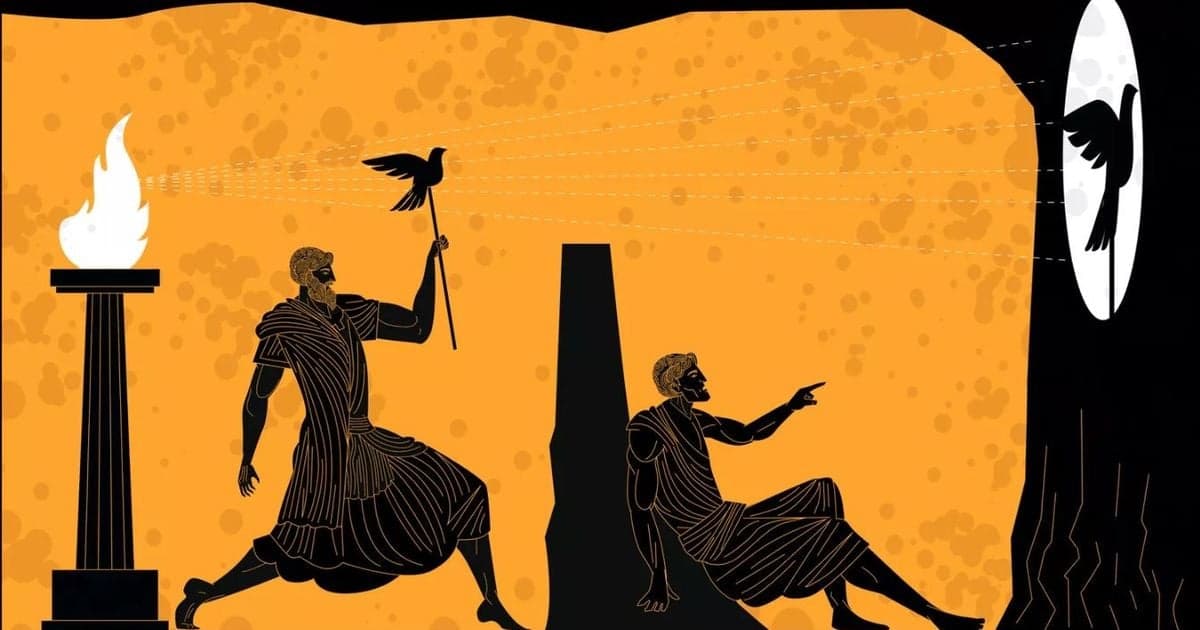
That vision becomes a purchase, not a change of life. Sure that his youth can buy the knowledge he wants, he sends his attendant away and invites Socrates to supper as the designing lover. With the lamp out he offers his body and his friends' resources for help towards virtue. Socrates answers that a serious trade would give true beauty for appearance, and that the mind grows critical when the bodily eye fails. Nothing further happens. In the morning Alcibiades rises as from the couch of a father or an elder brother. He cannot be angry, and he cannot hope to win a man whom money cannot wound.
The campaign stories show that the refusal was not a pose. At Potidaea Socrates outlasts hunger and frost, stands fixed in thought from morning until the next morning, and saves Alcibiades and his arms, then pushes the prize of valour back onto him. In the flight after Delium he retreats without panic, so that no one pursues him. He ends by saying no human likeness fits except the satyr, and that talk of asses, smiths, and cobblers is easy to mock outside and carries the duty of a good man inside. The blame on the praise is that Socrates begins as the lover and ends by making the beloved court him. Charmides and Euthydemus have been turned the same way. Agathon is told not to be deceived, and not to wait until experience teaches the lesson.
Coming Up in Chapter 12
The company will laugh, because Alcibiades still seems in love with Socrates. Socrates will say the long praise hid a plot to quarrel with Agathon and keep him for himself. Then a band of revellers will spoil the banquet, and at dawn he will still be forcing two sleepy poets to admit that comedy and tragedy are the same genius.