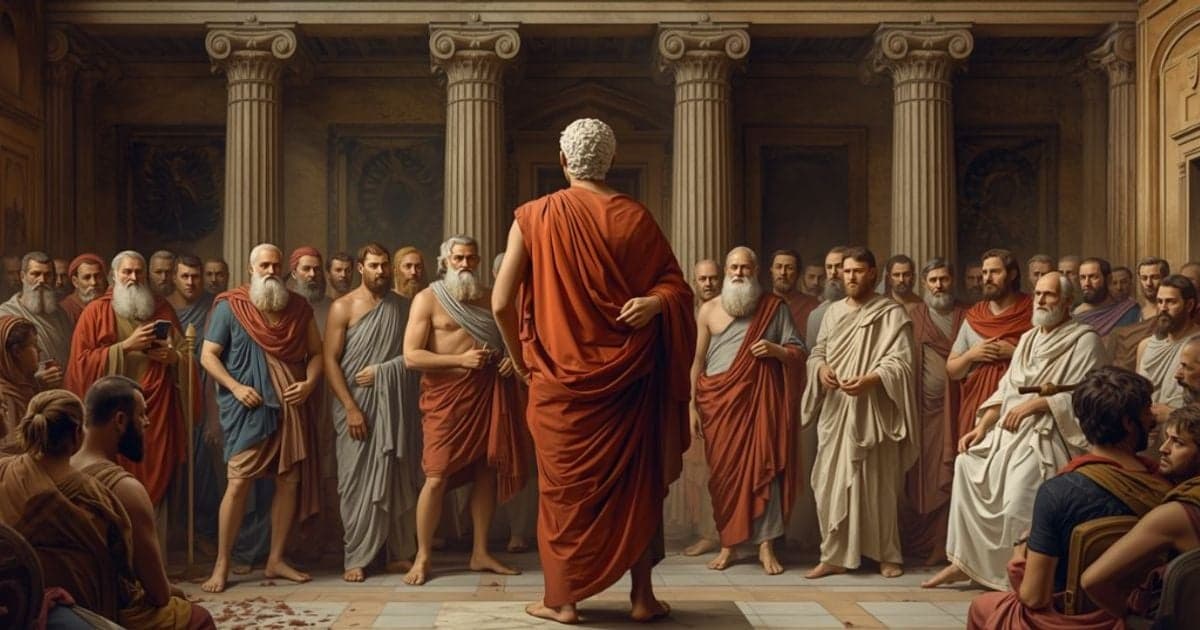
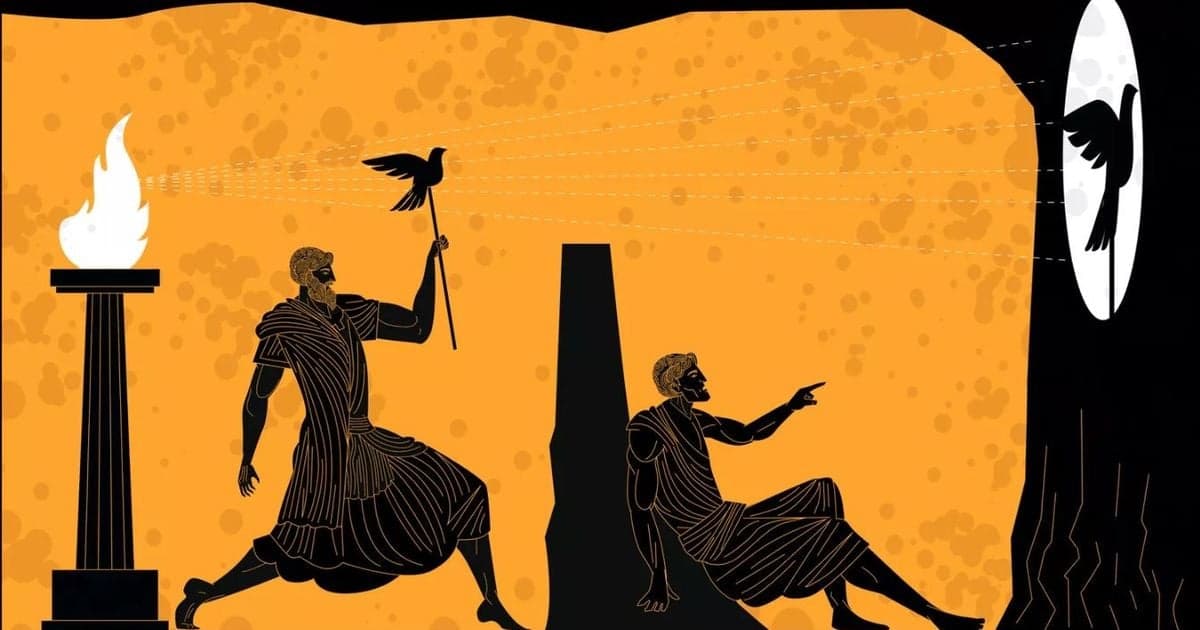
Free study guide · no paywall
SymposiumStudy Guide
by Plato (-385)
Plato's night of speeches on love, mapped across 12 chapters and six lessons.
Start here
Plot, characters & chapter jump
12 chapter summaries · 9 key figures · discussion questions · quotes · free
Plot summary
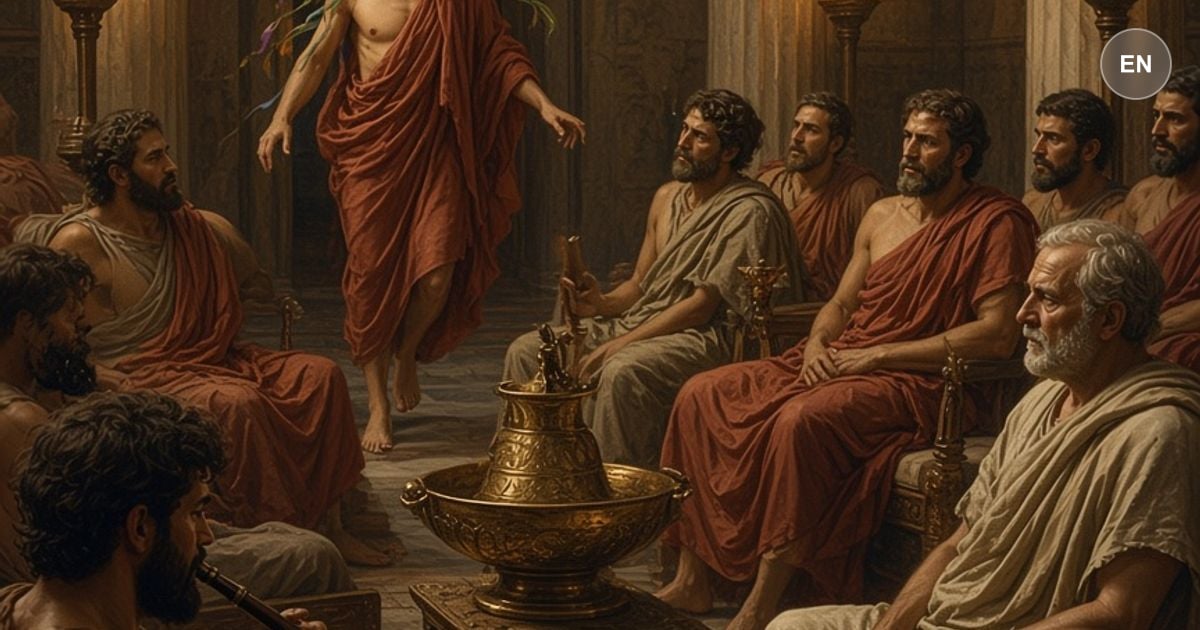
Apollodorus, who was not at the supper, repeats what Aristodemus told him about the night Agathon celebrated his first tragic victory. The guests send the flute-girl away and praise Love in turn: Phaedrus on courage, Pausanias on two loves, Eryximachus on harmony, Aristophanes on people cut in two, and Agathon on a god already complete. Socrates then shows that desire wants what it lacks, and retells Diotima of Mantineia on the spirit in the gap, birth in beauty, and a ladder past one face. Alcibiades arrives drunk, crowns the host without seeing Socrates, and at dawn Socrates is still claiming that comedy and tragedy share one genius.
Key characters
Jump to chapter
What readers search for
Common questions about Symposium
What is Plato's Symposium about?
A victory supper at the tragic poet Agathon's house, retold by Apollodorus, who was not there. The guests send the flute-girl away and praise Love in turn. The witness is Aristodemus, who fell asleep before the end, and Apollodorus keeps only what seemed worth remembering. The night people quote is already a story at second hand.
Hearing a Story at Second HandWhat is Aristophanes' speech about the missing half in the Symposium?
He says the first people were round and double, and Zeus cut them in two, leaving the navel as a memorial. Each person is like a flat fish, always looking for the other half. Plato lets the myth stand at full length. He does not let it finish the night. Socrates later shows that love wants what it lacks, and Diotima's ladder will not stop at one face.
The Missing HalfWhat are the two kinds of love in the Symposium?
Pausanias refuses to praise Love as if there were only one. Two goddesses mean two Loves: a common desire that wants the body, and a heavenly desire that wants the soul and lasts. Eryximachus then finds that split in the body, in music, and in the seasons. The distinction is useful. The physician's reach is the warning.
Two Kinds of DesireWhat is Diotima's ladder of love in the Symposium?
After birth in beauty, she names the lesser mysteries. The climb starts with one beautiful body, then beautiful practices and souls, until the lover contemplates the vast sea of beauty. One person can be a true beginning. Treating that person as the whole of beauty is where the climb stops too soon.
Climbing Past PossessionWhat does Alcibiades say about Socrates in the Symposium?
He arrives drunk, ribands flowing, holds them in front of his eyes, and crowns Agathon without seeing Socrates already on the couch. He praises Socrates as a Silenus figure no one can possess, tells of bare feet on the ice at Potidaea, and warns Agathon not to learn the refusal by experience. A larger gift does not buy the no.
Love That Asks for CourageFast track
Short on time? Start here
You do not have to read all 12 chapters in one sprint. These 6 beats hold the book's argument together.
Full coverage
Everything in this study guide
The same surfaces readers expect from a traditional study guide — plot, characters, themes, quotes, and homework help — grouped across 3 parts, with audio and the source text on every chapter. Free, no paywall.
Plot overview
Summary, context, and why the book still matters
12 chapter summaries
Every chapter with audio narration
9 key figures
Who drives the plot and what each one does
6 lessons
Themes traced to scenes, not generic labels
15+ important quotes
Verified lines with chapter links and analysis
Discussion questions
Five per chapter, with suggested answers for class and essays
Original text
Author's words beside every summary
This is not a plot cheat sheet. Wide Reads walks all twelve speeches as a night that will not let the missing half finish the argument. Follow the six lesson deep dives when a speech hits close to home, then open individual chapters for summaries, quotes, and audio.
For plot and theme questions about Symposium, see Common Questions on the book page.
How to use this guide
How to Read This Book with Wide Reads
Start with the report
Chapters 1–6 are the frame and the praises. Apollodorus names the carrier and drops what he will not keep. Phaedrus makes love a dare. Pausanias splits desire in two. Eryximachus carries that split into the body and the seasons. Aristophanes tells the cut. Agathon praises the god as already complete.
Stay for the question
Chapters 7–10 are the hinge. Socrates asks whether Love wants what it already has. Diotima refuses to call Love a god, or foul. She describes birth in beauty, then names the lesser mysteries and the climb toward the vast sea of beauty. If you stop at the other half, you have not read this part.
Keep the door and the dawn
Chapters 11–12 break the order. Alcibiades holds the ribands in front of his eyes, crowns Agathon, and confesses he could not possess Socrates. At dawn the two poets assent while drowsy that the genius of comedy and the genius of tragedy are the same. When a chapter raises a question you cannot shake, jump to the matching lesson page, then return to the chapter list.
Plot & context
Book Overview
Apollodorus is stopped on the road from Phalerum and asked for the speeches at a supper he did not attend. Two days earlier Glaucon had already asked, and that version, passed through Phoenix, was muddled. The witness was Aristodemus, a small man who never wore shoes, and he fell asleep before the end. Plato's Symposium is that report: a night at the tragic poet Agathon's house, the day after Agathon won his first prize, retold by a man who heard it from a man who was not fully awake. The sentence later ages quote arrives in the middle of the night. The dialogue spends the rest of the evening refusing to let that sentence finish the argument.
The case has more voices than the proverb keeps. Phaedrus wants Love praised as the eldest god and the source of courage, and he brings Alcestis, Orpheus, and Achilles. Pausanias will not allow one Love: a common desire wants the body, a heavenly desire wants the soul and lasts. Eryximachus, the physician, finds that split in medicine, in music, and in the seasons. Aristophanes, recovered from a hiccough that delayed his turn, tells of people cut in two, still searching for the other half. Agathon, the host, praises the god himself as young, fair, and the cause of every virtue. Socrates does not add another hymn. He asks whether Love wants what it already has. Diotima of Mantineia is not at the table. She arrives only as a lesson he retells. Alcibiades arrives last, drunk, head flowing with ribands, and crowns Agathon without seeing the man already on the couch beside him.
The night moves by refusals, not by a single definition. The company dismisses hard drinking and sends the flute-girl away, then agrees that each guest, left to right, will praise Love as well as he can. Phaedrus makes Love a dare: an army of lovers would not desert, and a lover would rather die than be seen acting basely. Pausanias refuses a single name for desire, and ties the heavenly kind to a lasting care for the soul. Eryximachus carries the split out of the bedroom and into the body of the world. Aristophanes makes the cut so vivid that the rest of the book has to answer it: Zeus slices the old double people like an egg divided with a hair, Apollo turns the faces, and the navel is left as a memorial. Agathon's praise is the hinge. He has described Love as already complete, and Socrates shows that desire wants what it lacks. Diotima answers that Love is not a god but a great spirit, child of Plenty and Poverty, always in the gap. She then says mortals bear children in beauty, and that a soul can climb from one beautiful body toward a beauty that does not come and go. Alcibiades breaks the order with a speech that is also a confession: he wanted Socrates, and Socrates would not be possessed. At dawn the others are asleep or gone, and Socrates is still claiming that the genius of comedy and the genius of tragedy are the same.
Plato wrote the dialogue in the years after the trial and the death. He does not award the prize to one speech. He lets each case stand at full length, including the myth later ages quote as if it were the book. The frame is already a warning about that habit. Apollodorus admits he will keep only what seemed worth remembering, and what the chief speakers said. Aristodemus does not recollect all that was said. The ending is not a verdict. It is a room that will not close on the sentence people came prepared to hear, and a last claim the two poets are too drowsy to follow.
Read the full summary on the book page →
Why this book now
People still open this dialogue after they have quoted the missing half and treated that proverb as the book. Plato lets Aristophanes charm the room, then spends the rest of the night against the habit of stopping there. This guide keeps that pressure tied to the second-hand report in chapter 1, the question that stops Agathon in chapter 7, the ladder in chapter 10, and Alcibiades at the door in chapter 11.
About Plato
Plato (c. 428-348 BC) was an Athenian who knew Socrates as a young man and spent the rest of his life writing the conversations the city had cut short. The supper in the Symposium is set in 416 BC, the year Agathon won his first tragic prize, but the dialogue was written later, after the trial of 399. Plato does not hand the night one definition of love. He lets Phaedrus, Pausanias, Eryximachus, Aristophanes, and Agathon each make a full case, then gives Socrates the turn that questions them, and gives Diotima of Mantineia the lesson Socrates will not claim as his own. He founded the Academy outside the city wall and wrote philosophy as staged talk rather than a finished lecture. Benjamin Jowett's nineteenth-century English is the public-domain translation used here. The dialogue still finds people who know the missing half by proverb and have not stayed for the speech that answers it. A memorable speech is not the same as the last one.
Themes with proof
Lessons from Symposium
Six pressures repeat across the twelve speeches: hearing a story at second hand, tested by Apollodorus and the witness who slept; love that asks for courage, tested by Alcestis and bare feet on the ice; two kinds of desire, tested when Pausanias refuses one Love; the missing half, tested when the later speeches will not let the myth finish; wanting what you lack, tested by the question that stops Agathon; and climbing past possession, tested by the ladder and by Alcibiades, who did not get Socrates. Each spoke ties named chapters to the pattern.
Deep dives
Chapter-by-chapter breakdowns
Two Kinds of Desire
Hear Pausanias refuse a single Love, then watch Eryximachus carry the split into the body and the seasons.
if there were only one Aphrodite there would be only one Love; but as there are two goddesses there must be two…
The Missing Half
Stay with Aristophanes' cut, then with the speeches that will not let that myth be the last word.
Each of us when separated, having one side only, like a flat fish, is but the indenture of a man, and he…
Character guide
Key Figures
Who drives the plot, what each one wants, and why they matter to the argument of the book.
Apollodorus
Repeats the supper years later, on the road from Phalerum. He was not in the room, and he keeps only what seemed worth remembering.
Aristodemus
The small man who never wore shoes. He was the witness, fell behind Socrates on the way, and slept before the dawn argument.
Phaedrus
Opens the praises. Love, he says, is the eldest god and the source of courage, proved by Alcestis, Orpheus, and Achilles.
Pausanias
Refuses one Love. Two goddesses mean a common desire and a heavenly desire that lasts and asks for improvement.
Aristophanes
Tells of round people cut in two, like a flat fish always looking for the other half. The speech the proverb keeps.
Agathon
The host, fresh from a tragic victory. He praises Love as young, fair, and already the cause of every virtue.
Socrates
Does not add another hymn. He asks whether Love wants what it already has, then retells a lesson he will not claim as his own.
Diotima of Mantineia
Not at the table. A woman wise in love, whose teaching names Love a spirit born of Plenty and Poverty, then a ladder past one face.
Alcibiades
Arrives drunk with ribands, crowns Agathon without seeing Socrates, and warns the room that the man cannot be bought.
Memorable lines
Key Quotes
Verified passages with chapter links — the lines teachers and essays keep returning to.
“There was a time when I was running about the world, fancying myself to be well employed, but I was really a most wretched being, no better than you are now. I thought that I ought to do anything rather than be a philosopher.”
“Moreover, I have asked Socrates about the truth of some parts of his narrative, and he confirmed them.”
“For he is the eldest of the gods, which is an honour to him; and a proof of his claim to this honour is, that of his parents there is no memorial; neither poet nor prose-writer has ever affirmed that he had any.”
“For what lover would not choose rather to be seen by all mankind than by his beloved, either when abandoning his post or throwing away his arms?”
“For we all know that Love is inseparable from Aphrodite, and if there were only one Aphrodite there would be only one Love; but as there are two goddesses there must be two Loves.”
“for the love of Aristogeiton and the constancy of Harmodius had a strength which undid their power.”
“Eryximachus, he said, you ought either to stop my hiccough, or to speak in my turn until I have left off.”
“I think that he has rightly distinguished two kinds of love. But my art further informs me that the double love is not merely an affection of the soul of man towards the fair, or towards anything, but is to be found in the bodies of all animals and in productions of the earth, and I may say in all that is”
“Mankind, he said, judging by their neglect of him, have never, as I think, at all understood the power of Love.”
“He spoke and cut men in two, like a sorb-apple which is halved for pickling, or as you might divide an egg with a hair”
“Do you think, Socrates, said Agathon, that my head is so full of the theatre as not to know how much more formidable to a man of sense a few good judges are than many fools?”
“The previous speakers, instead of praising the god Love, or unfolding his nature, appear to have congratulated mankind on the benefits which he confers upon them.”
“For in my simplicity I imagined that the topics of praise should be true, and that this being presupposed, out of the true the speaker was to choose the best and set them forth in the best manner.”
“Whereas I now see that the intention was to attribute to Love every species of greatness and glory, whether really belonging to him or not, without regard to truth or falsehood—that was no matter; for the original proposal seems to have been not that each of you should really praise Love, but only that you should appear to praise him.”
“'Hush,' she cried; 'must that be foul which is not fair?'”
Class & essay prep
Discussion Questions
Sample prompts drawn from the chapter guides — each with suggested answers for seminars and written work.
Why does Apollodorus say Glaucon cannot be right that the supper was recent and that he himself was there?
From Chapter 1Why does the company begin supper while Socrates is still standing in the neighbouring portico?
From Chapter 1What proof does Phaedrus offer that Love is the eldest of the gods?
From Chapter 2Why does he say a lover would rather be seen by all mankind than by the beloved when abandoning a post?
From Chapter 2What defect does Pausanias find in a praise of Love that does not name which Love it means?
From Chapter 3How does he separate common love from heavenly love?
From Chapter 3Why does Aristophanes not speak in his own turn?
From Chapter 4What does Eryximachus think Pausanias got right, and where does he say the speech went lame?
From Chapter 4Why does Aristophanes say people have never understood the power of Love?
From Chapter 5Why does Zeus cut the round people in two instead of destroying them?
From Chapter 5Why does Agathon say a few good judges are more formidable than many fools?
From Chapter 6What method does Agathon set against the speeches before his?
From Chapter 6What did Socrates think praise required before he heard the close of Agathon's speech?
From Chapter 7Why does a wish to stay healthy count, on his account, as desire for something not yet possessed?
From Chapter 7Why does Diotima tell Socrates to hush?
From Chapter 8Chapter by chapter
All Chapters
Grouped by 3 sections — the same structure as the book hub.
The Praises
Chapters 1–6 · Frame through Agathon
Ch. 1 · The Second-Hand SupperThe road from Phalerum
A companion asks Apollodorus for the speeches in praise of love at Agathon's supper. He has already told them to Glaucon, who stopped him two days ear...
Ch. 2 · Phaedrus Praises Love as Courage
Phaedrus calls Love a mighty god because he is the eldest. No poet or prose writer has given him parents. Hesiod puts Earth and Love just after Chaos....
Ch. 3 · Pausanias Names Two Loves
Pausanias says Phaedrus praised Love in the wrong form. If there were only one, the speech would do. There are two, because there are two Aphrodites. ...
Ch. 4 · Eryximachus Treats Love as Harmony
Pausanias stops. Aristophanes should speak next, but the hiccough, from too much food or some other cause, forces a swap. He asks Eryximachus to cure ...
Ch. 5 · Aristophanes and the Missing HalfThe cut and the other half
Aristophanes praises Love unlike Pausanias or Eryximachus. People have never understood Love's power. If they had, they would have built temples and o...
Ch. 6 · Agathon Praises the God Himself
Socrates tells Eryximachus that anyone waiting to speak after Agathon would be in a great strait. Agathon says Socrates is casting a spell so the expe...
Socrates and Diotima
Chapters 7–10 · The lack and the ladder
Ch. 7 · Socrates Shows Love Wants What It LacksLove wants what it lacks
When Agathon finishes, the company cheers. Socrates asks Eryximachus if the fear was true: a wonderful speech, and Socrates left in a strait. Eryximac...
Ch. 8 · Diotima Says Love Is Not a GodLove is not a god
Socrates leaves Agathon's method and retells a lesson from Diotima of Mantineia. When the Athenians sacrificed before the plague, she delayed the dise...
Ch. 9 · Diotima on Birth in Beauty
Diotima asks what people are doing when they show the eagerness and heat called love, if love wants the good forever. Socrates says he would not have ...
Ch. 10 · Diotima's LadderThe lesser mysteries and the ladder
Diotima calls the teaching she has just given the lesser mysteries of love, which even Socrates may enter. The greater and more hidden ones crown thos...
Arrival and Dawn
Chapters 11–12 · Alcibiades and the last claim
Ch. 11 · Alcibiades Praises SocratesRibands in front of his eyes
The speeches in praise of Love have just ended in applause when a drunken arrival breaks the form of the night. Alcibiades comes crowned to honour Aga...
Ch. 12 · Comedy and Tragedy at Dawn
When Alcibiades finishes, the company laughs, because he still seems in love with Socrates. Socrates says he is sober, or he would not have hidden his...
Using this guide
Study Guide FAQ
How to use Wide Reads for class, essays, and revision — and how this guide compares to traditional study sites.
Why Wide ReadsWhat makes this different from SparkNotes or CliffsNotes?
Traditional study guides summarise the Symposium as a theory of love, and often stop on Aristophanes. This guide keeps every claim tied to the speech that makes it: all 12 chapters, the figures in the room and the woman who is not, and discussion questions with suggested answers. Wide Reads adds The Missing Half and Climbing Past Possession traced through the cut, the question to Agathon, and the ladder. Summaries include audio; the Jowett text sits beside every chapter. Free, no paywall.
Is Symposium hard to read?
Symposium is rated intermediate difficulty. The night is one conversation, but the speeches change register: myth, law, medicine, comic invention, and a lesson Socrates retells. Chapter summaries, terms, and audio walk each speech so the argument stays attached to the person who made it, not to a lecture about Eros in general.
Can I use this study guide for essays and homework?
Yes. Use this reading guide beside Plato's text, not instead of it. The chapter summaries, verified quotes, and discussion questions can sharpen an essay on the missing half, Diotima's ladder, or Alcibiades. Always read the speech itself. The guide is the path into the supper. The dialogue is still the point.
Begin on the road from Phalerum
Chapter 1 opens with a man repeating a supper he did not attend, and a promise to keep only what seemed worth remembering. Each chapter adds summaries, quotes, audio, and the second-hand thread that turns a victory night into a test of which speech you are willing to stay for.
Wide Reads is different.
Plot, characters, and themes — plus audio, source text, and patterns you can use after class
Two ways in
Read & listen to the summary
Chapter by chapter, with audio. The meaning arrives because you experienced it — not because someone listed bullet points.
Start with this.
Read the original text
The actual words the author wrote, alongside every summary. Use the guide, then step into the source.
Then step into the source.
Either way, the door opens inward.
— and most of all, Why does this matter?
Continue Exploring
Guides, life skills, and the full library.More ways to read Symposium: guides, life skills, and the wider library.