
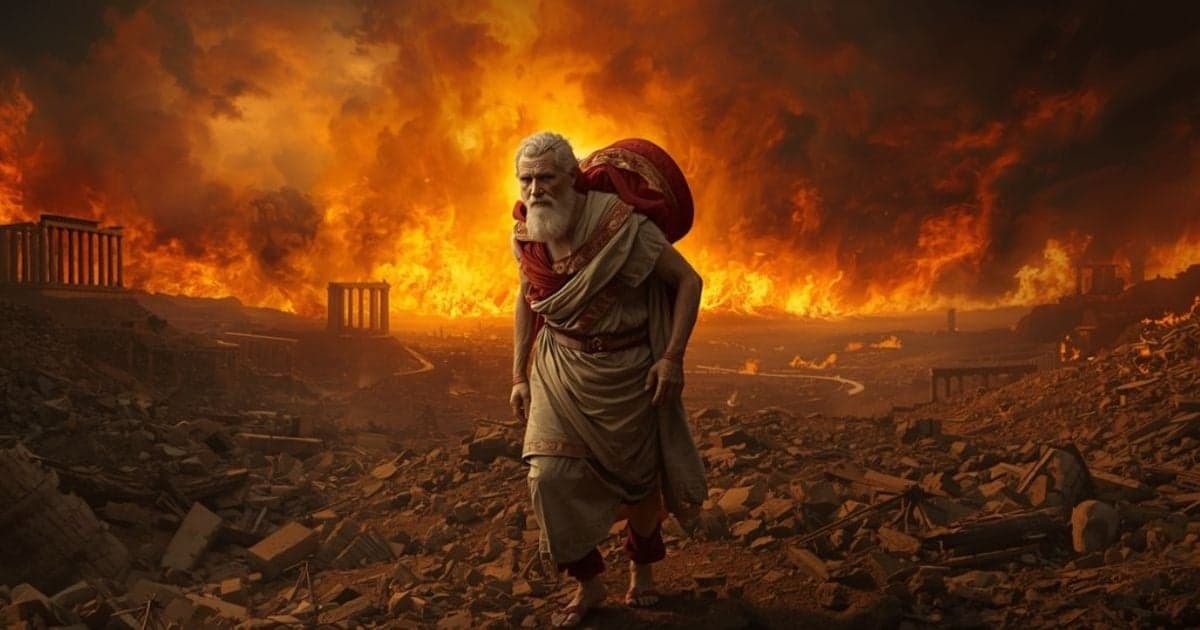
Dido is not a delay in a founder's calendar. She is a refugee who built Carthage, a widow who chose power, a host who offers a kingdom already standing. Aeneas is drawn to her genuinely. Their story fails not because the love is false but because the poem's world has already assigned him a different coast.
The cave is the whole problem in one weather event. She needs a name that makes the union honorable. He never shares that name. Mercury does not ask which story they have been living. He names Italy, and Aeneas starts talking like a man whose feelings are a problem to be managed rather than a vow to be kept.
The smoke on the horizon is knowledge without repair. The underworld is speech without audience. Virgil makes both sides legible, which is why the tragedy still hurts. Duty wins, and winning feels like a crime you can explain and cannot undo.
The Central Lesson
Love in The Aeneid collides with duty because the two people never share a definition. Dido calls the cave a marriage. Aeneas calls the departure an order. The feast, the storm, the smoke, and the silent shade are the same lesson from four distances. If you do not say what you are building while the other person can still answer, you will one day have a perfect speech and no one left who will hear it.
Applying This to Your Life
Align Expectations Before Depth
Dido and Aeneas never agree on what the relationship means. Before investing deeply, clarify whether you are building a shared future or passing through one another's lives on the way somewhere else.
Do Not Let Fate Language End the Negotiation
Aeneas tells Dido not to oppose the gods. When destiny enters a breakup, the leaving party can skip the reckoning. If you are going, say what you are doing in human terms first.
Explanation After Harm Is Not Repair
Aeneas finally speaks beautifully in the underworld. Dido turns away. Some decisions close doors that eloquence cannot reopen. Act with that knowledge before you act.
Other lessons in this book
More life-skill deep dives from the same classic.
Carrying Grief While You Lead
Tell Troy while it still hurts, watch Dido's smoke, walk the underworld, and bury Pallas without putting the command down.
6 chapters·Explore AnalysisDuty When Destiny Demands Sacrifice
Follow Mercury out of Carthage, Anchises's parade of Romans, and the duel that fulfills prophecy without feeling like triumph.
6 chapters·Explore AnalysisLeading People Past Exhaustion
Hold the fleet through Juno's storm, the ship-burning mutiny, Evander's alliance, and a truce that will not hold.
6 chapters·Explore AnalysisThe Cost of Building Something New
Sit with Troy on Aeneas's back, the burning ships, and Latium's first blood, and name who pays for a city that does not exist yet.
6 chapters·Explore AnalysisWhen Founding Demands Violence
Track Camilla, Pallas's belt, and Turnus on the ground, and refuse to call the last stroke a clean victory.
5 chapters·Explore Analysis
Continue exploring
Explore this theme
The same lessons in other books
See how other books teach the same life skills.

North and South
Acting on Conscience When It Costs YouWatch Hale leave the church, Margaret lie at the station for Frederick, and Thornton refuse a speculation that would save him.North and South
Navigating Class and Economic PowerTrace Milton from imported Irish hands and Boucher's brook to the inheritance that buys a partnership, not a husband.
The Scarlet Pimpernel
Acting Despite MisunderstandingRide for France while Marguerite still calls him the biggest fool in England, then let her find the rope.
Where the lesson lives in the book
Hospitality Before Either of Them Chooses
Dido welcomes the wrecked Trojans with a city already rising. Venus, fearing Juno, sends Cupid onto her lap. What begins as political refuge becomes attachment before Aeneas has chosen it. The fire is hidden, and it is already working.
Key Insight:
The affair is never purely private. Gods, politics, and survival needs shape desire from the start. Love formed under pressure may not be free choice, yet its pain is still real.
“Relate at large, my godlike guest,”
One Cave, Two Names
A storm drives them into a cave. Dido calls the union marriage. Aeneas does not. Rumor spreads. Mercury orders Italy. He prepares the ships, then faces her fury, her pleading, and her curse. Two sincere people are speaking different moral languages in the same bed.
Key Insight:
This is literature's great study of mismatched definitions. Dido experiences abandonment. Aeneas experiences obedience. The tragedy is structural: they never agreed what the relationship was for.
“But call'd it marriage, by that specious name”
Fire He Can Read and Cannot Undo
Sailing from Africa, Aeneas sees smoke on the Carthaginian coast and understands. Duty has won the morning. The knowledge arrives too late to change the ships' direction, and too early to be forgotten.
Key Insight:
Aeneas reads the signal correctly and still sails. Victory for the mission does not erase memory or guilt. The founder carries the dead with him whether or not he looks back.
“He knew the stormy souls of womankind, What secret springs their eager passions move, How capable of death for injur'd love.”
The Speech That Arrives After Death
In the underworld he finds Dido among the wounded lovers. He weeps and speaks the words he could not find while she lived. She turns away without answering, still refusing him even as a shade.
Key Insight:
Virgil denies reconciliation. Some wounds duty creates cannot be healed with explanation. The scene is devastating because Aeneas finally feels fully, and it changes nothing.
“Unwilling I forsook your friendly state, Commanded by the gods, and forc'd by fate.”