
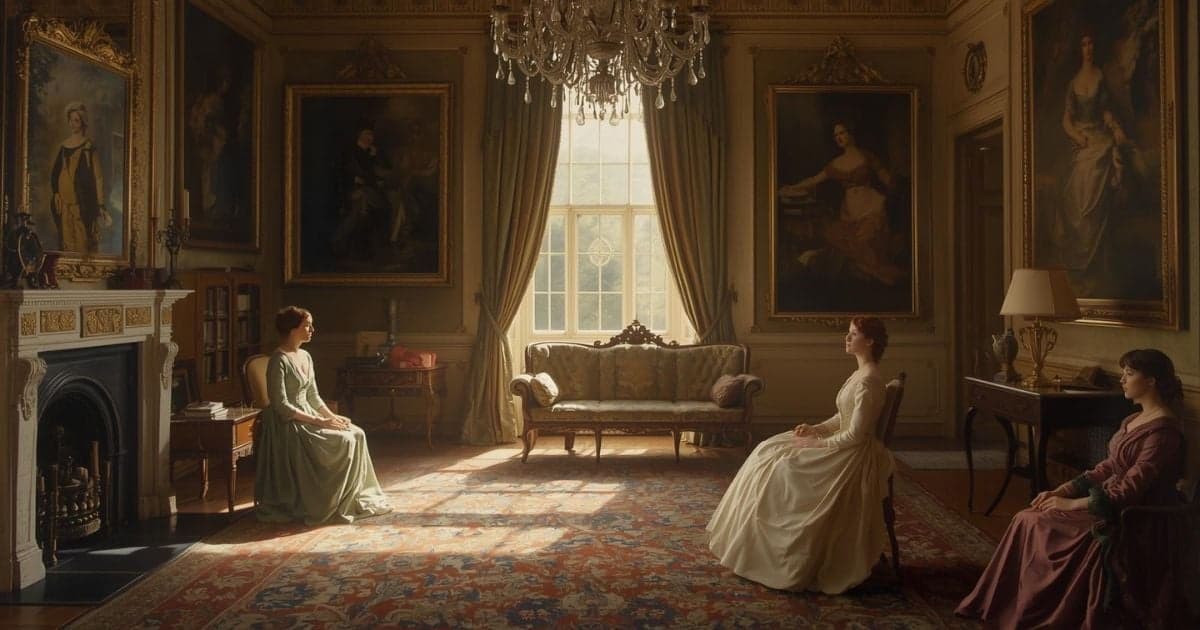
Readers remember the weather of this novel: walks, letters, a fever. Under the weather sits a column of figures. The girls have a thousand pounds apiece from an uncle who preferred a noisy child. John begins at three thousand and ends at presents. Five hundred a year is treated as abundance if the women will only stop wanting a carriage. Miss Grey's fifty thousand does not enter as gossip. It enters as a plot that can marry a man who still says he loved someone else.
Austen is not cynical about feeling. She is exact about what feeling cannot buy. Marianne can call grandeur irrelevant while she still has a cottage and a mother who will not count. Elinor cannot afford that speech. Edward's honor keeps him poor. Willoughby's debts make him available to a fortune. Lucy spends a secret the way other people spend a dowry. The marriage market here is not a metaphor. It is the only legal engine most of these women have.
Precarity trains you to misread help. John's concern in London is a tour of other people's money. Mrs. Ferrars's veto is love with a leash. Brandon's two hundred a year is the first sum that arrives without a performance of generosity. The skill is not despising money. It is refusing to let a mood, a brother, or a charming rescue stand in for a number you can live on. After Norland, every yes has to survive the ledger.
The Central Lesson
Feeling does not repeal arithmetic. The Dashwood women lose a home because the law does not count them, then spend a novel watching attachments pretend to be independent of pounds. Fanny can talk a deathbed request into trifles because each reduction sounds decent. Willoughby can love Marianne and still marry a fortune because debts are not a mood. Edward can keep his word and still be made poor in an afternoon. Survival here is literacy: hearing the number inside the kindness, the veto inside the mother's love, the settlement inside the romance. Austen does not award a lottery. She awards enough, which is the first romantic word the ledger will allow.
Applying This to Your Life
Write the Original Promise Down
Fanny never calls John cruel. She calls each smaller number realistic. Before you accept a reduced offer from family, an employer, or a partner, name the first figure out loud and ask who benefits from every step down. Prudence that only ever shrinks your claim is not prudence.
Hear the Fortune Inside the Romance
Willoughby's marriage is announced with a sum attached. That is not a subplot. When someone leaves, ask what the leaving solves financially. Love and a budget can occupy the same person. Only one of them signs the settlement.
Treat Enough as a Serious Word
Brandon's living will not restore Norland. It will hold a life. Precarity makes people chase the fantasy of being saved by a fortune. Austen's ending is colder and kinder: a competence, delayed, that does not require you to perform gratitude to the person who talked the gift away.
Other lessons in this book
More life-skill deep dives from the same classic.
Balancing Emotion and Reason
Each Defense Has a Cost
Watch Elinor carry Barton in silence and Marianne refuse to moderate a feeling, then see what each defense costs by Cleveland.
12 chapters·Explore AnalysisKeeping a Confidence at Personal Cost
A Secret You Did Not Choose
Hold Lucy Steele's engagement with Elinor: the one person who most needs to speak is the one who promised she would not.
11 chapters·Explore AnalysisReading Hidden Character
Charm Is a First Draft
See past Willoughby's shooting-jacket and Lucy's sweetness to the fortune and the secret they were always protecting.
12 chapters·Explore AnalysisRecognizing Quiet Constancy
The Man Who Will Not Perform
Watch Colonel Brandon wait through Eliza, the flannel waistcoat, and Marianne's fever while charm spends itself elsewhere.
12 chapters·Explore AnalysisRecovering from Heartbreak
Grief That Still Keeps House
Follow Willoughby's cut at the party and the letter that names money, then Elinor's private knowledge that Edward was never free.
14 chapters·Explore Analysis
Continue exploring
Explore this theme
The same lessons in other books
See how other books teach the same life skills.
The Idiot
Maintaining Goodness Without NaivetySit with Myshkin on the train in chapter 1: honesty with no angle, and a city that can only call it idiocy.
Northanger Abbey
Separating Fiction from RealityStop letting Gothic plots supply the story: laundry bills become clues, an old abbey becomes a crime scene, and real cruelty arrives without a villain's mask.
The Blue Castle
Building a Life of Your OwnLeave Elm Street for Mistawis, lock a house that is yours, and keep the Blue Castle after the excuse to live is withdrawn.
Where the lesson lives in the book
A Promise Larger Than the Law
The uncle's will ties Norland to a four-year-old boy who made noise. Henry Dashwood dies within a year. The widow and three daughters are left with about ten thousand pounds and a deathbed request that John assist them. He imagines three thousand pounds and feels generous. The house is already his.
Key Insight:
Women's security here is not a feeling. It is a legal structure that does not count them as heirs. A brother's good intention is not a title. Until money is settled in writing, it is still a mood.
How a Gift Becomes a Trifle
Fanny does not attack John's goodness. She praises it while shrinking the number. Three thousand would impoverish their dear little boy. Annuities are perpetual drains. Four women can live richly on five hundred a year if they stop wanting carriages. By afternoon the deathbed request has become occasional fish and game.
Key Insight:
The person who talks you out of helping rarely calls you cruel. They call the original sum unrealistic, then the next sum, then the next. Each step sounds prudent. Together they erase an obligation while leaving your self-image intact.
“To take three thousand pounds from the fortune of their dear little boy would be impoverishing him to the most dreadful degree.”
Living on Someone Else's Roof
Mrs. Dashwood stays at Norland for months while she searches for a house she cannot afford near the place she cannot leave. She still hopes John will honor his father's wish until longer acquaintance with Fanny teaches contempt. Edward spends his days at Norland winning affection the family cannot yet price against his dependence on a difficult mother.
Key Insight:
Security that depends on a relative's goodwill is not security. You can be grateful and still homeless. Until the next roof is signed in your name, every visit is a reminder that the law already decided who counts as an heir.
Distance Measured in Pounds
Mrs. Dashwood announces the move to Barton Cottage in Devonshire. John offers polite regret; Fanny says almost nothing. Edward's distress at the distance is unmistakable, and Mrs. Dashwood invites him with pointed warmth to show she will not be intimidated. Packing exposes how much Norland held and how little the women take with them.
Key Insight:
Forced relocation is an economic event dressed as geography. The miles matter because income and patronage do not travel with you. Watch who can afford to follow and who must stay where the money is.
Five Hundred a Year of Hope
Barton Cottage is small, regular, and repairable, nothing like Marianne's romantic idea of a cottage. Mrs. Dashwood immediately plans spring improvements she cannot fund on five hundred a year. The valley is pretty, the house is adequate, and the family must learn to call enough a home while still mourning what entailed away.
Key Insight:
Precarity does not only shrink the house. It shrinks the imagination to what the ledger will allow. Mrs. Dashwood's spring plans are love trying to outrun arithmetic. The skill is naming enough honestly before hope becomes a bill you cannot pay.
Wealth as a Moral Argument
Marianne asks what grandeur has to do with happiness. Elinor answers that money can only give happiness where there is nothing else to give it, but that a competence is not a small thing when you have already lost a house. The sisters are not debating philosophy. They are debating how much want they can survive.
Key Insight:
People with a competence get to call money vulgar. People without one have to treat it as weather. Elinor is not less romantic. She is less free to pretend the ledger is optional.
Fifty Thousand Pounds as a Plot
Mrs. Jennings brings the news: Willoughby is to marry Miss Grey. The fortune is named as casually as a parish. Marianne still tries to invent an innocence for him. Elinor hears the number and understands that the attachment has been priced. Romance did not lose to cruelty. It lost to a sum that could clear debts.
Key Insight:
When a marriage is announced with a fortune attached, do not treat the fortune as gossip. It is the mechanism. Willoughby loved Marianne and still chose the number that would keep Combe Magna solvent. Both can be true. Only one decides the ending.
The Marriage That Names the Price
After a week in London Willoughby's card proves he called during their absence. Mrs. Jennings soon brings the news everyone else has been pricing: he is to marry Miss Grey. Marianne still tries to invent an innocence for him. Elinor hears the fortune named and understands the attachment has already been settled in another register.
Key Insight:
Heartbreak often arrives with a number attached. The marriage is not a subplot. It is the mechanism that makes the bow in the crowded room possible. Love and a settlement can occupy the same man. Only one signs the papers.
John Recalculates in Town
In London, John Dashwood is shocked by the sisters' cheap lodgings and still more shocked that they might need help. He reports Mrs. Ferrars's wealth, Miss Morton's twenty thousand, and his own delicacy in not mentioning Edward's interest in Elinor now that Elinor is poor. Kindness here is a tour of other people's money.
Key Insight:
Precarity makes you visible as a problem and invisible as a claim. John can pity the cottage and still treat any real transfer as indecent. Watch for relatives who offer concern in place of the sum they already promised.
Disinheritance as a Public Sport
Edward will not break his word to Lucy. Mrs. Ferrars strips him of the heirship and settles it on Robert. John reports the scene as if stubbornness were the vice. Elinor hears a mother using money as a veto on a son's character, and a brother who finds the veto reasonable.
Key Insight:
An inheritance can be a leash. The threat is not only poverty. It is the family's right to rewrite your future in an afternoon because your choice did not match their ledger.
Two Hundred a Year Is Still a Life
Brandon offers Edward the living of Delaford, about two hundred a year, enough for a bachelor and tight for a wife. Elinor must carry the offer to the man she cannot marry. The gift does not restore Norland. It makes a reduced life possible without Fanny's permission.
Key Insight:
Survival often looks unglamorous: a small living, a delayed marriage, a competence instead of a fortune. Brandon's two hundred is not romance. It is the first number in the book that arrives as help instead of as a threat.
A Living Priced by John
Edward rejoices over the Delaford living while Lucy plans to profit from Colonel Brandon's estate. Elinor visits Harley Street alone, where John questions the gift's value and invents theories of a temporary holding. He whispers that Mrs. Ferrars must not yet hear of the marriage, as if discretion were generosity.
Key Insight:
Relatives who audit your rescue will always find it small. John can praise Brandon's kindness and still treat two hundred a year as a joke. When help finally arrives, notice who tries to shrink it before you have signed the lease.
Freedom That Still Has a Budget
Edward's freedom is obvious, and his errand at Barton is equally plain. Awkward but sincere, he secures Elinor's consent and Mrs. Dashwood's blessing by afternoon. Released from an engagement he long ceased to love, he can finally speak with grateful cheerfulness about a future that will not be rich but will be his.
Key Insight:
The happy ending here is not a fortune restored. It is a competence chosen freely after years of being priced by other people's ledgers. Enough, at last, is still an economic word. Austen means it as romance.
What the Marriages Can Actually Hold
Edward is restored just enough. Delaford will hold two households that cannot pretend they are rich. Marianne's whole heart goes to Brandon in time. The ending is not a lottery win. It is two lives that can finally budget both judgment and feeling because the arithmetic has stopped being an emergency.
Key Insight:
Austen does not rescue the Dashwoods with a hidden fortune. She rescues them with enough. After a novel in which every attachment was priced, enough is the romantic word.
“Marianne could never love by halves; and her whole heart became, in time, as much devoted to her husband, as it had once been to Willoughby.”