
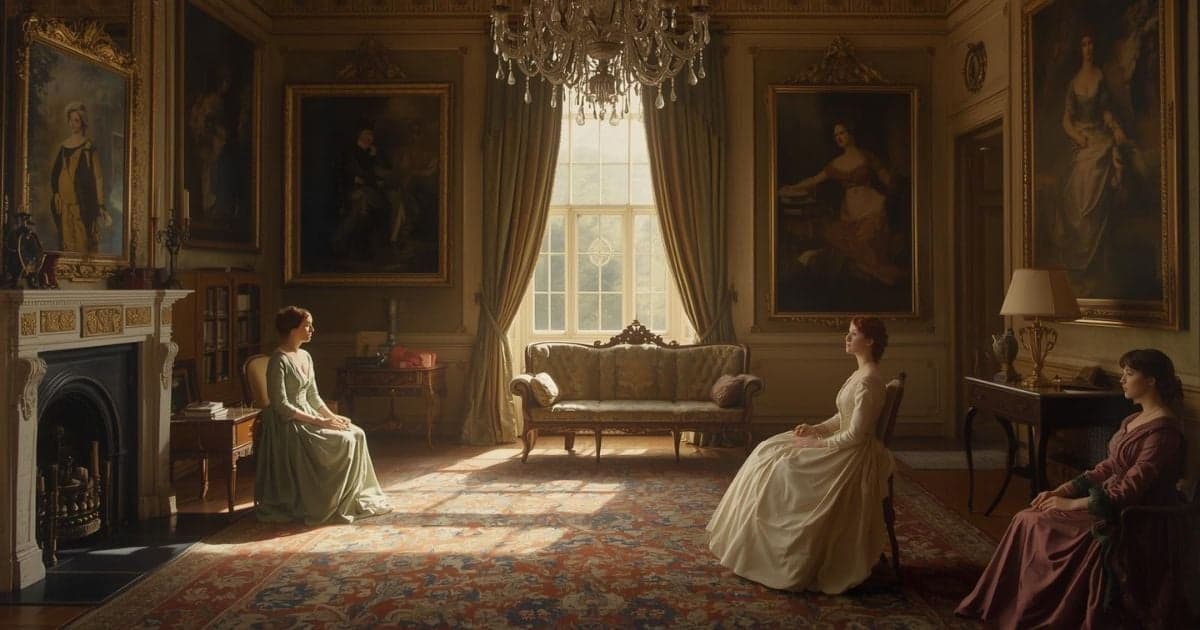
Brandon is unread because he will not compete. He listens to a song, offers a living to a rival, rides for a mother in a fever, and declines to convert any of it into a speech that would make him look like the hero of the hour. The cottage has been trained by a different temperature: Willoughby's ease, Marianne's weather, Mrs. Jennings's jokes. In that climate, steadiness looks like the absence of a story.
It is not absence. The Eliza history is already a novel. Whitwell was never mysterious to him. The living at Delaford is a future he is willing to give away. Constancy here is not waiting in a corner with a bouquet. It is a pattern of remaining useful when remaining useful cannot possibly be a courtship yet. That pattern is easy to miss if your test for love is whether the room got quieter when he entered.
Austen is not scolding Marianne for wanting lightning. She is showing what lightning is for, and what it is not for. Lightning chooses a first scene. Constancy is who is still in the house when the first scene has become a letter, a fortune, and a fever. The skill is learning to see the man who will not perform before the emergency makes him obvious, and refusing to call the later whole heart a demotion because it did not arrive as weather.
The Central Lesson
Constancy looks like dullness in a room trained by charm. Brandon will not compete with weather, will not invent a cover for Whitwell, will not turn a living or a night ride into a claim. The cottage files him under furniture until a fever makes logistics visible. He has already lived a plot the Dashwoods would have recognized as romance; he declined to tour it. Austen does not ask you to prefer quiet people on principle. She asks you to notice who is still in the house after the first scene has become a letter and a fortune. Lightning chooses an opening. Constancy is the pattern that remains when remaining cannot yet be courtship. A whole heart given in time is not a demotion. It is what love does when it is no longer employed by a performance.
Applying This to Your Life
Do Not File Steadiness as Furniture
Brandon is sorted into the background because he will not set the temperature of the evening. If your attention only tracks people who change the weather, you will miss the person who is already carrying the prior plot. Look once at who is not competing.
Watch Who Becomes Logistics
In the fever, Brandon rides. He does not require the ride to be understood as devotion. In your own emergencies, notice who handles the night and who needs the scene. Constancy is often the person who leaves the room without a speech.
Refuse to Call Later Love a Demotion
Marianne's whole heart goes to Brandon in time. That is not a consolation prize unless you need lightning to call something real. A love that arrives after the first draft has failed can still be entire. Do not punish it for not being the weather you were trained to want.
Other lessons in this book
More life-skill deep dives from the same classic.
Balancing Emotion and Reason
Each Defense Has a Cost
Watch Elinor carry Barton in silence and Marianne refuse to moderate a feeling, then see what each defense costs by Cleveland.
12 chapters·Explore AnalysisKeeping a Confidence at Personal Cost
A Secret You Did Not Choose
Hold Lucy Steele's engagement with Elinor: the one person who most needs to speak is the one who promised she would not.
11 chapters·Explore AnalysisReading Hidden Character
Charm Is a First Draft
See past Willoughby's shooting-jacket and Lucy's sweetness to the fortune and the secret they were always protecting.
12 chapters·Explore AnalysisRecovering from Heartbreak
Grief That Still Keeps House
Follow Willoughby's cut at the party and the letter that names money, then Elinor's private knowledge that Edward was never free.
14 chapters·Explore AnalysisSurviving Economic Precarity
The Ledger Behind Feeling
Sit with Fanny talking a deathbed promise down to nothing, then the cottage, London, and a marriage market that treats five hundred a year as a verdict.
14 chapters·Explore Analysis
Continue exploring
Explore this theme
The same lessons in other books
See how other books teach the same life skills.
The Idiot
Maintaining Goodness Without NaivetySit with Myshkin on the train in chapter 1: honesty with no angle, and a city that can only call it idiocy.
Northanger Abbey
Separating Fiction from RealityStop letting Gothic plots supply the story: laundry bills become clues, an old abbey becomes a crime scene, and real cruelty arrives without a villain's mask.
The Blue Castle
Building a Life of Your OwnLeave Elm Street for Mistawis, lock a house that is yours, and keep the Blue Castle after the excuse to live is withdrawn.
Where the lesson lives in the book
Filed Under Unromantic
Colonel Brandon listens while Marianne sings and is immediately less interesting than a man who has not yet arrived. He is thirty-five, kind, and so little like a first chapter that the cottage does not bother to read him. Presence without performance registers as furniture.
Key Insight:
Rooms trained by charm will mistake steadiness for a lack of plot. If someone does not compete for the temperature of the evening, they will be sorted into the background before you have any data.
Age Treated as a Punchline
Mrs. Jennings declares Brandon in love. Marianne finds the idea absurd: rheumatism, a man old enough to be her father, the comic of flannel. Elinor defends his vigor and is talking to a theory, not a person. Second attachments, in Marianne's religion, are already a kind of fraud.
Key Insight:
You cannot recognize constancy if your definition of love requires weather. Marianne is not cruel. She is consistent. A man who will not perform rapture is, on her terms, already dead.
The Warning Without a Speech
Colonel Brandon objects to Willoughby's horse for Marianne and hints at history the cottage will not yet hear. Marianne treats the objection as jealousy and old age. Elinor listens. Brandon leaves the party without converting his care into a scene that would win Marianne's gratitude.
Key Insight:
Constancy often warns without claiming credit. Brandon cannot compete with Willoughby's gift, so he offers fact and discretion instead. The room mistakes that for dullness because it does not arrive as weather.
Leaving Without a Performance of Excuse
Whitwell is cancelled. Brandon goes, and the party is offended by the lack of a story they can enjoy. Willoughby remains and looks, by contrast, like candor. The man who will not perform also will not invent a cover that would make him look better in the moment.
Key Insight:
Constancy often looks like bad manners to people who expect a scene. Brandon's silence is not emptiness. It is a prior obligation that the cottage has not earned the right to hear yet.
He Has Been Constant Before
The Eliza history arrives because Marianne needs a true picture of Willoughby, not because Brandon needs credit. He loved, lost, searched a sponging-house, and then raised a child the world would not. The quiet man has already outlived one romance that the cottage would have recognized as a plot.
Key Insight:
Some people look undramatic because the drama already happened, and they declined to tour it. Constancy includes what they did when there was no audience at Barton to impress.
Visits Without a Claim
In London Colonel Brandon calls almost daily while Marianne writes to Willoughby and treasures his card. Elinor enjoys Brandon's conversation even as she grieves his evident love for her sister. He does not convert his constancy into a rival's scene or demand Marianne notice what Willoughby withholds.
Key Insight:
Steadiness that does not compete for applause is easy to file as furniture. Brandon's daily visits are not courtship yet. They are the pattern of a man who remains present without turning presence into leverage.
Help Offered to a Rival
Edward is disinherited for keeping a word. Brandon offers him the living of Delaford and asks Elinor to carry the news. He improves the prospects of a man who, if the world were a contest, stands in his way. The gift has no speech attached to it that would let Marianne see him as a hero.
Key Insight:
Constancy is what you do for people who cannot reward you with the ending you want. Brandon does not wait to be chosen before he is useful. That is easy to miss if you are waiting for a declaration.
The Ride That Is Not a Scene
Marianne's fever turns dangerous. Brandon goes for Mrs. Dashwood. There is no speech about what it costs him to watch another Eliza-shaped crisis. He moves. Elinor notices. The plot, for once, requires a man who can leave a room without needing to be understood as he goes.
Key Insight:
In an emergency, look at who becomes logistics. Charm is often elsewhere. Constancy is the person who will ride through the night without converting the ride into a claim on you.
Mrs. Dashwood Learns to See Him
After the fever, their mother begins to read Brandon correctly: not as a punchline, not as a nurse's bargain, but as the man who was there. Marianne is not ready. The recognition starts in the person who had preferred weather and now has to prefer survival.
Key Insight:
Quiet constancy is often recognized first by bystanders. The person being waited for may still be loyal to an old plot. That delay is not proof the waiting was empty. It is proof the room was slow.
Cleveland Before the Fever
The party leaves London in early April and reaches Cleveland in Somersetshire, a modern house near Willoughby's county. Marianne grieves leaving the city where he remains; Elinor is glad to escape Lucy and unseen by Willoughby since his marriage. Brandon has ridden ahead. The house will soon require the man who does not perform.
Key Insight:
Constancy is often already in place before the emergency makes it visible. Brandon does not wait for Marianne's fever to begin caring. He is simply there when the plot finally needs logistics instead of weather.
A Whole Heart, Chosen Late
Mrs. Dashwood hears Elinor's account of Willoughby's confession with permanent judgment. That evening Marianne declares herself satisfied and wishes for no change, convinced she could never have been happy with a man whose first offence against Eliza poisoned everything after. She is ready to see what Brandon has been.
Key Insight:
Constancy is not a consolation prize unless you need lightning to call something real. Marianne's turn is not a demotion. It is what a whole heart does when it stops being employed by a first draft that could not survive daylight.
A Whole Heart, Given in Time
Marianne could never love by halves. In time the whole heart goes to the husband who did not compete with Willoughby's weather. Austen does not pretend this is the same lightning. She pretends it is enough, and then, later, as much.
Key Insight:
Constancy is not a consolation prize unless you need lightning to call something real. Marianne's later devotion is not a demotion. It is what a whole heart does when it is no longer employed by a first draft.
“Marianne could never love by halves; and her whole heart became, in time, as much devoted to her husband, as it had once been to Willoughby.”