Wide Reads
Literature MattersLife IndexEducators
Sign in
Where to Begin

Chapter XI — Pride and Prejudice

Pride and Prejudice - Chapter XI

Jane Austen

Pride and Prejudice

Chapter XI

Home›Books›Pride and Prejudice›Chapter 11
Previous
11 of 61
Next

Analysis by the Wide Reads editorial team·Reviewed against the source text·Updated November 27, 2025

Summary

Chapter XI

Pride and Prejudice by Jane Austen

0:000:00
Listen to Next Chapter

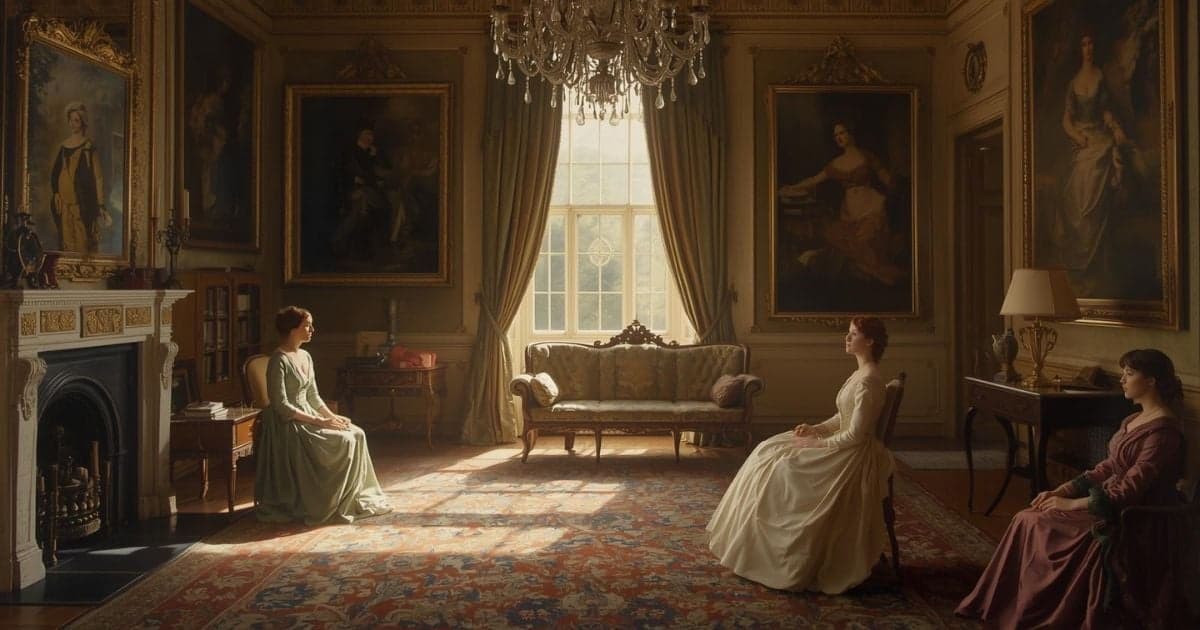
Attention is currency in a drawing room, and some people spend it on performance while others win it by refusing to perform. Jane comes downstairs; Bingley is all joy and attention, piling up the fire and talking scarcely to anyone else, while Elizabeth watches from her needlework with delight. After tea, cards fail; Caroline pretends to read while watching Darcy's page, praises libraries, and hears the Netherfield ball is settled once Nicholls has made white soup.

Caroline walks the room to attract Darcy and fails. She persuades Elizabeth to take a turn about the room so Darcy will look up; he offers his two motives, secret affairs or figures shown best in walking. Their sparring turns serious: vanity versus regulated pride, then Darcy's confession of a temper too little yielding and lost good opinion never returning.

Elizabeth calls implacable resentment a real failing she cannot laugh at. They trade closing barbs: her defect is a propensity to hate everybody; his smile answers that hers is wilfully to misunderstand them. Caroline demands music; Darcy, after a pause, is not sorry, he begins to feel the danger of paying Elizabeth too much attention. He began to feel the danger of paying Elizabeth too much attention.

In this chapter: Terms Characters Key Quotes Themes Modern Story

Why This Matters

Connect literature to life

Skill: Hearing rigidity in casual confession

Banter can reveal someone's non-negotiables before either person admits attraction. In the drawing room Darcy confesses that lost good opinion never returns and trades paired defects with Elizabeth while Caroline, excluded, demands music and he begins to feel the danger of paying Elizabeth too much attention. Notice engineered proximity, listen when joking turns to admitted rigidity, and recognize when intellectual combat is becoming emotional risk.

Coming Up in Chapter 12

Jane is well enough to leave Netherfield, and by a pact between the sisters, Elizabeth will write home to Mrs. Bennet to fetch them before the promised ball can keep the family any longer. Elizabeth wrote dominates the opening movement.

Share it with friends

PreviousPrevious ChapterNextNext Chapter
Original text
1,597 wordscomplete

Chapter 11

Attention is currency in a drawing room, and some people spend it o...

[Illustration] When the ladies removed after dinner Elizabeth ran up to her sister, and seeing her well guarded from cold, attended her into the drawing-room, where she was welcomed by her two friends with many professions of pleasure; and Elizabeth had never seen them so agreeable as they were during the hour which passed before the gentlemen appeared. Their powers of conversation were considerable. They could describe an entertainment with accuracy, relate an anecdote with humour, and laugh at their acquaintance with spirit. But when the gentlemen entered, Jane was no longer the first object; Miss Bingley’s eyes were instantly…

Public-domain chapter text, formatted for reading.

Master this chapter. Complete your experience

Purchase the complete book to access all chapters and support classic literature

Buy at Powell'sBuy on Amazon

Available in paperback, hardcover, and e-book formats

Now let's explore the literary elements.

Key Quotes & Analysis

"My good opinion once lost is lost for ever"

— Mr. Darcy

Context: Confessing faults of temper

Foreshadows how he will handle betrayal.

In Today's Words:

When someone burns a bridge with me, there's no rebuilding it. This all-or-nothing approach might work in competitive business environments where trust is everything, but it's pretty harsh for personal relationships. Like blocking someone on all social media after one argument instead of working through issues.

"And _your_ defect is a propensity to hate everybody."

— Elizabeth Bennet

Context: After Darcy on natural defects

Names his social coldness before she knows the full man.

In Today's Words:

Your biggest problem is thinking everyone's beneath you. It's that tech bro energy where you assume you're the smartest person in every room. Sure, maybe you've got the skills to back it up, but that attitude makes people want to prove you wrong rather than collaborate with you.

"is wilfully to misunderstand them."

— Mr. Darcy

Context: Smiling reply to Elizabeth's charge

The novel's paired diagnosis of prejudice in one line.

In Today's Words:

You're deliberately misreading the situation. It's like when people twist your words in Slack messages or choose the worst possible interpretation of your feedback. Sometimes we see what we expect to see instead of what's actually there, especially when we've already decided someone's the villain.

"You either choose this method of passing the evening because you are in each other’s confidence, and have secret affairs to discuss, or because you are conscious that your figures appear to the greatest advantage in"

— Mr. Darcy

Context: Two motives for walking

Cool analysis that forces Caroline to hear what she engineered.

In Today's Words:

You're either walking together because you're plotting something behind everyone's back, or because you know you look good doing it and want people to notice. It's calling out performative behavior, like those LinkedIn posts that are obviously humble-bragging disguised as professional insights about teamwork and collaboration.

Thematic Threads

Courtship on display

In This Chapter

Bingley monopolizes Jane while Elizabeth watches gladly

Development

Public attachment within the house

In Your Life:

When have you seen interest become obvious before it was declared?

Performance versus substance

In This Chapter

Caroline's fake reading versus Elizabeth's wit

Development

Caroline loses; Elizabeth gains Darcy's mind

In Your Life:

Where has performance failed next to quiet competence?

Pride and prejudice named

In This Chapter

Hating everyone versus wilful misunderstanding

Development

Title themes in banter

In Your Life:

When has joking accidentally described your real conflict?

Resentment and rigidity

In This Chapter

Lost good opinion never returns

Development

Foreshadows letter and crises

In Your Life:

Who cannot reopen a door once offended?

Danger of attention

In This Chapter

Darcy fears paying Elizabeth too much attention

Development

Attraction acknowledged internally

In Your Life:

When have you argued with someone you were still drawn to?

You now have the context. Time to form your own thoughts.

Discussion Questions

This is not a test. Five prompts guide you through the chapter, from how it opens to how it closes, so you notice context and rhythm rather than facts to memorize. Sit with each question in your own words. When you see "One way to read it," treat it as a starting point, not the only answer.

  1. 1

    How does Mr. Bingley behave toward Jane when he joins the drawing-room party?

    ▶One way to read it

    He congratulates her politely, piles up the fire so she will not suffer from the change of room, moves her farther from the door, sits by her, and talks scarcely to anyone else while Elizabeth watches with delight.

    analysis • surface
  2. 2

    What are Mr. Darcy's two motives for the ladies walking up and down the room, and how does Elizabeth advise Miss Bingley to respond?

    ▶One way to read it

    Either they are in each other's confidence with secret affairs to discuss, or they know their figures show best while walking. Elizabeth says their surest way to disappoint him is to ask nothing about it.

    analysis • medium
  3. 3

    When have you seen someone perform interest in a book, a hobby, or a cause mainly to impress someone who was not paying attention?

    ▶One way to read it

    Think of praising reading while watching someone else's page, joining a conversation topic you do not care about, or mirroring another person's tastes to keep their eyes on you rather than on the thing itself.

    application • medium
  4. 4

    Mr. Darcy admits that his good opinion once lost is lost forever. Why does Elizabeth say that failing puts him safe from her laughter?

    ▶One way to read it

    She treats implacable resentment as a real moral shade, not a joke. Because she cannot laugh at it, the confession lands as serious character information rather than more material for teasing.

    application • deep
  5. 5

    What does the closing exchange, her defect is hating everybody and his is wilfully misunderstanding them, reveal about how their argument has shifted?

    ▶One way to read it

    They have moved from social sparring to naming each other's habits of mind. Darcy begins to feel the danger of paying Elizabeth too much attention, which shows the conversation has become personal for him even while she still frames it as combat.

    reflection • deep

Critical Thinking Exercise

Confession in Banter

Recall a conversation that began as jokes but revealed grudges or bad faith—or performance versus quiet respect.

Consider:

  • •Did anyone admit trust cannot be restored once lost?
  • •Was there a paired accusation naming both sides?
  • •Did attention start to feel risky?

Coming Up Next...

Chapter 12

Jane is well enough to leave Netherfield, and by a pact between the sisters, Elizabeth will write home to Mrs. Bennet to fetch them before the promised ball can keep the family any longer. Elizabeth wrote dominates the opening movement.

Continue to Chapter 12
Previous
Chapter X
Contents
Next
Chapter 12
Keep exploring

Continue Exploring

Study guides, teaching tools, themes, and the full library.More ways to read Pride and Prejudice: study guides, teaching tools, and the wider library.

  • Pride and Prejudice Study Guide
  • Teaching Resources
  • Essential Life Index
  • Browse by Theme
  • All Books

What this chapter teaches

Theme analyses that draw on this chapter and apply it to modern life.

  • Pride Masks VulnerabilityLearn how pride becomes armor against the fear of rejection—and what it takes to let those defenses down in Pride and Prejudice and beyond.
Social Class & StatusLove & RelationshipsIdentity & Self-Discovery

You Might Also Like

Persuasion cover

Persuasion

Jane Austen

Also by Jane Austen

Emma cover

Emma

Jane Austen

Also by Jane Austen

Sense and Sensibility cover

Sense and Sensibility

Jane Austen

Also by Jane Austen

Northanger Abbey cover

Northanger Abbey

Jane Austen

Also by Jane Austen

Browse all 106+ books

Share This Chapter

Know someone who'd enjoy this? Spread the wisdom!

TwitterFacebookLinkedInEmail

Go further with Prestige

Unlock study guides and downloads, early access, and exclusive content — and support free access for everyone.

Subscribe to PrestigeCreate free account
Intelligence Amplifier
Intelligence Amplifier™Powering Wide Reads

Exploring human-AI collaboration through books, essays, and philosophical dialogues. Classic literature transformed into navigational maps for modern life.

2025 Books

→ The Amplified Human Spirit→ The Alarming Rise of Stupidity Amplified→ San Francisco: The AI Capital of the World
Visit intelligenceamplifier.org
hello@widereads.com

WideReads Originals

→ You Are Not Lost→ The Last Chapter First→ The Lit of Love→ Wealth and Poverty→ Wisdom for the Wounded
Arvintech
arvintechAmplify your Mind
Visit at arvintech.com

Navigate

  • Home
  • Library
  • Essential Life Index
  • How It Works
  • Subscribe
  • Account
  • About
  • Contact
  • Authors
  • Suggest a Book
  • Landings

Made For You

  • Trending
  • Students
  • Educators
  • Families
  • Readers
  • Literary Analysis
  • Finding Purpose
  • Letting Go
  • Recovering from a Breakup
  • Corruption
  • Gaslighting in the Classics

Newsletter

Weekly insights from the classics. Amplify Your Mind.

Legal

  • Privacy Policy
  • Terms of Service
  • Editorial Standards
  • Cookie Policy
  • Accessibility

Why Public Domain?

We focus on public domain classics because these timeless works belong to everyone. No paywalls, no restrictions—just wisdom that has stood the test of centuries, freely accessible to all readers.

Public domain books have shaped humanity's understanding of love, justice, ambition, and the human condition. By amplifying these works, we help preserve and share literature that truly belongs to the world.

A Pilgrimage

Powell's City of Books

Portland, Oregon

If you ever find yourself in Portland, walk to the corner of Burnside and 10th. The building takes up an entire city block. Inside is over a million books, new and used on the same shelf, organized by color-coded rooms with names like the Rose Room and the Pearl Room. You can lose an afternoon. You can lose a weekend. You will find a book you have been looking for your whole life, and three you did not know existed.

It is a pilgrimage. We cannot find a bookstore like it anywhere on earth. If you read the classics, and you ever get the chance, go. It belongs on every reader's bucket list.

Visit powells.com

We are not in any way affiliated with Powell's. We are just a very big fan.

© 2026 Wide Reads™. All Rights Reserved.

Intelligence Amplifier™ and Wide Reads™ are proprietary trademarks of Arvin Lioanag.

Copyright Protection: All original content, analyses, discussion questions, pedagogical frameworks, and methodology are protected by U.S. and international copyright law. Unauthorized reproduction, distribution, web scraping, or use for AI training is strictly prohibited. See our Copyright Notice for details.

Disclaimer: The information provided on this website is for general informational and educational purposes only and does not constitute professional, legal, financial, or technical advice. While we strive to ensure accuracy and relevance, we make no warranties regarding completeness, reliability, or suitability. Any reliance on such information is at your own risk. We are not liable for any losses or damages arising from use of this site. By using this site, you agree to these terms.