Wide Reads
Literature MattersLife IndexEducators
Sign in
Where to Begin
Notes from Underground - The Masks We Wear When Cornered

Fyodor Dostoevsky

Notes from Underground

The Masks We Wear When Cornered

Home›Books›Notes from Underground›Chapter 19
Previous
19 of 21
Next

Summary

The Masks We Wear When Cornered

Notes from Underground by Fyodor Dostoevsky

0:000:00
Listen to Next Chapter

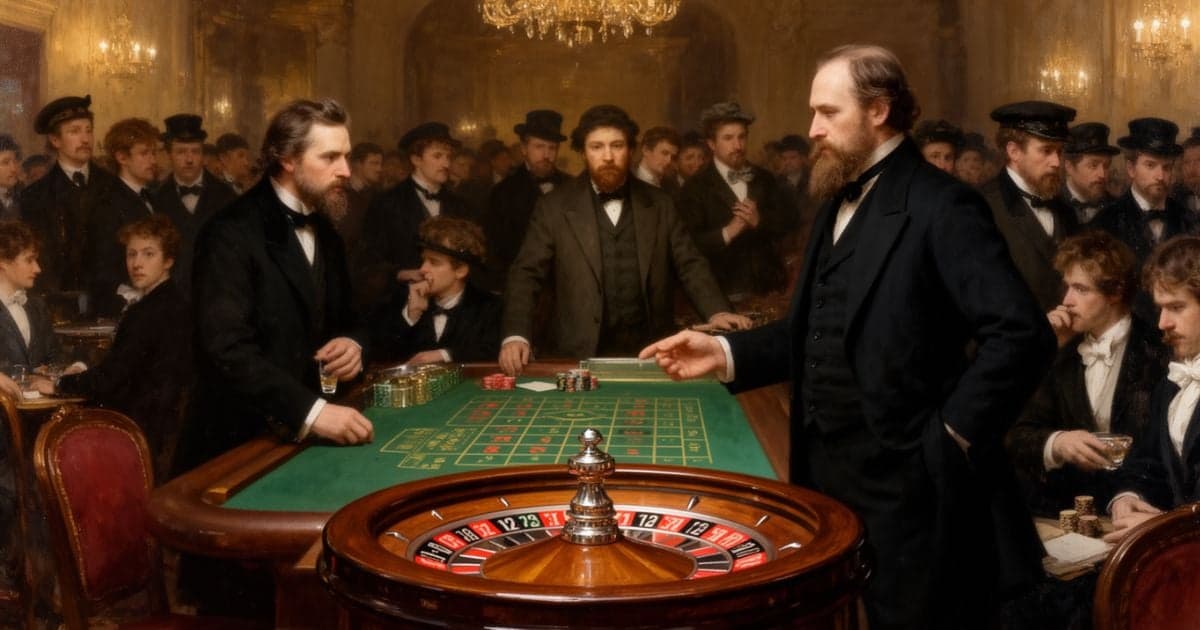
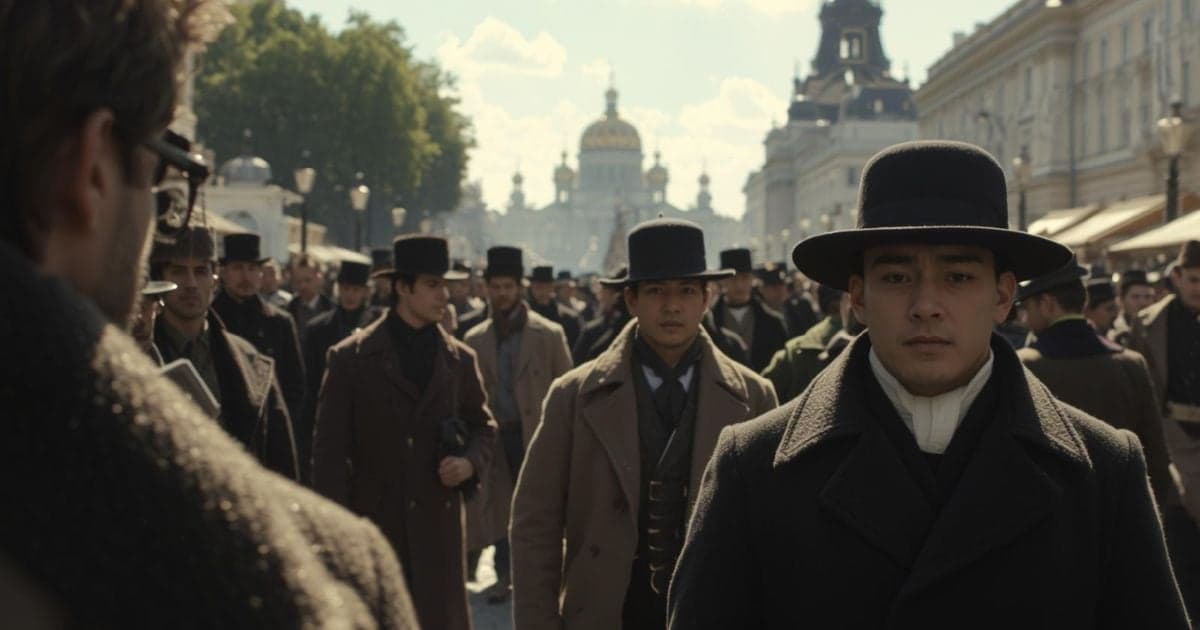
He wakes up the next morning and refuses the truth. Last night's emotion with Liza? "Such an attack of womanish hysteria, pah!" He has given her his address — it doesn't matter, let her come. But clearly, obviously, the most important matter is something else entirely: he must save his reputation in the eyes of Zverkov and Simonov as quickly as possible. He has actually forgotten Liza by morning. He borrows fifteen roubles from Anton Antonitch — in the best of humours, gives it at once on the first asking — and while signing the IOU, casually mentions that last night he had been "keeping it up with some friends at the Hôtel de Paris," giving a farewell party to a comrade, a friend of his childhood, a desperate rake from a good family with considerable means, witty, charming, a regular Lovelace, and they drank an extra half-dozen. "It went off all right; all this was uttered very easily, unconstrainedly and complacently." He promptly writes to Simonov — and is still lost in admiration of that letter. With tact and good-breeding, without superfluous words, he blames himself for all that happened, defending himself by alleging that he had been drunk on the first glass he drank before they arrived (while waiting between five and six). He begs Simonov's pardon, asks him to convey his explanations to the others, and mentions Zverkov, whom "I seemed to remember as though in a dream" he had insulted. He was particularly pleased with a certain lightness, almost carelessness, in the style — which gave them to understand, better than any argument, that he looked upon the whole thing as a gentleman serenely respecting himself should. "On a young hero's past no censure is cast!" Then, re-reading it, he catches himself: there is actually an aristocratic playfulness about it! Because he is an intellectual and cultivated man! Then: h'm. It was not the wine. He had not drunk anything at all between five and six while waiting for them. He had lied shamelessly. He was not ashamed now. "Hang it all though, the great thing was that I was rid of it." He pays Simonov the six roubles through Apollon (who becomes more respectful when he learns there is money in the letter) and goes out for a walk in the evening. He liked sauntering along the crowded business streets in the dusk — Myeshtchansky Street, Sadovy Street, Yusupov Garden — liked the cheap bustle, the bare prose, the working people going home with faces cross with anxiety. Tonight it only irritates him. He returns "completely upset, it was just as though some crime were lying on my conscience." Liza is what he cannot shake. He had dismissed everything else; his letter to Simonov satisfied him entirely. But Liza kept returning. The specific anxiety: she will see how he lives. "Yesterday I seemed such a hero to her, while now, h'm!" The American leather sofa with the stuffing sticking out. The dressing-gown that will not cover him. And Apollon, who is certain to insult her — and then he will be panic-stricken, begin bowing and scraping, pulling his dressing-gown round him, smiling, telling lies. "And to put on that dishonest lying mask again!" Then he fires up at himself: "Why dishonest? How dishonest? I was speaking sincerely last night. I remember there was real feeling in me, too. Her crying was a good thing, it will have a good effect." He cannot feel at ease. One image from the night before stands in his imagination and will not leave: the moment he struck a match and saw her pale, distorted face, with its look of torture. The pitiful, unnatural, distorted smile. He did not know then that fifteen years later he would still see Liza that way — always with that pitiful, distorted, inappropriate smile on her face at that minute. The next day he is ready again to call it all exaggeration, due to over-excited nerves. He always knew that weak point in himself. But the refrain persists: she will come, she is certain to come. The fury breaks through — at her, not himself. "The damnable romanticism of these pure hearts! Oh, the vileness — oh, the silliness!" If she had been near him at that moment he would have insulted her, spat at her, turned her out, struck her. Then he stops short and catches himself in great confusion. Then the fantasy. After nine o'clock, when she can no longer possibly come, the dreaming begins again — sweetly, this time. He becomes her salvation. She comes, he talks to her, develops her, educates her. She loves him passionately. He pretends not to notice — for effect. At last, transfigured, trembling, sobbing, she flings herself at his feet: he is her saviour. He launches into European, inexplicably lofty subtleties à la George Sand about influence and tyranny and indelicacy. "You are mine, you are my creation, you are pure, you are good, you are my noble wife. Into my house come bold and free, its rightful mistress there to be." Then we go abroad, and so on, and so on. "In fact, in the end it seemed vulgar to me myself, and I began putting out my tongue at myself." Meanwhile, Apollon: a portrait. An elderly, dignified man who worked part-time as a tailor. He despised the Underground Man beyond all measure and looked down upon him insufferably — looked down upon everyone. Flaxen, smoothly brushed hair, the tuft oiled with sunflower oil, the mouth compressed into the shape of the letter V. A pedant to the most extreme point, with the vanity only befitting Alexander of Macedon. In love with every button on his coat, every nail on his fingers — absolutely in love with them, and he looked it. A perfect tyrant in his behaviour: spoke very little, and when he glanced it was with a firm, majestically self-confident and invariably ironical look. Did his work with the air of doing the greatest favour. His lisp, which he was enormously proud of, believing it added greatly to his dignity. In the evenings, reading psalms aloud to himself behind his partition in a slow, singsong voice as though over the dead — a source of many battles. For seven years the Underground Man could not get rid of him. He is "as though chemically combined with my existence." The wages war: the Underground Man has been intending for two years to withhold Apollon's wages for a fortnight, purely to teach him not to give himself airs. The plan is specific: keep the seven roubles in a drawer, show him he has the money, but won't pay it — won't, simply because that is what he wishes, because he is master. If Apollon came respectfully, with bowed head, he might be softened. He holds out for four days. Then the staring campaign begins: long severe stares on meeting him, then the standing at the doorway one hand behind back and one foot behind the other with an utterly contemptuous look. If spoken to: no answer, then deliberate turning, deliberate withdrawal. Two hours later: the same. Then — if all that fails — long, deep sighs while looking at him, measuring by them the depths of his moral degradation. He raged and shouted and still was forced to do what Apollon wanted. Every time. This time the stares have barely begun when he loses his temper completely. The confrontation: he drags Apollon back, demands an answer, takes the seven roubles from the drawer and holds them up — you are not going to have it until you come respectfully with bowed head and beg my pardon. Apollon: "That cannot be." The Underground Man: "It shall be so, I give you my word of honour!" Apollon: "And there's nothing for me to beg your pardon for. Besides, you called me a torturer, for which I can summon you at the police-station for insulting behaviour." He commands Apollon to go fetch the police-officer. Apollon bursts into a guffaw, threading his needle without raising his head. "You are certainly out of your mind. Whoever heard of a man sending for the police against himself?" He clutches Apollon by the shoulder. Did not notice the door from the passage softly open. A figure comes in and stops, staring at them in perplexity. He glances — nearly swoons with shame — and rushes back to his room, clutching his hair with both hands, leaning his head against the wall and standing motionless. Two minutes later, Apollon's deliberate footsteps. "There is some woman asking for you." He stands aside and lets in Liza — staring at them sarcastically, refusing to leave. The clock whirrs and wheezes and strikes seven.

Coming Up in Chapter 20

With Liza standing in his doorway, witnessing his pathetic battle with his servant, the Underground Man must face the woman he tried to 'save' while his carefully constructed masks lie in ruins around him. The confrontation he's both feared and fantasized about is finally here.

Share it with friends

Previous ChapterNext Chapter
GO ADS FREE — JOIN US
Original text
complete·3,894 words
P

ART II — À Propos of the Wet Snow
Chapter VIII

It was some time, however, before I consented to recognise that truth. Waking up in the morning after some hours of heavy, leaden sleep, and immediately realising all that had happened on the previous day, I was positively amazed at my last night’s sentimentality with Liza, at all those “outcries of horror and pity.” “To think of having such an attack of womanish hysteria, pah!” I concluded. And what did I thrust my address upon her for? What if she comes? Let her come, though; it doesn’t matter.... But obviously, that was not now the chief and the most important matter: I had to make haste and at all costs save my reputation in the eyes of Zverkov and Simonov as quickly as possible; that was the chief business. And I was so taken up that morning that I actually forgot all about Liza.

1 / 19

Master this chapter. Complete your experience

Purchase the complete book to access all chapters and support classic literature

Buy at Powell's

Available in paperback, hardcover, and e-book formats

GO ADS FREE — JOIN US

Why This Matters

Connect literature to life

Skill: Recognizing Damage Control Spirals

This chapter teaches how to spot when your attempts to save face are actually creating bigger problems than the original embarrassment.

Practice This Today

This week, notice when you catch yourself crafting elaborate explanations for simple mistakes - try replacing the story with a direct apology instead.

GO ADS FREE — JOIN US

Now let's explore the literary elements.

Key Quotes & Analysis

"To think of having such an attack of womanish hysteria, pah! And what did I thrust my address upon her for?"

— Narrator

Context: Waking up the morning after his speech to Liza

The repudiation is instant and complete. The previous night's genuine feeling (or whatever it was) has been reclassified as weakness. "Womanish hysteria" is revealing — he is embarrassed not by what he did to her but by the fact that he felt something. Feeling is humiliating. The address is now just an administrative problem.

In Today's Words:

I can't believe I got emotional. And why did I give her my address? That was stupid.

"There is actually an aristocratic playfulness about it! And it's all because I am an intellectual and cultivated man! ... No, it was not the wine. I did not drink anything at all between five and six when I was waiting for them. I had lied to Simonov; I had lied shamelessly; and indeed I wasn't ashamed now."

— Narrator

Context: Admiring his letter to Simonov, then catching himself

The self-congratulation collapses in the space of two sentences. He praises himself for his cultivated polish, then immediately exposes the lie at the centre of it, then notes he is not ashamed of the lie. He is more proud of his performance than troubled by its dishonesty.

In Today's Words:

Masterful letter. Very sophisticated. Oh — also completely based on a lie. Not ashamed though.

"I did not know then, that fifteen years later I should still in my imagination see Liza, always with the pitiful, distorted, inappropriate smile which was on her face at that minute."

— Narrator

Context: The image of Liza's face when he lit the candle, which will not leave him

This is the narrator speaking from the future — and the word 'inappropriate' is exact. The smile was wrong for the situation, wrong for a face in that kind of anguish, wrong in a way that could only happen to someone who had learned to mask extremity. He has done something that will stay with him. He knows it already.

In Today's Words:

Fifteen years later I can still see her face. That smile that had no business being there.

"In fact, in the end it seemed vulgar to me myself, and I began putting out my tongue at myself."

— Narrator

Context: After the full George Sand salvation fantasy — educating Liza, becoming her noble saviour, the poetry

He runs the fantasy all the way to its conclusion — the speech about influence and tyranny, the noble wife, the going abroad — and then sees it for what it is. The tongue-out gesture is perfect: self-mockery as the final reflex. He cannot sustain a dream without immediately deflating it.

In Today's Words:

I imagined saving her completely. Then I saw how ridiculous that was and laughed at myself.

"If it had not been for Liza nothing of this would have happened."

— Narrator

Context: After the Apollon confrontation collapses at the exact moment Liza arrives

The logic is backwards and he half-knows it. Apollon did not cause Liza's visit. The wages war is his own doing, a distraction manufactured out of anxiety. He blames Liza for the humiliation of being seen at his worst — by the one person he had most wanted to appear heroic before.

In Today's Words:

He blames her for witnessing what he was already doing to himself.

Thematic Threads

Pride

In This Chapter

Underground Man's elaborate letter to Simonov transforms his humiliation into intellectual superiority

Development

Evolved from earlier defensive superiority to active image management and self-deception

In Your Life:

You might recognize this when you find yourself crafting the 'perfect' explanation for why you were late instead of just apologizing.

Power

In This Chapter

Psychological warfare with servant Apollon over wages becomes a battle for dominance and respect

Development

New focus on power dynamics in intimate relationships, not just social ones

In Your Life:

This shows up when you withhold something small (affection, information, help) to make someone else feel your displeasure.

Class

In This Chapter

Terror that Liza will see his squalid apartment and witness his actual social status

Development

Deepened from social climbing to desperate concealment of true circumstances

In Your Life:

You experience this when you're mortified about someone seeing your car, apartment, or family dynamics.

Identity

In This Chapter

Collision between the noble savior persona he presented to Liza and his petty reality with Apollon

Development

Multiple false identities now crashing into each other simultaneously

In Your Life:

This happens when different groups in your life meet and you realize you've been different people with each.

Control

In This Chapter

Elaborate schemes to manage everyone's perception while losing control of actual situations

Development

Escalated from internal control to desperate external manipulation

In Your Life:

You might see this when you spend more energy managing what people think about a situation than actually handling the situation.

GO ADS FREE — JOIN US

You now have the context. Time to form your own thoughts.

Discussion Questions

  1. 1

    The Underground Man wakes up mortified by his emotional breakdown with Liza and immediately focuses on damage control with his former classmates. What specific actions does he take to try to salvage his reputation?

    analysis • surface
  2. 2

    Why does the Underground Man engage in a power struggle with his servant Apollon, and how does this connect to his feelings about Liza potentially visiting?

    analysis • medium
  3. 3

    Think about a time when someone made a mistake at work or in a relationship. Have you seen people spend more energy covering up the mistake than fixing it? What usually happens in these situations?

    application • medium
  4. 4

    When you feel exposed or embarrassed, what's your first instinct - to admit the mistake quickly or to protect your image? What have you learned works better in the long run?

    application • deep
  5. 5

    The Underground Man's attempts to control his image actually make him more vulnerable, not less. What does this reveal about the relationship between authenticity and real power in relationships?

    reflection • deep

Critical Thinking Exercise

10 minutes

Track Your Damage Control Patterns

Think of a recent situation where you felt embarrassed or made a mistake. Write down your immediate reaction and then trace what happened next. Did you focus on fixing the problem or managing how others saw you? Map out the actual consequences of your damage control efforts versus what might have happened if you'd just owned the mistake upfront.

Consider:

  • •Notice the difference between protecting your reputation and protecting your ego
  • •Consider how much mental energy went into managing perceptions versus solving problems
  • •Think about which approach actually earned more respect from others

Journaling Prompt

Write about a time when someone admitted a mistake to you honestly and directly. How did that affect your opinion of them? Now compare that to a time when someone clearly tried to cover up or spin their mistake. What did each approach teach you about handling your own mistakes?

GO ADS FREE — JOIN US

Coming Up Next...

Chapter 20: The Moment of Truth Arrives

With Liza standing in his doorway, witnessing his pathetic battle with his servant, the Underground Man must face the woman he tried to 'save' while his carefully constructed masks lie in ruins around him. The confrontation he's both feared and fantasized about is finally here.
Continue to Chapter 20
Previous
The Cruel Truth About Salvation
Contents
Next
The Moment of Truth Arrives

Continue Exploring

Notes from Underground Study GuideTeaching ResourcesEssential Life IndexBrowse by ThemeAll Books

You Might Also Like

Crime and Punishment cover

Crime and Punishment

Fyodor Dostoevsky

Also by Fyodor Dostoevsky

The Brothers Karamazov cover

The Brothers Karamazov

Fyodor Dostoevsky

Also by Fyodor Dostoevsky

The Idiot cover

The Idiot

Fyodor Dostoevsky

Also by Fyodor Dostoevsky

Jane Eyre cover

Jane Eyre

Charlotte Brontë

Explores personal growth

Browse all 47+ books
GO ADS FREE — JOIN US

Share This Chapter

Know someone who'd enjoy this? Spread the wisdom!

TwitterFacebookLinkedInEmail

Read ad-free with Prestige

Get rid of ads, unlock study guides and downloads, and support free access for everyone.

Subscribe to PrestigeCreate free account
Intelligence Amplifier
Intelligence Amplifier™Powering Wide Reads

Exploring human-AI collaboration through books, essays, and philosophical dialogues. Classic literature transformed into navigational maps for modern life.

2025 Books

→ The Amplified Human Spirit→ The Alarming Rise of Stupidity Amplified→ San Francisco: The AI Capital of the World
Visit intelligenceamplifier.org
hello@widereads.com

WideReads Originals

→ You Are Not Lost→ The Last Chapter First→ The Lit of Love→ Wealth and Poverty→ 10 Paradoxes in the Classics · coming soon
Arvintech
arvintechAmplify your Mind
Visit at arvintech.com

Navigate

  • Home
  • Library
  • Essential Life Index
  • How It Works
  • Subscribe
  • Account
  • About
  • Contact
  • Authors
  • Suggest a Book
  • Landings

Made For You

  • Students
  • Educators
  • Families
  • Readers
  • Literary Analysis
  • Finding Purpose
  • Letting Go
  • Recovering from a Breakup
  • Corruption
  • Gaslighting in the Classics

Newsletter

Weekly insights from the classics. Amplify Your Mind.

Legal

  • Privacy Policy
  • Terms of Service
  • Cookie Policy
  • Accessibility

Why Public Domain?

We focus on public domain classics because these timeless works belong to everyone. No paywalls, no restrictions—just wisdom that has stood the test of centuries, freely accessible to all readers.

Public domain books have shaped humanity's understanding of love, justice, ambition, and the human condition. By amplifying these works, we help preserve and share literature that truly belongs to the world.

A Pilgrimage

Powell's City of Books

Portland, Oregon

If you ever find yourself in Portland, walk to the corner of Burnside and 10th. The building takes up an entire city block. Inside is over a million books, new and used on the same shelf, organized by color-coded rooms with names like the Rose Room and the Pearl Room. You can lose an afternoon. You can lose a weekend. You will find a book you have been looking for your whole life, and three you did not know existed.

It is a pilgrimage. We cannot find a bookstore like it anywhere on earth. If you read the classics, and you ever get the chance, go. It belongs on every reader's bucket list.

Visit powells.com

We are not in any way affiliated with Powell's. We are just a very big fan.

© 2026 Wide Reads™. All Rights Reserved.

Intelligence Amplifier™ and Wide Reads™ are proprietary trademarks of Arvin Lioanag.

Copyright Protection: All original content, analyses, discussion questions, pedagogical frameworks, and methodology are protected by U.S. and international copyright law. Unauthorized reproduction, distribution, web scraping, or use for AI training is strictly prohibited. See our Copyright Notice for details.

Disclaimer: The information provided on this website is for general informational and educational purposes only and does not constitute professional, legal, financial, or technical advice. While we strive to ensure accuracy and relevance, we make no warranties regarding completeness, reliability, or suitability. Any reliance on such information is at your own risk. We are not liable for any losses or damages arising from use of this site. By using this site, you agree to these terms.