He wakes up the next morning and refuses the truth. Last night's emotion with Liza? "Such an attack of womanish hysteria, pah!" He has given her his address, it doesn't matter, let her come. But clearly, obviously, the most important matter is something else entirely: he must save his reputation in the eyes of Zverkov and Simonov as quickly as possible. He has actually forgotten Liza by morning.
He borrows fifteen roubles from Anton Antonitch, in the best of humours, gives it at once on the first asking, and while signing the IOU, casually mentions that last night he had been "keeping it up with some friends at the Hôtel de Paris," giving a farewell party to a comrade, a friend of his childhood, a desperate rake from a good family with considerable means, witty, charming, a regular Lovelace, and they drank an extra half-dozen. "It went off all right; all this was uttered very easily, unconstrainedly and complacently."
He promptly writes to Simonov, and is still lost in admiration of that letter. With tact and good-breeding, without superfluous words, he blames himself for all that happened, defending himself by alleging that he had been drunk on the first glass he drank before they arrived (while waiting between five and six). He begs Simonov's pardon, asks him to convey his explanations to the others, and mentions Zverkov, whom "I seemed to remember as though in a dream" he had insulted. He was particularly pleased with a certain lightness, almost carelessness, in the style, which gave them to understand, better than any argument, that he looked upon the whole thing as a gentleman serenely respecting himself should. "On a young hero's past no censure is cast!" Then, re-reading it, he catches himself: there is actually an aristocratic playfulness about it! Because he is an intellectual and cultivated man! Then: h'm. It was not the wine. He had not drunk anything at all between five and six while waiting for them. He had lied shamelessly. He was not ashamed now. "Hang it all though, the great thing was that I was rid of it."
He pays Simonov the six roubles through Apollon (who becomes more respectful when he learns there is money in the letter) and goes out for a walk in the evening. He liked sauntering along the crowded business streets in the dusk, Myeshtchansky Street, Sadovy Street, Yusupov Garden, liked the cheap bustle, the bare prose, the working people going home with faces cross with anxiety. Tonight it only irritates him. He returns "completely upset, it was just as though some crime were lying on my conscience."
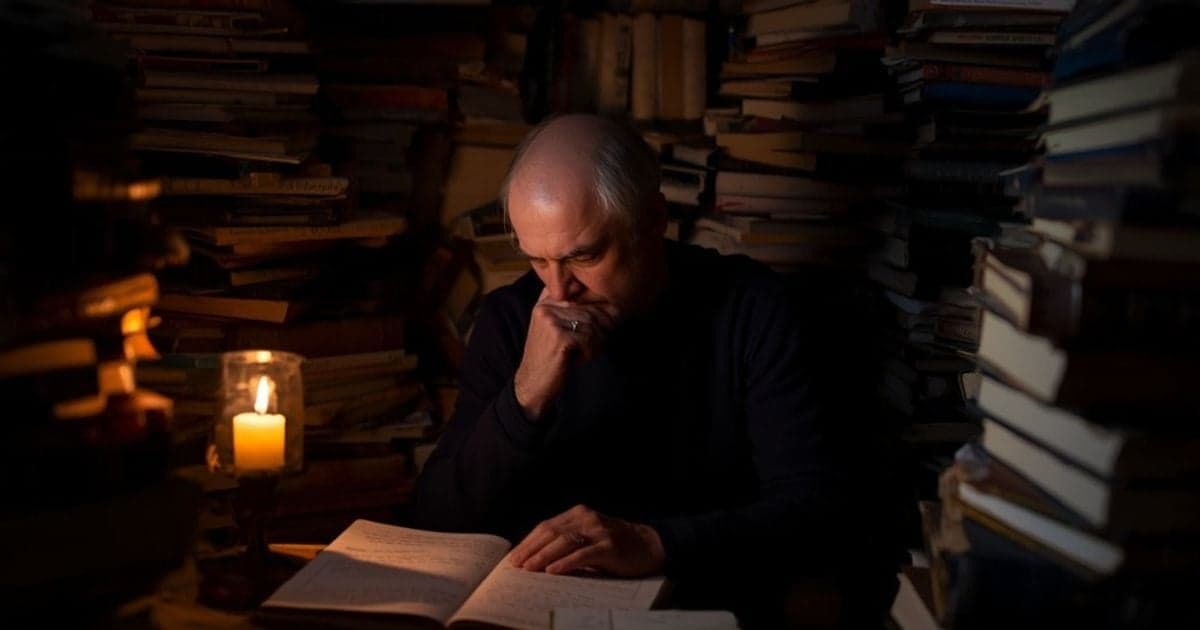
Liza is what he cannot shake. He had dismissed everything else; his letter to Simonov satisfied him entirely. But Liza kept returning. The specific anxiety: she will see how he lives. "Yesterday I seemed such a hero to her, while now, h'm!" The American leather sofa with the stuffing sticking out. The dressing-gown that will not cover him. And Apollon, who is certain to insult her, and then he will be panic-stricken, begin bowing and scraping, pulling his dressing-gown round him, smiling, telling lies. "And to put on that dishonest lying mask again!" Then he fires up at himself: "Why dishonest? How dishonest? I was speaking sincerely last night. I remember there was real feeling in me, too. Her crying was a good thing, it will have a good effect." He cannot feel at ease.
One image from the night before stands in his imagination and will not leave: the moment he struck a match and saw her pale, distorted face, with its look of torture. The pitiful, unnatural, distorted smile. He did not know then that fifteen years later he would still see Liza that way, always with that pitiful, distorted, inappropriate smile on her face at that minute.
The next day he is ready again to call it all exaggeration, due to over-excited nerves. He always knew that weak point in himself. But the refrain persists: she will come, she is certain to come. The fury breaks through, at her, not himself. "The damnable romanticism of these pure hearts! Oh, the vileness, oh, the silliness!" If she had been near him at that moment he would have insulted her, spat at her, turned her out, struck her. Then he stops short and catches himself in great confusion.
Then the fantasy. After nine o'clock, when she can no longer possibly come, the dreaming begins again, sweetly, this time. He becomes her salvation. She comes, he talks to her, develops her, educates her. She loves him passionately. He pretends not to notice, for effect. At last, transfigured, trembling, sobbing, she flings herself at his feet: he is her saviour. He launches into European, inexplicably lofty subtleties à la George Sand about influence and tyranny and indelicacy. "You are mine, you are my creation, you are pure, you are good, you are my noble wife. Into my house come bold and free, its rightful mistress there to be." Then we go abroad, and so on, and so on. "In fact, in the end it seemed vulgar to me myself, and I began putting out my tongue at myself."
Meanwhile, Apollon: a portrait. An elderly, dignified man who worked part-time as a tailor. He despised the Underground Man beyond all measure and looked down upon him insufferably, looked down upon everyone. Flaxen, smoothly brushed hair, the tuft oiled with sunflower oil, the mouth compressed into the shape of the letter V. A pedant to the most extreme point, with the vanity only befitting Alexander of Macedon. In love with every button on his coat, every nail on his fingers, absolutely in love with them, and he looked it. A perfect tyrant in his behaviour: spoke very little, and when he glanced it was with a firm, majestically self-confident and invariably ironical look. Did his work with the air of doing the greatest favour. His lisp, which he was enormously proud of, believing it added greatly to his dignity. In the evenings, reading psalms aloud to himself behind his partition in a slow, singsong voice as though over the dead, a source of many battles. For seven years the Underground Man could not get rid of him. He is "as though chemically combined with my existence."
The wages war: the Underground Man has been intending for two years to withhold Apollon's wages for a fortnight, purely to teach him not to give himself airs. The plan is specific: keep the seven roubles in a drawer, show him he has the money, but won't pay it, won't, simply because that is what he wishes, because he is master. If Apollon came respectfully, with bowed head, he might be softened. He holds out for four days. Then the staring campaign begins: long severe stares on meeting him, then the standing at the doorway one hand behind back and one foot behind the other with an utterly contemptuous look. If spoken to: no answer, then deliberate turning, deliberate withdrawal. Two hours later: the same. Then, if all that fails, long, deep sighs while looking at him, measuring by them the depths of his moral degradation. He raged and shouted and still was forced to do what Apollon wanted. Every time.
This time the stares have barely begun when he loses his temper completely. The confrontation: he drags Apollon back, demands an answer, takes the seven roubles from the drawer and holds them up, you are not going to have it until you come respectfully with bowed head and beg my pardon. Apollon: "That cannot be." The Underground Man: "It shall be so, I give you my word of honour!" Apollon: "And there's nothing for me to beg your pardon for. Besides, you called me a torturer, for which I can summon you at the police-station for insulting behaviour." He commands Apollon to go fetch the police-officer. Apollon bursts into a guffaw, threading his needle without raising his head. "You are certainly out of your mind. Whoever heard of a man sending for the police against himself?"
He clutches Apollon by the shoulder. Did not notice the door from the passage softly open. A figure comes in and stops, staring at them in perplexity. He glances, nearly swoons with shame, and rushes back to his room, clutching his hair with both hands, leaning his head against the wall and standing motionless.
Two minutes later, Apollon's deliberate footsteps. "There is some woman asking for you." He stands aside and lets in Liza, staring at them sarcastically, refusing to leave. The clock whirrs and wheezes and strikes seven.