Chapter 12
The Underground Man at Twenty-Four
PART II — À Propos of the Wet Snow Chapter I At that time I was only twenty-four. My life was even then gloomy, ill-regulated, and as solitary as that of a savage. I made friends with no one and positively avoided talking, and buried myself more and more in my hole. At work in the office I never looked at anyone, and was perfectly well aware that my companions looked upon me, not only as a queer fellow, but even looked upon me—I always fancied this—with a sort of loathing. I sometimes wondered why it was that nobody except…
Public-domain chapter text, formatted for reading.
Master this chapter. Complete your experience
Purchase the complete book to access all chapters and support classic literature
Available in paperback, hardcover, and e-book formats
Now let's explore the literary elements.
Key Quotes & Analysis
"Owing to my unbounded vanity and to the high standard I set for myself, I often looked at myself with furious discontent, which verged on loathing, and so I inwardly attributed the same feeling to everyone."
Context: Realising why he believed everyone at the office looked at him with disgust
This is one of the chapter's sharpest psychological observations. The colleagues with terrible faces and dirty uniforms were indifferent to how they appeared — and so no one cared about them. The Underground Man's torment was not produced by others' contempt but by his own, projected outward. He was the source of his own persecution.
In Today's Words:
My vanity was so extravagant and my standards for myself so impossibly high that I never actually measured up to my own image of what I should be, which meant I was perpetually ashamed, which meant I needed somewhere to direct that shame, which is where the officer came in.
"Every decent man of our age must be a coward and a slave. That is his normal condition. Of that I am firmly persuaded. Only donkeys and mules are valiant, and they only till they are pushed up to the wall."
Context: Declaring himself a coward and a slave — and immediately universalising it
The move from self-diagnosis to universal law is characteristic. He is not confessing a personal failing — he is arguing that consciousness and decency produce cowardice structurally. The donkeys and mules line is darkly funny: actual courage belongs to creatures with no inner life to protect.
In Today's Words:
Every thoughtful person I have ever known lives this way: cowardly in the situations that actually matter, slavishly performing whatever role the social order requires, and calling this normalcy. I am not different from the rest of you. I am merely more honest about the condition we share.
"I could have forgiven blows, but I could not forgive his having moved me without noticing me."
Context: On the officer who moved him aside in the billiard room without a word or glance
The hierarchy of insults is exact. Physical violence at least acknowledges you as a presence, a threat, something worth responding to. Being moved like furniture is worse — it means you don't register at all. The Underground Man would have preferred to be hit.
In Today's Words:
He barely touched me. He moved me aside the way you move a chair, not with hostility but with the casual efficiency of someone clearing a path. And I could not forgive him because being moved aside without even being registered as a person worth noticing is a different order of injury than being insulted.
"Why must you invariably be the first to move aside? There's no regulation about it, there's no written law. Let the making way be equal as it usually is when refined people meet."
Context: Waking at 3am in hysterical rage after years of moving aside for the officer on Nevsky Prospect
The argument is technically correct — there is no written rule. But everyone, including him, knows it doesn't work that way. The question he cannot answer is why he himself always flinches first. The 3am timing is precise: this is the thought that won't let him sleep, the injury that won't stop bleeding.
In Today's Words:
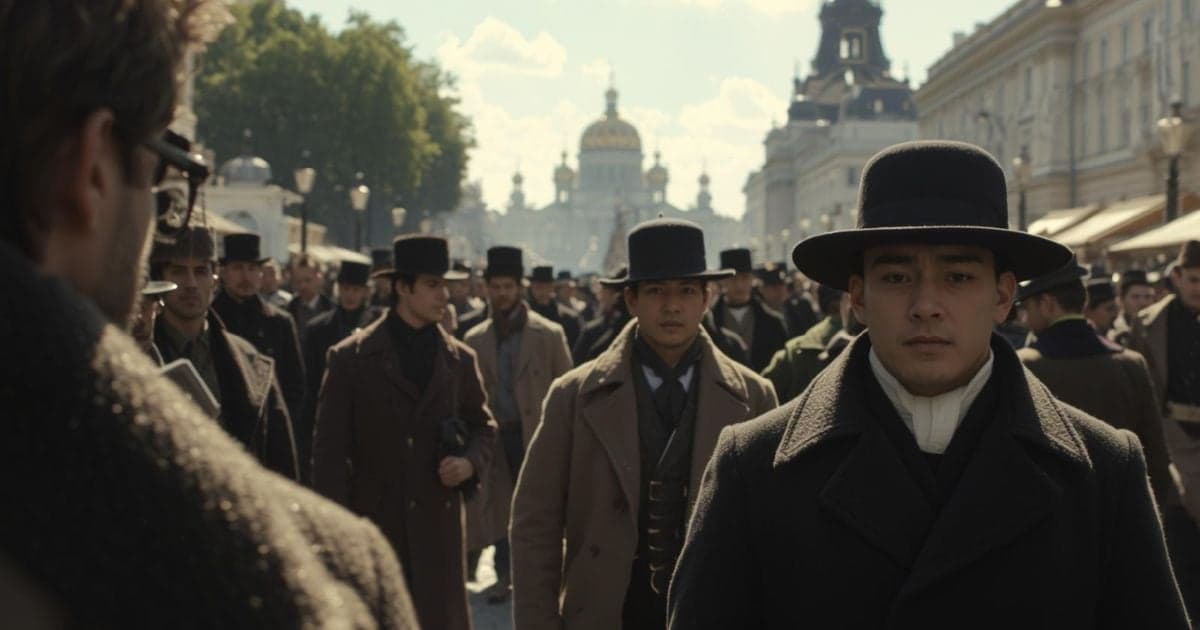
I walked the same street, at the same time, in the same direction, hoping we would collide. For two years. And when we finally did, and I held my ground and he moved aside this time, he did not even notice. He walked on. I had been preparing for a confrontation with someone who was not having one.
Thematic Threads
Social Invisibility
In This Chapter
The Underground Man feels treated 'like a fly' by the officer, experiencing the pain of being seen as insignificant
Development
Builds on earlier themes of isolation, now showing how social invisibility creates desperate need for recognition
In Your Life:
You might recognize this in how certain people make you feel invisible or unimportant in professional or social settings
Class Anxiety
In This Chapter
His obsession with buying expensive clothes and beaver collar to 'look equal' before confronting the officer
Development
Expands class themes to show how external markers become tools for claiming dignity
In Your Life:
You might see this in your own impulses to 'dress the part' or buy things to feel worthy in certain social situations
Revenge Fantasy
In This Chapter
Three years of elaborate planning, stalking, and story-writing all focused on one moment of engineered collision
Development
Introduced here as a new manifestation of his underground thinking patterns
In Your Life:
You might recognize this in how you replay conversations, planning perfect comebacks, or engineering ways to 'show' people who wronged you
Self-Deception
In This Chapter
He convinces himself this shoulder-bump victory represents genuine equality and dignity
Development
Continues his pattern of creating elaborate justifications for his behavior
In Your Life:
You might see this in how you convince yourself that small symbolic victories actually address deeper issues in your relationships or work
Wounded Pride
In This Chapter
The casual dismissal by the officer becomes a defining moment that shapes years of his life
Development
Shows how his hypersensitivity transforms minor interactions into major psychological events
In Your Life:
You might recognize this in how certain moments of feeling dismissed or overlooked continue to sting and influence your behavior long afterward
You now have the context. Time to form your own thoughts.
Discussion Questions
This is not a test. Five prompts guide you through the chapter, from how it opens to how it closes, so you notice context and rhythm rather than facts to memorize. Sit with each question in your own words. When you see "One way to read it," treat it as a starting point, not the only answer.
- 1
The officer nudges the Underground Man off the pavement without looking at him. Why does being moved aside without being noticed make the offense so unbearable?
analysis • surfaceOne way to read it
Being shoved and acknowledged would at least confirm that he exists as a person worth moving around. Being moved aside without a glance means the officer did not register him as a presence at all. It is erasure rather than insult, and erasure is harder to respond to because there is no one to confront.
- 2
He plans revenge for two years, rehearses it obsessively, achieves it through a shoulder collision, and the officer does not notice. What does the officer's non-response reveal about the nature of the grudge?
analysis • mediumOne way to read it
The revenge was never actually about the officer. His indifference to the collision confirms that the injury was always the Underground Man's own problem, a wound to a sense of dignity that no external act could repair. The grudge was a way of asserting existence; the resolution was always going to feel hollow.
- 3
The Underground Man knew from the start that his pursuit was beneath him, yet he could not stop. When have you pursued something you simultaneously knew was pointless?
application • mediumOne way to read it
The chapter suggests the pursuit continues because stopping would require admitting that the original injury cannot be addressed. Continuing feels like maintaining dignity even when it costs more than giving up would. The grudge provides structure that stopping takes away.
- 4
He spends two years constructing an identity around this grievance. What do chronic grievances actually provide to the people who hold them?
application • deepOne way to read it
They provide structure, purpose, and a narrative in which you are the wronged protagonist with a clear antagonist. Without the grievance, the Underground Man would have to face the formlessness of his life directly. The grudge is not just an emotion; it is an organizing principle substituting for something larger.
- 5
The chapter covers nine years of the Underground Man's life compressed around this single episode. What does centering Part II on this particular story tell us about what Dostoevsky thinks actually defines a person's inner life?
reflection • deepOne way to read it
Dostoevsky is arguing that the incidents that define us are not the big public events but the private humiliations we cannot release. The encounter with the officer is objectively minor. That it occupies years of mental life is the point: consciousness magnifies small wounds into architectures.
Critical Thinking Exercise
Rewrite the Revenge Fantasy
Think of a time someone treated you dismissively or made you feel invisible. Write two versions of your response: first, describe the elaborate revenge fantasy you created (or could create). Then rewrite the same situation showing how you could address it directly or let it go with dignity intact.
Consider:
- •Notice how much mental energy the revenge fantasy requires versus direct action
- •Consider what you're really trying to prove and whether the other person even remembers the incident
- •Ask yourself: 'Am I fighting for my actual needs or just my wounded pride?'
Journaling Prompt
Write about a time when you got the revenge or recognition you wanted. How did it actually feel? What did you learn about manufactured dignity versus authentic self-worth?
Coming Up Next...
Chapter 13: Escape into Dreams and Forced Social Contact
Having achieved his strange victory over the officer, the Underground Man's story takes a new turn. The consequences of his obsessive behavior and his continued struggle with human connection will lead him into even more complex psychological territory.