
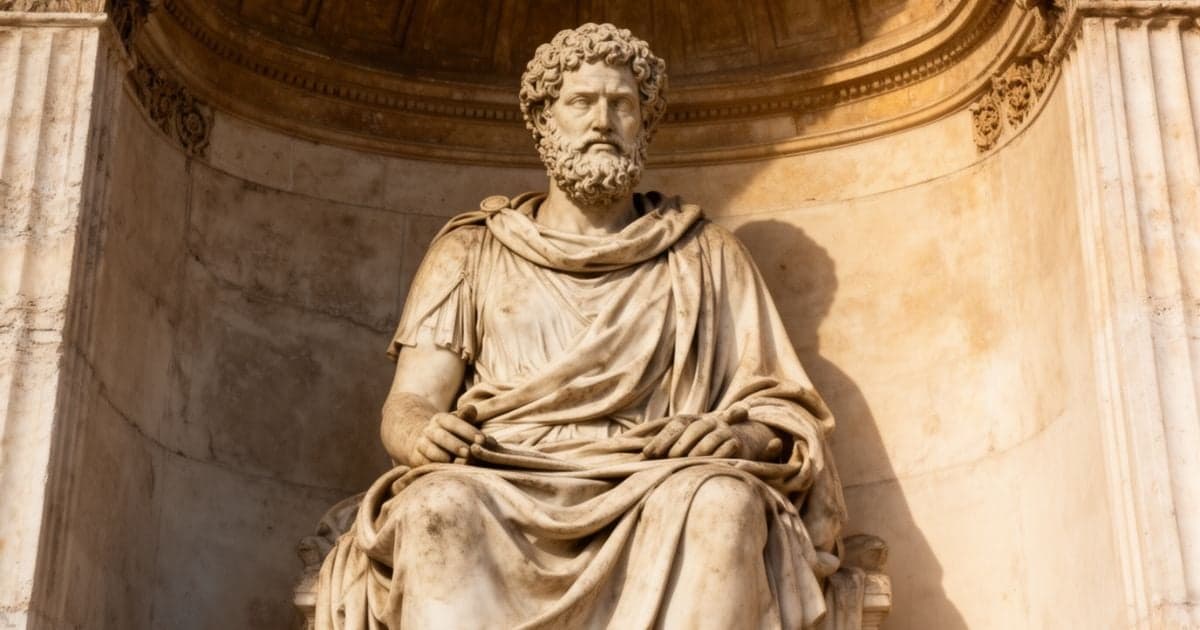
Before the idle man walks in, Marcus names him. An unthankful man. A railer. A crafty, false, or envious man. The sentence is written in the morning, at Granua, as a drill, not as a complaint after the fact. They act from ignorance of good and evil. You share reason. Anger at them is as irrational as hating a stone for falling. The first injury he is trying to prevent is not their vice. It is his own shock, which would hand them the inner government before breakfast.
The rest of the journal keeps closing the infection routes. The best revenge is not to become like them. Wickedness is what you have already seen in every town and gossip. When someone trespasses, ask what they took to be good. Injustice hurts the sinner; humans are the creatures who forget one another. Speak to a son: we were not born to annoy each other; the hurt will be yours. Care for the unthankful anyway. People will follow their opinions. Do not wait for a conversion before you speak justly.
If a colleague, a relative, or a crowd keeps astonishing you in the same key, you are paying twice: once for their conduct, and again for a theory that today would be different. The skill is the dawn update. Expect the weather. Refuse the matching vice. Keep kinship without requiring them to become reasonable on your timetable. Surprise is optional. Catching their illness is not.
The Central Lesson
Other people will fail you. Marcus treats that as weather, not as a plot twist. At Granua he names the idle, the unthankful, and the envious before they arrive, so shock cannot seize the day. They act from a mistaken map of good. You share reason; hating them is like hating a stone. The work after dawn is refusing infection: do not become like them, do not cast this Tuesday as a premiere, do not wait for their conversion before you speak justly. Kinship without naivete. Care without a contract that they improve. Surprise is the wound you can still decline.
Applying This to Your Life
Run the Granua List
Before a hard day, name the types you are likely to meet: idle, unthankful, envious, false. You are not cursing them. You are retiring the fantasy that the room will be staffed by your better angels. Then decide who you will be when they arrive.
Watch for Matching
After the slight, check your tone. If it now resembles the sample you hated, Book Six has already named the loss. The best revenge is remaining unlike them. That is a behavioural test, not a slogan.
Keep Kinship Without the Premiere
This Tuesday is not a unique production. Ask what good they thought they were chasing. You may still refuse the harm. You do not have to build a religion in which you were singled out. Care can survive without their improvement.
Other lessons in this book
More life-skill deep dives from the same classic.
Building Earned Authority
From My Grandfather Verus
Credit Verus, Rusticus, and Antoninus by name: gentleness, Epictetus, and a ruler who never mistakes flattery for respect.
6 chapters·Explore AnalysisControlling the Inner Fortress
You Do Not Need the Seashore
Retreat into the mind Book Four trains: obstacles feed a strong fire, and you do not need the seashore if the principles are already stored.
6 chapters·Explore AnalysisFacing Mortality Without Panic
Hippocrates Died Sick
Sit with Hippocrates dying sick, Alexander and the mule-driver both gone, and time that will not return.
6 chapters·Explore AnalysisGetting Up and Doing the Work
It Is a Man's Work
Talk yourself out of the warm bed the way Book Five does: bees already work, rest has a stint, and duty does not.
6 chapters·Explore AnalysisSeparating What You Control
The Tumult Is Opinion
Keep ruling reason from becoming a slave to appetite, reputation, or other people's opinions, and release what is not yours.
6 chapters·Explore Analysis
Continue exploring
The same lessons in other books
See how other books teach the same life skills.

Les Misérables: Essential Edition
Navigating Poverty and Social ClassTrace Fantine from 1817 hope to factory gossip, and the class that treats need as indictment.
The Essays of Montaigne
Choosing Real FriendshipHear essay 27 answer La Boétie: because it was he, because it was I.
Siddhartha
Living in the PresentStay at the ferry until past and future stop being places you can live.
Where the lesson lives in the book
Name Them Before Dawn
After the roll of teachers, the notebook turns to the day. Betimes in the morning, say to yourself: this day you will have to do with an idle curious man, an unthankful man, a railer, a crafty, false, or envious man. They are afflicted with these vices through ignorance of good and evil. You share reason with them. To be angry is as irrational as hating a stone for falling. The drill is written at Granua, before the idle and the envious arrive. Surprise is what he is trying to kill first.
Key Insight:
People who shock you twice a week are not surprising. Your model is. Marcus updates the model at dawn so the first failure of the day cannot steal the inner government. Preparation is not cynicism. It is refusing to treat ordinary human weather as a personal insult.
“Betimes in the morning say to thyself, This day I shalt have to do with an idle curious man, with an unthankful man, a railer, a crafty, false, or an envious man;”
Do Not Become the Sample
The best kind of revenge is not to become like them. You are wounded and you do not exclaim, do not turn the other person into a permanent enemy who is only waiting to harm you. No man can hinder you from living as your nature requires. The morning list named the vices. Book Six names the infection route: matching them. That is how a difficult person colonizes a second life.
Key Insight:
Resentment is often a costume of the thing you hate. If the ungrateful man gets to pick your tone for the afternoon, he has already succeeded at more than the original slight. The counter is not sweetness as brand. It is remaining unlike the sample.
“The best kind of revenge is, not to become like unto them.”
You Have Already Seen This
What is wickedness? That which you have already seen, many times, in towns, houses, old stories, and fresh gossip. There is nothing new. All things are usual and brief. When someone trespasses, consider what he supposed to be good and evil when he did it. True living is more like a wrestler's practice than a dancer's. You can grant yourself what men beg for after death: to see the puppet show and still stand.
Key Insight:
Outrage grows when you treat this Tuesday as a premiere. Marcus generalizes on purpose. The generalization does not excuse the wrong. It removes the specialness that turns disappointment into a career. Conserve the energy for what can still be steered.
“What is wickedness? It is that which many time and often thou hast already seen and known in the world.”
Injustice Hurts the Sinner First
To be unjust is to be impious: rational creatures were made for one another, to help and not harm. Willing lies are injustice. Unwilling error still wars against truth. Sin hurts the sinner; omission can be unjust too. Beasts flock and stars sympathize; humans forget one another. Wipe fancy. Keep the mind free. The person who failed you is not a new species. He is a member of a kind that keeps missing its own assignment.
Key Insight:
You do not have to like the harm to locate it accurately. People chase a mistaken good. That fact does not make you their nurse. It does keep you from building a theology in which you were uniquely selected for injury.
“Those creatures that are reasonable, are now the only creatures that have forgotten their natural affection and inclination of one towards another.”
We Were Not Born for This
He imagines speaking to a son: we were not born to hurt and annoy one another; it will be thy hurt, not mine. Tomorrow, perchance, that person shall die. The line is both boundary and kinship. You can refuse the annoyance without pretending the other person is a different animal. The morning drill and this address are the same practice at two hours of the day.
Key Insight:
Firmness that needs contempt is still entangled. Marcus holds two facts: they will fail you, and they are still kin enough that becoming like them is a loss. The skill is the double hold, not the choice of only one.
“My son, we were not born for this, to hurt and annoy one another; it will be thy hurt not mine, my son:”
Care for the Unthankful Anyway
No time to read, he tells himself, but there is time not to wrong yourself, to scorn vainglory, and to care for the unthankful. Stop complaining about palace trouble. People will do what their opinions dictate; do not be diverted from speaking justly and kindly. The drill is not a license to withdraw into superiority. It is a way to keep doing the social work without needing the other person to become reasonable first.
Key Insight:
If your kindness required their improvement, it was a contract, not a practice. Marcus keeps the care and drops the surprise. That is how you remain in a court, a team, or a family without letting the worst person set the weather.