
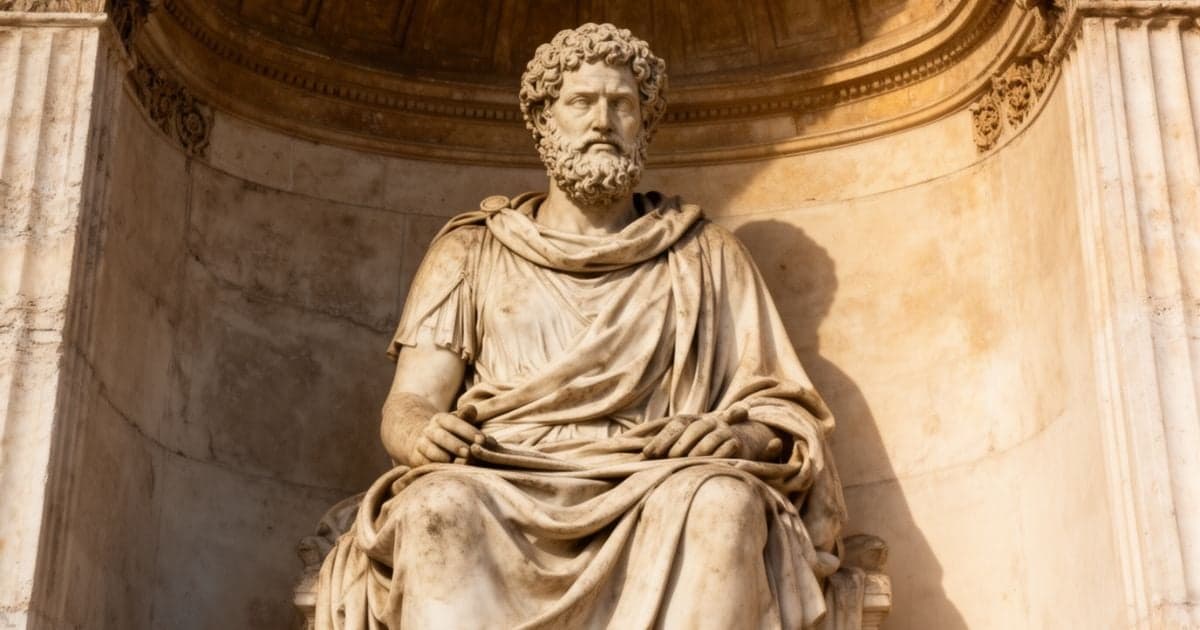
The most powerful man in the known world does not open his private notebook with a conquest. He opens with a grandfather. Verus taught gentleness. A mother taught a spare diet. Rusticus told him the life needed a cure, not a costume, and put Epictetus in his hands. Antoninus worked without a troop of guards. Fronto showed him the fraud that lives in courts. This is not charm. It is inventory. Authority that can be inspected starts as a debt you are willing to write down before anyone asks.
The later books keep testing whether he will trade that inventory for a better lighting plot. Strip the robe and it is dyed wool. Alexander and the mule-driver end in the same place. Empire has already made the philosopher's title hard to recover; he says so, and then asks only that remaining life follow nature. Book Ten is harsher still: stop disputing the signs of a good man. Be one. The last page does not award him the title. It asks the present estate of his understanding, with the luggage stripped.
If you have ever rehearsed a self-made origin story for a room that would have believed a truer one, you already know the temptation. The skill is not public gratitude as branding. It is keeping the actual teachers in the sentence so the next decision cannot pretend it had no parents. Name the materials. Drop the long robe. Spend the remaining hours on the man, not on the argument about the man.
The Central Lesson
Earned authority is not a self-made speech. It is a receipt. Marcus names Verus, Rusticus, and Antoninus before he claims a single victory, then spends the rest of the notebook refusing the costume those names would make easy: the long robe, the gala, the philosopher's title empire already spoiled. Strip the wool. Admit the path you missed. Stop disputing the signs of a good man and be one. The last question is not who will remember you. It is the present estate of your understanding, luggage off, purple optional. If the respect you want requires the lighting to stay perfect, it was never respect.
Applying This to Your Life
Write the Receipt First
Before you describe a win, list the people and habits that made it possible. Book One is the form. If a name is missing because it would complicate the myth, that is the name the myth was built to hide.
Separate Rank from Wisdom
Antoninus is the model of a ruler who does not confuse flattery with respect. Ask where your title is doing work your judgment has not earned. Put the duty in that gap, not a better performance of certainty.
Stop Workshopping the Signs
Book Ten's instruction is blunt. If you are still arguing what a good leader looks like, you are postponing the day that would have to match the list. Be such. Then run Book Twelve's audit: what is the present estate of your understanding, without the luggage.
Other lessons in this book
More life-skill deep dives from the same classic.
Controlling the Inner Fortress
You Do Not Need the Seashore
Retreat into the mind Book Four trains: obstacles feed a strong fire, and you do not need the seashore if the principles are already stored.
6 chapters·Explore AnalysisFacing Mortality Without Panic
Hippocrates Died Sick
Sit with Hippocrates dying sick, Alexander and the mule-driver both gone, and time that will not return.
6 chapters·Explore AnalysisGetting Up and Doing the Work
It Is a Man's Work
Talk yourself out of the warm bed the way Book Five does: bees already work, rest has a stint, and duty does not.
6 chapters·Explore AnalysisMorning Preparation for Difficult People
An Idle Curious Man
Use the Granua drill before the day begins: expect the idle and the envious, and refuse to hate a stone for falling.
6 chapters·Explore AnalysisSeparating What You Control
The Tumult Is Opinion
Keep ruling reason from becoming a slave to appetite, reputation, or other people's opinions, and release what is not yours.
6 chapters·Explore Analysis
Continue exploring
The same lessons in other books
See how other books teach the same life skills.

Les Misérables: Essential Edition
Navigating Poverty and Social ClassTrace Fantine from 1817 hope to factory gossip, and the class that treats need as indictment.
The Essays of Montaigne
Choosing Real FriendshipHear essay 27 answer La Boétie: because it was he, because it was I.
Siddhartha
Living in the PresentStay at the ferry until past and future stop being places you can live.
Where the lesson lives in the book
The Journal That Begins as a Receipt
The first book is not a campaign report. It is a list of names. Grandfather Verus taught gentleness and a refusal of anger. A mother taught piety and a spare diet. Tutors kept him off circus factions and gladiator sides. Rusticus told him his life needed redress, handed him Epictetus, and gave him permission to stop playing the philosopher in a long robe. Antoninus governed without a troop of guards and never mistook flattery for respect. Fronto showed how envy and fraud run through courts. The emperor is tracing materials. He is not inventing a self.
Key Insight:
Self-made mythology is a performance for people who were not in the room. Marcus writes the room. If you cannot name who taught you the thing you now sell as native talent, you are already protecting a story that will not survive a close look.
“Of my grandfather Verus I have learned to be gentle and meek, and to refrain from all anger and passion.”
Strip the Robe to Dyed Wool
Book Six keeps taking status apart. Food is a carcass. Wine is juice. A robe is dyed wool. Do the duty praised or blamed, warm or cold, waking or dying. Death itself is one of the actions of a life. Alexander and his mule-driver meet the same end. Honour the rational, sociable soul above the retinue. Philosophy is a mother, not a court stepmother you visit when the palace is quiet.
Key Insight:
Earned authority is what remains after the costume is named as costume. If the respect you want requires the robe to stay on, it was never respect. It was lighting. Marcus keeps reminding himself because the palace keeps offering better lighting.
“The best kind of revenge is, not to become like unto them.”
The Title That Will Not Stick
He tells himself the truth other people will not: he cannot claim the credit of a man who lived a philosopher's life from youth. Empire pulled him off that path. He has done many things contrary to the perfection he praises. Fame is not worth chasing to recover the title. Let whatever life remains follow what nature requires. No time to read? There is still time not to wrong himself, to scorn vainglory, and to care for the unthankful.
Key Insight:
Authority that depends on an unblemished resume has to lie. Marcus builds the other kind: remaining time used without the costume of having already arrived. Admitting the title will not stick is not collapse. It is the only honest starting line left.
“let it suffice thee if all the rest of thy life, be it more or less, thou shalt live as thy nature requireth”
Stop Listing the Signs. Be the Man.
He addresses his own soul as if it were late. One day it may be good, simple, single. Until then, stop making the good man a topic. Make it not any longer a matter of dispute what the signs and proprieties are. Be such. The generation of men is a door: some come in, others go out. Toys at home, wars abroad, doctrines blotted by daily slavery. Join action and contemplation. Credit here is not a speech. It is the refusal to keep workshopping the definition.
Key Insight:
People who talk longest about leadership are often delaying the part that would cost them. Marcus is the emperor, and he still catches himself arguing the signs. The earned thing is the day that matches the list, not a better list.
“Make it not any longer a matter of dispute or discourse, what are the signs and proprieties of a good man, but really and actually to be such.”
I Have Lived
Book Eleven inventories what the soul can actually do: divide a thing until contempt of the whole is possible, remember you were not born to hurt one another, hold the line that tomorrow the other person may die. The quoted stance is spare: I have lived; I want nothing of what properly belonged to me. That is not a boast about tenure. It is a man checking whether the inner account is already payable without the next promotion.
Key Insight:
Earned authority includes knowing when the ledger is complete enough to stop performing hunger. If you still need the next title to feel that you have lived, the previous titles did not do the work you hired them for.
“I have lived; neither want I anything of that which properly did belong unto me.”
The Present Estate of Understanding
The last book asks the only audit that still matters: what is the present estate of my understanding? Enjoy now what you keep deferring. If it is not fitting, do it not. If it is not true, speak it not. Other men's wickedness, opinion, and voice are not allowed to steer. God sees the mind bare of outward encumbrances. Strip the luggage. Live round and present. The notebook ends without a victory speech because the speech was never the point.
Key Insight:
A career can look finished and still be a pile of luggage. Marcus's last question is not who remembers him. It is whether the mind, right now, is in a condition he would respect if the purple came off. That is the authority the journal was always trying to earn.
“What is the present estate of my understanding? For herein lieth all indeed.”