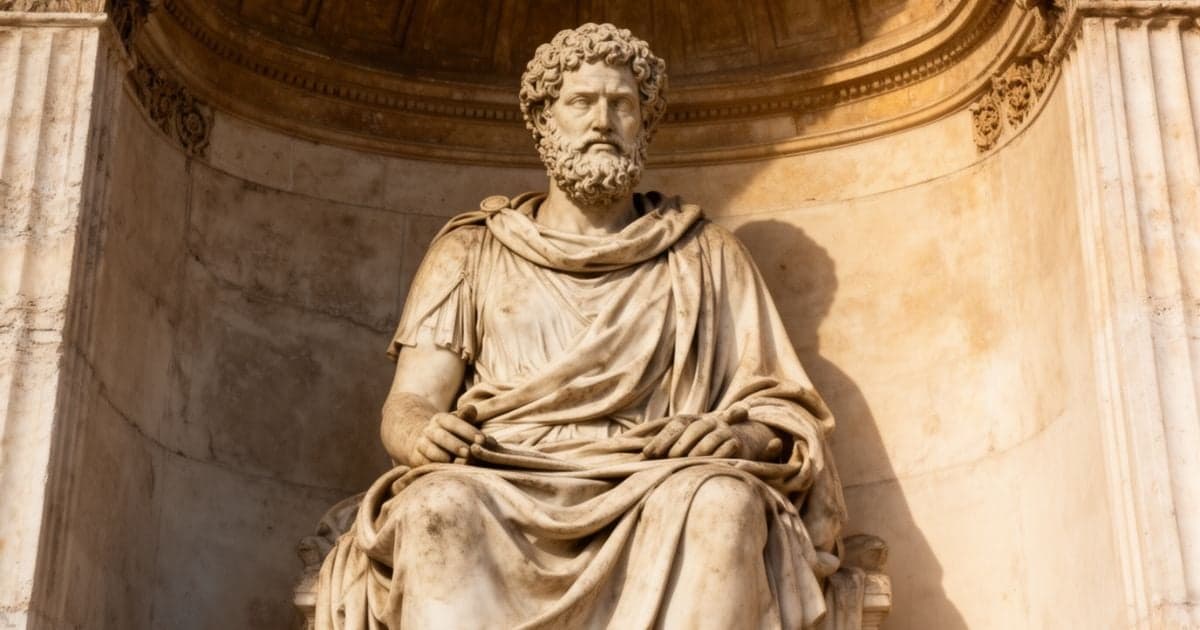
Chapter 09
Living in Harmony with Nature
THE NINTH BOOK I. He that is unjust, is also impious. For the nature of the universe, having made all reasonable creatures one for another, to the end that they should do one another good; more or less according to the several persons and occasions but in nowise hurt one another: it is manifest that he that doth transgress against this her will, is guilty of impiety towards the most ancient and venerable of all the deities. For the nature of the universe, is the nature the common parent of all, and therefore piously to be observed of all things…
Public-domain chapter text, formatted for reading.
Master this chapter. Complete your experience
Purchase the complete book to access all chapters and support classic literature
Available in paperback, hardcover, and e-book formats
Now let's explore the literary elements.
Key Quotes & Analysis
"Hasten, I thee pray, O Death; lest I also in time forget myself."
Context: Section III on death and living among contrary opinions
Marcus prefers departure to slowly corrupting among people who do not share his convictions.
In Today's Words:
Marcus says living among people of contrary opinions in daily life can wear you down until you forget your own convictions. He even voices the shocking prayer: come quickly, Death, before time among them erodes who you meant to be and what you stood for.
"Those creatures that are reasonable, are now the only creatures that have forgotten their natural affection and inclination of one towards another."
Context: Section VII on human failure to cooperate
Marcus contrasts humans with beasts and stars that still incline toward union.
In Today's Words:
Beasts flock and even distant stars show sympathy, Marcus observes, yet humans alone among rational creatures forget their natural affection toward one another in daily life. We are made to cooperate, and resisting that unity is already a kind of impiety against the common nature we share.
"it should rather be for that which troubled thee, whatsoever it was, was not without anywhere that thou shouldest come out of it, but within in thine own opinions, from whence it must be cast out"
Context: Section XI on the source of trouble
Marcus locates distress in judgment inside the mind, not in external location.
In Today's Words:
Marcus says the trouble you thought was out in the world was never located there at all. It lived inside your opinions all along, and ease returns only when you cast those judgments out from within rather than hunting escape in a different place or role.
"One prayeth that he may compass his desire, to lie with such or such a one, pray thou that thou mayst not lust to lie with her."
Context: Section XL on how to pray
Marcus redirects prayer from outcomes to character: freedom from destructive wanting matters more than getting the thing.
In Today's Words:
Marcus retools prayer: if others ask to sleep with someone, ask instead that you stop wanting to. Pray not for externals you cannot command but for freedom from lust, fear, and resentment, so character rather than outcome becomes the gift you seek from the gods.
Thematic Threads
Class
In This Chapter
Marcus shows how even emperors must accept natural limits and work within cosmic order rather than above it
Development
Evolved from earlier themes about duty—now showing that true power comes from alignment, not opposition
In Your Life:
You might see this when trying to maintain appearances that drain your resources instead of accepting your actual circumstances
Identity
In This Chapter
Death reframed not as identity loss but as natural transformation, like aging or seasons changing
Development
Building on earlier acceptance themes—identity isn't fixed but part of larger flow
In Your Life:
You might struggle with this when facing major life changes that threaten your sense of who you are
Social Expectations
In This Chapter
Fame and reputation revealed as fleeting distractions from what actually matters in human cooperation
Development
Deepening the theme of external validation vs internal worth from previous chapters
In Your Life:
You might see this in social media pressure or workplace politics that distract from meaningful relationships
Personal Growth
In This Chapter
Growth happens through accepting difficult people and situations as teachers rather than obstacles
Development
Advanced application of earlier stoic principles—using adversity as curriculum
In Your Life:
You might find this when dealing with difficult family members or coworkers who trigger your worst reactions
Human Relationships
In This Chapter
Even when humans forget how to cooperate, nature still pulls us toward each other—connection is our default
Development
Introduced here as fundamental insight about human nature and social bonds
In Your Life:
You might notice this when conflict with someone reveals underlying care or when strangers help during crises
You now have the context. Time to form your own thoughts.
Discussion Questions
This is not a test. Five prompts guide you through the chapter, from how it opens to how it closes, so you notice context and rhythm rather than facts to memorize. Sit with each question in your own words. When you see "One way to read it," treat it as a starting point, not the only answer.
- 1
Marcus opens Book IX by saying to be unjust is to be impious because the universe made rational creatures for one another to help, not harm. Why does he treat lying, pleasure-chasing, and fear of pain as wars against nature rather than private vices?
analysis • surfaceOne way to read it
They violate the order that binds humans together. Whoever fights truth or clings to pleasure and pain as ultimate goods accuses the whole arrangement whenever life does not reward virtue on his schedule.
- 2
Marcus says reasonable creatures alone have forgotten natural affection, while even beasts flock together. Where do you see people with reason cooperate less well than animals with none?
analysis • mediumOne way to read it
Office politics, online pile-ons, and family estrangements often show humans choosing division where instinct would still pull animals together. Marcus says nature still prevails; no one can truly live alone.
- 3
Marcus says trouble must be cast out from within your opinions, not from without, because objects stand outside while understanding passes verdict. How would that relocate the fix for a current grievance?
application • mediumOne way to read it
The event is not the prison. Your judgment that it ruins you is. Change the opinion or the charitable action available now, rather than waiting for the world outside to rearrange itself first.
- 4
Marcus redirects prayer: do not ask to obtain lust or escape a person, but not to lust and to bear them patiently. How is that different from praying for outcomes?
application • deepOne way to read it
Outcome-prayer asks fate to rearrange externals. Character-prayer asks for freedom from destructive wanting and for patience with people you cannot remove. Marcus says that is the help actually within reach.
- 5
Marcus says when you do good you should not hunt a third reward, because the act itself suffices as the eye does not ask payment for seeing. When have you turned service into a ledger, and what would vine-like giving look like instead?
reflection • deepOne way to read it
Scorekeeping poisons generosity. Marcus says man is born to do good; when you help, you have already received what nature required. The fruit is the deed, not applause, repayment, or moral credit stored for later.
Critical Thinking Exercise
Map Your Resistance Points
Think of a current situation that's causing you stress or frustration. Write it down, then identify what parts of this situation you're fighting against versus what you're actually able to control. Create two columns: 'Fighting Reality' and 'Can Actually Influence.' Be brutally honest about which column has more items.
Consider:
- •Notice if you're spending more energy on the 'Fighting Reality' column than the 'Can Actually Influence' column
- •Ask yourself what would happen if you fully accepted everything in the first column
- •Consider how you could redirect your resistance energy toward the things you can actually change
Journaling Prompt
Write about a time when you stopped fighting an unchangeable situation and focused on what you could control instead. What shifted? How did this change your stress level and your results?
Coming Up Next...
Chapter 10: The Soul's Journey to Simplicity
Book Ten addresses the soul directly: one day you will be simple, visible, dead to worldly things, and content with the present estate providence assigns. Until then, fit your conversation so you neither complain of others nor act unjustly.