
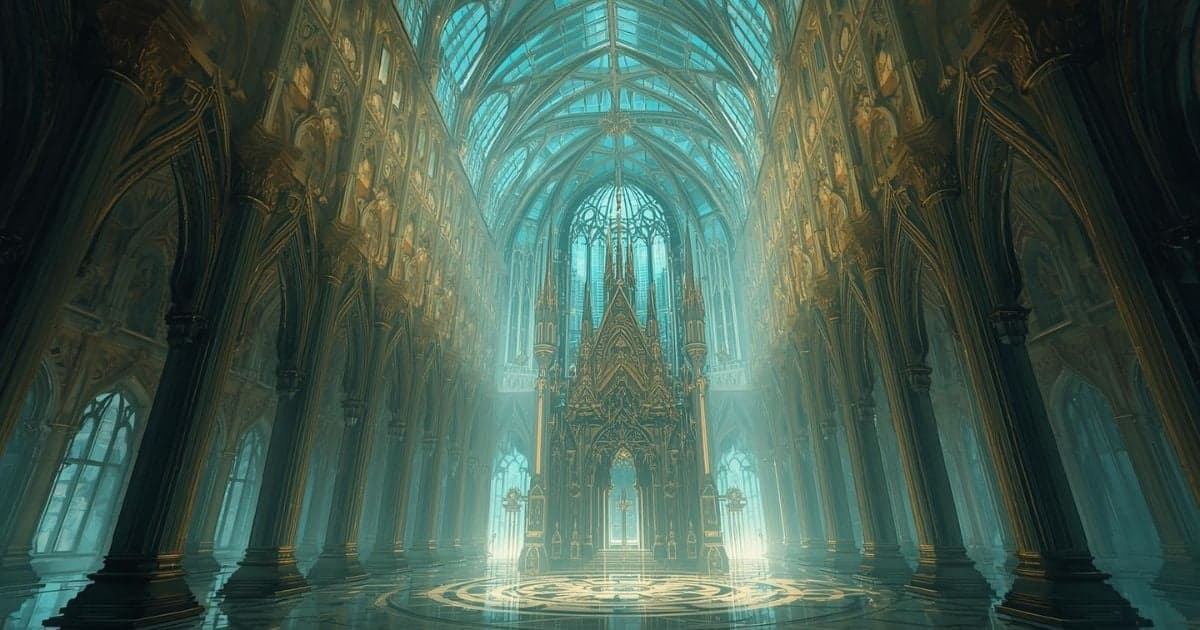
Teresa does not invent a soul for you to grow into. She sees a castle of one diamond, or of very transparent crystal, with rooms stacked and adjoining, and a principal chamber where God and the soul hold their most secret intercourse. The scandal is not that the building is hard to find. The scandal is that you live in it and treat the courtyard as the address. Sentinels, body, reputation: those get the maintenance. The rooms above and beside go unnamed. She is sixty-two, ill, writing under obedience because a Life already got confiscated. The map is for women who already pray and still have not asked who dwells in the most delightful place.
Prayer is the gate, and a moving mouth is not automatically a gate. If a person neither considers to whom he is addressing himself, what he asks, nor what he is who ventures to speak, she will not call the recitation prayer. The first basement rooms are a gain, and they are still full of noise. Chapter 5 lets the mill clack. Imagination is not understanding. Love is the grain. You grind while the mechanism complains. That is how a beginner learns the building is real: not by a silent tour, but by remaining at a mill that will not flatter her with quiet.
Then the cloth. Sin can cover crystal until the floor plan is a rumor. Teresa will not let a darkened house pass for a deep one. The ending refuses a finished mystic anyway. She named seven mansions and then said each contains gardens, fountains, and labyrinths she has not mapped. What she leaves is permission to walk at will without asking leave. Humility, not a badge for having finished the diagram, is how a soul who thinks herself unfit for the third mansion is sometimes hurried into the fifth. The diamond was never the prize at the end of self-knowledge. It was the house you were already failing to enter.
The Central Lesson
The Interior Castle locates you inside a diamond you have been polishing from the outside. Most people live with the sentinels and never ask who occupies the center. Prayer is the gate, a wandering mill is not a failed map, and a black cloth can hide rooms you then congratulate yourself for knowing. Teresa does not hand you a finished mystic. She hands you a house you may walk at any hour, and a warning: humility gets in faster than a tour you have already named complete.
Applying This to Your Life
Name the Courtyard You Call Home
Where do you spend the day: body, inbox, reputation, the sentinels' gossip? Write the rooms you have never toured. If you cannot name them, you are not deep. You are camped.
Ask Who Is Being Addressed
Before the next rote, pause. To whom are you speaking, what are you asking, who are you to ask it? If those three are blank, the lips moved and the gate stayed shut.
Grind While the Mill Clacks
A noisy mind is the outer rooms telling the truth. Stay. Love more than you think. Do not wait for silence as proof you have an interior. The clack is the survey.
Other lessons in this book
More life-skill deep dives from the same classic.
Moving Beyond Surface Self-Help
Watch the first rooms fill with reptiles, then the third mansion praise an orderly life that still bargains with God.
5 chapters·Explore AnalysisIntegrating Inner and Outer Life
Leave the last rooms with Martha still working, and a door held open when the prioress calls you out.
5 chapters·Explore AnalysisDistinguishing True Progress from False
Set the two fountains of chapter 6 side by side, then test the visions that arrive before they become a rank.
6 chapters·Explore AnalysisNavigating Stages of Growth
Stay with the rich young man in the third mansion, then the silkworm that cannot skip the cocoon.
5 chapters·Explore AnalysisMaintaining Contemplative Practice
Return to the wandering mind and the dry third-mansion prayer that wanted God's presence without His dominion.
6 chapters·Explore Analysis
Continue exploring
Explore this theme
The same lessons in other books
See how other books teach the same life skills.

Les Misérables: Essential Edition
Navigating Poverty and Social ClassTrace Fantine from 1817 hope to factory gossip, and the class that treats need as indictment.
The Essays of Montaigne
Choosing Real FriendshipHear essay 27 answer La Boétie: because it was he, because it was I.
Siddhartha
Living in the PresentStay at the ferry until past and future stop being places you can live.
Where the lesson lives in the book
A Castle of One Diamond
The image arrives while Teresa is still begging for words. The soul is a castle formed of a single diamond, or of very transparent crystal, with rooms above, below, and beside, as heaven has mansions. She is not asking you to build this. She is asking you to notice you already occupy it. The disgrace is geographic. You know the body as if it were the house. You have not asked who dwells in the most delightful place.
Key Insight:
Inner life is not a project you start when the outer one is tidy. It is a building you already inhabit and have never toured. The map begins with the rooms you have treated as optional.
“I thought of the soul as resembling a castle, formed of a single diamond or a very transparent crystal, and containing many rooms, just as in heaven there are many mansions.”
The Courtyard Where the Sentinels Stand
Most souls never go in. They live in the courtyard of the building where the sentinels stand, neither caring to enter farther nor to know who dwells inside, what is in it, what rooms it contains. The body gets the care. The diamond gets the rumor of a gate. Prayer is that gate. Lips moving through a learned rote, with no one addressed, are not prayer. She will not let you call the outer wall the dwelling.
Key Insight:
Camping with the guards is not caution. It is a decision to know the perimeter and never the house. If you cannot name who is being spoken to, the words were never a key.
“Many souls live in the courtyard of the building where the sentinels stand, neither caring to enter farther, nor to know who dwells in that most delightful place, what is in it and what rooms it contains.”
A Black Cloth Over Crystal
The second chapter covers the diamond. Mortal sin is not a mood. It is a cloth thrown over crystal so the rooms cannot be seen, a tree planted by foul water, fruit that poisons what it feeds. Teresa will not let you map a castle you have darkened and then call the darkness depth. True perfection, when she names it, is not a tour of states. It is love of God and neighbor, kept.
Key Insight:
A map that ignores the cloth is a souvenir. You cannot inventory rooms you have made uninhabitable and then congratulate yourself on knowing the floor plan.
“True perfection consists in the love of God and our neighbour, and the better we keep both these commandments, the more perfect we shall be.”
Let the Mill Clack On
The first rooms are noisy. You sit down to enter and the imagination starts its mill. Teresa refuses the modern verdict that a wandering mind means you have no interior. Thoughts are not the understanding. Love is more essential than thinking much. Practise whatever most excites you to that. Let the mill clack on while you grind the wheat: work with will and intellect, and stop treating the clack as proof the castle was a fiction.
Key Insight:
Noise in the outer rooms is not a failed map. It is the first accurate survey. The work is remaining at the mill, not silencing it as a condition of going in.
“Let the mill clack on while we grind our wheat; that is, let us continue to work with our will and intellect.”
Walk About at Will
The epilogue does not lock the diagram. Teresa is glad the labor is finished, and she still will not shove a soul through a door the Lord has shut. What she leaves her sisters is an interior castle they can enter and walk about at will, at any hour, without asking leave of their superiors. Humility is the beloved virtue. Souls who think themselves unworthy of the third mansion may be given the fifth sooner. The map is a permission, not a finished mystic.
Key Insight:
The last gift is not a rank. It is a house you may walk without a pass. Unworthiness, honestly held, is sometimes the quicker admission than a tour you have already named advanced.
“He dearly loves humility: if you think yourselves unworthy to enter the third mansion, He will grant you all the sooner the favour of entering the fifth.”