
A House the Inhabitant Has Not Toured
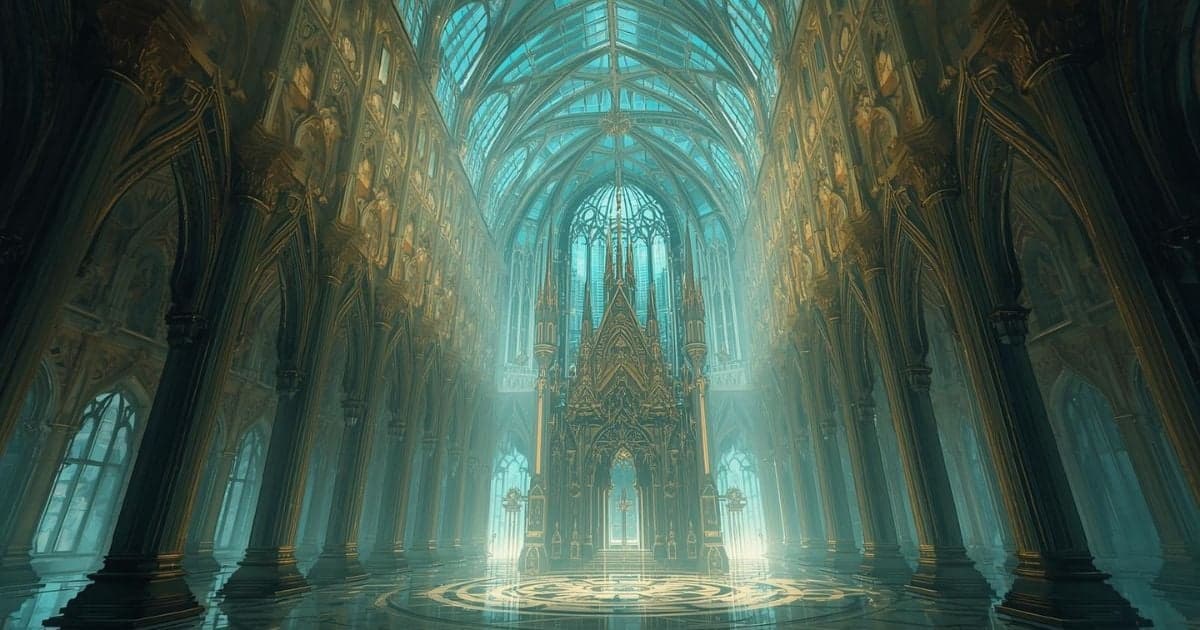
The Interior Castle is a teaching written in 1577, under obedience, for enclosed Carmelites. The psyche it implies already lives in the building it refuses to enter. Teresa of Ávila begs for words because she does not know how to start. The castle occurs to her as a single diamond, or a very transparent crystal, with rooms above, below, and beside, and a principal chamber where God and the soul hold their most secret intercourse. Most people live in the courtyard with the sentinels. They care for the body, the coarse setting of the diamond, and do not ask who dwells in the most delightful place. Orderly piety, wanted visions, and public rapture are defences against meeting that inhabitant. Genuine suspension of the faculties is fortification for a closeness the self is too timid to bear, not proof that the self has arrived.
A Cloth Over a Diamond Still in the Sun
The originating wound is not emptiness. It is a failure to know what one already is. Teresa calls it a misfortune and a disgrace that, through our own fault, we understand neither our nature nor our origin. She thinks it more foolish to learn nothing of ourselves except that we possess bodies, and to realise only vaguely that we have souls because people say so. The courtyard is a life organised around the part of the self that can be washed, dressed, and shown.
Mortal sin, in the next turn, does not smash the diamond. It throws a thick black cloth over a crystal standing in the sun, so that however brightly the sun shines the crystal cannot reflect it. The chambers grow disorderly. Senses, powers, and stewards are described as blind. The fruit of a tree planted in foul ground poisons what it feeds. Psychologically this is covering, not replacement. The horror is that the light is present and the covering makes the rooms look as if they had none. Shame here is not a mood added later. It is the discovery that the self has been blocking its own reflection and calling the darkness the truth of the house.
The Blessing That Takes Safety Back
The third mansions look like recovery. Teresa greets souls who have persevered with the blessing on those who fear the Lord, then immediately removes the safety the blessing seemed to offer. Life in exile has no security. She wants them to live like soldiers whose walls can be breached at any hour. She remembers saints who fell, and her own wasted past, and she asks God to abide in her anyway. Enclosure and a religious habit do not quiet that memory. The respectable self hears a blessing and files itself as safe. She treats that filing as the danger.
The rich young man is the figure of this defence. He wants perfection until the cost is named, then walks away sorrowful. Dryness in these rooms often comes from a hidden bargain: God's presence without God's dominion. Years of order can look like detachment until a moderate loss unseats the soul. Advice fails for a precise reason. These people are sure they suffer only for God, so correction has nowhere to land. The small disappointment reveals an attachment. The certainty that the pain is already holy keeps anyone else from naming it. Moral identity has become the wall. A psyche organised around being the good one cannot hear that the goodness is still negotiating.
Reptiles in the Nearer Rooms
Progress does not sweep the house. In the fourth mansions, nearer the King, reptiles still enter, and Teresa says they may do good by forcing humility. The shock is structural. Nearness does not mean the intruders have left. It means their presence can stop the soul from treating its progress as a clean room it has earned. The beginner wanted a castle without vermin. The text keeps the vermin and changes what they are for. Humility is not a virtue added on top of a tidy interior. It is what the untidy interior can still teach if the soul stops pretending the rooms are empty.
The same mansion holds the counterfeit. False trances sit beside the recollection she has just praised. The devil is said to tempt these souls in particular, and she turns to how people deluded in this way should be treated. A mind that has just been gathered is also a mind ready to mistake a faint for a favour. Some constitutions are so feeble that a single prayer of quiet seems to undo them. The psychology of the nearer rooms is therefore double. Real gathering happens without the labour of shutting the eyes and staging solitude. Performed collapse borrows the look of that gathering. Discrimination, not a cleaner feeling, is what keeps the two apart.
Water She Has Actually Watched
The formal feature that carries the psychology is the comparison, and the voice that keeps admitting it has wandered. Teresa says she has left her subject, then reaches for water because she loves that element and has studied it more than others. Two fountains fill two basins. One runs through aqueducts: sensible devotion gained by meditation, by thinking on created things, and by the labour of the mind. The other, once the basin is full, overflows in a great stream. No machinery. The water does not run through aqueducts. She says such favours are not to be sought.
That pair is a psychology of effort and reception written as plumbing. The first fountain can be pointed to. A person can say they meditated, they laboured, they kept the pipes in repair. The second cannot be cranked, and the wish to crank it is already a misunderstanding. The scattered prose is part of the same point. A teacher who loses the thread and still trusts a plain image is refusing the fantasy of a finished system. The book will not become a machine for producing the spring. Its structure keeps breaking into likenesses, then warning the reader not to hunt the likeness as a technique. What is withheld is a method for the second fountain. The withholding is the teaching.
The Habit Does Not Buy the Pearl
The Carmelite habit marks a call to contemplation. Teresa calls arrival even at the portal a great boon, since many are called and few are chosen, and she still says most of them have far more to do before the Lord will show the pearl. The clothes tell them they belong. They do not tell them they have been given the jewel. Belonging becomes a defence against the wait.
The silkworm stops that skip. It feeds, spins a narrow cocoon, and buries itself. She tells her sisters to die as the worm does, immersed in God's greatness. What startles her is the creature that comes out and cannot return to crawling. Desire has changed its object. Then she refuses to let the new form become a rank. She knew souls who fell after the grace and still left teaching that helped others, while the butterfly that lays a few eggs dies for ever. Having been inside does not keep the soul there.
Betrothal names the short visit so it will not be mistaken for the wedding. The soul knows its Bridegroom in a way the senses could not learn in a thousand years. She still calls it an agreement, a visit, not the marriage. Certainty feels like arrival because it exceeds anything the senses can check. The legal distinction keeps that feeling from promoting itself.
A Face Already Seen
The sixth mansion opens on a soul already wounded, sighing for solitude as far as duty allows. The sight of the Spouse is so deeply printed that the only desire left is to behold Him again. Nearness does not settle the longing. It makes every interruption feel like time spent away from a face the soul has already seen. This is not the courtyard's ignorance. It is the opposite pain: knowledge that will not stay, and a life of duties that keeps calling the soul back from the only face it now wants.
Then the spark dies. The impulse is delicate and unlike anything the soul can produce. When it goes out, what remains is not a feeling that can be stored and replayed. It is a longing for a Bridegroom who stays hidden, and the fear that the sweetness was never the soul's to keep. Later the same restlessness returns in a harsher form. Sublime favours do not settle the butterfly. Each one increases the longing and the sense of how much love is still unpaid. A passing thought that death is delayed strikes like a fiery dart. The gift makes the soul less able to rest, not more. Psychologically, Teresa is describing a desire that gifts intensify. The defence of collecting experiences fails here, because the experience itself widens the want.
The Room That Tries to Grade the Rapture
Display is the defence that survives when private feeling will not hold. Imaginary visions are the favours she thinks the devil can counterfeit most easily. A genuine presence she compares to a precious stone shut in a gold locket: certain, and not yet seen. The soul that wants the vision in order to show it has already left that image. When people of a lively imagination, or people much afflicted with melancholy, say they see or hear something supernatural, she wants little attention paid, and she does not want them told it comes from the devil. A mind that lives in pictures can take its own weather for a voice. A quarrel about the source only feeds the picture.
Intellectual vision goes further. Someone knows Christ is beside her and sees nothing, neither with the eyes of the body nor with the imagination. The first feeling is distress, because she has never heard of such a favour. Doubt fails when He speaks. A psyche trained to trust what it can display meets an unseen nearness as a problem to solve, or a story to tell, before it can bear the nearness itself.
Public rapture makes the audience literal. Trance, ecstasy, and rapture are the same thing, and great courage is required. His Majesty fortifies the butterfly so she may take the King of heaven for her Spouse. No woman, however low her class, would fear to wed an earthly king. Espousing this King asks more fortitude, because our nature is too timid for it. When others can see the suspension, the soul is embarrassed and the watchers have a scene they can mock. Teresa treats that worry as a want of humility. The favour was never a performance the room was meant to grade.
The flight of the spirit is the same loss of steering. The motion is sudden enough that she is not sure God is the cause. Resistance accelerates it, and she yields like straw drawn to amber only after resistance has failed. Later the jubilee is a joy that will not stay hidden. The nuns of St. Joseph often feel it, and the world reads the gladness as excess.
The Moat Is Still There
The ending does not wash the history clean, and it does not keep the drama. Favours increase sorrow for sin. The grief is shame at ingratitude more than fear of punishment. Past follies sit in the memory like mire in a riverbed while a strong current runs over them. Being lifted makes the history heavier. In another vision, all things are beheld in God and engraved on the memory in an instant. She compares God to a spacious mansion in which the creatures dwell, so that a sin is committed inside His presence. The shame is not that God is far. It is that the wrong was done in the house.
Spiritual marriage is distinguished from the visit by permanence. Before rain joins a river, Christ greets the soul with peace. A betrothal can pass. The marriage, as she draws it, does not. Once that union is described, a picture, a sermon, or sacred music no longer makes the butterfly take flight. In the seventh mansions the ecstasies are rare, and they seldom happen in public.
What she writes of these rooms is but a cipher. The last mansion still has a moat. Venomous creatures that were deprived of their power unite to take it back, and the disturbance may last a day or a little longer. Sublime favour does not end weakness. The epilogue then refuses force. The sisters may walk the castle at any hour without asking leave, and they still cannot push a shut door. The soul that thinks herself unworthy of the third mansion may be given the fifth sooner. Violence at an obstacle displeases the Lord of the house. The wish to shove through is what keeps the door shut.
Why It Resonates Now
Modern readers often meet this book as a map of personal growth: seven stages, an inner journey, a peak experience that proves the work was real. That reading flatters the courtyard. It keeps the self in charge of a project, polishing the outer wall and calling the polish depth. Teresa's third-mansion soul, orderly and still bargaining, is easy to recognise wherever a managed life stands in for a met one. The small loss that unseats a person who thought they were detached is not a sixteenth-century curiosity. It is what happens when identity has been built on composure.
The other contemporary hook is the display of intensity. A rapture graded by the room, a vision wanted because it can be told, a faint mistaken for a favour: these are the same defences that turn inner life into content. The book resonates where people are anxious to be seen as transformed, and where a private certainty is promoted into a public rank. What it will not support is the hope that the last room is a calm in which the old self finally gets to feel successful. The ecstasies thin out. The moat remains. The door does not open because it was forced.
Limits of This Reading
Self-estrangement, defence, and the social life of extreme states are modern lenses. Teresa writes as a Carmelite nun, under obedience, in the language of mansions, mortal sin, the devil, and union with God. The diamond, the cloth, the silkworm, and the two fountains are her comparisons, not clinical constructs. To call the courtyard a failure of self-knowledge is an analogy. It does not turn the book into a theory of dissociation, and distress or a public collapse is not a spiritual promotion.
The historical pressure sits beside the text. She is sixty-two, ill, founding reformed houses, writing after churchmen had taken her Life because they feared a woman's visions. This reading follows the Stanbrook translation of 1921. Another English will shift intercourse, favour, and rapture. Intercourse in her first chapter means the most secret communion in the central chamber, and the footnote points to John of the Cross on union. A modern ear that hears only a sexual sense will misread the sentence. The aim of the book remains theological. The Lord of the castle admits the soul. The psychological reading can show what the self does instead of waiting. It cannot replace the admission she says no one can force.