Wide Reads
Literature MattersLife IndexEducators
Sign in
Where to Begin
Don Quixote - The Golden Age Speech

Miguel de Cervantes Saavedra

Don Quixote

The Golden Age Speech

Home›Books›Don Quixote›Chapter 11
Previous
11 of 126
Next

Summary

The Golden Age Speech

Don Quixote by Miguel de Cervantes Saavedra

0:000:00
Listen to Next Chapter

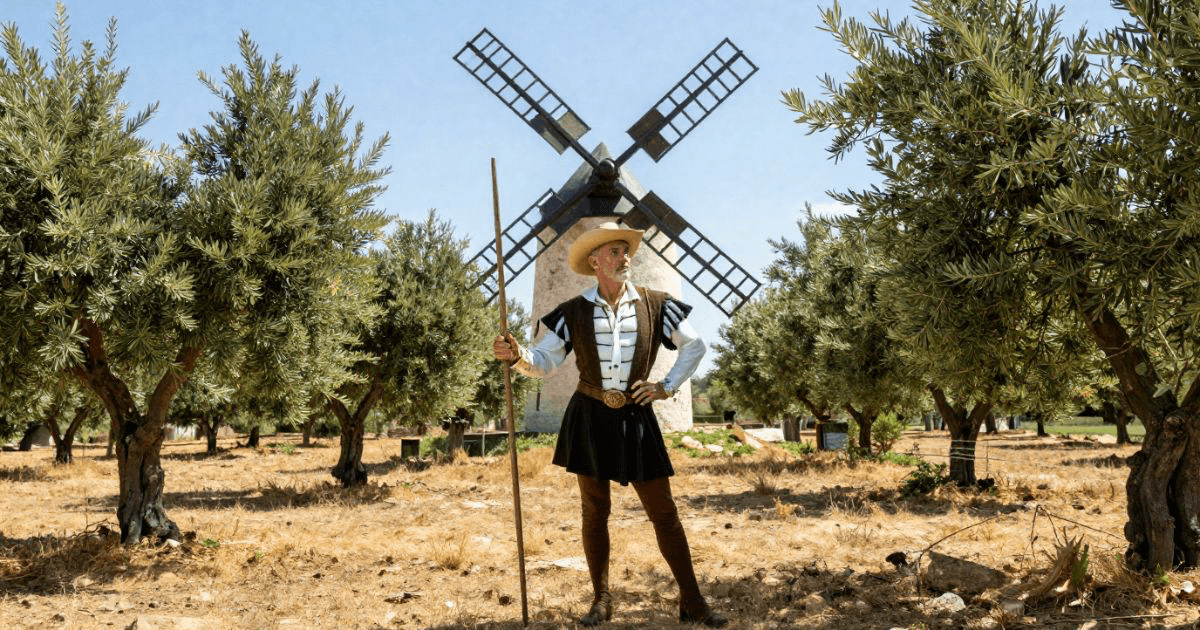
The Golden Age speech is one of the novel's most famous passages, and it reveals Quixote's underlying philosophy: the world has fallen from an ideal past and needs knights to restore it. Sitting with humble goatherds sharing simple food, eating acorns, Quixote is reminded of humanity's mythical golden age. He launches into an elaborate monologue about a time when property didn't exist—people knew not the words 'mine' and 'thine.' When nature provided everything freely: oaks offered fruit, streams flowed pure, bees gave honey without being asked, cork trees shed bark for roofing. When justice was natural, maidens could wander safely, and there was no need for law because there was no crime. The speech is beautiful, nostalgic, and completely disconnected from his audience's reality. The goatherds, who work brutally hard every day tending animals, sit there 'gaping in amazement' at this armored lunatic romanticizing their poverty as some kind of golden age. Quixote explains that knights-errant were created when the world fell from this ideal, to protect the vulnerable from increasing wickedness. He's providing his mission statement: he exists because the world needs saving from its fallen state. But here's the irony Cervantes highlights: Quixote just finished a series of disasters where he made every situation worse. He 'rescued' Andres (who got beaten harder), attacked friars (innocent monks), nearly killed a squire (who was just doing his job), and charged windmills (and lost). He's explaining his noble purpose to people who are actual shepherds—the occupation he's romanticizing—while they're thinking about work tomorrow. The narrator notes 'all this long harangue might very well have been spared.' The goatherds don't need a lecture about pastoral simplicity; they live it, and it's hard. Sancho's reaction is perfect: he says nothing, eats acorns, and keeps drinking from the wine-skin. He's learned that when his master starts philosophizing, the best response is just to let him talk himself out while attending to practical matters. The chapter introduces Antonio, a literate goatherd who sings a love ballad. This matters because it shows that even people Quixote romanticizes as 'simple folk' have their own complex emotional lives, read books, and pursue sophisticated romance.

Coming Up in Chapter 12

The goatherds have their own dramatic story to share: a wealthy beauty named Marcela who rejected society to become a shepherdess, leaving a trail of lovesick men in her wake. One has just died of unrequited love. Is she responsible for his death?

Share it with friends

Previous ChapterNext Chapter
GO ADS FREE — JOIN US
Original text
complete·2,207 words

WHAT BEFELL DON QUIXOTE WITH CERTAIN GOATHERDS He was cordially welcomed by the goatherds, and Sancho, having as best he could put up Rocinante and the ass, drew towards the fragrance that came from some pieces of salted goat simmering in a pot on the fire; and though he would have liked at once to try if they were ready to be transferred from the pot to the stomach, he refrained from doing so as the goatherds removed them from the fire, and laying sheepskins on the ground, quickly spread their rude table, and with signs of hearty good-will invited them both to share what they had. Round the skins six of the men belonging to the fold seated themselves, having first with rough politeness pressed Don Quixote to take a seat upon a trough which they placed for him upside down. Don Quixote seated himself, and Sancho remained standing to serve the cup, which was made of horn. Seeing him standing, his master said to him:

1 / 11

Master this chapter. Complete your experience

Purchase the complete book to access all chapters and support classic literature

Read Free on GutenbergBuy at Powell'sBuy on Amazon

As an Amazon Associate, we earn a small commission from qualifying purchases at no additional cost to you.

Available in paperback, hardcover, and e-book formats

GO ADS FREE — JOIN US

Why This Matters

Connect literature to life

Skill: Detecting Class Projection

This chapter teaches you to recognize when someone is projecting their ideologies or aesthetics onto other people's lives without understanding those lives from the inside.

Practice This Today

This week, notice when you hear someone romanticizing a lifestyle or type of work they don't actually do. Ask: would people living that life describe it this way? What makes this appealing to the speaker?

GO ADS FREE — JOIN US

Now let's explore the literary elements.

Key Quotes & Analysis

"Happy the age, happy the time, to which the ancients gave the name of golden...because they that lived in it knew not the two words 'mine' and 'thine'!"

— Don Quixote

Context: Beginning his Golden Age speech

He's describing communal property as the natural state before corruption, suggesting all conflict comes from ownership. This is sophisticated political philosophy, but delivered to an audience of property-less workers who would love to have something that's 'mine.'

In Today's Words:

Back in the golden days, nobody owned anything—everything was shared and perfect!

"What I eat in my corner without form or fuss has much more relish for me, even though it be bread and onions, than the turkeys of those other tables where I am forced to chew slowly, drink little, wipe my mouth every minute."

— Sancho Panza

Context: Refusing to dine as Quixote's equal

Sancho articulating working-class wisdom: freedom and comfort matter more than status and luxury. He'd rather have autonomy with poverty than surveillance with plenty. This is actual political consciousness, not philosophical abstraction.

In Today's Words:

I'd rather eat simple food in peace than fancy food where I have to watch my manners constantly.

"All this long harangue (which might very well have been spared) our knight delivered because the acorns they gave him reminded him of the golden age."

— Narrator

Context: Commenting on Quixote's speech

Cervantes editorializing that the speech was unnecessary and self-indulgent. Quixote saw acorns and couldn't resist monologuing. The narrator is calling him out for inflicting his philosophy on a captive audience who just wanted to eat.

In Today's Words:

He gave this whole long unnecessary speech just because the acorns triggered his golden age obsession.

"The goatherds listened to him gaping in amazement without saying a word in reply. Sancho likewise held his peace and ate acorns, and paid repeated visits to the second wine-skin."

— Narrator

Context: The audience's reaction

Perfect description of polite endurance of someone's tedious speech. The goatherds are stunned into silence—not by wisdom but by bewilderment. Sancho's strategy is superior: eat, drink, say nothing. Let him tire himself out.

In Today's Words:

They all sat there in stunned silence having no idea what to say. Sancho just kept eating and drinking.

Thematic Threads

Identity

In This Chapter

Quixote's identity requires him to philosophize about chivalry's purpose, even to an audience that doesn't understand or care—performance of identity through monologue

Development

Showing how identity demands constant articulation and justification, especially to unreceptive audiences

In Your Life:

You might notice yourself explaining who you are or what you're about to people who aren't asking

Class

In This Chapter

The entire chapter is about class blindness—Quixote romanticizes poverty to the poor, while Sancho rejects false equality, and the goatherds just want to eat

Development

Deepening class analysis: how upper classes project meaning onto lower-class lives without understanding them

In Your Life:

You might recognize times when someone from a different class explained your own life to you based on their fantasies about it

Social Expectations

In This Chapter

The goatherds are too polite to tell Quixote to shut up, so they endure his lecture—social expectation of hospitality traps them in audience role

Development

Showing how social norms can make you a captive audience to someone's tedious performance

In Your Life:

You might remember times when politeness trapped you into listening to someone go on and on

Personal Growth

In This Chapter

Sancho shows growth: he knows when to argue (the dinner seating) and when to just let Quixote talk himself out (the speech)—he's learning to pick his battles

Development

First signs of Sancho developing practical wisdom about managing his master

In Your Life:

You might recognize the skill of knowing when to engage and when to just let someone exhaust themselves talking

GO ADS FREE — JOIN US

You now have the context. Time to form your own thoughts.

Discussion Questions

  1. 1

    What does Don Quixote describe as the characteristics of the Golden Age?

    analysis • surface
  2. 2

    Why do the goatherds sit in amazed silence rather than responding to Quixote's speech?

    analysis • medium
  3. 3

    What does Sancho's refusal to dine as Quixote's equal reveal about the difference between honor and comfort from a working-class perspective?

    analysis • deep
  4. 4

    Have you ever had someone romanticize or philosophize about your life or work in ways that showed they didn't understand it?

    reflection • medium
  5. 5

    How can you tell if you're appreciating something versus romanticizing it in ways that ignore the actual difficulty of those who live it?

    application • deep

Critical Thinking Exercise

10 minutes

Romanticization Reality Check

Think of a lifestyle, career, or cultural practice you admire or find appealing that you don't personally do or live. Write down what appeals to you about it. Then research or imagine what people actually living it would say about the hard parts, the boring parts, the parts that don't fit the aesthetic. Notice any gaps between your romanticized version and their lived reality.

Consider:

  • •Ask whether you're drawn to the reality or the aestheticized version
  • •Notice if your appreciation requires ignoring certain aspects
  • •Consider whether people doing this work/living this life would choose it if they had your options

Journaling Prompt

Write about a time when someone romanticized something about your life or work in ways that revealed they had no idea what it's actually like. How did that feel? Did you correct them or stay silent? Why?

GO ADS FREE — JOIN US

Coming Up Next...

Chapter 12: The Story of Marcela

The goatherds have their own dramatic story to share: a wealthy beauty named Marcela who rejected society to become a shepherdess, leaving a trail of lovesick men in her wake. One has just died of unrequited love. Is she responsible for his death?

Continue to Chapter 12
Previous
The First Real Conversation
Contents
Next
The Story of Marcela

Continue Exploring

Don Quixote Study GuideTeaching ResourcesEssential Life IndexBrowse by ThemeAll Books
Identity & Self-DiscoveryMoral Dilemmas & EthicsLove & Relationships

You Might Also Like

Jane Eyre cover

Jane Eyre

Charlotte Brontë

Explores identity & self

Great Expectations cover

Great Expectations

Charles Dickens

Explores identity & self

The Strange Case of Dr Jekyll and Mr Hyde cover

The Strange Case of Dr Jekyll and Mr Hyde

Robert Louis Stevenson

Explores identity & self

The Odyssey cover

The Odyssey

Homer

Explores identity & self

Browse all 47+ books
GO ADS FREE — JOIN US

Share This Chapter

Know someone who'd enjoy this? Spread the wisdom!

TwitterFacebookLinkedInEmail

Read ad-free with Prestige

Get rid of ads, unlock study guides and downloads, and support free access for everyone.

Subscribe to PrestigeCreate free account
Intelligence Amplifier
Intelligence Amplifier™Powering Wide Reads

Exploring human-AI collaboration through books, essays, and philosophical dialogues. Classic literature transformed into navigational maps for modern life.

2025 Books

→ The Amplified Human Spirit→ The Alarming Rise of Stupidity Amplified→ San Francisco: The AI Capital of the World
Visit intelligenceamplifier.org
hello@widereads.com

WideReads Originals

→ You Are Not Lost→ The Last Chapter First→ The Lit of Love→ Wealth and Poverty→ 10 Paradoxes in the Classics · coming soon
Arvintech
arvintechAmplify your Mind
Visit at arvintech.com

Navigate

  • Home
  • Library
  • Essential Life Index
  • How It Works
  • Subscribe
  • Account
  • About
  • Contact
  • Authors
  • Suggest a Book
  • Landings

Made For You

  • Students
  • Educators
  • Families
  • Readers
  • Literary Analysis
  • Finding Purpose
  • Letting Go
  • Recovering from a Breakup
  • Corruption
  • Gaslighting in the Classics

Newsletter

Weekly insights from the classics. Amplify Your Mind.

Legal

  • Privacy Policy
  • Terms of Service
  • Cookie Policy
  • Accessibility

Why Public Domain?

We focus on public domain classics because these timeless works belong to everyone. No paywalls, no restrictions—just wisdom that has stood the test of centuries, freely accessible to all readers.

Public domain books have shaped humanity's understanding of love, justice, ambition, and the human condition. By amplifying these works, we help preserve and share literature that truly belongs to the world.

A Pilgrimage

Powell's City of Books

Portland, Oregon

If you ever find yourself in Portland, walk to the corner of Burnside and 10th. The building takes up an entire city block. Inside is over a million books, new and used on the same shelf, organized by color-coded rooms with names like the Rose Room and the Pearl Room. You can lose an afternoon. You can lose a weekend. You will find a book you have been looking for your whole life, and three you did not know existed.

It is a pilgrimage. We cannot find a bookstore like it anywhere on earth. If you read the classics, and you ever get the chance, go. It belongs on every reader's bucket list.

Visit powells.com

We are not in any way affiliated with Powell's. We are just a very big fan.

© 2026 Wide Reads™. All Rights Reserved.

Intelligence Amplifier™ and Wide Reads™ are proprietary trademarks of Arvin Lioanag.

Copyright Protection: All original content, analyses, discussion questions, pedagogical frameworks, and methodology are protected by U.S. and international copyright law. Unauthorized reproduction, distribution, web scraping, or use for AI training is strictly prohibited. See our Copyright Notice for details.

Disclaimer: The information provided on this website is for general informational and educational purposes only and does not constitute professional, legal, financial, or technical advice. While we strive to ensure accuracy and relevance, we make no warranties regarding completeness, reliability, or suitability. Any reliance on such information is at your own risk. We are not liable for any losses or damages arising from use of this site. By using this site, you agree to these terms.