
Free study guide · no paywall
An Essay on CriticismStudy Guide
by Alexander Pope (1711)
Judgement, taste, and the Pierian spring in eight argument sections and six lessons on how to read before you rule.
Start here
Plot, characters & chapter jump
8 chapter summaries · 6 key figures · quotes · free
Plot summary
Alexander Pope was twenty-three when An Essay on Criticism appeared in 1711, asking whether bad writers or bad judges hurt the world more. Eight sections in heroic couplets move from watches that disagree to nature's limits, rules Greece drew from Homer, pride that blinds half-formed judges, the warning to drink deep at the Pierian spring, true wit dressed by nature, parties that dress faction as taste, and a closing catalogue of morals the good critic must show.
Jump to chapter
What readers search for
Common questions about An Essay on Criticism
What is An Essay on Criticism about?
Alexander Pope's 1711 poem in heroic couplets asks whether bad writers or bad judges do more harm. Pope compares judgements to watches that disagree, sets nature's limits on wit, praises rules Greece found in Homer, names pride as the vice that blinds critics, warns against shallow learning at the Pierian spring, and closes with the morals a good critic ought to show. It is a treatise on taste, not a list of proverbs.
Judging Before You UnderstandWhat does "a little learning is a dangerous thing" mean in Pope?
The line belongs to Part II's warning at the Pierian spring. Shallow draughts intoxicate the brain. Drink deep, or taste not at all. Pope is not mocking education. He is warning readers who sample classics, quote one couplet, and start judging. Learning's Alps keep rising as you climb. The proverb only bites when smattering mistakes itself for mastery.
Drinking Deep From LearningWhat is true wit in An Essay on Criticism?
Pope writes that true wit is nature to advantage dressed, and that expression must follow thought rather than decorate vacancy. Wit without measure is not freedom. It is noise dressed as brilliance. The poem ties wit to limits nature already drew, not to rules invented later to cage poets.
Following Nature Before RulesWhat rules does Pope give for critics in An Essay on Criticism?
He praises rules of old discovered, not devised, and holds Homer as the model from which Greece learned what poetry could bear. Critics who prey on a single leaf miss the forest. Pope allows grace beyond art when the whole work earns it. Nitpicking kills what it claims to defend when design is sacrificed for display.
Knowing Rules and When to BendWhat does Pope say about pride in An Essay on Criticism?
Of all the causes which conspire to blind man's erring judgement, Pope names pride chief among them. The half-formed judge hunts faults to be seen clever, sees motes while missing design, and mistakes a sharp remark for a verdict. Vanity masquerades as standards in any room where wit substitutes for reading.
Naming Pride in JudgementFast track
Short on time? Start here
Eight sections carry the whole essay from the opening couplet to the closing catalogue. If you only have an hour, read 1, 5, and 8 for the ratio, the Pierian warning, and the morals critics ought to show, then return for Homer, pride, and faction.
Full coverage
Everything in this study guide
The same surfaces readers expect from a traditional study guide — plot, characters, themes, quotes, and homework help — plus audio and the source text on every chapter. Free, no paywall.
Plot overview
Summary, context, and why the book still matters
8 chapter summaries
Every chapter with audio narration
6 key figures
Who drives the plot and what each one does
6 lessons
Themes traced to scenes, not generic labels
Important quotes
Verified lines with chapter links and analysis
Original text
Author's words beside every summary
This is not a line-a-day quote list. Wide Reads walks Pope's essay as a single argument in couplets: method before verdict, nature before swagger, depth before public praise. Use the eight-section path below, open the six Lessons when a unit hooks you, and read each chapter for summaries, verified quotes, and audio beside the original verse.
For plot and theme questions about An Essay on Criticism, see Common Questions on the book page.
How to use this guide
How to Read This Book with Wide Reads
Start with the ratio
Read Section 1 for Pope's opening question, the watch metaphor, and the demand that only writers who excel should teach and only those who have written well should censure freely. You need that ratio before nature, Homer, and pride can read as one case rather than scattered proverbs.
Follow the argument through Part II
Sections 2 through 6 set limits on genius, recover rules from Greece and Homer, name pride as the never-failing vice of fools, place the Pierian spring inside its warning about shallow learning, and define true wit as nature to advantage dressed. Keep the whole work in view: Pope punishes critics who pick at a leaf while the forest stands unseen.
Let the lessons test faction
Sections 7 and 8 turn on parties in wit and the morals critics ought to show, from candour to learned restraint. When a section raises a question you cannot shake, whether judgement races ahead of reading, shallow learning masquerades as mastery, or town opinion substitutes for taste, open the matching Lesson, then return to the chapter list.
Plot & context
Book Overview
People repeat that a little learning is a dangerous thing and treat the line as a bumper sticker. Pope wrote it inside a poem that asks a harder question first: whether the world suffers more from bad writers or from bad judges. The turn is not a proverb. It is a discipline. He was twenty-three when the Essay on Criticism appeared in 1711, already packing a whole theory of taste into heroic couplets that sound like common sense until you try to live by them.
The voices in the case are roles, not a household. The poet who writes before he can judge. The critic who hunts faults in Greek leaves while missing the design of the whole. Nature, who sets limits that wit must dress, not defy. Homer, who stands as the model rule-finder Greece discovered rather than invented. Pride, which Pope calls the never-failing vice of fools. The parties of wit that follow parties of state. At the end, the good critic: candid, deep read, ready to praise a rival and willing to show a friend a fault. The only lasting opponent is judgement performed without method.
Part I opens on the opening couplet: whether want of skill in writers or in critics hurts more, and why watches that disagree still teach us that none is perfect. The next movement sets nature's limits against swaggering genius, so wit cannot claim exemption from measure. Part I continues with rules the ancients found in Homer, not rules they dreamed up to cage poets, and with critics who pick at a single leaf while the forest stands unseen. Pride blinds the half-formed judge who mistakes a sharp remark for a verdict. Part II holds the Pierian spring inside its real warning: taste the shallow cup, but drink deep or drown in smattering, with learning's Alps still rising as you climb. True wit is nature to advantage dressed; expression must follow thought, not decorate vacancy. Part III turns on fashion: parties in wit attend on parties of state, and town opinion passes for taste until faction names itself. The close sketches morals critics ought to show, from candour to learned restraint, and a lineage of sound judges from Aristotle and Horace forward.
Pope is not writing manners for a salon. He is writing instructions for anyone who rates, reviews, quotes, or teaches a text in public, including the reader who will never publish a line but still decides what counts as good. He never asks you to hate rules. He asks you to earn them by reading past the couplet you are ready to repeat. He never asks you to abandon wit. He asks you to see wit fail when it forgets nature, history, and the whole work. The ending does not crown a critic king. It asks you to become the sort of reader whose praise means something because it cost you attention.
Read the full summary on the book page →
Why this book now
People still quote that a little learning is a dangerous thing while skipping the argument that surrounds it. Pope wrote for anyone who rates, reviews, teaches, or shares a verdict in public, including the reader who will never publish a line but still decides what counts as good. This guide keeps the couplets tied to method, depth, and the whole passage rather than the single line ready to repeat.
About Alexander Pope
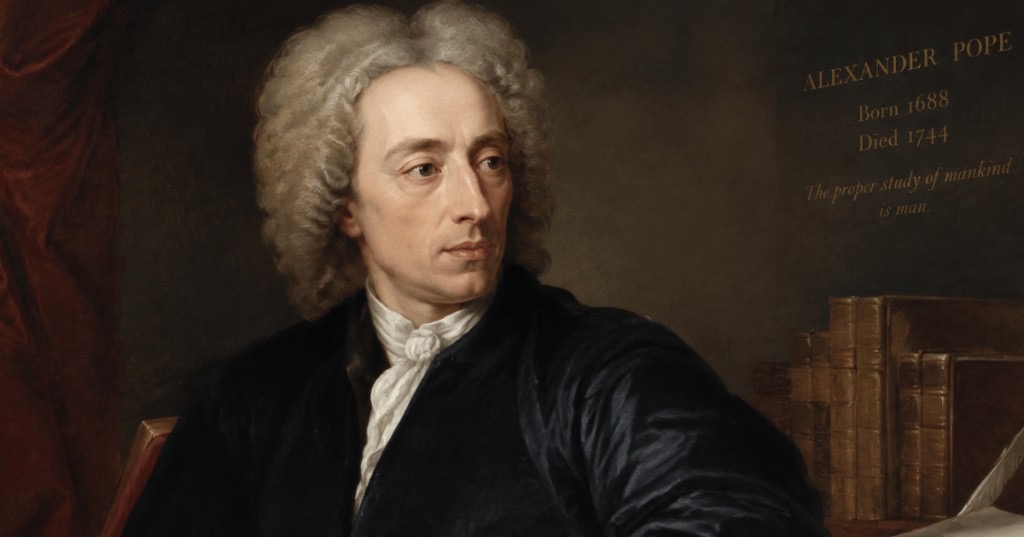
Alexander Pope (1688-1744) was born in London to Roman Catholic parents, a faith that barred him from public office and shaped his life at the margins of power. A childhood illness left him short in stature and in fragile health, yet he became the dominant poetic voice of Augustan England. He made his name with Pastorals, The Rape of the Lock, and translations of Homer that paid for the villa at Twickenham where wits and statesmen visited. An Essay on Criticism appeared in 1711, before the Homer project and long before The Dunciad. It is Pope as teacher: impatient with pretension, devoted to craft, and convinced that criticism is a discipline, not a pose. He never claimed to be a scholar in the university sense, but he read the classics with appetite and wrote rules generations still quote without reading past them. His gift was packing argument into couplets that feel proverbial. The danger is treating the proverbs as ornaments. The essay still matters when anyone reviews, rates, or performs judgement in public.
Themes with proof
Lessons from An Essay on Criticism
Six lessons Pope rehearses across the eight sections: judging before you understand, following nature before rules, drinking deep from learning, naming pride in judgement, knowing rules and when to bend them, and separating taste from faction. Each spoke ties named couplets to scenes you can still recognise in any room that rates work in public.
Deep dives
Chapter-by-chapter breakdowns
Drinking Deep From Learning
Place the Pierian spring proverb inside its warning about shallow learning.
Naming Pride in Judgement
Track pride as the never-failing vice of fools.
Character guide
Key Figures
Who drives the plot, what each one wants, and why they matter to the argument of the book.
Alexander Pope
Twenty-three-year-old poet who packs a theory of taste into heroic couplets that sound like common sense until you try to live by them.
Nature
The standard wit must dress, not defy; limits placed on genius before rules are named.
Homer
Model rule-finder: Greece discovered rules in him rather than inventing rules to cage poets.
The half-learned witling
Hunts wit until common sense is lost, then turns critic in self-defence, like unfinished insects on the Nile banks.
Boileau
French classicist Pope invokes as a rival tradition to British parties in wit.
The good critic
Closing portrait: candid, deep read, ready to praise a rival and willing to show a friend a fault.
Memorable lines
Key Quotes
Verified passages with chapter links — the lines teachers and essays keep returning to.
Key quotes with analysis are available in each chapter's detailed view.
Chapter by chapter
All Chapters
Chapter-by-chapter summaries, quotes, and audio.
Ch. 1 · The Need for a CriticWriters versus judges
Misleading judgement does more public harm than bad writing. A dull poem only tires patience; a false verdict misleads sense, and ten people censure w...
Ch. 2 · Nature, Wit, and LimitsNature's limits on wit
Nature already set fit limits on wit, and pretending cleverness is what those limits curb. Land gains on the sea in one place and leaves sandy plains ...
Ch. 3 · Rules, Greece, and HomerRules Greece found in Homer
Ancient rules were discovered, not devised: nature methodised, liberty restrained by laws nature first ordained. Greece showed her sons the steep path...
Ch. 4 · Pride and the Half-Formed JudgePride blinds judgement
Pride is the strongest bias that blinds erring judgement: the never-failing vice of fools. Other causes conspire to misguide the mind; this one rules ...
Ch. 5 · A Little LearningDrink deep at Pierian spring
The first sip of learning makes a young critic drunk. Pope says drink deep from the Pierian spring, or do not taste it. A shallow draught heats the br...
Ch. 6 · True Wit and ExpressionTrue wit and expression
The damage is not wit but misread surfaces: readers praise dress and sound while thought stays thin or wrong underneath. Pope defines true wit as natu...
Ch. 7 · Parties and Fashion in TasteParties and fashion
When judgement tracks party lines, envy and fashion displace merit as the real test. Pope ties wit factions to political ones: public quarrels double ...
Ch. 8 · The Good Critic and the LineageMorals of the good critic
Technical grasp is only half of judgement; without the morals of speech, critics wound rooms or hoard sense until truth turns cruel. Pope opens his cl...
Using this guide
Study Guide FAQ
How to use Wide Reads for class, essays, and revision — and how this guide compares to traditional study sites.
Why Wide ReadsWhat makes this different from SparkNotes or CliffsNotes?
Traditional study guides list Pope's famous lines and paraphrase his rules. This guide keeps every line inside the argument: all eight sections, six key figures, verified quotes, and discussion questions beside the verse. Wide Reads adds Judging Before You Understand and Drinking Deep From Learning traced through named passages like the opening ratio and the Pierian spring. Summaries include audio; the original text sits beside every section. Free, no paywall.
Is An Essay on Criticism hard to read?
An Essay on Criticism is rated intermediate. It is didactic verse in heroic couplets, not a story, and the syntax can feel Augustan rather than conversational. Section summaries, the six Lessons, and audio beside each unit keep the argument attached to the couplet that makes it. The poem is still the point.
Can I use this study guide for essays and homework?
Yes. Use this reading guide beside Pope's essay, not instead of it. The answer kit and section summaries help you place the Pierian spring, Homer's role, and pride's blindness before you write. Lessons and discussion questions can sharpen essays on taste, learning, and faction. Always return to the couplets themselves. The guide is the path; the poem is still the point.
Begin with the opening question
Section 1 asks whether the world suffers more from bad writers or from bad judges, then demands self-knowledge before public censure. Each section adds summaries, quotes, audio, and the Lesson thread that turns quoted couplets back into a discipline you can still use.
Wide Reads is different.
Plot, characters, and themes — plus audio, source text, and patterns you can use after class
Two ways in
Read & listen to the summary
Chapter by chapter, with audio. The meaning arrives because you experienced it — not because someone listed bullet points.
Start with this.
Read the original text
The actual words the author wrote, alongside every summary. Use the guide, then step into the source.
Then step into the source.
Either way, the door opens inward.
— and most of all, Why does this matter?
Continue Exploring
Guides, life skills, and the full library.More ways to read An Essay on Criticism: guides, life skills, and the wider library.


