War and Peace

Leo Tolstoy
0:000:00
0:00 / 0:00

Prestige · $2.99/month
Chapter audio, theme analysis, and downloads
Leo Tolstoy
0:00 / 0:00
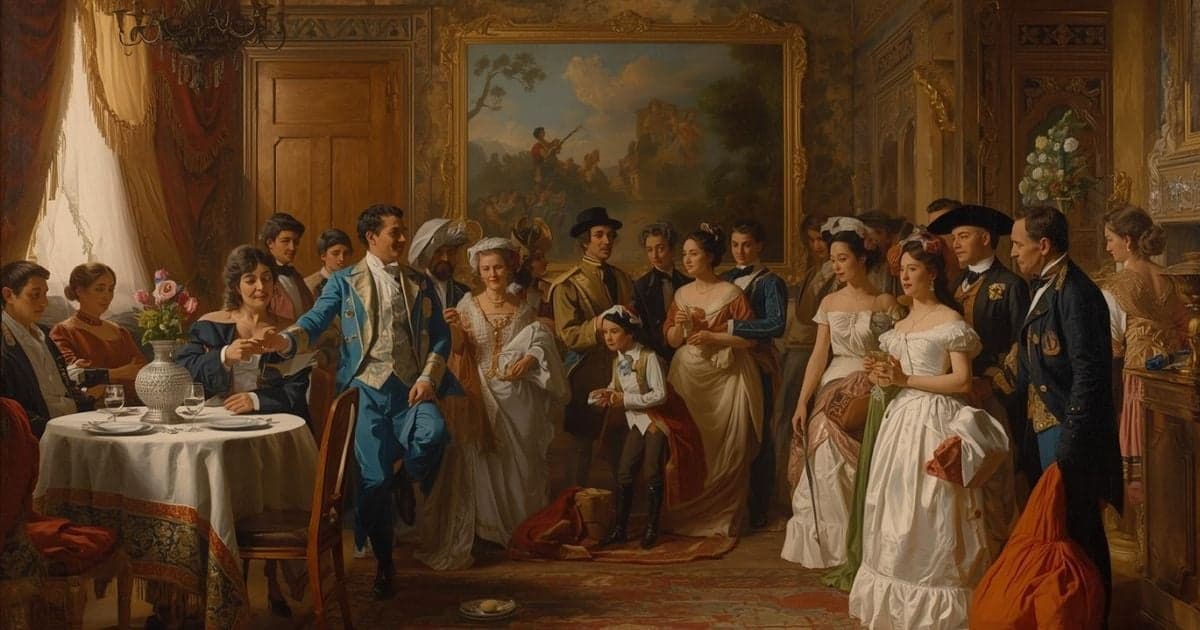
Anna Pavlovna Scherer opens her Petersburg salon by asking whether anyone still believes Bonaparte is a man and not the Antichrist, and Pierre Bezukhov, large, illegitimate, and already in the wrong coat, answers as if the question were still allowed. Tolstoy published the novel in 1869, after six years of family papers, histories, and his own Crimean service. The argument is that the emperor everyone is arguing about will not be the one who decides what happens to them.
Pierre Bezukhov is the awkward outsider who inherits one of the largest fortunes in Russia and still cannot find a reason to get up. Prince Andrei Bolkonsky is the brilliant officer who wants glory so he can escape a marriage that already feels finished, then discovers that the sky over Austerlitz does not care who he wanted to become. Natasha Rostova is the girl who fills a ballroom without trying, then nearly wrecks her life for a man who treats seduction as sport. Nikolai Rostov spends money and courage with the same open hand, then has to learn a farm. Princess Mary endures a tyrannical father and still keeps a conscience. Hélène and Anatole Kuragin use charm as a tool. Old Prince Bolkonsky drills his household like a regiment. Kutuzov wins by refusing to look like a genius. Napoleon believes a city can be commanded the way a dinner is served. The only opponent who never leaves the page is history itself, moving through drawing rooms and oatfields with the same indifference.
Andrei lies wounded at Austerlitz and the high sky shrinks Napoleon to a buzzing fly. Pierre is maneuvered into marrying Hélène because the match is useful, then joins the Freemasons hoping a ritual will organize his life. Natasha dances with Andrei at her first grand ball, then almost elopes with Anatole while the trusted adults look the other way. At Borodino, Pierre wanders among men who are about to die, and Andrei's regiment waits in an oatfield under fire without firing a shot. Moscow empties and burns. Pierre is taken prisoner and meets Platon Karataev, who shares food and a folk tale as if that were a philosophy. Natasha tends the dying Andrei. Years later Pierre and Natasha speak in domestic shorthand, and Tolstoy closes with an essay arguing that no great man steered any of it.
Tolstoy wrote the book between 1863 and 1869, drawing on family papers, histories, and his own service in the Crimean War, and he never treats the invasion as a backdrop, or the salons as comic relief, or Napoleon's genius as a fact. A marriage proposal and a cavalry charge belong to the same moral universe. The ending is not luck. Pierre's peace is not a prize for suffering. It is the slower work of a man who stopped asking history to explain him and started attending to the person beside him.
Pierre looks for a system large enough to hold his life, and Finding Meaning in Chaos is the salon, the inheritance, Borodino, then Karataev's prison circle, a purpose that will not fit in a book. Understanding Free Will vs Fate is Tolstoy at Borodino and in the Second Epilogue, taking the commander apart until even a private person cannot claim to steer the current. Building Authentic Relationships is Natasha's first dance, Anatole's playbook, and the epilogue marriage that includes reproach. Facing Mortality is the sky at Austerlitz, Lise's death, and Andrei's last hours with Natasha, when pride finally has no work left. Questioning Success is Pierre's fortune, Hélène's match, and Napoleon in occupied Moscow, each triumph failing to deliver what it advertised. Embracing Simplicity is a tavern in the rain, Karataev's circle, Nicholas at the plow, and the language Pierre and Natasha invent after the war.
Andrei looks at the high sky and Napoleon shrinks to a buzzing fly. Moscow burns. Years later Pierre and Natasha speak in domestic shorthand. Wide Reads gathers summaries, quotes, and audio through all three hundred and sixty-one chapters, from a Petersburg soirée in 1805 to a harvest at Bald Hills.
Follow Pierre from the salon and the inheritance through Borodino to Karataev's prison circle, and see purpose arrive when the systems fail.
A life can feel empty before it looks empty. If the official conversation does not touch what actually troubles you, the problem…
July 1805: Anna Pavlovna Scherer receives Prince Vasili Kuragin in her Petersburg salon and opens wi...
Anna Pavlovna's drawing room fills with Petersburg society playing the same parts: greet the aunt no...
The reception hums in three clusters: men around the abbe, youth around Helene and Princess Lise, go...
Prince Andrew Bolkonski enters bored before the room is boring: he grimaces at his pretty wife, kiss...
Talk turns to Napoleon's Milan coronation and the comedy of Genoa and Lucca petitioning a throne. An...
Guests thank Anna and drift out. Pierre, stout and absent-minded, takes a general's hat by mistake a...
Lise joins Pierre and Andrew after the salon mask drops off. She opens with flirtatious French chatt...
Alone after Lise leaves, Andrew and Pierre sit in miserable silence until Andrew sighs them into sup...
Past one on a white Petersburg night, Pierre heads home from Andrew's and feels too awake for sleep....
Prince Vasili keeps his salon promise: Boris lands in the Semenov Guards as cornet, though Anna Mikh...
The drawing room has gone stale. The countess smiles at her visitor but clearly hopes she will leave...
Sonya sits in the Rostov drawing room trying to look interested in adult talk while her eyes keep tr...
Natasha hides among the conservatory tubs waiting for Boris, thrilled by the new pleasure of watchin...
The exhausted countess sends Vera away so she can speak privately with Anna Mikhaylovna, her old Pet...
Anna Mikhaylovna coaches Boris on the ride over: be affectionate with your godfather, your future de...
Pierre arrives in Moscow after the bear-and-policeman scandal, expecting cold shoulders from his fat...
Anna Mikhaylovna has driven off with Boris to visit the dying Count Bezukhov, leaving Countess Rosto...
The Rostovs await Marya Dmitrievna, le terrible dragon, while the count entertains men in his smokin...
At the men's end of the Rostov table the talk turns hot: a German colonel swears he has seen the war...
After dinner the Rostov house turns to cards and music; Natasha hunts for Sonya and finds her sobbin...
While the Rostovs still dance, Count Bezukhov suffers a sixth stroke; doctors say recovery is imposs...
Pierre dozes in the carriage with Anna Mikhaylovna and wakes at Count Bezukhov's house by the back d...
Pierre enters the icon-lit chamber where Count Bezukhov sits in an invalid chair, wax taper in his h...
After the rite, Pierre finds Vasili and Catiche whispering under Catherine's portrait; they fall sil...
At Bald Hills the old Prince Bolkonski runs life like a drill: same minute for meals, geometry lesso...
Andrew and pregnant Lise arrive at Bald Hills while Tikhon guards the old prince's nap and the clavi...
Performative equality is still hierarchy when someone else sets the table. Prince Bolkonski seats hi...
Departure turns a house into a series of doors you may never pass through again. Prince Andrew packs...
Book Two opens with bureaucracy wearing parade polish. Near Braunau a Russian regiment scrubs button...
Kutuzov arrives in a Viennese carriage with an Austrian general at his side, and the regimental comm...
After the review Kutuzov meets an Austrian general in private and makes courtesy sound like a blade....
October 11: while headquarters buzzes over Mack's defeat, the Pavlograd hussars still live like cade...
That evening the squadron officers crowd Denisov's quarters because Rostov publicly accused an offic...
Kutuzov retreats toward Vienna, burning bridges; on October 23 Russian guns guard the Enns crossing ...
Enemy shots already cross the Enns bridge while Prince Nesvitski, on foot, is jammed against the rai...
Only Denisov's hussars remain facing the French hill while the army crosses; Tolstoy writes the invi...
After Krems the Russian army still retreats, but Kutuzov crosses the Danube, beats Mortier, and wins...
Prince Andrew rests with Bilíbin, the witty diplomat who turns every crisis into an epigram. Andrew ...
Next morning Andrew dresses for court and enters Bilíbin's study where young diplomats form les nôtr...
At the levee Emperor Francis only nods; later he asks Andrew checklist questions about times, miles,...
That night Andrew leaves Brünn for the army, fearing capture on the road to Krems. He joins the clog...
On November 1 Kutuzov learns his forty thousand men face Napoleon’s hundred and fifty thousand with ...
Between three and four o’clock Prince Andrew reaches Bagration at Grunth; the truce still holds, rum...
Andrew finishes his circuit at Túshin’s battery on the high ground, sketches the Russian line and Fr...
French movement and Russian reply open the battle; Andrew sees columns shift, gallops to Bagration, ...
Bagration rides into smoke on the right flank, meets wounded men, confused troops, and a colonel who...
At Schön Grabern the retreat almost holds until the left flank collapses. Bagration sends Zherkóv wi...
Russian infantry spill from the wood in disorder until one cry, Cut off!, infects the ranks with pan...
Darkness follows the guns: Túshin retreats silent and near tears, staff officers scold him though Zh...
Book Three opens on Prince Vasíli, who never plans schemes in words yet always moves toward richer, ...
Prince Vasíli must settle Pierre before touring estates and arranging Anatole's match. Pierre has ci...
Prince Vasíli writes that he and Anatole will visit Bald Hills on the way to the army. The little pr...
Princess Mary enters the drawing room heavy-footed while Vasíli and Anatole wait. She kisses hands, ...
Everyone but Anatole sleeps badly. Mary trembles at the thought of marriage and asks her maid to sta...
Midwinter brings Nicholas's first letter in months. Count Rostóv reads it behind a closed door, sobb...
Near Olmütz, Nicholas rides to the Guards camp broke, muddy, and proud of his St. George cross. Bori...
Eighty thousand allied troops form before Olmütz as the Russian and Austrian emperors review Kutúzov...
The day after the review Boris rides to Olmütz in his best uniform to use Prince Andrew's friendship...
Rostóv's squadron stays in reserve while others fight; his dread and dreams of glory feel wasted as ...
Alexander, shaken by dead and wounded, eats little and sleeps badly at Wischau. Savary arrives under...
Weyrother drives exhausted to Kutúzov's castle and reads German dispositions while Kutúzov sleeps th...
Rostóv rides picket duty in fog, fighting sleep while his mind loops between the Emperor, Denísov, a...
Before dawn the left flank marches in fog, burning sheds and following Austrian guides while columns...
At eight o'clock Kutúzov leads Milorádovich's column to Pratzen; Prince Andrew expects his Toulon, p...
Kutúzov halts where roads part; fog lifts enough to show the French were not a mile and a half away ...
On Bagratión's quiet flank at nine, Dolgorúkov wants action; Bagratión sends Rostóv to ask Kutúzov, ...
Rostóv rides through a lost battle looking for Kutúzov and the Emperor and finds only fleeing crowds...
On the Pratzen Heights Prince Andrew lies wounded beside the fallen flagstaff, moaning like a child ...
Published 1869
Leo Tolstoy (1828-1910) was born Lev Nikolayevich Tolstoy at Yasnaya Polyana, a family estate south of Tula. He left Kazan University without finishing, gambled, joined the army, and served at Sevastopol. Those years gave him a habit of watching men under pressure without decorating them. He married Sophia Behrs in 1862, ran the estate, taught peasant children, and spent six years turning family archives and the Napoleonic invasion into War and Peace.
He originally conceived the book as a novel about the Decembrists of 1825, then walked backward until 1805 became the opening and 1812 the centre. The result is not a conventional historical novel. It is an argument that private life and public catastrophe belong to the same moral universe: a marriage proposal and a cavalry charge, a salon joke and a city on fire. The Second Epilogue, often skipped, is essential to the project. He claims history is not moved by great men but by the accumulated actions of countless ordinary people.
In later life he turned against property, the Orthodox Church, and his own fame. He was excommunicated in 1901 and died in 1910 at the railway station in Astapovo, after leaving home. The late prophet is famous. The novelist who wrote War and Peace is the one who still will not let a reader treat an emperor as the author of an age.
Leo Tolstoy speaks to the moment a headline hands one person the credit or the blame for an outcome that thousands of untracked choices actually produced: the founder called a visionary for a market that was already moving, the general called a genius for a battle that a hundred small delays and small acts of disobedience actually decided. War and Peace names that habit directly, then spends three hundred and sixty-one chapters taking it apart.
Plot, characters, and themes — plus audio, source text, and patterns you can use after class
Two ways in
Chapter by chapter, with audio. The meaning arrives because you experienced it — not because someone listed bullet points.
Start with this.
The actual words the author wrote, alongside every summary. Use the guide, then step into the source.
Then step into the source.
Either way, the door opens inward.
— and most of all, Why does this matter?
Purchase the complete book to access all chapters and support classic literature
Available in paperback, hardcover, and e-book formats
Free to read • No account required

Weekly insights from the classics. Amplify Your Mind.
We focus on public domain classics because these timeless works belong to everyone. No paywalls, no restrictions—just wisdom that has stood the test of centuries, freely accessible to all readers.
Public domain books have shaped humanity's understanding of love, justice, ambition, and the human condition. By amplifying these works, we help preserve and share literature that truly belongs to the world.
© 2026 Wide Reads™. All Rights Reserved.
Intelligence Amplifier™ and Wide Reads™ are proprietary trademarks of Arvin Lioanag.
Copyright Protection: All original content, analyses, discussion questions, pedagogical frameworks, and methodology are protected by U.S. and international copyright law. Unauthorized reproduction, distribution, web scraping, or use for AI training is strictly prohibited. See our Copyright Notice for details.
Disclaimer: The information provided on this website is for general informational and educational purposes only and does not constitute professional, legal, financial, or technical advice. While we strive to ensure accuracy and relevance, we make no warranties regarding completeness, reliability, or suitability. Any reliance on such information is at your own risk. We are not liable for any losses or damages arising from use of this site. By using this site, you agree to these terms.
Deep dives
Watch Natasha's first dance, Anatole's playbook, and the epilogue marriage that includes reproach.
All this had to be and could not be otherwise.
Stay with Andrei under the Austerlitz sky, then at Yaroslavl, when pride finally has no work left.
How was it I did not see that lofty sky before? And how happy I am to have found it at last!
Trending search questions mapped to the lessons in this novel—what readers actually ask Google about Pierre and Natasha, Prince Andrei's death, the Second Epilogue's argument about history, and Platon Karataev.
Yes, but not as a reward for the plot they were each running separately. Natasha nearly elopes with Anatole, then nurses the dying Andrei; Pierre survives French captivity and an empty marriage to Hélène before either of them is free to choose the other. Tolstoy skips the wedding and gives you the marriage instead: two people speaking in domestic shorthand while history, somewhere, keeps moving without their permission.
Explore Building Authentic RelationshipsHe is struck down at Austerlitz early in the novel and watches a high, indifferent sky shrink Napoleon to a passing fly. He recovers, loses his wife Lise the day he returns home, courts Natasha, then breaks the engagement under his father's pressure and Anatole's interference. Wounded again at Borodino, he is found and nursed by Natasha, and dies with pride finally holding nothing back.
Explore Facing MortalityOn the surface, five Russian families living through Napoleon's 1812 invasion. Underneath, an argument about whether history is steered by great men or accumulated out of millions of small, unrecorded choices. Pierre searches a salon, an inheritance, and a Masonic lodge for a system large enough to hold his life, and Tolstoy keeps showing him that the system is not coming, while meaning arrives anyway, usually from the person beside him.
Explore Finding Meaning in ChaosThe Second Epilogue is not a digression from the story; it is the argument the story was building toward. Tolstoy sets the plot aside to take apart the idea that Napoleon or Kutuzov personally caused what happened in 1812, arguing instead that command looks decisive only after the fact, once millions of ordinary decisions have already made the outcome. Skip it and you keep the marriages and lose the reason he wrote the book.
Explore Understanding Free Will vs FateA peasant soldier Pierre meets as a fellow prisoner after Moscow falls. Karataev owns almost nothing, shares food without keeping score, and offers a folk story as if that were a complete philosophy rather than a lecture. He never argues a position; he simply is one. For Pierre, who has spent the whole novel hunting a system large enough to explain his life, Karataev is the first proof that meaning does not require one.
Explore Embracing SimplicitySix lessons run through the novel: find meaning when history refuses to pause and explain itself; question whether free will or fate actually decided the outcome; build relationships that can survive strategy and self-interest; face mortality without the comfort of a heroic story; question success measured in fortune, rank, or conquest; and embrace the kind of simplicity a shared potato and a tavern in the rain make possible. Those six patterns, not just a war and a wedding, are why the book still gets read.
What makes him indispensable is that he built the argument from the inside. He served under fire at Sevastopol, watched men decide and disobey under real conditions, then spent six years turning family papers and the 1812 invasion into a novel that treats a marriage proposal and a cavalry charge as the same order of event. Kutuzov wins by refusing to look like a genius. Napoleon loses while giving orders as if a city could be commanded like a dinner. Tolstoy will not let either man be smarter than the accumulated, anonymous decisions of everyone below them.
He later turned against the fame the novel bought him, gave away his claim on his own property, and spent his final decades quarrelling with the Church that excommunicated him for it. The prophet who died at a rural railway station in 1910 is the famous version. The novelist who wrote War and Peace is the one who still stops a reader from handing the whole story to a single name.