
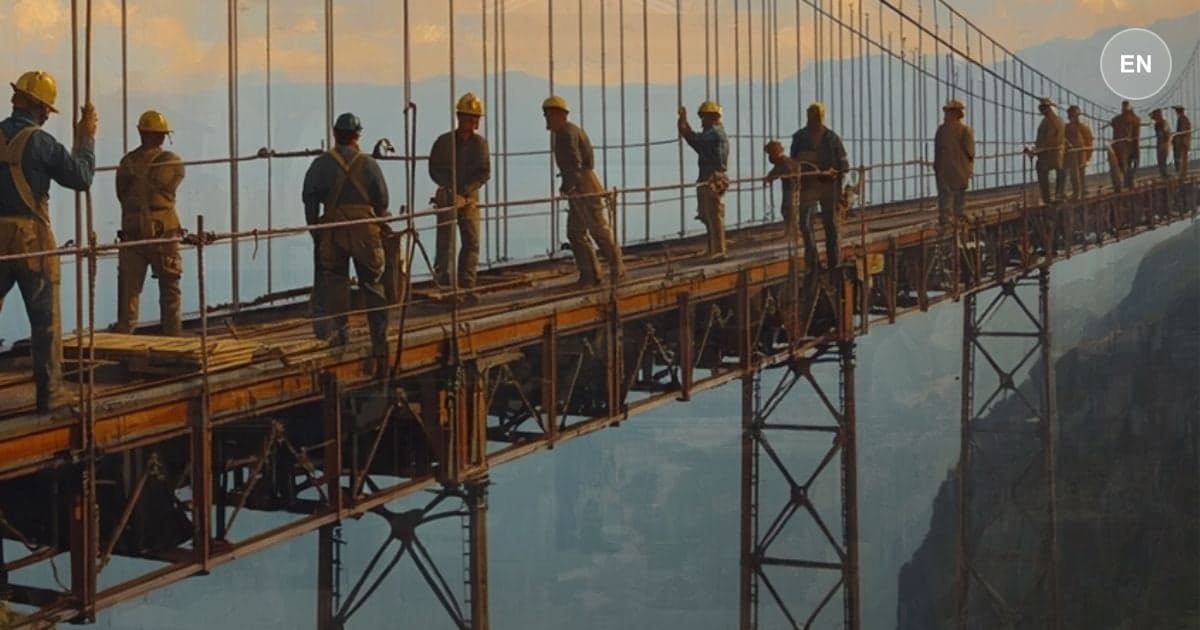
These stories honor competence so fiercely that it is easy to miss the other plot. Cottar keeps a dream country whose starting-off place is a pile of brushwood. Miriam has been walking it too. Findlayson, after the flood, sits in a divine council that no specification required. Scott and William fall in love while feeding a famine and prove it by not stealing an afternoon from the convoys. McPhee's fortune is a house with Janet in it. The job keeps insisting it is the whole person. The book keeps showing the room the job cannot enter.
Kipling is not asking you to quit the work. He is showing that a life fused entirely to the bridge, the engine, or the uniform will still grow a private map, and that the map is where the person remains after the shift. Cottar is a good officer. That is not what Miriam recognizes. She recognizes the boy who has been walking the same inner road. If your identity is only the title, you will not know the person who has been walking beside you, including yourself.
The danger is not having an inner life. The danger is treating it as childish until it is the only place two people can still meet. Findlayson wakes and wants the bridge news first, which is right for an engineer and incomplete for a man. Keep the standard. Keep also one practice, friendship, or private country that the gong does not get to schedule. The day's work is real. It is not the whole of who does it.
The Central Lesson
The day's work is not the whole person. Cottar keeps a dream country the uniform never mapped, and Miriam has been walking it too. Findlayson talks to gods. Scott and William recognize each other in a famine the assignment did not schedule as romance. Keep the standard. Keep also one private map that would survive if the job ended tomorrow. If you cannot name it, you are already only the signature, and the next flood will take more than the bridge.
Applying This to Your Life
Keep a Room the Job Cannot Enter
Cottar's dream country looks childish until it becomes the only place two people recognize each other. Protect one practice, friendship, or inner map that your title does not get to schedule.
Let Recognition Grow from Shared Work
Scott and William do not perform a courtship plot. They notice each other because both are doing the unglorious thing well. That is still how many real attachments start: not as a brand, as a witness.
Do Not Become Only the Signature
Findlayson on the pier and McPhee at the tail-shaft are admirable. They are also incomplete. Ask who you are when the drawing is signed and the flood has dropped. If you cannot answer, the job has already taken the private life.
Other lessons in this book
More life-skill deep dives from the same classic.
Systems Run on Skilled People
See the Dimbula's plates find one another, the pasture horses list their miles, and the Cat keep the ball at the boundaries.
5 chapters·Explore AnalysisHearing Work Before Rhetoric
Hear Boney's Kansas speech, Sargent's English costume, and a doctor who treats the wrong man, then ask who has actually carried the load.
6 chapters·Explore AnalysisWhen Competence Becomes Identity
Watch Findlayson stay with the flooded piers, .007 take the wrecking run, and Wardrop refuse a dead engine as a verdict on himself.
5 chapters·Explore AnalysisStandards When No One Is Watching
Sit with McPhee's unsigned tail-shaft, the Haliotis repair, and Chinn's vaccination when no inspector is coming.
5 chapters·Explore AnalysisWork That Serves Without Glory
Follow Scott's goats in a famine camp, McPhee's salvage, and a bridge travellers will cross without a thought.
5 chapters·Explore Analysis
Continue exploring
Explore this theme
The same lessons in other books
See how other books teach the same life skills.

Les Misérables: Essential Edition
Navigating Poverty and Social ClassTrace Fantine from 1817 hope to factory gossip, and the class that treats need as indictment.
The Jungle
Reading Graft as Everyday GovernmentStay with Duane's cell and chapter 25: votes, inspectors, and a city that prices justice.
The Essays of Montaigne
Choosing Real FriendshipHear essay 27 answer La Boétie: because it was he, because it was I.
Where the lesson lives in the book
The Same Starting-Off Place
Georgie Cottar grows from a frightened child into a competent officer and keeps a secret dream country whose starting place is a pile of brushwood near a beach. Miriam Lacy has been walking the same road. The uniform never knew. The book ends when two private maps recognize each other.
Key Insight:
Cottar's professional excellence is real. So is the inner life he hid because it did not look like work. Kipling's last story is a reminder that the day's work is not the whole person.
“Then you 're the Boy— my Brushwood Boy, and I 've known you all my life!”
A Punchayet the Drawing Cannot Contain
Findlayson stays with the Kashi Bridge through the monsoon, then takes opium against the fever and watches Hindu gods debate whether the railway is even their concern. Morning restores the engineer. The vision is not in the specification. Hitchcock's first question is still the bridge.
Key Insight:
The night on the piers is the job. The dream is the part of Findlayson the drawing cannot hold. Competence can still leave a man talking to gods about what the work was for.
“When Brahm ceases to dream, the Gods die.”
A Bond the Convoy Did Not Schedule
Scott and William feed a famine. Their attachment grows from mutual recognition of the work, not from a ballroom. Scott passes within miles of her camp and will not detour while carts are failing. She reads the refusal as evidence. The service never listed that part.
Key Insight:
The famine is the assignment. The recognition between two exhausted people is the life the assignment cannot see. Kipling lets the private bond grow out of competence without turning the camp into a love plot first.
“Thank God I did n't!”
Janet and the New Carpets
McPhee tells the salvage story over Madeira in a modest house suddenly furnished with new carpets, a piano, and a servant in a cap. Janet is in the room. The fortune is consequence. The marriage is the life the engine-room never listed on the articles.
Key Insight:
The refused tail-shaft and the Grotkau salvage are the work. The house with Janet is what the work was supposed to protect. A job that never mentions a private life still funds one, or wrecks one.
“Ye 've cast your bread on the watter, McPhee, an' be damned to you”
The Living Man Inside the Tomb
John Chinn inherits his grandfather's shrine among the Bhils and a duty that looks official until he has to walk it. Vaccination, hunting, and promises kept cost him more than a posting. The tribe knows the private man inside the inherited name.
Key Insight:
A family reputation can get you through the door. It cannot do the work. Chinn has to become someone the Bhils will trust in the present, not only remember from a tomb.
“I 've got a sort of hereditary influence over 'em.”