
Lessons
Lessons from The Day's Work
Six lessons from this classic work, traced chapter by chapter.
0:00 / 0:00
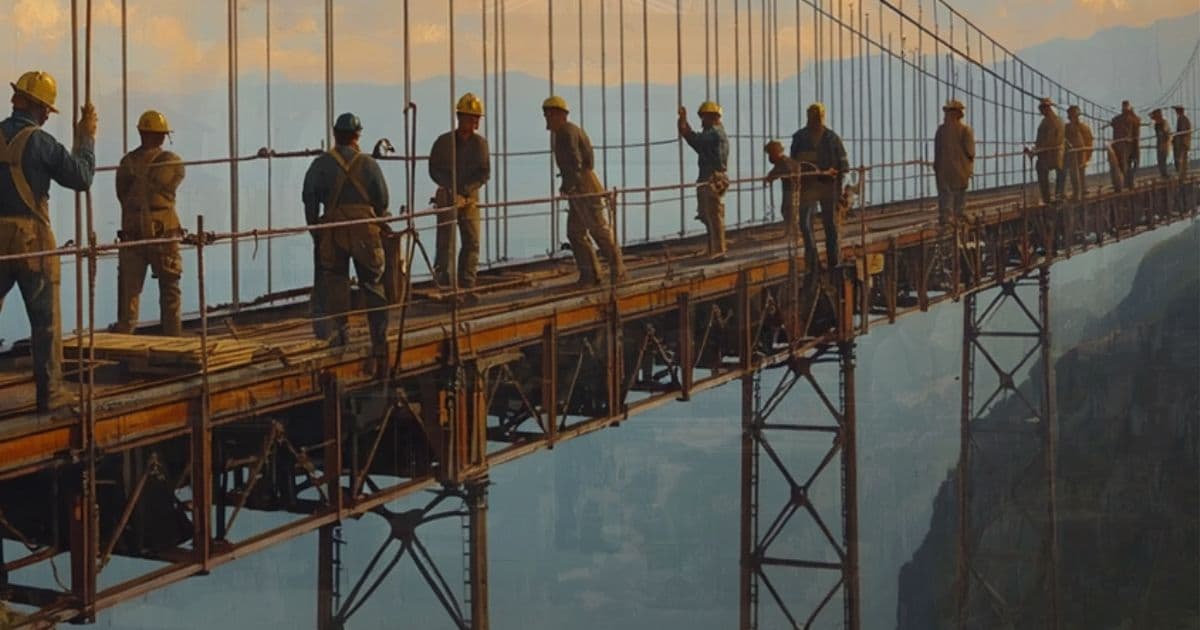
Findlayson has three years in a railway bridge across the Ganges when the river comes to take it back. He stays on the piers through the flood instead of going to safety, then wakes from an opium dream in which the Hindu gods discuss whether the Kashi Bridge is even their concern. Kipling published the collection in 1898. The bridge is still unfinished. The men on it are already the only thing keeping it there. Civilization here is not a speech. It is a rivet that holds when nobody important is watching.
Continue the summary
Findlayson is the chief engineer: exhausted, proud, and so fused to the structure that a failed pier would be a verdict on him. Hitchcock is the assistant who stays. Peroo is the lascar who knows the river better than either of them. McPhee is the chief engineer who loses a job rather than sign a faulty tail-shaft, then salvages a liner in a storm. Scott and William feed a famine across eight Madras districts, milking goats by hand for infants who will not eat the grain. Locomotive .007 takes hazing in a roundhouse and then runs a wrecking crew forty miles in the dark. The Maltese Cat captains an underfunded polo side. John Chinn inherits a tomb and a tribe. Wilton Sargent spends a fortune becoming English and ruins it by stopping a sacred express. Around them Kipling places Boney, the agitator horse who has never done the work; Wardrop, who rebuilds shelled engines at sea; Georgie Cottar, whose private dream life outlasts the uniform; and the new steamer Dimbula, whose plates have to find one another in an Atlantic gale.
The Kashi Bridge takes the monsoon and holds. Boney talks Kansas and freedom until the working horses list the miles they have actually run. The Dimbula's rivets stop complaining and become a ship. John Chinn vaccinates the Bhils by using his grandfather's name instead of a gun. Wardrop straightens bent rods with no dockyard in sight. Scott milks goats in a famine camp. .007 proves what the shops built him for. The Skidars win because the Cat keeps the ball at the boundaries. McPhee refuses the Breslau's tail-shaft, gets fired, and later takes the Grotkau off a lee shore. Sargent orders a train to stop as if Holt Hangars were his private siding. An American doctor forces an emetic on the wrong man on a Plymouth Sunday. Cottar grows from a frightened child into a competent officer and finds the woman who has been walking the same dream.
Kipling wrote these stories after years as a journalist in India and after watching how engines, ships, and railways actually fail. He never treats the workshop as local colour, or the flood as a cute test of character. Competence here is not a mood. It is a night on a pier, a refused signature, a repair that has to run. Empire is the workplace, not the sermon. What remains is not a hymn to steam. It is a picture of people who become their jobs, and of jobs that keep running because someone accepted the cost when applause was not available.
The flood is the first pressure, and When Competence Becomes Identity is Findlayson staying on the piers, .007 taking the wrecking run forty miles in the dark, and Wardrop refusing a dead engine as a verdict on himself. Once the job has become the only self left, Standards When No One Is Watching is McPhee refusing the Breslau's tail-shaft and losing the post, then later taking the Grotkau off a lee shore, and Chinn vaccinating the Bhils with a grandfather's name instead of a gun. Systems Run on Skilled People is the Dimbula's rivets becoming a ship, the pasture horses listing the miles they have actually run, and the Cat keeping the ball at the boundaries so the Skidars can win. Work That Serves Without Glory is Scott milking goats in a famine camp, that same salvage, and a bridge travellers will cross without a thought. Hearing Work Before Rhetoric is Boney talking Kansas and freedom until the working horses answer with miles, Sargent stopping a sacred express as if Holt Hangars were his private siding, and a doctor who forces an emetic on the wrong man on a Plymouth Sunday. The Private Life the Job Cannot See is Cottar's dream country, Findlayson's night with the gods, and the famine-camp romance the uniform never scheduled.
A refused tail-shaft sits unsigned on the Breslau. Years later the same man takes the Grotkau off a lee shore. Wide Reads keeps summaries, quotes, and audio on all twelve stories, from the flooded Kashi piers to the dream road two people have been walking separately.
Why this matters
People still arrive at this collection the moment a workplace treats competence as mood instead of structure: the shortcut that saves tonight's deadline and costs someone else's life next month, the expert who talks revolution but has never carried the load, the job that becomes the only self you have left. Kipling does not offer a hymn to overtime. He offers a study of signatures, piers, and repairs that have to run when applause is not available. This guide keeps that pressure tied to the Kashi flood, the unsigned tail-shaft, and the dream road Cottar walks after the shift ends.
Theme breakdowns
Explore the lessons
The Day's Work is Kipling's 1898 collection about what actually holds when nobody important is watching: Findlayson stays on the flooded Kashi piers as if a failed rivet would be a verdict on him, McPhee loses a job rather than sign a faulty tail-shaft and later takes the Grotkau off a lee shore, Wardrop rebuilds shelled engines at sea with no dockyard in sight, locomotive .007 runs a wrecking crew forty miles in the dark after the roundhouse stops laughing, the Dimbula's plates find one another in an Atlantic gale, Scott milks goats in a famine camp travellers will never name, Boney talks Kansas and freedom until the working horses list the miles they have actually run, and Georgie Cottar keeps walking a dream road the uniform never scheduled.
Each card traces a pattern through named chapters — summaries, quotes, and key insights tied to the scenes that prove it. Start with the featured lessons, then open the deep dives below.
Deep dives
Chapter-by-chapter breakdowns
Systems Run on Skilled People
See the Dimbula's plates find one another, the pasture horses list their miles, and the Cat keep the ball at the boundaries.
My honour is the honour of this bridge.
Work That Serves Without Glory
Follow Scott's goats in a famine camp, McPhee's salvage, and a bridge travellers will cross without a thought.
Practically, the thing was done.
Continue Exploring
Guides, life skills, and the full library.More ways to read The Day's Work: guides, life skills, and the wider library.