Free study guide · no paywall
The Day's WorkStudy Guide
by Rudyard Kipling (1898)
A flooded pier, an unsigned tail-shaft, and a dream road two people walk separately: mapped across twelve stories and six lessons on craft, duty, and what work costs when nobody is watching.
Start here
Plot, characters & chapter jump
12 chapter summaries · 8 key figures · discussion questions · quotes · free
Plot summary
Findlayson has spent three years driving the Kashi Bridge across the Ganges when the monsoon arrives two months early and he refuses to leave the piers. McPhee loses a job rather than sign a faulty tail-shaft, then later takes the Grotkau off a lee shore. Wardrop rebuilds shelled engines at sea with no dockyard in sight. Locomotive .007 runs a wrecking crew forty miles in the dark after the roundhouse stops laughing. Scott milks goats in a famine camp. The Maltese Cat captains an underfunded polo side. John Chinn vaccinates the Bhils with a grandfather's name instead of a gun. Wilton Sargent spends a fortune becoming English and ruins it by stopping a sacred express. Georgie Cottar keeps walking a dream country the uniform never scheduled.
Key characters
Jump to chapter
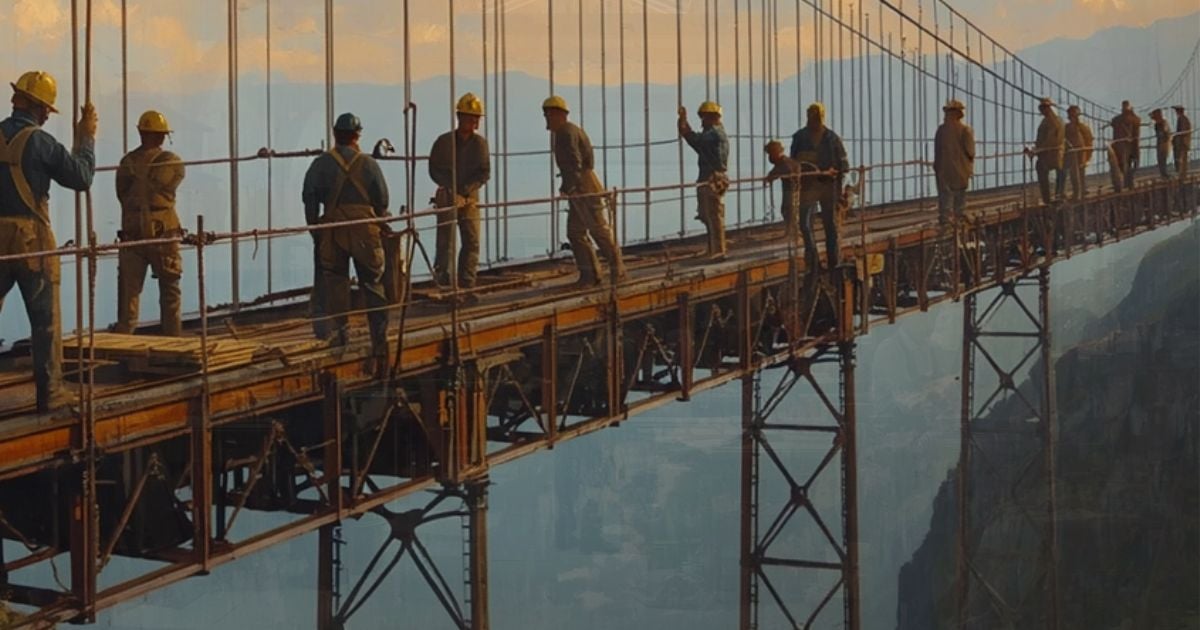
- Chapter 1Findlayson stays on the flooded piers
- Chapter 2Boney talks Kansas; the horses list their miles
- Chapter 5Wardrop refuses a dead engine as a verdict
- Chapter 6Scott milks goats in the famine camp
- Chapter 7.007's wrecking run in the dark
- Chapter 8The Maltese Cat wins at the boundaries
- Chapter 12Cottar and Miriam on the dream road
What readers search for
Common questions about The Day's Work
What is The Day's Work about?
Kipling published the collection in 1898 after years as a journalist in India and long conversations with engineers, drivers, and shipwrights. Twelve stories follow a flooded railway bridge, a shelled engine room, a famine camp, a roundhouse rookie, and a polo pony who captains an underfunded side. The through-line is not empire as a speech. It is a rivet, a refused signature, or a repair that has to run when nobody important is watching.
When Competence Becomes IdentityWhy does Findlayson stay on the bridge during the flood in The Day's Work?
The Kashi Bridge is three years of Findlayson's life across the Ganges, and the monsoon arrives two months early. When the flood gong sounds, he will not leave the piers because a failed span would read as a verdict on him, not a line item. Hitchcock and Peroo stay with him through the night, and Findlayson wakes from an opium dream in which the Hindu gods debate whether the bridge is even their concern.
When Competence Becomes IdentityWhy does McPhee refuse to sign the Breslau tail-shaft in The Day's Work?
McPhee is the chief engineer who will not put his name on a faulty tail-shaft the owners want signed so the ship can sail. He loses the post for the refusal, which is the part most workplaces still get right: the cost of the standard arrives immediately, and the cost of the shortcut arrives later on someone else's watch. Years later the same man takes the Grotkau off a lee shore when the Breslau breaks as predicted.
Standards When No One Is WatchingWhat happens in the locomotive story .007 in The Day's Work?
Locomotive .007 arrives in a roundhouse as a kid the veterans can mock until the Flying Freight is ditched forty miles out. The wrecking run is the only credential that counts: the shops built him for this, and the ridicule ends when he does the function, not when he answers the hazing. Kipling treats the engine as a worker whose proof is a night run in the dark, not a speech about potential.
When Competence Becomes IdentityWhat is The Maltese Cat story about in The Day's Work?
The Skidars' polo team reaches the Upper India Cup final against the Archangels, who can field two ponies for every one the poorer regiment owns. The Maltese Cat, a flea-bitten pony who once pulled a vegetable cart in Malta, keeps the underfunded side focused on the game instead of the maxims. He wins by keeping the ball at the boundaries so intelligence and coordination blunt superior resources.
Systems Run on Skilled PeopleFast track
Short on time? Start here
Seven stories carry most of the collection's weight, from the Kashi flood to the dream road two people have been walking separately.
Chapter 1
Findlayson stays on the flooded piers
Chapter 2
Boney talks Kansas; the horses list their miles
Chapter 5
Wardrop refuses a dead engine as a verdict
Chapter 6
Scott milks goats in the famine camp
Chapter 7
.007's wrecking run in the dark
Chapter 8
The Maltese Cat wins at the boundaries
Chapter 12
Cottar and Miriam on the dream road
Full coverage
Everything in this study guide
The same surfaces readers expect from a traditional study guide — plot, characters, themes, quotes, and homework help — plus audio and the source text on every chapter. Free, no paywall.
Plot overview
Summary, context, and why the book still matters
12 chapter summaries
Every chapter with audio narration
8 key figures
Who drives the plot and what each one does
6 lessons
Themes traced to scenes, not generic labels
15+ important quotes
Verified lines with chapter links and analysis
Discussion questions
Five per chapter, with suggested answers for class and essays
Original text
Author's words beside every summary
This is not a plot cheat sheet. Wide Reads walks The Day's Work the way Kipling built it: twelve stories about what actually holds when the inspector has gone, the flood has started, or the roundhouse is still laughing. Use the three-part path below to keep your bearings, follow the six lesson deep dives when a story hooks you, and open individual chapters for summaries, quotes, and audio.
For plot and theme questions about The Day's Work, see Common Questions on the book page.
How to use this guide
How to Read This Book with Wide Reads
Start with infrastructure under pressure
Read chapters 1 through 4 for Findlayson on the flooded Kashi piers, Boney's Kansas speech in the Vermont pasture, the Dimbula finding herself in an Atlantic gale, and John Chinn inheriting a tomb the Bhils treat as a shrine.
Follow engines, standards, and service
Chapters 5 through 8 carry Wardrop's shelled engine room, Scott's goats in a famine camp, locomotive .007's wrecking run, and the Maltese Cat keeping the ball at the boundaries so the Skidars can win.
Read rhetoric, rescue, and private life
Chapters 9 through 12 stage McPhee's salvage, Wilton Sargent's English costume, a Plymouth Sunday where a doctor doses the wrong man, and Cottar's dream road with Miriam. When a story raises a question you cannot shake, jump to the matching lesson page, then return to the chapter list.
Plot & context
Book Overview
Findlayson has three years in a railway bridge across the Ganges when the river comes to take it back. He stays on the piers through the flood instead of going to safety, then wakes from an opium dream in which the Hindu gods discuss whether the Kashi Bridge is even their concern. Kipling published the collection in 1898. The bridge is still unfinished. The men on it are already the only thing keeping it there. Civilization here is not a speech. It is a rivet that holds when nobody important is watching.
Findlayson is the chief engineer: exhausted, proud, and so fused to the structure that a failed pier would be a verdict on him. Hitchcock is the assistant who stays. Peroo is the lascar who knows the river better than either of them. McPhee is the chief engineer who loses a job rather than sign a faulty tail-shaft, then salvages a liner in a storm. Scott and William feed a famine across eight Madras districts, milking goats by hand for infants who will not eat the grain. Locomotive .007 takes hazing in a roundhouse and then runs a wrecking crew forty miles in the dark. The Maltese Cat captains an underfunded polo side. John Chinn inherits a tomb and a tribe. Wilton Sargent spends a fortune becoming English and ruins it by stopping a sacred express. Around them Kipling places Boney, the agitator horse who has never done the work; Wardrop, who rebuilds shelled engines at sea; Georgie Cottar, whose private dream life outlasts the uniform; and the new steamer Dimbula, whose plates have to find one another in an Atlantic gale.
The Kashi Bridge takes the monsoon and holds. Boney talks Kansas and freedom until the working horses list the miles they have actually run. The Dimbula's rivets stop complaining and become a ship. John Chinn vaccinates the Bhils by using his grandfather's name instead of a gun. Wardrop straightens bent rods with no dockyard in sight. Scott milks goats in a famine camp. .007 proves what the shops built him for. The Skidars win because the Cat keeps the ball at the boundaries. McPhee refuses the Breslau's tail-shaft, gets fired, and later takes the Grotkau off a lee shore. Sargent orders a train to stop as if Holt Hangars were his private siding. An American doctor forces an emetic on the wrong man on a Plymouth Sunday. Cottar grows from a frightened child into a competent officer and finds the woman who has been walking the same dream.
Kipling wrote these stories after years as a journalist in India and after watching how engines, ships, and railways actually fail. He never treats the workshop as local colour, or the flood as a cute test of character. Competence here is not a mood. It is a night on a pier, a refused signature, a repair that has to run. Empire is the workplace, not the sermon. What remains is not a hymn to steam. It is a picture of people who become their jobs, and of jobs that keep running because someone accepted the cost when applause was not available.
Read the full summary on the book page →
Why this book now
People still arrive at this collection the moment a workplace treats competence as mood instead of structure: the shortcut that saves tonight's deadline and costs someone else's life next month, the expert who talks revolution but has never carried the load, the job that becomes the only self you have left. Kipling does not offer a hymn to overtime. He offers a study of signatures, piers, and repairs that have to run when applause is not available. This guide keeps that pressure tied to the Kashi flood, the unsigned tail-shaft, and the dream road Cottar walks after the shift ends.
About Rudyard Kipling
Rudyard Kipling (1865-1936) was born in Bombay, sent to school in England, and returned to India as a young journalist. He won the 1907 Nobel Prize in Literature. The early years in the subcontinent, and the later years watching how engines, ships, and railways actually failed, shaped stories that treat empire as a workplace rather than a doctrine. The Day's Work is the book where that fascination becomes a method. He interviewed engineers, rode with drivers, and studied how a bridge takes weight and how a boiler fails under pressure. The celebration of competence is unsentimental: a job well done can still leave you unnamed, and a shortcut can still kill someone who never signed the drawing. He is often remembered for The Jungle Book and Kim. These twelve stories show the other side: precise respect for skilled labour and the moral weight of a signature, a pier, or a refused order. He died in London in 1936, one of the most widely read authors of his age.
Themes with proof
Lessons from The Day's Work
Six pressures Kipling tests across bridges, engine rooms, and roundhouses: when competence becomes identity, standards that live after the inspector has gone, systems that run on skilled people, work that serves without glory, rhetoric that talks past the miles actually run, and the private life the job cannot see. Each spoke ties named stories to the proof.
Deep dives
Chapter-by-chapter breakdowns
Systems Run on Skilled People
See the Dimbula's plates find one another, the pasture horses list their miles, and the Cat keep the ball at the boundaries.
My honour is the honour of this bridge.
Work That Serves Without Glory
Follow Scott's goats in a famine camp, McPhee's salvage, and a bridge travellers will cross without a thought.
Practically, the thing was done.
Character guide
Key Figures
Who drives the plot, what each one wants, and why they matter to the argument of the book.
Findlayson
Chief engineer who stays on the flooded Kashi piers as if a failed rivet would be a verdict on him, then wakes from an opium dream among the Hindu gods.
McPhee
Chief engineer who loses a post rather than sign a faulty tail-shaft on the Breslau, then later takes the Grotkau off a lee shore when the shortcut breaks as predicted.
Wardrop
Engineer who will not treat a shelled plant as a sentence on the crew, and straightens bent rods at sea with no dockyard in sight.
Scott and William
Relief workers who feed a famine across eight Madras districts, milking goats by hand for infants who will not eat the grain the trains deliver.
Locomotive .007
Roundhouse rookie the veterans mock until the wrecking run forty miles in the dark proves what the shops built him for.
The Maltese Cat
Flea-bitten polo pony who captains an underfunded side by keeping the ball at the boundaries instead of answering showy rivals.
John Chinn
Officer who vaccinates the Bhils by using his grandfather's name and reputation instead of a gun, and stalks the Clouded Tiger when legend threatens a second panic.
Georgie Cottar
Officer whose professional competence is real, and whose dream country with Miriam is the life the uniform never scheduled.
Memorable lines
Key Quotes
Verified passages with chapter links — the lines teachers and essays keep returning to.
“" All but," said he, with a smile.”
“Practically, the thing was done.”
“our inalienable right. It 's humiliatin'," said the yellow horse, sniffing”
“" Not till they 're dead," Muldoon answered quietly.”
“" she 's a real ship, is n't she?”
“She has to find herself yet.”
“The Chirms are luckier than most folk, because they know exactly what they must do.”
“Thou art their law.”
“Heave to, or take the consequences!”
“Kuined from end to end”
“It 's de- clared!”
“I like men who do things”
“Where did this thing blow in from?”
“That kid 's all right. Eustis designed him, and Eustis designed me. Ain't that good enough?”
“We ' ve pulled up from bottom to second place in two weeks against all those fellows on the ground here. That 's because we play with our heads as well as our feet.”
Class & essay prep
Discussion Questions
Sample prompts drawn from the chapter guides — each with suggested answers for seminars and written work.
Opening: What does Findlayson see when he surveys the bridge before the flood warning?
From Chapter 1Middle: Why do Findlayson and Hitchcock divide the river banks when the telegrams arrive?
From Chapter 1Opening: Who is Boney and why is he in the Back Pasture?
From Chapter 2Middle: How do Muldoon and Marcus challenge Boney's equality talk?
From Chapter 2Opening: Why does the captain say christening is not enough to make a ship?
From Chapter 3Middle: How do the Dimbula's parts behave when the gale first strikes?
From Chapter 3Why do the uniformed Bhils treat young Chinn as Jan Chinn returned before he proves himself in battle?
From Chapter 4How does John's performance at the Satpura tomb turn vaccination from terror into cooperation?
From Chapter 4Why does Wardrop sabotage his own engine room before leaving the Haliotis in port?
From Chapter 5What does the shell's path through the chief engineer's cabin add to the story's tone?
From Chapter 5Why does William insist on traveling into the famine with her brother instead of waiting in the hills?
From Chapter 6What does Scott learn when starving villagers refuse wheat and millet?
From Chapter 6Why do the veteran engines mock .007 when he asks what a hot-box is?
From Chapter 7What changes in the yard's attitude once the Flying Freight ditches and .007 is sent out?
From Chapter 7What disadvantages do the Skidars' ponies list before the final, and how does The Maltese Cat answer each fear?
From Chapter 8Chapter by chapter
All Chapters
Chapter-by-chapter summaries, quotes, and audio.
Ch. 1 · The Bridge-BuildersFindlayson stays on the flooded piers
Chief Engineer Findlayson and his assistant Hitchcock have spent three brutal years driving the Kashi Bridge across the Ganges. The opening scene is i...
Ch. 2 · The Walking DelegateBoney talks Kansas; the horses list their miles
Sunday afternoon salting is Vermont custom: the narrator carries salt through brook and sugar-bush, past ruined rose-fringed cellars and Lost Orchard,...
Ch. 3 · The Ship That Found Herself
Miss Frazier stands on the clean decks of the new steamer Dimbula, proud of the paint, brass, patent winches, and straight bow where she cracked the c...
Ch. 4 · The Tomb of His Ancestors
The Tomb of His Ancestors opens with three generations of the Chinn family embedded in Central India. John Chinn the First pacified the Bhils through ...
Ch. 5 · The Devil and the Deep SeaWardrop refuses a dead engine as a verdict
The Devil and the Deep Sea follows the Haliotis, a tramp steamer with a ledger of aliases and a crew that has lived by evasion. Kipling sketches her c...
Ch. 6 · William the ConquerorScott milks goats in the famine camp
William the Conqueror begins in the punishing heat of a provincial club, where Scott and Martyn loaf through empty evenings until telegrams declare fa...
Ch. 7 · .007.007's wrecking run in the dark
Kipling's locomotive fable opens in a roundhouse where veteran engines test a newcomer before work begins. Locomotive .007, fresh from the shops, endu...
Ch. 8 · The Maltese CatThe Maltese Cat wins at the boundaries
The Skidars' polo team reaches the final of the Upper India Free-for-All Cup against the Archangels, who can field two ponies for every one the poorer...
Ch. 9 · Bread upon the Waters
The narrator revisits McPhee, the scarred Chief Engineer of the Breslau whom readers met through Brugglesmith, and finds him celebrating with Janet in...
Ch. 10 · An Error in the Fourth Dimension
Wilton Sargent, son of the American railway magnate Merton Sargent, has spent four years and a fortune trying to become more English than the English....
Ch. 11 · My Sunday at Home
On a sleepy Sunday local toward Plymouth, the narrator shares a carriage with an American doctor enchanted by the English landscape. The doctor marvel...
Ch. 12 · The Brushwood BoyCottar and Miriam on the dream road
Little Georgie Cottar screams that a policeman on the Down has entered the nursery; servants blame a gardener's tale, and the housekeeper soothes him ...
Using this guide
Study Guide FAQ
How to use Wide Reads for class, essays, and revision — and how this guide compares to traditional study sites.
Why Wide ReadsWhat makes this different from SparkNotes or CliffsNotes?
Traditional study guides summarise what happens in The Day's Work story by story. This guide gives you that coverage: all twelve chapters, eight key figures, and Kipling's three-part arc from flooded infrastructure through engines and service to rhetoric and private life. Wide Reads adds When Competence Becomes Identity and Standards When No One Is Watching traced through named scenes like the Kashi piers and McPhee's unsigned tail-shaft. Summaries include audio. Free, no paywall.
Is The Day's Work hard to read?
The Day's Work is rated intermediate difficulty. Our chapter-by-chapter analysis breaks down complex passages, explains historical context, and highlights key themes to make the text more accessible. Each chapter includes summaries, character analysis, and discussion questions to deepen your understanding.
Can I use this study guide for essays and homework?
Yes — use this reading guide alongside The Day's Work, not instead of it. Wide Reads exists to show you why the book still matters: lessons, chapter summaries with audio, and life skills you can carry into real life. That context can sharpen essays on themes, characters, and quotes. Always read Rudyard Kipling's original text, though. We are the guide at the trailhead; the classic is still the point.
Begin on the flooded piers
Chapter 1 opens with Findlayson looking over seven miles of country he has remade while the monsoon arrives two months early. Each chapter adds summaries, quotes, audio, and the life-skill thread that turns twelve stories about skilled work into a case file on what a signature, a pier, or a refused order actually costs.
Wide Reads is different.
Plot, characters, and themes — plus audio, source text, and patterns you can use after class
Two ways in
Read & listen to the summary
Chapter by chapter, with audio. The meaning arrives because you experienced it — not because someone listed bullet points.
Start with this.
Read the original text
The actual words the author wrote, alongside every summary. Use the guide, then step into the source.
Then step into the source.
Either way, the door opens inward.
— and most of all, Why does this matter?
Continue Exploring
Guides, life skills, and the full library.More ways to read The Day's Work: guides, life skills, and the wider library.