
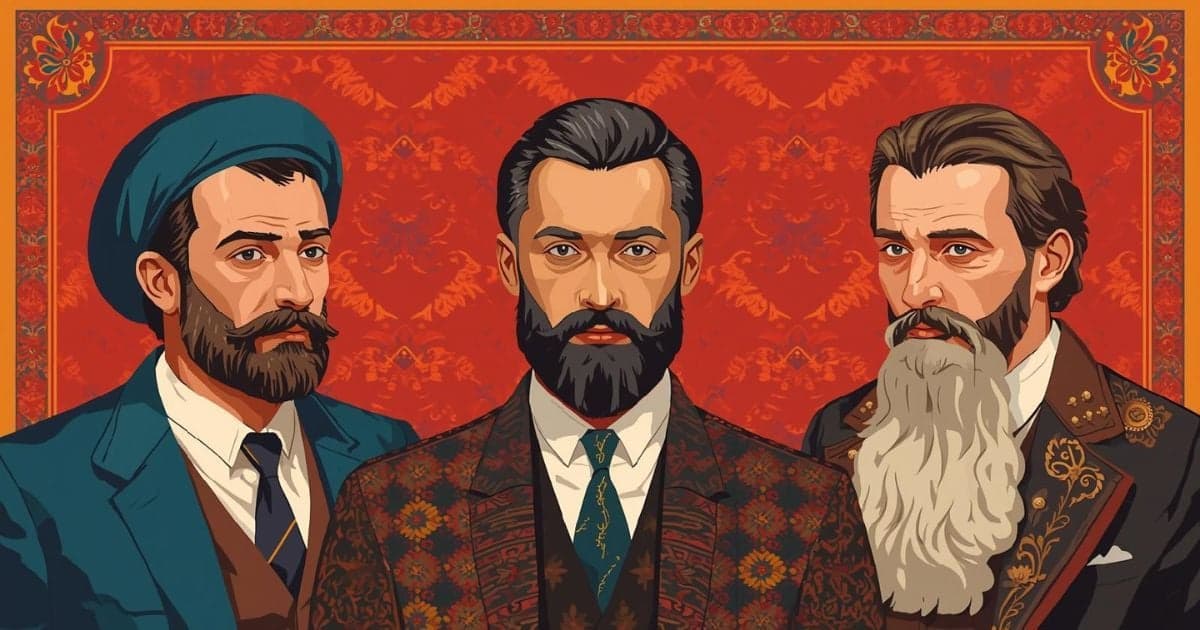
The Inquisitor's genius is that he does not sound like a villain. He sounds like a tired administrator who has watched people break under choice and decided to spare them. Bread, a miracle that ends the argument, a throne that tells you who you are: three products, one invoice. You pay with the right to be wrong. He calls the invoice love. Christ, in Ivan's poem, will not take the contract. He will also not debate it. That refusal is what the cardinal cannot forgive.
Ivan needs the poem because a list of tortured children has already made harmony look like a crime. He will not be the architect of a happiness that requires one unavenged tear. Alyosha will not be that architect either. The fork is not believer versus atheist. It is whether you will manage other people for their own good, or stand in a world that will not be managed and still refuse to become cruel in return.
Dostoevsky does not refute the desert offers with a pamphlet. He lets the kiss glow and the cell stay locked. He lets Zosima talk about a heaven that does not need a crowd. He lets a shabby devil, later, repeat Ivan's own student manifesto back to him. The usable pressure is this: every system that promises to lift the burden of freedom is selling you a childhood. Check the price before you call it care.
The Central Lesson
The Inquisitor is not a cartoon of tyranny. He is the voice that says people are too weak for freedom and that taking the burden is mercy. Bread, miracle, and a throne will always be on offer because they work. Ivan returns a ticket to a harmony he will not inhabit. Christ kisses a man who will not change. The lesson is not to stop wanting relief. It is to notice when relief is a childhood being sold back to you, and to refuse the management job even when the alternative is a world you cannot justify. A kiss will not unlock every cell. It will keep you from becoming the lock.
Applying This to Your Life
Name the Invoice on the Offer
When a leader, a workplace, or a faith asks you to stop choosing in exchange for certainty, write down what you are being paid in: safety, belonging, a finished answer. Then write what you are spending. If the spend is the right to revise, you are in Seville.
Do Not Mistake Silence for Defeat
Christ's kiss does not win the argument and does not open the lock. Some rooms are not asking for a better brief. They are asking you to take the job of managing other people's consciences. Declining the job can look like weakness. It is often the only refusal that stays human.
Keep a Practice, Not Only a Protest
Ivan's rebellion is morally sharp and has nowhere to live. Zosima's answer is smaller: stop treating people as cattle, and do the next concrete kindness without a theory of history. Protest without a practice will eventually sit on your sofa and talk like a poor relation.
Other lessons in this book
More life-skill deep dives from the same classic.
Love in Action vs Love in Dreams
Hear Zosima cheapen beautiful feelings, then watch Alyosha do the work at Ilyusha's stone.
18 chapters·Explore AnalysisRecognizing Intellectual Responsibility
Watch a sentence about God leave Ivan's mouth and become a paperweight in the old man's room.
19 chapters·Explore AnalysisBreaking Generational Dysfunction
Stand with the boys at the stone and ask whether this house can stop repeating the father.
25 chapters·Explore AnalysisWhen Doubt Becomes Identity
Follow Ivan from one reptile will devour the other to a hanging and a devil who talks like a poor relation.
12 chapters·Explore AnalysisUnderstanding Vicarious Guilt
Hold Dmitri on the fence with a pestle, then in the dock for a murder he only wanted.
34 chapters·Explore Analysis
Continue exploring
The same lessons in other books
See how other books teach the same life skills.

Les Misérables: Essential Edition
Navigating Poverty and Social ClassTrace Fantine from 1817 hope to factory gossip, and the class that treats need as indictment.
The Jungle
Reading Graft as Everyday GovernmentStay with Duane's cell and chapter 25: votes, inspectors, and a city that prices justice.
The Essays of Montaigne
Choosing Real FriendshipHear essay 27 answer La Boétie: because it was he, because it was I.
Where the lesson lives in the book
The Church That Would Swallow the State
When Zossima returns exhausted to his cell, Ivan is already debating the monks: his article argues the Church must eventually absorb the State, not sit in a corner of it. Païssy cries So be it; Miüsov mutters ultramontanism. Ivan outlines a future where moral law and civil law are one.
Key Insight:
The Grand Inquisitor's bargain begins as a respectable argument: let someone else carry the weight of freedom. Ivan is not yet in Seville, but he is already sketching who should decide for the many.
A Ticket He Will Not Keep
Ivan will not argue that God is absent. He will not sit in a harmony whose foundation is a child torn by dogs, a five-year-old locked in a freezing outhouse, a general's hunt staged for sport. He asks Alyosha whether he would design that building. Alyosha says no. Ivan returns the entrance ticket with respect, and calls the refusal rebellion only after Alyosha names it.
Key Insight:
Moral refusal is not the same as disbelief. Ivan's case is that a meaning purchased with unavenged tears is not a meaning he will inhabit. The danger is what comes next: a life that has nowhere to stand except the refusal.
“It's not God that I don't accept, Alyosha, only I most respectfully return Him the ticket.”
Three Offers in the Desert
Ivan's poem puts Christ back in Seville. The old cardinal arrests him and explains the correction. Bread would have ended hunger's revolt. A leap from the temple would have chained conscience to miracle. Caesar's sword would have united the world. Christ refused all three. The Church, the Inquisitor says, accepted them. Men will cry: make us your slaves, but feed us.
Key Insight:
The offer is always the same: trade the anxiety of choosing for a meal, a sign, and a voice that will not let you be wrong. It works because the diagnosis is partly true. Weakness is real. The question is whether treating people as children is compassion or a market.
“Make us your slaves, but feed us.”
A Kiss That Does Not Unlock the Cell
Christ never answers the speech. He kisses the bloodless lips. The kiss glows. The old man keeps the idea, opens the door, and tells him never to come back. Ivan finishes. Alyosha kisses Ivan the same way, stealing the gesture from the poem, and will not let the parable become a licence.
Key Insight:
Some arguments cannot be beaten on their own terms. The Inquisitor wants a debate about management. The kiss refuses the job. It does not prove the cardinal wrong. It refuses to become him. That is a different kind of answer, and it leaves the lock on the door.
“The kiss glows in his heart, but the old man adheres to his idea.”
Freedom That Does Not Need a Crowd
Zosima's last teaching answers the Inquisitor without naming him. Paradise is not a programme. It is already here if a person will see it. The monk's freedom is not a throne and not a riot. It is the refusal to treat other people as cattle, and the claim that hell is the inability to love.
Key Insight:
If the Inquisitor's freedom is a burden to be lifted, Zosima's is a capacity to be practiced. One version needs a hierarchy to keep the flock calm. The other needs a person who will stop using other people as furniture.
Scoundrel Lower Than Thief
Mitya confesses fifteen hundred roubles of Katerina's trust sewn in a rag around his neck while the town believed three thousand gone. He explains the distinction that tortured him: a scoundrel who might return half is not a thief who spent the reserve; tearing the amulet made him a thief for life in his own court.
Key Insight:
The Inquisitor's trade is also moral management: flatten every distinction until the room can file one label. Mitya refuses the flattening even when it cannot save him from parricide. Conscience that still sorts scoundrel from thief is freedom the file hates.
The Troika Without a Driver
Ippolit continues by rejecting insanity and retelling the Grushenka triangle, then traces murder from tavern talk to Katya's letter as the programme of the murder written forty-eight hours before, naming Ivan's departure as part of the plan.
Key Insight:
The Inquisitor's method is historical inevitability: turn a messy house into a fable the jury can ride without choosing. Bread, miracle, authority—give them a troika and call it Russia.
The Poor Relation Repeats the Poem
On the eve of brain fever a shabby gentleman sits on Ivan's sofa and gossips like a cousin who will not leave. He needles Ivan about the Grand Inquisitor and about the new man who will make all things lawful. He retells a legend Ivan invented at seventeen. The visitor is not a refutation. He is the leftover manifesto, wearing a lorgnette.
Key Insight:
An argument you are proud of will eventually sit down in your room and talk in your voice. If your identity is the case against freedom, you will meet it when you need a reason to live, and it will not help you live.