Master this chapter. Complete your experience
Purchase the complete book to access all chapters and support classic literature
As an Amazon Associate, we earn a small commission from qualifying purchases at no additional cost to you.
Available in paperback, hardcover, and e-book formats
Why This Matters
Connect literature to life
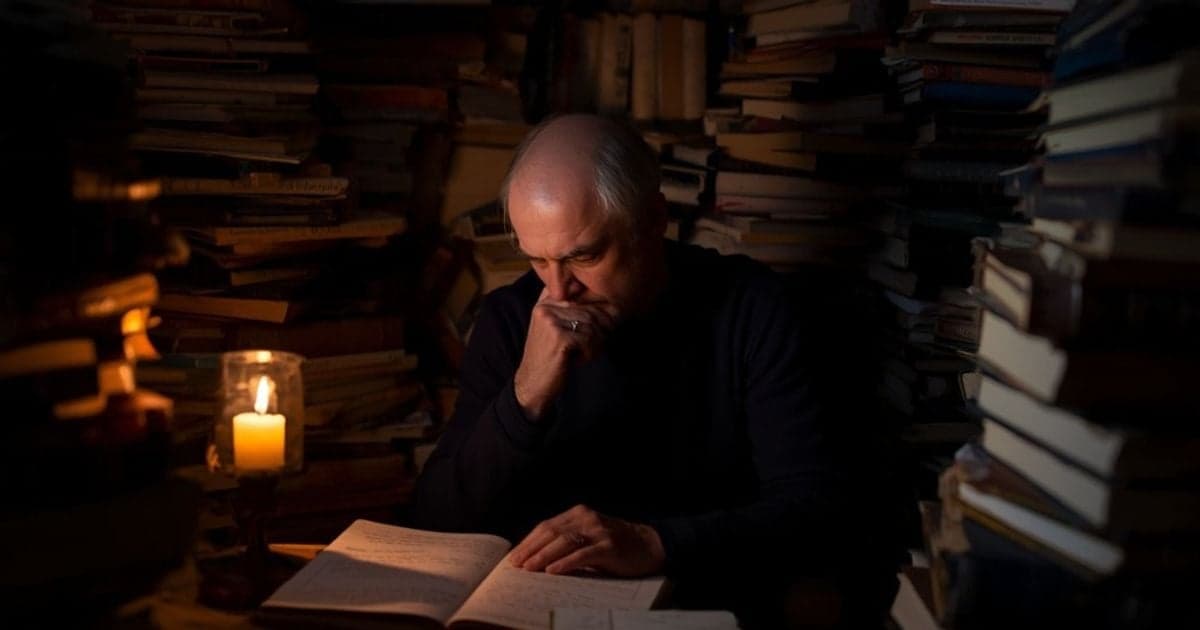
This chapter teaches how to recognize when our isolated minds create convincing internal critics that feel external but are actually our own thoughts amplified.
Practice This Today
This week, notice when negative thoughts start feeling like conversations with someone else—that's your signal to reach out to one real person before the mental echo chamber gets stronger.
Now let's explore the literary elements.
Key Quotes & Analysis
"Hallucinations are quite likely in your condition"
Context: The doctor explains Ivan's mental state after examining him
This quote establishes the medical framework for understanding Ivan's supernatural encounter. It suggests that guilt and fever can create experiences that feel completely real but aren't. The doctor's clinical detachment contrasts with Ivan's intense suffering.
In Today's Words:
When you're this stressed and sick, your brain can play tricks on you
"I am not a dream, I am a reality"
Context: The devil insists on his existence during their conversation
This captures the terrifying ambiguity of mental illness - when your own thoughts feel foreign and threatening. The devil's insistence on being real mirrors how guilt and self-doubt can feel like external forces attacking us.
In Today's Words:
Your problems aren't just in your head - they're real and they're here to stay
"You are myself, myself, only with a different face"
Context: Ivan recognizes the devil as his own reflection
This is Ivan's moment of psychological insight - recognizing that his tormentor is himself. It's both liberating and terrifying to realize that our worst enemy is often our own mind. This represents the first step toward potential healing.
In Today's Words:
You're just me talking to myself, aren't you?
Thematic Threads
Isolation
In This Chapter
Ivan's physical and emotional separation from his family allows his guilt to manifest as a tormenting hallucination
Development
Escalated from earlier philosophical detachment to complete psychological breakdown
In Your Life:
You might recognize this when your alone time becomes consumed by self-criticism or worst-case scenarios.
Guilt
In This Chapter
Ivan's complicity in his father's murder creates a psychological devil that mirrors his own moral theories back to him
Development
Transformed from abstract philosophical concepts to personal psychological torture
In Your Life:
You might see this when unresolved guilt creates intrusive thoughts that feel like external persecution.
Identity
In This Chapter
Ivan's intellectual pride becomes the weapon his mind uses against him, as the devil quotes his own theories
Development
His philosophical identity, once his strength, now fragments under moral pressure
In Your Life:
You might experience this when your professional or personal identity becomes a source of self-attack during crisis.
Human Connection
In This Chapter
Alyosha's arrival interrupts Ivan's psychological torment, showing how real relationships break mental isolation
Development
Contrasts with Ivan's earlier rejection of human bonds and spiritual community
In Your Life:
You might notice this when a friend's presence immediately shifts your mental state from dark to manageable.
Mental Health
In This Chapter
Ivan's fever and hallucinations show how psychological stress manifests as physical and mental breakdown
Development
Progression from intellectual stress to complete psychological crisis
In Your Life:
You might recognize this when emotional stress begins affecting your sleep, appetite, or ability to think clearly.
You now have the context. Time to form your own thoughts.
Discussion Questions
- 1
What clues in the chapter reveal that Ivan's visitor isn't real but a product of his own mind?
analysis • surface - 2
Why does Ivan's guilt and isolation create this particular kind of mental tormentor rather than comfort or peace?
analysis • medium - 3
Where do you see people today creating their own mental 'devils' through isolation when dealing with shame or guilt?
application • medium - 4
If someone you cared about was spiraling in isolation like Ivan, what specific steps would you take to help them reconnect with reality?
application • deep - 5
What does this chapter reveal about the difference between healthy solitude for reflection and destructive isolation that amplifies our worst thoughts?
reflection • deep
Critical Thinking Exercise
Break the Echo Chamber
Think of a time when you were alone with heavy thoughts that seemed to get worse the more you dwelled on them. Write down what those thoughts were telling you, then imagine explaining the situation to a trusted friend or family member. How would their perspective differ from your isolated thoughts? What would they say to challenge your mental 'devil'?
Consider:
- •Notice how isolation amplifies negative self-talk while connection provides reality checks
- •Consider why shame and guilt make us want to withdraw when connection is exactly what we need
- •Think about the difference between productive alone time and destructive mental spiraling
Journaling Prompt
Write about a time when someone helped you break out of a negative thought spiral by offering a different perspective. What did they do or say that helped you see the situation more clearly?
Coming Up Next...
Chapter 79: When Conscience Becomes a Tormentor
Alyosha brings devastating news from the yard that will force Ivan to confront the real-world consequences of his philosophical theories. The revelation about Smerdyakov will challenge everything Ivan thought he understood about guilt and responsibility.