Master this chapter. Complete your experience
Purchase the complete book to access all chapters and support classic literature
As an Amazon Associate, we earn a small commission from qualifying purchases at no additional cost to you.
Available in paperback, hardcover, and e-book formats
Why This Matters
Connect literature to life
This chapter teaches how to identify when your real opponents hide behind anonymous collective narratives rather than making direct accusations.
Practice This Today
This week, notice when workplace conflicts involve vague 'people say' statements versus specific, documented incidents you can actually address.
Now let's explore the literary elements.
Key Quotes & Analysis
"I am more afraid of them than of Anytus and his associates, who are dangerous, too, in their own way. But far more dangerous are the others, who began when you were children, and took possession of your minds with their falsehoods."
Context: Explaining why the old anonymous accusers are more threatening than the named ones
He immediately reframes the danger. The formal accusers are manageable — you can cross-examine them. The old rumors are not. They were planted in childhood, when minds are most open, and have been growing ever since.
In Today's Words:
The guys suing me I can handle. It's the decades of gossip that will actually destroy me.
"Hardest of all, I do not know and cannot tell the names of my accusers; unless in the chance case of a Comic poet. All who from envy and malice have persuaded you — some of them having first convinced themselves — all this class of men are most difficult to deal with."
Context: Describing the impossibility of refuting anonymous, self-convinced accusers
The most chilling detail: some of the accusers had first convinced themselves. They were not cynical liars. Sincere, self-deceived people spreading sincere false beliefs are far harder to refute than ordinary liars.
In Today's Words:
The hardest people to argue with are the ones who genuinely believe the wrong things they're saying about you.
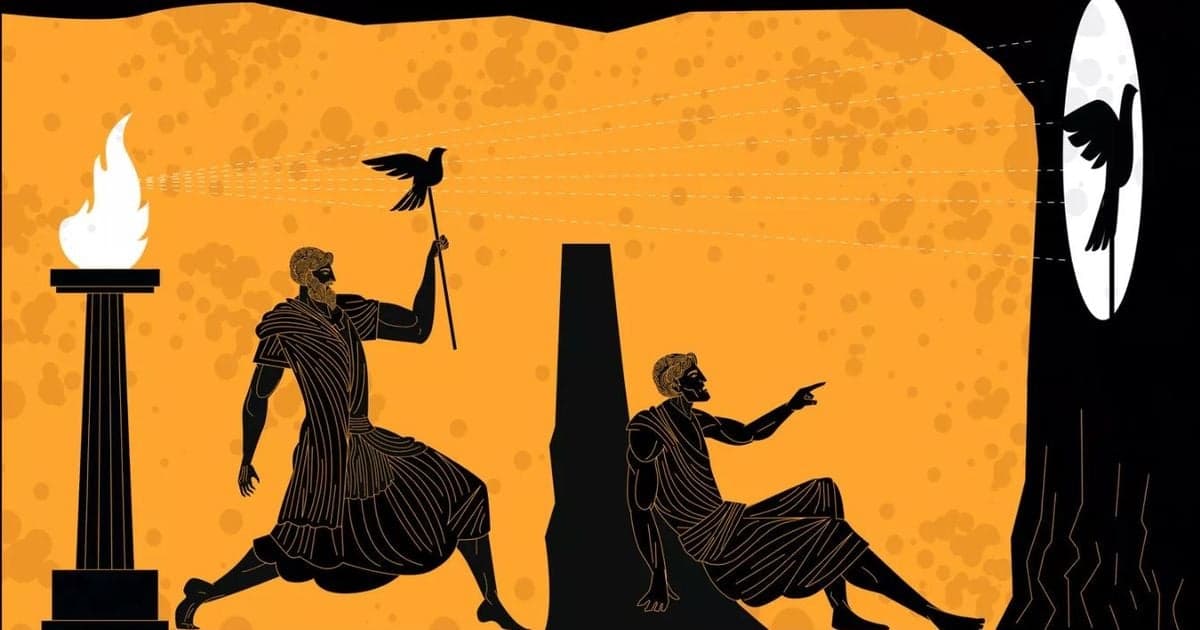
"I must simply fight with shadows in my own defence, and argue when there is no one who answers."
Context: Describing the fundamental unfairness of defending against anonymous, decades-old rumors
You cannot cross-examine a rumor. You cannot summon gossip to the stand. Socrates has to argue against an opponent who is everywhere and nowhere — the accumulated prejudice of a city.
In Today's Words:
I'm shadow-boxing. There's no one to refute because the real accusers are everywhere and no one.
Thematic Threads
Class
In This Chapter
Socrates is stereotyped as a typical paid sophist despite never charging fees, showing how class assumptions stick regardless of individual reality
Development
Building from earlier chapters where his humble origins contrast with his philosophical reputation
In Your Life:
You might face assumptions about your capabilities or character based on your job, neighborhood, or background rather than your actual performance.
Identity
In This Chapter
Socrates must defend not just his actions but his entire public persona, shaped by comedy and cultural narrative rather than truth
Development
Deepening from previous chapters where he established his unique philosophical mission
In Your Life:
Your reputation at work or in your community might be shaped more by gossip and first impressions than by your consistent daily actions.
Social Expectations
In This Chapter
The court expects him to fit the mold of either a natural philosopher or a paid teacher, categories that don't capture who he actually is
Development
Expanding on earlier themes of how society pressures individuals into predetermined boxes
In Your Life:
People might expect you to behave a certain way based on your role or background, making it hard to be seen as an individual.
Power Dynamics
In This Chapter
Anonymous accusers wield more influence than named ones because they shaped public opinion when people were young and impressionable
Development
Introduced here as a new dimension of how power operates through cultural narrative
In Your Life:
The people who really control your opportunities might not be the ones making official decisions, but those who influence the decision-makers through informal networks.
You now have the context. Time to form your own thoughts.
Discussion Questions
- 1
Why does Socrates say his anonymous accusers are more dangerous than the ones he can name in court?
analysis • surface - 2
How did comedy plays and childhood rumors create a version of Socrates that may not match reality?
analysis • medium - 3
Where do you see this pattern of anonymous reputation damage happening in workplaces, schools, or online communities today?
application • medium - 4
If someone spread false rumors about your character for years, what specific steps would you take to defend yourself?
application • deep - 5
What does this chapter reveal about how societies decide who to trust and who to fear?
reflection • deep
Critical Thinking Exercise
Track Your Own Reputation Trail
Think about how others might describe you in three different settings: at work, in your family, and in your community. Write down what you think people say about you versus what you know to be true about yourself. Look for gaps between reputation and reality, then identify who or what shaped those perceptions.
Consider:
- •Consider both positive and negative aspects of your reputation
- •Think about when and how certain impressions of you might have formed
- •Notice which reputation elements you can control versus those you cannot
Journaling Prompt
Write about a time when you discovered someone had a completely wrong impression of you. How did that false impression form, and what did you learn about managing your reputation going forward?
Coming Up Next...
Chapter 4: The Oracle's Riddle Revealed
Having addressed the old rumors, Socrates now faces a direct challenge from the jury: if he's not doing anything strange, why do these accusations exist at all? He prepares to reveal the true source of his troubles and the mission that has made him so many enemies.