Master this chapter. Complete your experience
Purchase the complete book to access all chapters and support classic literature
As an Amazon Associate, we earn a small commission from qualifying purchases at no additional cost to you.
Available in paperback, hardcover, and e-book formats
Why This Matters
Connect literature to life
This chapter teaches how to recognize when someone is using style to hide weak substance, and how authentic communication builds stronger trust.
Practice This Today
This week, notice when people use fancy language or polished presentations to avoid direct answers, and practice responding with simple, honest questions that cut to the core issue.
Now let's explore the literary elements.
Key Quotes & Analysis
"They almost made me forget who I was—so persuasively did they speak; and yet they have hardly uttered a word of truth."
Context: Opening his defense by describing the effect of his accusers' speeches
His first line is almost an admission of vulnerability — their rhetoric almost worked on him. But he catches himself. This is not weakness; it is honesty about the power of persuasion.
In Today's Words:
They were so convincing I almost lost myself — but not a word they said was true.
"From me you shall hear the whole truth: not, however, delivered after their manner in a set oration duly ornamented with words and phrases."
Context: Contrasting his approach with that of his accusers
He is not just promising truth — he is rejecting the entire genre of polished courtroom rhetoric. Truth delivered plainly, he implies, is the only kind worth having.
In Today's Words:
I'll tell you what's real — but I'm not going to dress it up to make it easier to swallow.
"Never mind the manner, which may or may not be good; but think only of the truth of my words, and give heed to that: let the speaker speak truly and the judge decide justly."
Context: His single request to the jury before beginning his defense
This is the whole of his opening in one sentence. He asks for exactly one thing: that truth be the criterion. Not eloquence, not sympathy, not performance — just truth matched with just judgment.
In Today's Words:
Don't grade how I say it. Just decide whether what I say is true.
Thematic Threads
Authenticity
In This Chapter
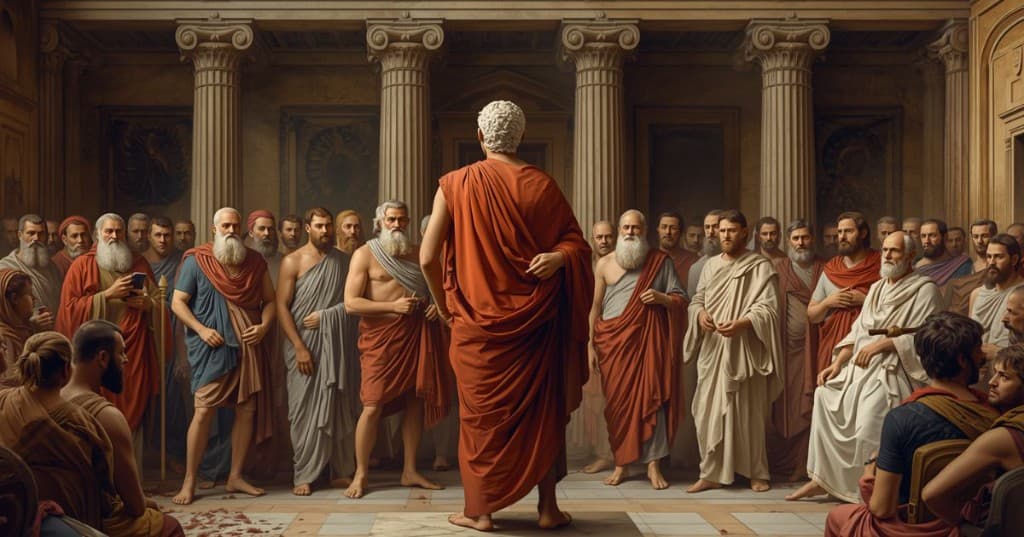
Socrates chooses plain speaking over courtroom rhetoric, making his inexperience a sign of honesty rather than weakness
Development
Introduced here as core defense strategy
In Your Life:
You might see this when deciding whether to adopt corporate speak in meetings or speak in your natural voice
Class
In This Chapter
Socrates positions himself as an outsider to legal formalities, comparing himself to a foreigner who deserves patience
Development
Introduced here through legal system dynamics
In Your Life:
You might see this when navigating professional environments where you feel like an outsider due to background or experience
Identity
In This Chapter
At seventy, Socrates refuses to change his speaking style to match expectations, staying true to who he is
Development
Introduced here as resistance to performance pressure
In Your Life:
You might see this when facing pressure to change your personality or communication style to fit in
Social Expectations
In This Chapter
The courtroom expects polished rhetoric, but Socrates deliberately subverts this expectation to expose his accusers' emptiness
Development
Introduced here through courtroom dynamics
In Your Life:
You might see this when social situations demand certain behaviors that don't align with your values or natural style
Truth vs Performance
In This Chapter
Socrates contrasts his honest, plain speaking with his accusers' slick but empty presentation
Development
Introduced here as central conflict
In Your Life:
You might see this when choosing between saying what people want to hear versus what you actually believe
You now have the context. Time to form your own thoughts.
Discussion Questions
- 1
What contradiction did Socrates point out about his accusers' warning regarding his speaking ability?
analysis • surface - 2
Why did Socrates choose to speak plainly instead of using formal courtroom language, and how did this choice serve his defense strategy?
analysis • medium - 3
Think about a time when someone impressed you more with honesty than with polished performance. What made their approach more trustworthy?
application • medium - 4
When facing judgment or criticism in your own life, how could you use Socrates's approach of owning your authentic voice while focusing on substance over style?
application • deep - 5
What does Socrates's strategy reveal about the relationship between vulnerability and authority in human interactions?
reflection • deep
Critical Thinking Exercise
Test the Authenticity Strategy
Think of a situation where you need to defend a decision, ask for something important, or address criticism. Write two versions: one using polished, formal language trying to impress, and another using Socrates's plain-speaking approach where you acknowledge your limitations but focus on your core message. Compare which version feels more honest and which you'd trust more if you heard it from someone else.
Consider:
- •Notice which version requires you to pretend or perform versus just being yourself
- •Consider how acknowledging weaknesses upfront might actually strengthen your position
- •Think about which approach would build longer-term trust with your audience
Journaling Prompt
Write about a time when someone's honesty about their limitations made you trust them more, or when your own authenticity worked better than trying to impress. What did you learn about the power of being genuine?
Coming Up Next...
Chapter 3: Fighting Shadows and Old Lies
Socrates turns his attention to the deeper threat: not his current accusers, but the whispered rumors that have shaped public opinion for decades. He's about to tackle the most dangerous enemy of all, the one that's been poisoning minds since his audience was young.


