Master this chapter. Complete your experience
Purchase the complete book to access all chapters and support classic literature
As an Amazon Associate, we earn a small commission from qualifying purchases at no additional cost to you.
Available in paperback, hardcover, and e-book formats
Why This Matters
Connect literature to life
This chapter teaches how to spot the difference between real knowledge and confident ignorance by watching how people respond to specific questions.
Practice This Today
This week, notice when someone deflects a direct question with generalities or gets defensive when asked for specifics about their area of supposed expertise.
Now let's explore the literary elements.
Key Quotes & Analysis
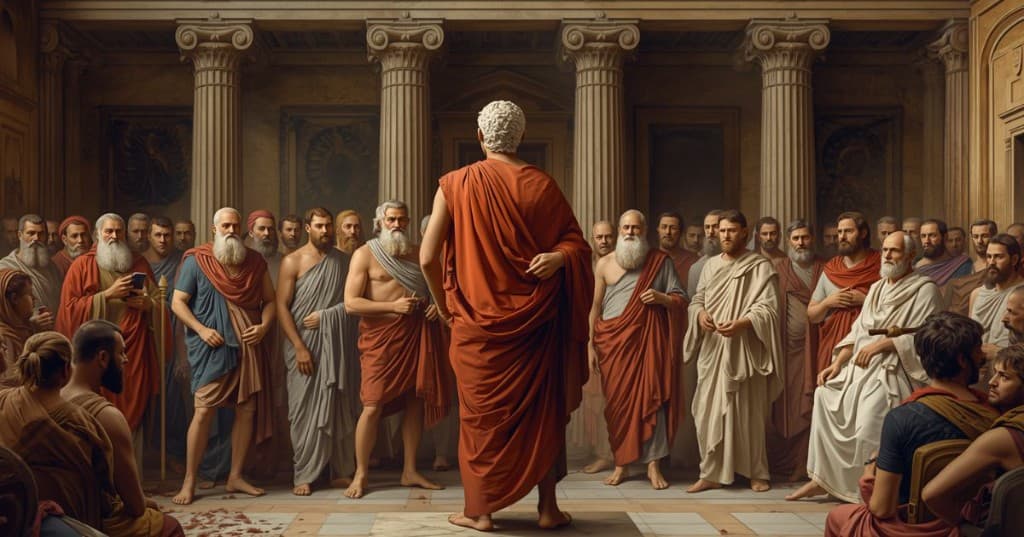
"I reflected that if I could only find a man wiser than myself, then I might go to the god with a refutation in my hand. I should say to him, 'Here is a man who is wiser than I am; but you said that I was the wisest.'"
Context: Explaining his plan to disprove the oracle by finding someone wiser
His response to the oracle is not pride but skepticism — and the skepticism is aimed at the god himself. He sets out to prove Apollo wrong. This is the intellectual engine of everything that follows.
In Today's Words:
My plan was to find someone smarter than me and use them to prove the oracle wrong.
"I do not suppose that either of us knows anything really beautiful and good, but I am better off than he is — for he knows nothing, and thinks that he knows; I neither know nor think that I know."
Context: His private conclusion after discovering the politician knows nothing but believes he knows everything
This is the precise formulation of Socratic wisdom — not 'I know nothing' (the popular misquote) but something subtler: I don't know, and I don't claim to know. The politician fails both tests. Socrates fails only the first.
In Today's Words:
He knows nothing and thinks he knows everything. I know nothing and know it. That's the whole difference.
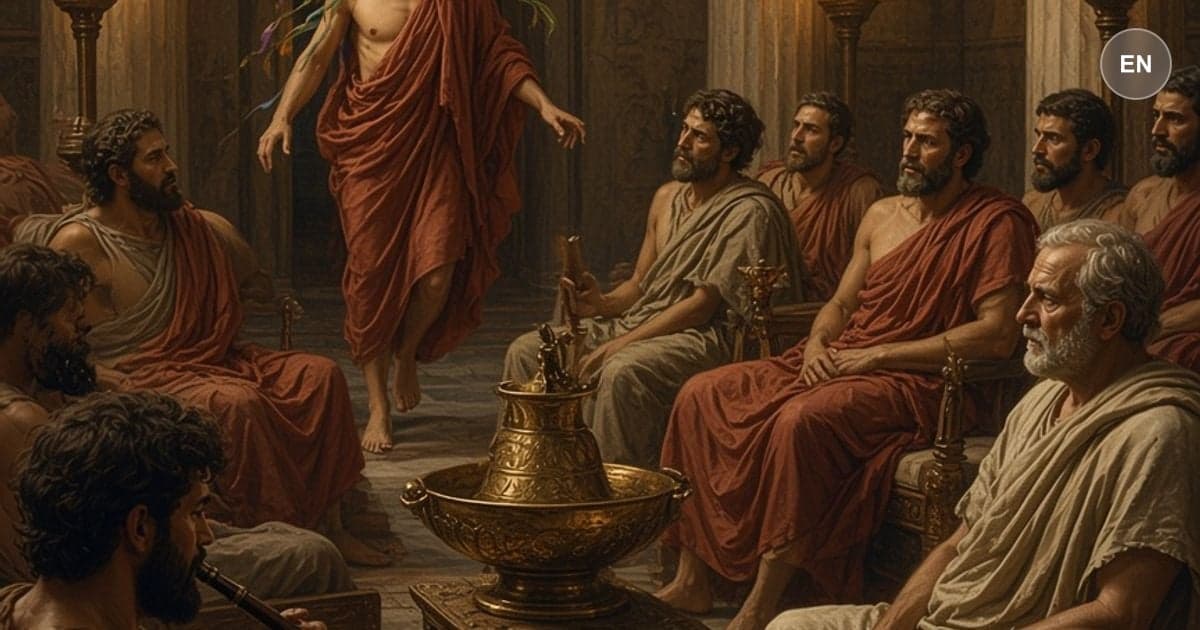
"I am almost ashamed to confess the truth, but I must say that there is hardly a person present who would not have talked better about their poetry than they did themselves."
Context: Describing the result of asking the poets to explain their own work
The embarrassment is genuine and telling. Socrates doesn't enjoy exposing the poets — he was hoping to learn from them. Finding that anyone in the audience could explain their verses better than they could was genuinely unsettling.
In Today's Words:
It was almost painful to discover that the poets had no idea what their own work meant.
Thematic Threads
Wisdom
In This Chapter
True wisdom means recognizing the limits of your knowledge rather than pretending to know everything
Development
Introduced here as Socrates' core insight
In Your Life:
You might recognize this when you catch yourself giving advice outside your expertise or feeling defensive when questioned about something you're supposedly good at.
Class
In This Chapter
Politicians and poets represent the educated elite who mistake credentials for actual understanding
Development
Builds on earlier themes of social status versus real worth
In Your Life:
You might see this when managers with impressive titles make decisions about work they've never actually done.
Social Expectations
In This Chapter
Society expects successful people to be wise about everything, creating pressure to appear knowledgeable beyond their expertise
Development
Develops the theme of how public reputation creates private pressure
In Your Life:
You might feel this pressure when colleagues expect you to have opinions about everything because you're good at your job.
Self-Awareness
In This Chapter
Socrates stands apart by honestly acknowledging what he doesn't know, while others pretend to knowledge they lack
Development
Introduced as the foundation of genuine wisdom
In Your Life:
You might practice this by saying 'I don't know' more often instead of bluffing your way through conversations.
Human Relationships
In This Chapter
Honest questioning creates enemies because it threatens people's carefully constructed self-image
Development
Shows how truth-telling can damage relationships even when well-intentioned
In Your Life:
You might experience this tension when you question someone's expertise and they react with anger rather than curiosity.
You now have the context. Time to form your own thoughts.
Discussion Questions
- 1
What did Socrates discover when he questioned the politician, poets, and other supposedly wise people?
analysis • surface - 2
Why did the Oracle's declaration that Socrates was the wisest man puzzle him, and what did his investigation reveal?
analysis • medium - 3
Where do you see this pattern of confident ignorance in your workplace, family, or community today?
application • medium - 4
How can you tell the difference between someone who actually knows what they're talking about versus someone who just sounds confident?
application • deep - 5
What does Socrates' approach teach us about the relationship between true wisdom and admitting what we don't know?
reflection • deep
Critical Thinking Exercise
Test Your Own Expertise
Pick something you consider yourself good at (your job, parenting, a hobby, cooking). Now imagine someone asked you to explain the deeper principles behind your skill, not just the steps you follow. Write down what you actually understand versus what you just do automatically. Where would your confidence outpace your real knowledge?
Consider:
- •Notice the difference between knowing how to do something and understanding why it works
- •Pay attention to areas where you might be making assumptions based on limited experience
- •Consider how your success in this area might make you overconfident in related but different areas
Journaling Prompt
Write about a time when you realized you knew less about something than you thought you did. How did that discovery change your approach to learning or giving advice to others?
Coming Up Next...
Chapter 5: The Dangerous Truth About Expertise
Socrates turns his investigation to the craftsmen and artisans, expecting to finally find people who genuinely know their trade. But even here, he discovers a troubling pattern that explains why true wisdom is so elusive.