Wide Reads
Literature MattersLife IndexEducators
Sign in
Where to Begin

Act V, Scene 5: Richmond's Peace Settlement — Richard III

Richard III - Act V, Scene 5: Richmond's Peace Settlement

William Shakespeare

Richard III

Act V, Scene 5: Richmond's Peace Settlement

Home›Books›Richard III›Chapter 25: Act V, Scene 5: Richmond's Peace Settlement
Previous
25 of 25

Analysis by the Wide Reads editorial team·Reviewed against the source text·Updated January 28, 2025

Summary

Act V, Scene 5: Richmond's Peace Settlement

Richard III by William Shakespeare

0:000:00

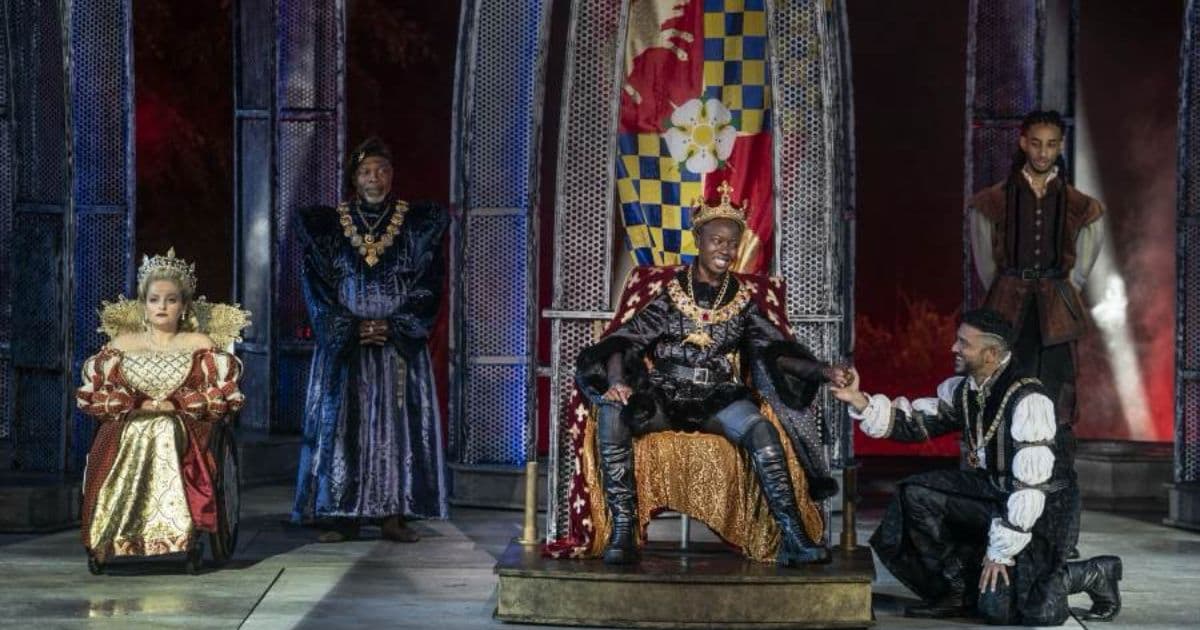
Richmond praises God and victorious friends and says the day is ours, the bloody dog is dead. Derby crowns him with royalties plucked from the dead temples of the bloody wretch and tells him wear it and make much of it. Richmond says great God of heaven amen to all, then asks first whether young George Stanley is living. Derby says he is safe in Leicester town.

Richmond asks what men of name are slain and hears Norfolk, Ferrers, Brokenbury, and Brandon. He orders their bodies interred as become their births, proclaims pardon to soldiers fled who will return in submission, and vows that as they have taken the sacrament they will unite the white rose and the red.

Richmond names England long mad, brother shedding brother, father and son butchered across York and Lancaster, and calls on heaven to smile on Richmond and Elizabeth conjoined as true successors. He asks God to abate traitors who would wound the land's peace, then closes now civil wounds are stopped, peace lives again, that she may long live here, God say amen. Exeunt. Finis.

In this chapter: Terms Characters Key Quotes Themes Modern Story

Why This Matters

Connect literature to life

Skill: Reading the Peace Settlement

A final scene can be governance, not celebration alone. Richmond names victory, crowns, asks if George Stanley lives, buries the slain, pardons fled soldiers, unites the white rose and red, and closes civil wounds stopped. Read hostage check, amnesty, and house union as one settlement after the tyrant falls.

Share it with friends

PreviousPrevious Chapter
Original text
322 wordscomplete

Chapter 25

Act V, Scene 5: Richmond's Peace Settlement

Richm. God, and your Armes Be prais'd Victorious Friends; The day is ours, the bloudy Dogge is dead Der. Couragious Richmond, Well hast thou acquit thee: Loe, Heere these long vsurped Royalties, From the dead Temples of this bloudy Wretch, Haue I pluck'd off, to grace thy Browes withall. Weare it, and make much of it Richm. Great God of Heauen, say Amen to all. But tell me, is yong George Stanley liuing? Der. He is my Lord, and safe in Leicester Towne, Whither (if you please) we may withdraw vs Richm. What men of name are slaine on either…

Public-domain chapter text, formatted for reading.

Master this chapter. Complete your experience

Purchase the complete book to access all chapters and support classic literature

Buy at Powell'sBuy on Amazon

Available in paperback, hardcover, and e-book formats

Now let's explore the literary elements.

Key Quotes & Analysis

"The day is ours, the bloudy Dogge is dead"

— Richmond

Context: Richmond opening the victory scene after battle

Richmond names the outcome plainly before settlement work begins. The dog is dead; the reign must now be built.

In Today's Words:

Richmond tells victorious friends the day is theirs and the bloody dog is dead. He opens with verdict, not ceremony. When a successor names the tyrant gone before asking about hostages or dead, the room knows the old order ended in the field, not in negotiation.

"But tell me, is yong George Stanley liuing? Der. He is my Lord, and safe in Leicester Towne,"

— Richmond and Derby

Context: Richmond's first question after Derby crowns him and he says amen

Before parade or policy, Richmond checks the hostage Richard held. George living means the lever broke.

In Today's Words:

Richmond asks whether young George Stanley is living, and Derby says he is safe in Leicester town. That question comes before the peace program. When the victor's first check is the hostage the tyrant held, the settlement starts with who survived the leverage, not who applauds.

"We will vnite the White Rose, and the Red. Smile Heauen vpon this faire Coniunction, That long haue frown'd vpon their Enmity:"

— Richmond

Context: After ordering burial and pardon for fled soldiers

Richmond moves from amnesty and sacrament to house union. Peace needs a public conjunction, not only victory.

In Today's Words:

Richmond vows to unite the white rose and the red and asks heaven to smile on a fair conjunction that long frowned on their enmity. Pardon and burial come first, then merger. When a winner names two houses joined after amnesty, the peace plan is structural, not a mood.

"Now Ciuill wounds are stopp'd, Peace liues agen; That she may long liue heere, God say, Amen."

— Richmond

Context: Richmond closing the play after England mad speech and Elizabeth conjoin

The final line stops civil wounds and bids peace live again. Finis follows amen.

In Today's Words:

Richmond closes by saying civil wounds are stopped and peace lives again, and asks God say amen that she may long live here. The play ends on peace named, not battle recalled. When a final scene ends on wounds stopped rather than the tyrant's body, the takeaway is what must be maintained next.

Thematic Threads

Hostage Before Parade

In This Chapter

Richmond asks is young George Stanley living before the rose union speech peaks

Development

The lever Richard used fails in the first question of the new reign

In Your Life:

When a winner's first check is whether the hostage lived, the settlement is about people held, not speeches given.

Union After Amnesty

In This Chapter

Inter bodies, pardon fled soldiers, then unite white rose and red

Development

Peace pairs burial and pardon with public house conjunction

In Your Life:

If merger talk follows amnesty and burial orders, the peace plan is trying to close accounts, not just declare victory.

You now have the context. Time to form your own thoughts.

Discussion Questions

This is not a test. Five prompts guide you through the chapter, from how it opens to how it closes, so you notice context and rhythm rather than facts to memorize. Sit with each question in your own words. When you see "One way to read it," treat it as a starting point, not the only answer.

  1. 1

    Why does Richmond ask about George Stanley before expanding the victory speech?

    ▶One way to read it

    Richmond praises God and says the bloody dog is dead, then asks first whether young George Stanley is living. The hostage check comes before celebration—accountability before parade.

    analysis • surface
  2. 2

    What work do burial orders and pardon for fled soldiers do before the rose union?

    ▶One way to read it

    Richmond names the slain, orders bodies interred as become their births, and proclaims pardon to soldiers who fled if they return in submission. Honor the dead and welcome the living before merging the factions.

    analysis • medium
  3. 3

    How does Derby's crown from dead temples frame the transfer of power?

    ▶One way to read it

    Derby crowns Richmond with royalties plucked from the dead temples of the bloody wretch. Power is literally taken from Richard's corpse, framing succession as removal of tyranny not mere inheritance.

    application • medium
  4. 4

    What does the England hath long been mad passage add to Richmond's peace promise?

    ▶One way to read it

    Richmond names England long mad, brother shedding brother, father and son butchered across York and Lancaster. Peace requires acknowledging systemic wound before vowing to unite white rose and red.

    application • deep
  5. 5

    Why does the play end on civil wounds stopped and peace lives again rather than Richard's body?

    ▶One way to read it

    Shakespeare closes on the realm healing, not on villain spectacle. Richmond's job is settlement—crown, pardon, union—not prolonged focus on the body Richard left on the field.

    reflection • deep

Critical Thinking Exercise

10 minutes

The Peace Settlement Analysis

Richmond settles victory with crown, hostage check, dead roll, pardon, and rose union. Think of a time when a win required accounting before celebration.

Consider:

  • •Why check the hostage before the parade?
  • •How do burial and pardon pair with merger?
  • •What does Finis add after God say amen?
  • •When does peace live again become maintenance, not slogan?

Journaling Prompt

Write about a peace settlement you witnessed. What was asked before the victory speech expanded?

Previous
Act V, Scene 4: A Horse, My Kingdom for a Horse
Contents
Keep exploring

Continue Exploring

Study guides, teaching tools, themes, and the full library.More ways to read Richard III: study guides, teaching tools, and the wider library.

  • Richard III Study Guide
  • Teaching Resources
  • Essential Life Index
  • Browse by Theme
  • All Books

Life-skill deep dives in Richard III

  • Protecting Yourself from PredatorsLearn concrete defenses: trust patterns over words, verify independently, and never ignore gut feelings that something
  • Recognizing Sociopathic CharmLearn to identify the distinctive patterns of charm used by people without empathy—before they can manipulate you in Richard III.
  • Understanding Manipulation TacticsSee exactly how Richard manipulates: gaslighting, triangulation, love-bombing, and making victims blame themselves in Richard III.

You Might Also Like

King Lear cover

King Lear

William Shakespeare

Also by William Shakespeare

Hamlet cover

Hamlet

William Shakespeare

Also by William Shakespeare

The Count of Monte Cristo cover

The Count of Monte Cristo

Alexandre Dumas

Explores personal growth

Don Quixote cover

Don Quixote

Miguel de Cervantes Saavedra

Explores personal growth

Browse all 106+ books

Share This Chapter

Know someone who'd enjoy this? Spread the wisdom!

TwitterFacebookLinkedInEmail

Go further with Prestige

Unlock study guides and downloads, early access, and exclusive content — and support free access for everyone.

Subscribe to PrestigeCreate free account
Intelligence Amplifier
Intelligence Amplifier™Powering Wide Reads

Exploring human-AI collaboration through books, essays, and philosophical dialogues. Classic literature transformed into navigational maps for modern life.

2025 Books

→ The Amplified Human Spirit→ The Alarming Rise of Stupidity Amplified→ San Francisco: The AI Capital of the World
Visit intelligenceamplifier.org
hello@widereads.com

WideReads Originals

→ You Are Not Lost→ The Last Chapter First→ The Lit of Love→ Wealth and Poverty→ Wisdom for the Wounded
Arvintech
arvintechAmplify your Mind
Visit at arvintech.com

Navigate

  • Home
  • Library
  • Essential Life Index
  • How It Works
  • Subscribe
  • Account
  • About
  • Contact
  • Authors
  • Suggest a Book
  • Landings

Made For You

  • Trending
  • Students
  • Educators
  • Families
  • Readers
  • Literary Analysis
  • Finding Purpose
  • Letting Go
  • Recovering from a Breakup
  • Corruption
  • Gaslighting in the Classics

Newsletter

Weekly insights from the classics. Amplify Your Mind.

Legal

  • Privacy Policy
  • Terms of Service
  • Editorial Standards
  • Cookie Policy
  • Accessibility

Why Public Domain?

We focus on public domain classics because these timeless works belong to everyone. No paywalls, no restrictions—just wisdom that has stood the test of centuries, freely accessible to all readers.

Public domain books have shaped humanity's understanding of love, justice, ambition, and the human condition. By amplifying these works, we help preserve and share literature that truly belongs to the world.

A Pilgrimage

Powell's City of Books

Portland, Oregon

If you ever find yourself in Portland, walk to the corner of Burnside and 10th. The building takes up an entire city block. Inside is over a million books, new and used on the same shelf, organized by color-coded rooms with names like the Rose Room and the Pearl Room. You can lose an afternoon. You can lose a weekend. You will find a book you have been looking for your whole life, and three you did not know existed.

It is a pilgrimage. We cannot find a bookstore like it anywhere on earth. If you read the classics, and you ever get the chance, go. It belongs on every reader's bucket list.

Visit powells.com

We are not in any way affiliated with Powell's. We are just a very big fan.

© 2026 Wide Reads™. All Rights Reserved.

Intelligence Amplifier™ and Wide Reads™ are proprietary trademarks of Arvin Lioanag.

Copyright Protection: All original content, analyses, discussion questions, pedagogical frameworks, and methodology are protected by U.S. and international copyright law. Unauthorized reproduction, distribution, web scraping, or use for AI training is strictly prohibited. See our Copyright Notice for details.

Disclaimer: The information provided on this website is for general informational and educational purposes only and does not constitute professional, legal, financial, or technical advice. While we strive to ensure accuracy and relevance, we make no warranties regarding completeness, reliability, or suitability. Any reliance on such information is at your own risk. We are not liable for any losses or damages arising from use of this site. By using this site, you agree to these terms.