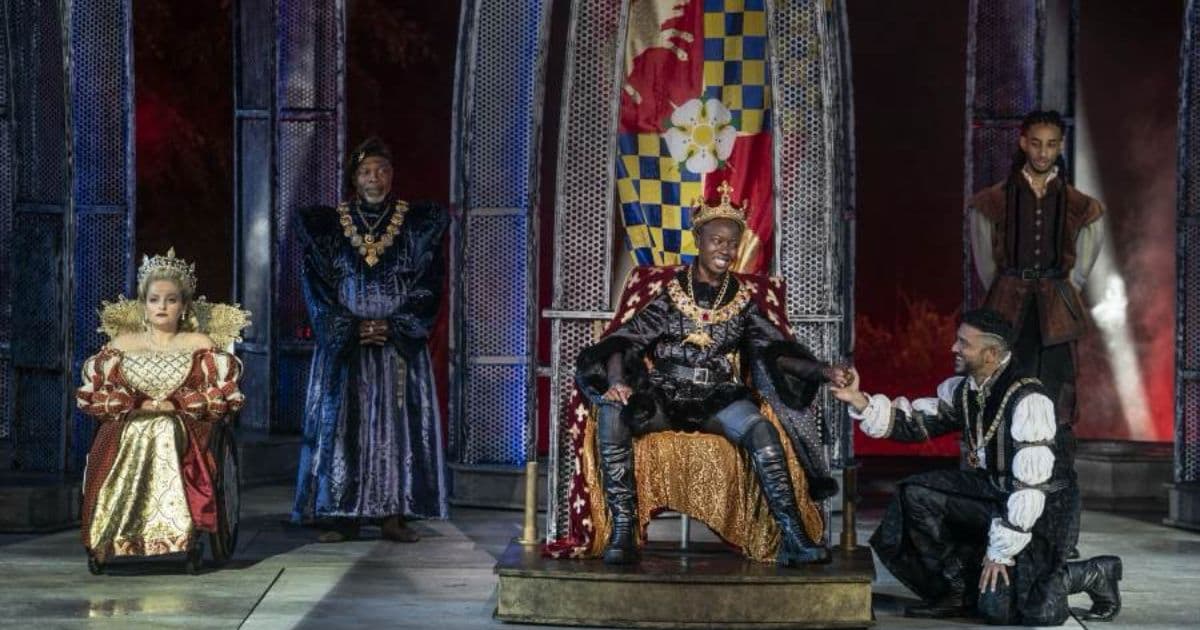
Chapter 21
Act V, Scene 3 (cont.): The Ghosts & Richard's Conscience
Enter the Ghost of Prince Edward, Sonne to Henry the sixt. Gh. to Ri[chard]. Let me sit heauy on thy soule to morrow: Thinke how thou stab'st me in my prime of youth At Teukesbury: Dispaire therefore, and dye. Ghost to Richm[ond]. Be chearefull Richmond, For the wronged Soules Of butcher'd Princes, fight in thy behalfe: King Henries issue Richmond comforts thee. Enter the Ghost of Henry the sixt. Ghost. When I was mortall, my Annointed body By thee was punched full of holes; Thinke on the Tower, and me: Dispaire, and dye, Harry the sixt, bids thee dispaire, and…
Public-domain chapter text, formatted for reading.
Master this chapter. Complete your experience
Purchase the complete book to access all chapters and support classic literature
Available in paperback, hardcover, and e-book formats
Now let's explore the literary elements.
Key Quotes & Analysis
"Let me sit heauy on thy soule to morrow: Thinke how thou stab'st me in my prime of youth At Teukesbury: Dispaire therefore, and dye."
Context: First ghost in the parade, opening the night's ledger against Richard
The parade begins with a named wound and a command to despair. Every ghost adds another line to the same bill.
In Today's Words:
Prince Edward's ghost tells Richard to weigh on his soul tomorrow and remember the stab at Tewkesbury, then despair and die. That opens the ghost ledger: each victim names what Richard did and orders despair. When harm returns as a numbered list the night before a fight, treat it as accounting, not bad dreams.
"Dreame on thy Cousins Smothered in the Tower: Let vs be laid within thy bosome Richard, And weigh thee downe to ruine, shame, and death,"
Context: The princes' ghosts mid-parade, naming the Tower smothering
The princes ask to be laid within Richard's bosom so their weight pulls him to ruin. The ledger names the crime and its mass.
In Today's Words:
The princes tell Richard to dream on his smothered cousins and let their souls lie in his bosom until they weigh him to ruin, shame, and death. They name the Tower crime as weight. When harm you hid returns to sit on your chest, the bill is already heavier than any army.
"My Conscience hath a thousand seuerall Tongues, And euery Tongue brings in a seuerall Tale, And euerie Tale condemnes me for a Villaine;"
Context: Richard alone after the ghost dream, in the conscience soliloquy
Richard's self-flattery collapses into a courtroom of tongues. Perjury and murder crowd the bar crying guilty.
In Today's Words:
Richard says his conscience has a thousand separate tongues, each telling a different story, and every story condemns him as a villain. Perjury and murder follow in degree until all cry guilty at the bar. When a predator's private monologue turns into a prosecutor's list, the self-defense loop is already broken.
"By the Apostle Paul, shadowes to night Haue stroke more terror to the soule of Richard, Then can the substance of ten thousand Souldiers"
Context: Richard to Ratcliffe at dawn after O Ratcliffe, I fear
Richard admits ghosts outrank armies. He will eavesdrop on allies because fear of shrinking matters as much as fear of Richmond.
In Today's Words:
Richard tells Ratcliffe shadows tonight struck more terror to his soul than ten thousand soldiers in armour. He still plans to listen under the tents for anyone who means to shrink from him. When a leader admits nightmares outweigh the rival's army but spies on allies at dawn, dread and control have merged.
Thematic Threads
Curse and Blessing Pair
In This Chapter
Each ghost tells Richard despair and die, then tells Richmond cheer or victory
Development
The ledger assigns moral weight to both camps before a sword is drawn
In Your Life:
When every harmed person in a story gets a line that curses one side and blesses the other, the fight is already about accounts, not surprise.
Shadows Over Soldiers
In This Chapter
Richard says shadows tonight struck more terror than ten thousand soldiers
Development
Internal dread outranks external force even as Richard spies on shrinking allies
In Your Life:
If someone admits nightmares hit harder than the rival's headcount but still monitors loyalty at dawn, fear has become their command style.
You now have the context. Time to form your own thoughts.
Discussion Questions
This is not a test. Five prompts guide you through the chapter, from how it opens to how it closes, so you notice context and rhythm rather than facts to memorize. Sit with each question in your own words. When you see "One way to read it," treat it as a starting point, not the only answer.
- 1
Why does each ghost curse Richard and bless Richmond in the same turn?
analysis • surfaceOne way to read it
Each victim tells Richard to despair and die, then blesses Richmond with cheer, angels, or victory. The paired lines assign moral sides: Richard condemned by the dead, Richmond backed by them.
- 2
What breaks first in Richard's soliloquy: self-love, denial, or the thousand tongues?
analysis • mediumOne way to read it
Richard insists it was only a dream, then asks whether Richard loves Richard and hears a thousand tongues condemning him for perjury and murder. Denial collapses into self-accusation he cannot outtalk.
- 3
How do the smothered princes' lines change the weight of the ghost parade?
application • mediumOne way to read it
The princes are the most innocent victims and the crime Richard hid longest. Their ghosts turn political ledger into child murder, the heaviest entry in the parade.
- 4
Why does Richard eavesdrop under the tents after admitting shadows beat ten thousand soldiers?
application • deepOne way to read it
Richard confesses ghosts strike more terror than soldiers yet still spies on allies at dawn. Fear does not produce repentance; it produces surveillance and control even when conscience has already spoken.
- 5
What does Buckingham's ghost add as the final entry in the ledger?
reflection • deepOne way to read it
Buckingham helped Richard to the crown and felt his tyranny last. The final ghost closes the arc of the paused ally: maker of kings, victim of kings, proof that complicity does not buy safety.
Critical Thinking Exercise
The Ghost Ledger Analysis
Richard faces a parade of ghosts, a conscience soliloquy, and dawn spying in one chapter. Think of a time when past harm felt like a list arriving all at once before a decisive day.
Consider:
- •How do curse-and-bless pairs assign moral weight?
- •What does thousand tongues guilty add that ghosts alone do not?
- •Why confess shadows over soldiers but still spy on allies?
- •Which ghost entry would be hardest to dismiss as dream?
Journaling Prompt
Write about a ghost ledger moment you witnessed. Did dread or headcount win at dawn?
Coming Up Next...
Chapter 22: Act V, Scene 3 (cont.): Jocund Dawn & Battle Order
Morning breaks: Richmond wakes jocund from ghostly dreams and rallies God and Saint George while Richard dismisses the hidden sun and calls conscience a coward's word before marching hand in hand to hell.