He is pacing the room in frenzied impatience, going up to the screen every few minutes to peek through the crack. Liza is sitting on the ground with her head leaning against the bed, apparently crying. She does not go away, and that irritates him. This time she understood it all: his outburst of passion had been simply revenge, a fresh humiliation, and to his earlier almost causeless hatred was added now a personal hatred, born of envy.
He doesn't hate her so much as he wants her to disappear. Real life is oppressing him with its novelty so much that he can hardly breathe.
He has the shamelessness to tap softly at the screen as though to remind her. She starts, springs up, flies to fetch her kerchief, hat, coat, as though making her escape. Two minutes later she comes out with heavy eyes. He gives a spiteful grin, forced, to keep up appearances, and turns away.
She says goodbye and moves to the door. He runs up, seizes her hand, opens it, thrusts something in it, closes it, then immediately dashes to the other corner of the room to avoid seeing.
He admits: he meant, just now, to lie, to write that he did this accidentally, through foolishness, through losing his head. But he doesn't want to lie. He put the money in her hand from spite. It came into his head while he was pacing and she was sitting behind the screen. The cruelty was so affected, so purposely made up, so completely a product of the brain, of books, that he could not keep it up even a minute. He rushes after her into the passage immediately.
He calls down the stairs: "Liza! Liza!" In a low voice, not boldly. No answer. He calls more loudly. No answer. The stiff outer glass door opens heavily with a creak and slams shut. The sound echoes up the stairs. She is gone.
He goes back inside. Stands at the table. Looks aimlessly. Then, suddenly: straight before him on the table is a crumpled blue five-rouble note, the one he had thrust into her hand. She had managed to fling it on the table at the very moment he dashed to the other corner. "Well! I might have expected that she would do that. Might I have expected it? No, I was such an egoist, I was so lacking in respect for my fellow-creatures that I could not even imagine she would do so."
He flies like a madman to dress, flings on what he can, and runs headlong out into the street. A still night, snow falling in masses almost perpendicularly, covering the pavement like a pillow. No one in the street, no sound. The street lamps give a disconsolate and useless glimmer. He runs two hundred paces to the crossroads and stops.
Where had she gone? And why was he running after her? To fall down before her, to sob with remorse, to kiss her feet, to entreat her forgiveness. He longed for that, his whole breast was being rent to pieces. But: should he not begin to hate her, perhaps, even tomorrow, just because he had kissed her feet today? Should he give her happiness? Had he not recognised that day, for the hundredth time, what he was worth? Should he not torture her?
He stands in the snow and ponders this.
Afterwards at home, he stifles the living pang of his heart with a fantasy: will it not be better that she should keep the resentment of the insult for ever? Resentment is purification, a most stinging and painful consciousness. Tomorrow he should have defiled her soul and exhausted her heart; whereas now the feeling of insult will never die in her, and however loathsome the filth awaiting her, the feeling of insult will elevate and purify her, by hatred, perhaps, too, by forgiveness. Then, catching himself: "Will all that make things easier for her though?"
And an idle question, on his own account: which is better, cheap happiness or exalted sufferings?
He never met Liza again. He has heard nothing of her. And he remained, for a long time afterwards, pleased with the phrase about the benefit from resentment and hatred, in spite of the fact that he almost fell ill from misery.
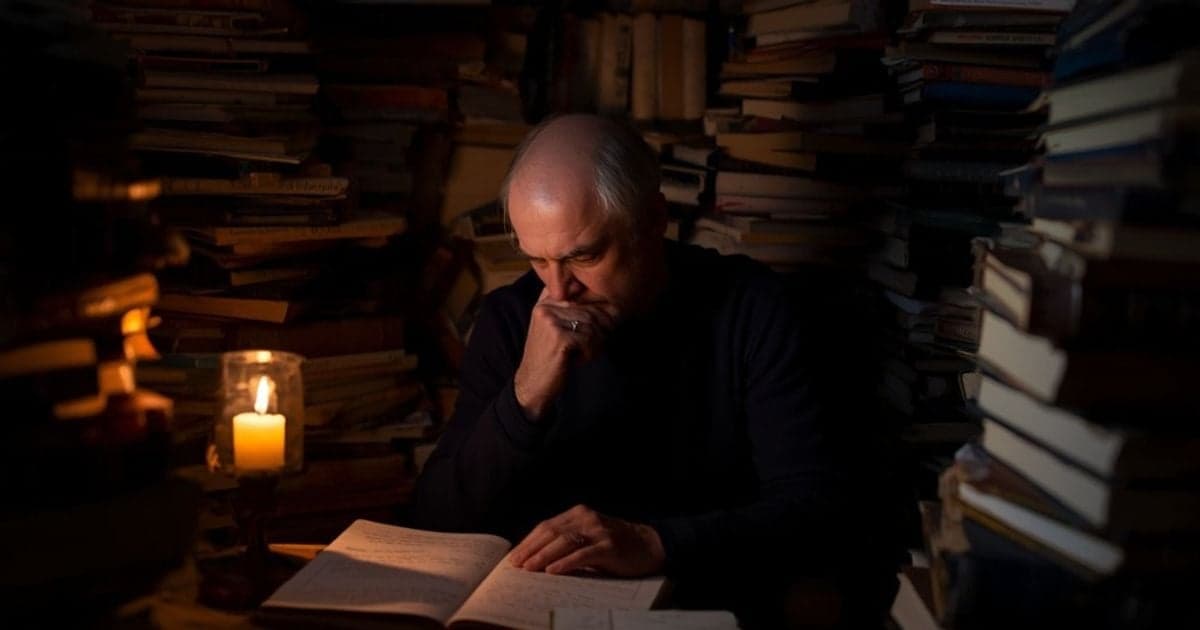
Then the notes break. He has felt ashamed the whole time he has been writing this story. It is hardly literature, more a corrective punishment. A novel needs a hero; all the traits for an anti-hero are expressly gathered here, and what matters most, it all produces an unpleasant impression. He turns on the reader directly: we are all divorced from life, all cripples, every one of us. We have come to look upon real life as an effort, almost as hard work, and all privately agree it is better in books. Give any one of us a little more independence, untie our hands, widen the sphere of activity, relax the control, and we should be begging to be under control again at once.
Then the defiant reversal: "Speak for yourself," the reader will object. He anticipates it. "I have only in my life carried to an extreme what you have not dared to carry halfway, and what's more, you have taken your cowardice for good sense, and have found comfort in deceiving yourselves. So that perhaps, after all, there is more life in me than in you."
We don't even know what living means. Leave us alone without books and we shall be lost at once, not knowing what to join on to, what to love, what to hate, what to respect, what to despise. We are oppressed at being men with a real individual body and blood; we are ashamed of it and try to contrive to be some sort of impossible generalised man. "We are stillborn, and for generations past have been begotten, not by living fathers, and that suits us better and better. We are developing a taste for it. Soon we shall contrive to be born somehow from an idea."
He stops. He doesn't want to write more from Underground.
[The notes of this paradoxalist do not end here, however. He could not refrain from going on with them, but it seems to us that we may stop here.]