Part II begins. The Underground Man is twenty-four. His life is gloomy, ill-regulated, solitary as a savage. He makes no friends, buries himself in his hole, never looks at anyone at the office, and is convinced his colleagues look at him with loathing. Then he notices something: one colleague has a repulsive, pock-marked face that looks positively villainous. Another has a dirty uniform that smells. Neither shows the slightest self-consciousness. They don't imagine themselves looked at with repulsion. He realizes: it is his own unbounded vanity and harsh standard for himself that makes him look at himself with furious discontent verging on loathing, and so he projects that feeling onto everyone. He hates his own face, thinks it disgusting, suspects something base in his expression, and every morning at the office tries to hold it lofty, expressive, and "above all, extremely intelligent." He knows perfectly well that it is impossible.
He despises his colleagues. He also fears them. Sometimes thinks them superior. He drops his eyes every time he meets anyone, has a sickly dread of being ridiculous, a slavish passion for the conventional. He declares, without embarrassment, that he was a coward and a slave, and generalises it: "Every decent man of our age must be a coward and a slave. That is his normal condition. Only donkeys and mules are valiant."
He lived in phases. Sometimes things reached such a point he came home ill. Then, without reason, scepticism would arrive, he'd laugh at his own intolerance, reproach himself for being "romantic," and suddenly contemplate making friends. He takes a digression to define what a Russian romantic actually is, not the German or French transcendental type, on whom nothing produces any effect, but a specifically Russian figure who understands everything, sees clearly, refuses to accept anyone, and yet never loses sight of a useful practical object (rent-free quarters, pensions, decorations), all while preserving "the sublime and the beautiful" inviolate. "The greatest rogue of all our rogues," who can be absolutely and loftily honest at heart without in the least ceasing to be a rogue. Their many-sidedness is remarkable.
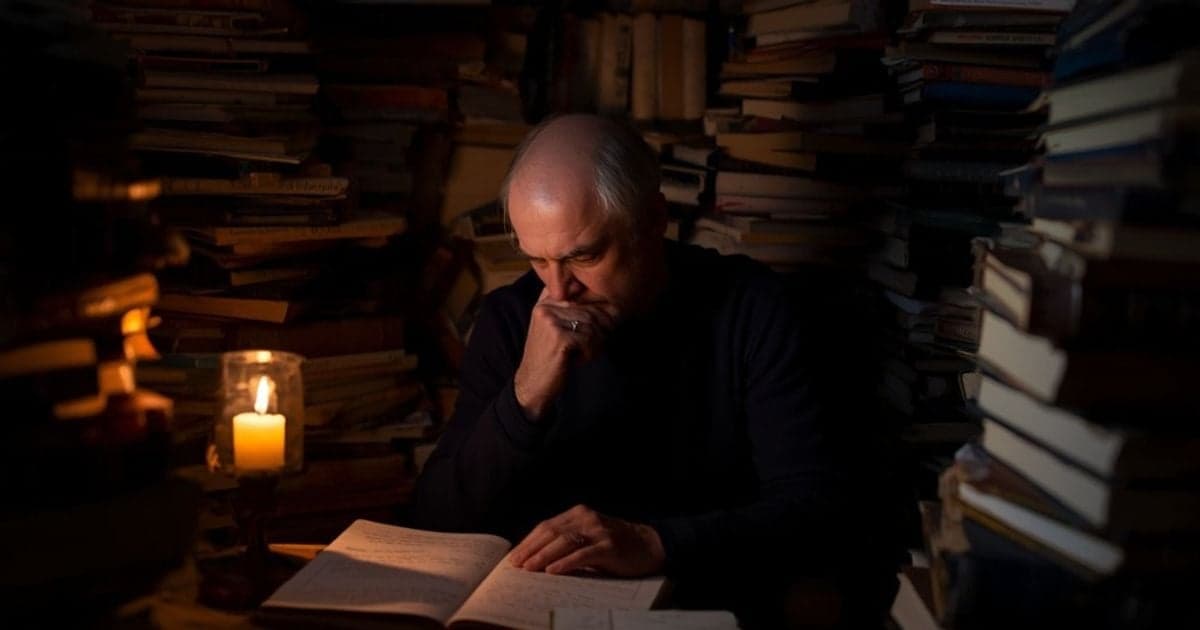
At home he reads to stifle what seethes in him. But reading bores him eventually. When bored, he plunges into "dark, underground, loathsome vice of the pettiest kind", furtively, timidly, at night, with a feeling of shame that never deserts him even at the worst moments. He catches himself starting to justify this, stops, admits he lied.
One night, passing a tavern, he sees through a lit window some gentlemen fighting with billiard cues and one thrown out of the window. He is so depressed he actually envies the man thrown out, envies him so much he goes into the billiard room. "Perhaps I'll have a fight, too, and they'll throw me out of the window." Nothing happens. He is not even equal to being thrown out of the window.
An officer wants to pass the billiard table, takes him by the shoulders without a word and moves him aside as though he were not there. He cannot forgive being moved without being noticed. He wanted a real quarrel, "a more decent, a more literary one, so to speak", he had only to protest and would certainly have been thrown out of the window. But he retreated. Not from physical cowardice, from moral cowardice. He was afraid that everyone present, from the marker down to the lowest clerk, would jeer at him for using literary language about the "point of honour." He was certain they would split their sides laughing.
The obsession lasts years. He stares at the officer in the street with spite and hatred. He stalks him: follows him home, learns his name from a shout in the street, pays a porter ten kopecks for his address. He writes a satirical novel unmasking the officer's villainy and sends it to the Otetchestvenniya Zapiski, not printed. He composes a magnificent challenge letter so beautifully worded that the officer "certainly would have flung himself on my neck and offered me his friendship", and, thank God, never sends it.
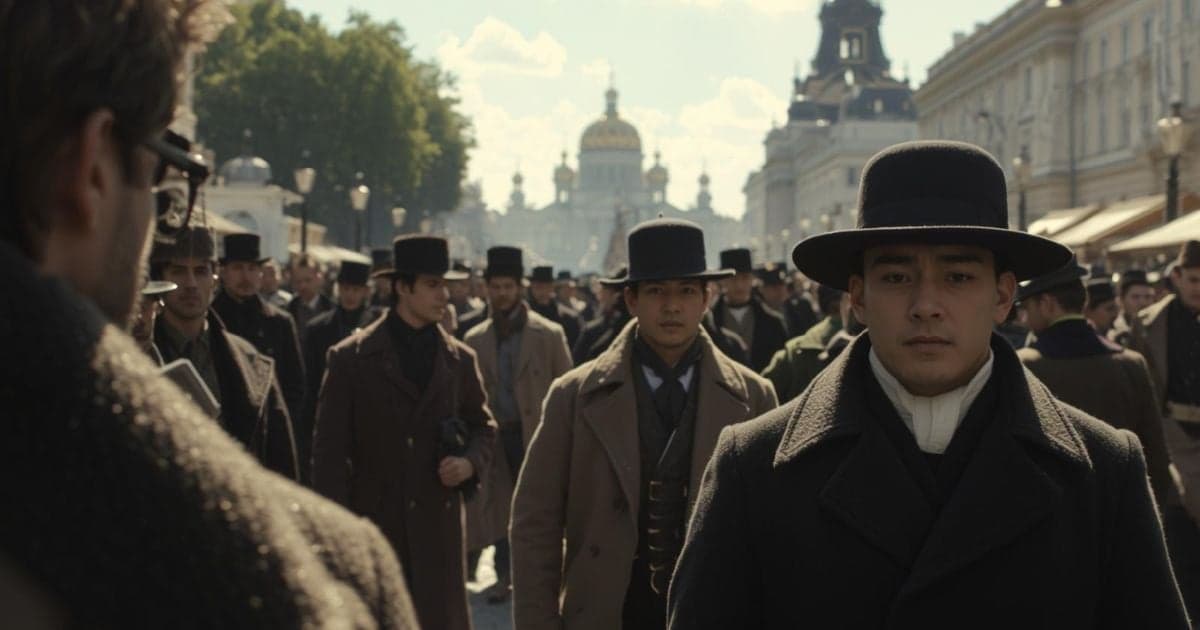
On holidays he strolls the sunny side of Nevsky Prospect, wriggling "like an eel" to make way for generals, officers, ladies. He feels like "a nasty, disgusting fly, more intelligent, more highly developed, more refined in feeling than any of them, of course, but a fly that was continually making way for everyone." He watches the officer on the Nevsky too: the officer wriggles for generals and persons of high rank, then walks straight through people like himself as if they were empty space. He wakes at three in the morning in hysterical rage: "Why must you invariably be the first to move aside? There's no regulation about it, no written law. Let the making way be equal, he moves half-way and you move half-way; you pass with mutual respect."
The plan: what if he did not move aside? He becomes obsessed. He needs better clothes first, buys black gloves, a decent hat. The overcoat has a raccoon collar, the height of vulgarity; he needs a beaver collar like an officer's. Finds cheap German beaver at the Gostiny Dvor. Sells the raccoon collar for part of the cost, borrows the rest from his superior Anton Antonitch Syetotchkin, a thing he finds monstrous and shameful. He does not sleep for two or three nights.
Multiple attempts fail. He steps aside at the last moment every time. Once, six inches from the officer, his courage fails entirely, he stumbles and falls at the officer's feet. The officer steps calmly over him.
The resolution comes by accident. He goes to the Nevsky one final time specifically to see how he will abandon the whole plan, and suddenly, three paces from his enemy, closes his eyes. They run full tilt, shoulder to shoulder. He does not budge an inch. The officer pretends not to notice, but he was only pretending, the Underground Man is convinced of it to this day. He got the worst of it physically; the officer was stronger. But that was not the point. He had kept his dignity, put himself on an equal social footing. He returns home singing Italian arias. "Of course, I will not describe to you what happened to me three days later; if you have read my first chapter you can guess for yourself."