
Middlemarch
George Eliot
0:00 / 0:00
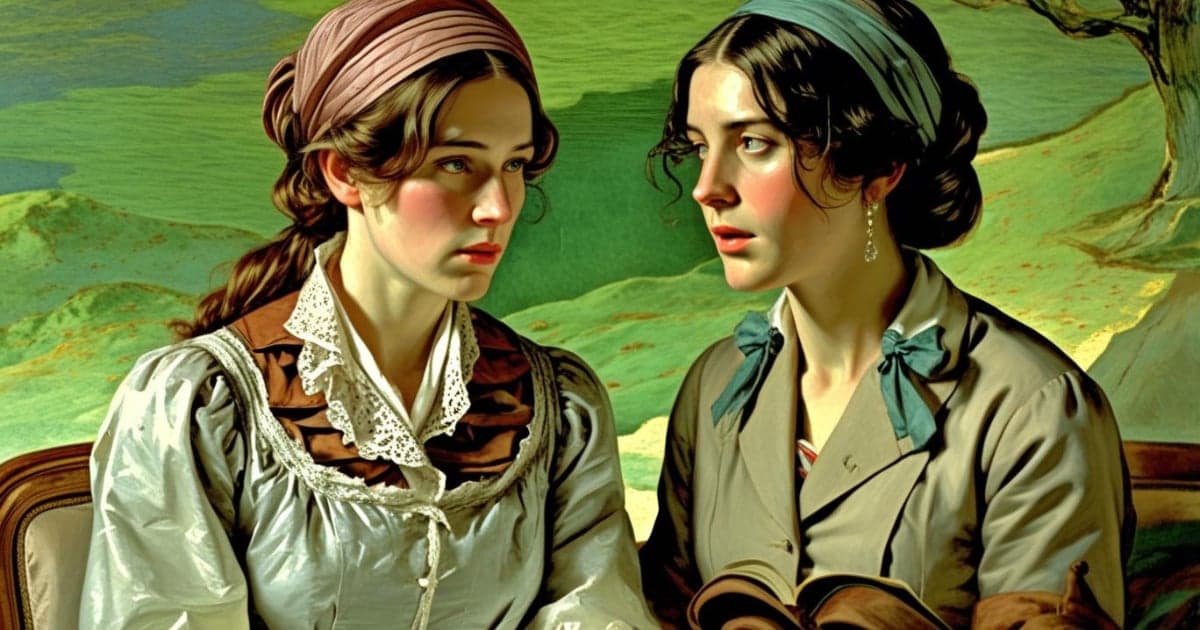
In a Via Sistina boudoir Dorothea sobs while Edward Casaubon stays at the library. The marriage was supposed to be holy work. She is months into discovering that a Key to All Mythologies is a locked anteroom, not a life. Eliot published Middlemarch in installments across 1871 and 1872. The woman who wanted an epic will spend the rest of the book learning how much good can be done in rooms no history will name.
Dorothea Brooke is the niece at Tipton Grange: beautiful, theoretic, and so hungry for moral greatness that she treats a fashion plate as an occupation for Bedlam. Edward Casaubon is the Lowick rector whose learning is a locked anteroom. Tertius Lydgate is the new doctor who found anatomy in a dusty Cyclopaedia and means to reform the Hospital without thinking about money. Rosamond Vincy is the manufacturer's daughter who believes her own desires are the natural centre of the universe. Fred Vincy ruins a hunter and signs Caleb Garth's name to the bill. Mary Garth will not marry a man who treats other people's savings as a loan against luck. Nicholas Bulstrode is the banker whose piety has a past. Will Ladislaw is the cousin Casaubon cannot bear to see near his wife. Mr. Brooke talks reform and cannot hold a thought. Celia sees what Dorothea will not. Harriet Bulstrode stays when the town turns. The town itself hears everything and forgets nothing.
Casaubon proposes in a letter about his loneliness and Dorothea kneels as if she had been chosen for holy work. In Rome she sobs in a Via Sistina boudoir while he stays at the library. Lydgate marries Rosamond and learns that a gentleman's disdain for ledgers will not pay Dover. Fred's horse lames itself and the Garths lose the money they could not spare. Featherstone's will names Rigg and leaves Fred with nothing. Casaubon adds a codicil that would punish Dorothea for marrying Will. Raffles comes back to The Shrubs on Christmas Eve. Bulstrode pays him off, then watches him die at Stone Court under Lydgate's care. The Green Dragon turns the dates into a scandal. Dorothea believes Lydgate when no one else will, walks to Middlemarch after a night on the floor, and later takes Will with the town still talking.
Eliot had already lived outside the categories the town would have assigned her. She never treats Dorothea's marriage as a cute error a clever girl should have spotted, or Lydgate's ruin as a lecture against ambition. The web is the point. A loan, a bill, a will, a rumour at the Green Dragon: each private choice arrives in someone else's kitchen. What remains is not a sermon about settling. It is a picture of what happens when idealism attaches to the wrong object, when money tells you who you married, and when the good that actually changes a town is done by people who will never be called great.
The first pressure is a letter that looks like a calling. Recognizing Self-Deception is Dorothea kneeling to Casaubon's loneliness, Lydgate assuming he can manage Rosamond, Bulstrode telling himself a payment is mercy. Choosing Partners Wisely is what follows: the Lowick wedding, the Vincys' drawing room, and the Finale's three harvests, where admiration, charm, and patience produce three different lives. Understanding Idealism's Limits sits in the Key to All Mythologies, the Hospital scheme, and Brooke's election talk that cannot hold a thought. Once those private stories leave the house, Reading Community Power is the Green Dragon, the Hospital board, and the neighbours who decide who may still be seen. Acting Well Without Recognition is Garth's tea going cold over letters, Dorothea believing Lydgate when the town has already voted, and the Finale's refusal of a monument. When Money Tests Character names the rest: Fred's bill, Lydgate's thousand pounds, Bulstrode's hundred, and the furniture Dover already holds.
A rumour at the Green Dragon can finish a reputation. A night on the floor can still send Dorothea walking toward a man the town has already condemned. Wide Reads places summaries, quotes, and audio on all eighty-six chapters, from Casaubon's letter to the Finale that names the people history forgot.
Lessons from Middlemarch
Six lessons from this classic novel.
Lessons from Middlemarch
Six lessons from this classic novel.Recognizing Self-Deception
Watch Dorothea kneel to a letter, Lydgate assume he can manage Rosamond, and Bulstrode call a payoff mercy.
I meant to do it.
Choosing Partners Wisely
Follow the Lowick wedding, the Vincy drawing room, and the Finale's three harvests: admiration, charm, and patience produce different lives.
The match that looks too ordinary is sometimes the only one that has looked at a person instead of a project. Celia…
Deep dives
Chapter-by-chapter breakdowns
Understanding Idealism's Limits
See the Key to All Mythologies, the Hospital scheme, and Brooke's election: purpose that outruns judgment.
Idealism starts spending its friends earlier than it admits. If the cause requires you to call a worse appointment a necessity, you…
Reading Community Power
Track the Green Dragon, the Hospital board, and the neighbours who decide who may still be seen.
Community power starts as seating, tone, and who is allowed to joke about money. If you only look for scandal, you will…
Table of Contents
The Sisters and Their Differences
Dorothea Brooke is not yet twenty, living at Tipton Grange with her scattered uncle Mr. Brooke and h...
Mr. Casaubon's Scholarly Proposal
The dinner at Tipton Grange opens with Mr. Brooke holding court over the soup, name-dropping Humphry...
When Good Intentions Meet Reality
While Celia escapes to the vicarage, Dorothea and Casaubon talk all morning. He explains his great w...
When Good Intentions Go Wrong
Driving home from Freshitt, Celia tells Dorothea what the household already knows: Sir James's man h...
A Proposal in Scholarly Language
Burton's epigraph on scholars ruined by sitting frames Casaubon's proposal letter: guarded, learned,...
The Art of Social Maneuvering
Mrs. Cadwallader's pony phaeton meets Casaubon's carriage at the Grange gate, and her morning alread...
The Shallow Stream of Passion
Casaubon spends weeks at the Grange while his Key to all Mythologies waits, having deliberately chos...
When Friends Won't Interfere
Sir James keeps calling at the Grange after Dorothea's engagement and finds it less painful than he ...
First Glimpse of Lowick Manor
Settlements satisfy Brooke, and marriage preliminaries roll smoothly. On a gray November morning Dor...
The Weight of Expectations
Will Ladislaw never pays Brooke's visit and soon vanishes to the Continent with no destination narro...
The Art of First Impressions
Lydgate is already fascinated by Rosamond Vincy, though he does not think he has fallen in love. She...
Family Expectations and False Promises
Fred and Rosamond ride to Stone Court through midland fields Eliot renders with childhood intimacy: ...
Common Questions About Middlemarch
Trending search questions mapped to the six lessons in this novel: what readers actually ask Google about why Dorothea marries Casaubon, Lydgate's debts, Bulstrode's secret, and whether Dorothea ends up with Will Ladislaw.
What is Middlemarch about?
Eliot follows several Middlemarch residents whose private choices turn out to be the whole town's business. Dorothea Brooke marries the scholar Edward Casaubon believing his Key to All Mythologies is a calling, then finds it is a locked anteroom. Doctor Tertius Lydgate wants to reform the local hospital and marries Rosamond Vincy without testing whether his ambition can survive her bills, while Mr Brooke's own reform campaign ends in eggs and heckles at the hustings. The real subject is how idealism survives, or fails to survive, contact with other people's money, patience, and gossip.
Explore Understanding Idealism's LimitsWhy does Dorothea marry Casaubon in Middlemarch?
Casaubon proposes by letter, naming his loneliness and his need for a wife to help finish the Key to All Mythologies. Dorothea, starved for a mind she can call great and a purpose bigger than charity visits, kneels to the offer as though she had been chosen for holy work. Months later in Rome she is sobbing in a boudoir on the Via Sistina while he stays at the library, discovering his scholarship is a locked drawer, not a shared vocation. She mistook a lonely man's request for a research assistant for a calling.
Explore Recognizing Self-DeceptionWhy does Lydgate end up in debt in Middlemarch?
Lydgate marries Rosamond assuming that being clever will substitute for watching the accounts, so furniture, plate, and a horse arrive before either of them has said a number out loud. By the time a dealer named Dover is holding the household's goods against the debt, pride has already stopped the couple from speaking honestly about money in the same room. Rosamond writes behind his back to his uncle Sir Godwin for cash, which only proves the marriage has split into two administrations. Lydgate finally borrows from the banker Bulstrode, a loan that will look like guilt once Bulstrode's own secret becomes public.
Explore When Money Tests CharacterWhat is Bulstrode's secret in Middlemarch?
Decades earlier, in a business that received stolen goods, Bulstrode married the widow who owned it and told her that her runaway daughter and grandson could never be traced, when he had in fact found them, so the fortune came to him rather than to the missing family. John Raffles, who worked for the same firm, resurfaces at Stone Court holding the story and has to be paid to stay quiet. When Raffles later falls ill, Bulstrode changes the nursing instructions and leaves brandy within reach, and Raffles dies that night, a timing the town never proves as murder but never forgets either.
Explore Reading Community PowerDoes Dorothea end up with Will Ladislaw in Middlemarch?
Yes. Casaubon's will contains a codicil that would strip Dorothea of her inheritance if she ever marries his cousin Will Ladislaw, written to control her from beyond the grave. She marries him anyway in the Finale, after the codicil has already cost her socially, choosing a smaller, disapproved-of life over the fortune and status Middlemarch expected her to protect. Eliot treats the loss of the Casaubon estate as proof that she finally chose a person over a project.
Explore Choosing Partners WiselyWhat life lessons does Middlemarch teach?
Six lessons run through the novel: recognising self-deception, the trap Dorothea, Lydgate, and Bulstrode each fall into when a story flatters them more than the facts do; choosing partners wisely, tested by ordinary days rather than proposals; understanding idealism's limits, proven when the Key to All Mythologies and Mr Brooke's reform campaign both collapse under real scrutiny; reading community power, the dinners and board votes that decide who Middlemarch will still receive; acting well without recognition, embodied in Mary Garth's refusal at Featherstone's deathbed; and letting money test character, the debts and secret letters that reveal who a household really is. Those six patterns, not the wedding plots alone, are why the book still answers modern searches.
About George Eliot
Published 1871
George Eliot was the pen name of Mary Ann Evans (1819-1880), born in Warwickshire, the daughter of a land agent who managed estates the way Caleb Garth would later manage them on the page. She translated Feuerbach and Spinoza, edited the Westminster Review, and chose a man's name because she knew a woman's fiction would be priced as a lady's amusement. It worked. Then the truth came out. It still worked, because the sentences were better than the scandal.
Middlemarch appeared in installments in 1871 and 1872, after she had already lived, openly, with George Henry Lewes for nearly twenty years. Lewes could not divorce. The dedication names him her husband anyway. That experience of being judged by people who had not lived her life is in every parlour in the book: the town that watches, the woman who will not perform gratitude, the man whose piety has a ledger behind it.
Virginia Woolf called it one of the few English novels written for grown-up people. The praise is exact. Eliot asks you to hold more than one sympathy at once, to watch a wrong marriage without calling the bride a fool, and to believe that the most important acts are the ones nobody records. She is buried in Highgate. The book has never stopped finding readers who mistook a project for a person, or who did good work in a room that will never be famous.
Why George Eliot Matters Today
Eliot speaks to the exact moment idealism curdles into self-deception without anyone noticing the switch: a marriage mistaken for a vocation, a career ambition mistaken for immunity from other people's money, a town's gossip mistaken for justice. Middlemarch names that drift through a proposal letter Dorothea reads as a calling, a ledger Lydgate refuses to examine until it examines him, and a payment Bulstrode calls mercy long after it has stopped being one.
What makes her indispensable is a life that never fit the categories Middlemarch itself hands out. She translated Spinoza and Feuerbach before she wrote a line of fiction, edited a leading review under a man's byline, then chose the name George Eliot because she knew a woman's novel would be priced as a lady's amusement rather than read on its argument. She lived openly with George Henry Lewes for nearly twenty years while English law denied him a divorce, which is the same provincial judgment her characters face from every parlour in the book. She refuses to let a reader feel superior to Dorothea or Lydgate, because she had already been the woman a town thought it understood.
Virginia Woolf called it one of the few English novels written for grown people, and the compliment still holds because Eliot refuses every shortcut a lesser novel would take: no villain to blame, no fortune to fix the marriage, no monument for the good the finale insists on naming anyway. Readers who arrive expecting a costume romance leave with a map of how a whole town moves on loans, wills, and rumour, and why the people who hold it together are rarely the ones anyone remembers.
More by George Eliot in Our Library
Wide Reads is different.
Plot, characters, and themes — plus audio, source text, and patterns you can use after class
Two ways in
Read & listen to the summary
Chapter by chapter, with audio. The meaning arrives because you experienced it — not because someone listed bullet points.
Start with this.
Read the original text
The actual words the author wrote, alongside every summary. Use the guide, then step into the source.
Then step into the source.
Either way, the door opens inward.
— and most of all, Why does this matter?
Get the Full Book
Purchase the complete book to access all chapters and support classic literature

Available in paperback, hardcover, and e-book formats
You Might Also Like


Free to read • No account required
