Wide Reads
Literature MattersLife IndexEducators
Sign in
Where to Begin
Middlemarch - The Sisters and Their Differences

George Eliot

Middlemarch

The Sisters and Their Differences

Home›Books›Middlemarch›Chapter 1
1 of 86
Next

Summary

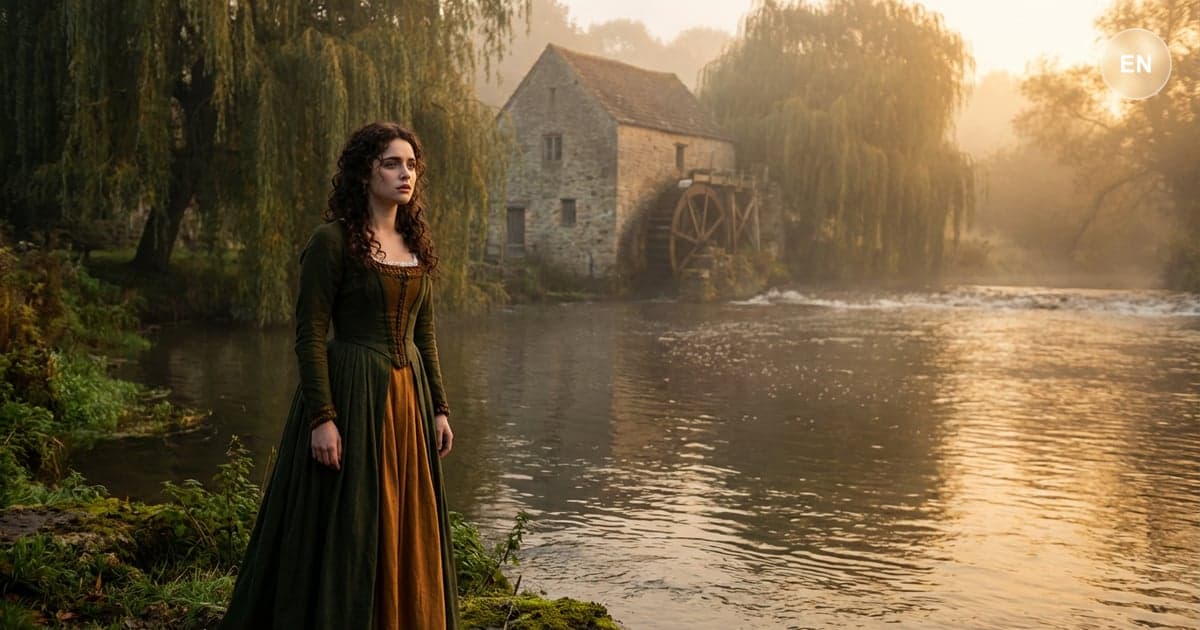
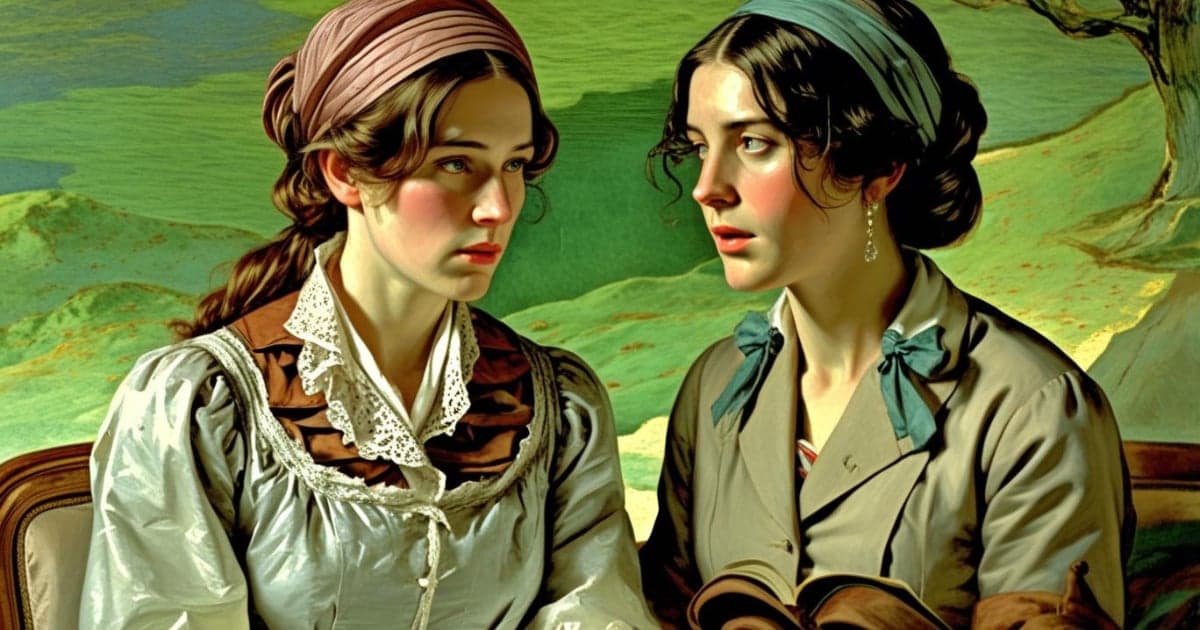
We meet Dorothea Brooke, a young woman "not yet twenty" living at Tipton Grange with her bachelor uncle Mr. Brooke and her younger sister Celia. Dorothea is beautiful but dresses with deliberate plainness: religion alone, Eliot tells us, would have been enough to determine it. Her mind is theoretic, enamoured of intensity, drawn toward grand moral purpose — she memorises Pascal and Jeremy Taylor and finds fashionable dress as sensible as an occupation for Bedlam. Her sister Celia has more common-sense. She mildly acquiesces in Dorothea's views, but Eliot is precise about the dynamic: Celia has always worn a yoke, and yoked creatures have their private opinions. There is a mixture of criticism and awe in how she sees her sister — not simple resentment, but something more complex and careful. The central scene of the chapter is the division of their mother's jewels, six months after their uncle first handed them over. Celia wants to wear them; Dorothea, in a tone half-caressing and half-explanatory, says simply "we should never wear them, you know." She gives the amethyst necklace and pearl cross to Celia without hesitation — she refuses the cross not because of vanity but because "a cross is the last thing I would wear as a trinket." Then Celia opens a ring-box, the sun breaks through a cloud, and the emerald catches the light. Dorothea is arrested. "How very beautiful these gems are," she says — and immediately begins trying to justify her delight by connecting the colors to the spiritual emblems in Revelation. She keeps the emerald ring and bracelet. Celia, quietly observing, notes the inconsistency. When she asks whether Dorothea will wear them in company, Dorothea replies haughtily: "Perhaps. I cannot tell to what level I may sink." Both sisters are left unhappy — Celia for having offended, Dorothea for questioning the purity of her own feeling. They reconcile silently, Dorothea pressing her cheek to Celia's arm. Before the jewelry scene, the chapter introduces the Reverend Edward Casaubon — a man of profound learning, noted throughout the county, understood for years to be engaged on a great work of religious history. He is coming to dine that evening. Dorothea already feels "venerating expectation" about him, even before they have met. This anticipation sits alongside her views on marriage: she has no interest in the amiable Sir James Chettam, who says "Exactly" to her remarks even when she expresses uncertainty. What she wants, Eliot tells us, is a marriage where the husband is "a sort of father, and could teach you even Hebrew, if you wished it." The arrival of Casaubon — scholar, widower, man of God — is precisely the kind of encounter her imagination has been waiting for.

Coming Up in Chapter 2

Casaubon has arrived — we've already been told he's coming, and that Dorothea feels venerating expectation about him before they've exchanged a word. Chapter II puts them at the dinner table together. What does the reality of the man do to the idea of him she has already formed?

Share it with friends

Next Chapter
GO ADS FREE — JOIN US
Original text
complete·3,281 words
S

ince I can do no good because a woman,
Reach constantly at something that is near it.
—The Maid’s Tragedy: BEAUMONT AND FLETCHER.

1 / 18

Master this chapter. Complete your experience

Purchase the complete book to access all chapters and support classic literature

Read Free on GutenbergBuy at Powell'sBuy on Amazon

As an Amazon Associate, we earn a small commission from qualifying purchases at no additional cost to you.

Available in paperback, hardcover, and e-book formats

GO ADS FREE — JOIN US

Why This Matters

Connect literature to life

Skill: Detecting Noble Hypocrisy

This chapter teaches how to spot when someone (including yourself) creates elaborate moral justifications for behavior that contradicts their stated values.

Practice This Today

This week, notice when you or others start explaining why an exception to your principles is actually more principled—that's usually noble hypocrisy in action.

GO ADS FREE — JOIN US

Now let's explore the literary elements.

Key Quotes & Analysis

"Since I can do no good because a woman, Reach constantly at something that is near it."

— Narrator

Context: The epigraph that opens the chapter, setting up Dorothea's struggle

This quote captures the central frustration of intelligent women in Eliot's era - being blocked from meaningful action by their gender, yet still striving to find purpose within those constraints.

In Today's Words:

Since society won't let me do important work because I'm a woman, I'll keep trying to find ways to make a difference anyway.

"Her hand and wrist were so finely formed that she could wear sleeves not less bare of style than those in which the Blessed Virgin appeared to Italian painters"

— Narrator

Context: Describing Dorothea's natural beauty despite her plain dress

Eliot shows how Dorothea's beauty transcends fashion, comparing her to religious art to emphasize both her physical grace and moral aspirations.

In Today's Words:

She was so naturally beautiful that she looked elegant even in the plainest clothes.

"The pride of being ladies had something to do with it"

— Narrator

Context: Explaining why the Brooke sisters dress simply

This reveals the complex class dynamics at play - the sisters' plain dress actually signals their high social status, as they don't need to dress up to prove their worth.

In Today's Words:

Part of it was that they were secure enough in their social status that they didn't need to show off.

Thematic Threads

Identity

In This Chapter

Dorothea builds her entire sense of self around being morally superior and spiritually focused

Development

Introduced here

In Your Life:

You might recognize this when you define yourself so strongly by what you're 'not' that you can't admit when you want those very things

Class

In This Chapter

Dorothea's ability to reject material goods while keeping the best ones reveals the luxury of performative poverty

Development

Introduced here

In Your Life:

You might see this when people with resources claim to be 'above' materialism while still enjoying its benefits

Family Dynamics

In This Chapter

Celia holds "a mixture of criticism and awe" toward Dorothea — she mildly acquiesces but notices every inconsistency, and "the younger had always worn a yoke; but is there any yoked creature without its private opinions?"

Development

Introduced here

In Your Life:

You might recognize this in relationships where one person sets the moral tone and the other quietly tallies the exceptions

Self-Deception

In This Chapter

Dorothea genuinely believes her justifications about the jewelry serving spiritual purposes

Development

Introduced here

In Your Life:

You might catch yourself creating elaborate explanations for choices that really come down to simple wants or needs

Social Expectations

In This Chapter

The pressure for young women to be both beautiful and morally pure creates impossible contradictions

Development

Introduced here

In Your Life:

You might feel this when society expects you to want things you're also supposed to be above wanting

GO ADS FREE — JOIN US

You now have the context. Time to form your own thoughts.

Discussion Questions

  1. 1

    What happens when Dorothea and Celia divide their mother's jewelry, and how does each sister react?

    analysis • surface
  2. 2

    Dorothea gives away the amethyst necklace and pearl cross without hesitation, yet keeps the emerald ring and bracelet. What happens in that moment, and how does she explain it to herself?

    analysis • medium
  3. 3

    Where have you seen someone (including yourself) create elaborate justifications for doing something they previously criticized?

    application • medium
  4. 4

    When you catch yourself in this kind of contradiction, what's a healthier response than creating complex justifications?

    application • deep
  5. 5

    What does this scene reveal about how we protect our self-image when our actions don't match our stated values?

    reflection • deep

Critical Thinking Exercise

10 minutes

Track Your Noble Hypocrisy

Think of a recent time you changed your mind about something but felt the need to justify it rather than simply admitting you changed your mind. Write down what you really wanted, what story you told yourself about why it was actually okay, and what you might have said instead if you'd been completely honest.

Consider:

  • •Notice the difference between changing your mind (normal) and elaborate justification (protecting self-image)
  • •Consider whether your original standard was too rigid or your justification too creative
  • •Think about how this pattern might affect your relationships when others do the same thing

Journaling Prompt

Write about a value or principle you hold strongly. How do you handle it when real life makes that principle complicated or inconvenient? What would honest flexibility look like versus elaborate justification?

GO ADS FREE — JOIN US

Coming Up Next...

Chapter 2: Mr. Casaubon's Scholarly Proposal

Casaubon has arrived — we've already been told he's coming, and that Dorothea feels venerating expectation about him before they've exchanged a word. Chapter II puts them at the dinner table together. What does the reality of the man do to the idea of him she has already formed?

Continue to Chapter 2
Contents
Next
Mr. Casaubon's Scholarly Proposal

Continue Exploring

Middlemarch Study GuideTeaching ResourcesEssential Life IndexBrowse by ThemeAll Books
Social Class & StatusLove & RelationshipsMoral Dilemmas & Ethics

You Might Also Like

Jane Eyre cover

Jane Eyre

Charlotte Brontë

Explores personal growth

Great Expectations cover

Great Expectations

Charles Dickens

Explores personal growth

The Strange Case of Dr Jekyll and Mr Hyde cover

The Strange Case of Dr Jekyll and Mr Hyde

Robert Louis Stevenson

Explores personal growth

Don Quixote cover

Don Quixote

Miguel de Cervantes Saavedra

Explores personal growth

Browse all 47+ books
GO ADS FREE — JOIN US

Share This Chapter

Know someone who'd enjoy this? Spread the wisdom!

TwitterFacebookLinkedInEmail

Read ad-free with Prestige

Get rid of ads, unlock study guides and downloads, and support free access for everyone.

Subscribe to PrestigeCreate free account
Intelligence Amplifier
Intelligence Amplifier™Powering Wide Reads

Exploring human-AI collaboration through books, essays, and philosophical dialogues. Classic literature transformed into navigational maps for modern life.

2025 Books

→ The Amplified Human Spirit→ The Alarming Rise of Stupidity Amplified→ San Francisco: The AI Capital of the World
Visit intelligenceamplifier.org
hello@widereads.com

WideReads Originals

→ You Are Not Lost→ The Last Chapter First→ The Lit of Love→ Wealth and Poverty→ 10 Paradoxes in the Classics · coming soon
Arvintech
arvintechAmplify your Mind
Visit at arvintech.com

Navigate

  • Home
  • Library
  • Essential Life Index
  • How It Works
  • Subscribe
  • Account
  • About
  • Contact
  • Authors
  • Suggest a Book
  • Landings

Made For You

  • Students
  • Educators
  • Families
  • Readers
  • Literary Analysis
  • Finding Purpose
  • Letting Go
  • Recovering from a Breakup
  • Corruption
  • Gaslighting in the Classics

Newsletter

Weekly insights from the classics. Amplify Your Mind.

Legal

  • Privacy Policy
  • Terms of Service
  • Cookie Policy
  • Accessibility

Why Public Domain?

We focus on public domain classics because these timeless works belong to everyone. No paywalls, no restrictions—just wisdom that has stood the test of centuries, freely accessible to all readers.

Public domain books have shaped humanity's understanding of love, justice, ambition, and the human condition. By amplifying these works, we help preserve and share literature that truly belongs to the world.

A Pilgrimage

Powell's City of Books

Portland, Oregon

If you ever find yourself in Portland, walk to the corner of Burnside and 10th. The building takes up an entire city block. Inside is over a million books, new and used on the same shelf, organized by color-coded rooms with names like the Rose Room and the Pearl Room. You can lose an afternoon. You can lose a weekend. You will find a book you have been looking for your whole life, and three you did not know existed.

It is a pilgrimage. We cannot find a bookstore like it anywhere on earth. If you read the classics, and you ever get the chance, go. It belongs on every reader's bucket list.

Visit powells.com

We are not in any way affiliated with Powell's. We are just a very big fan.

© 2026 Wide Reads™. All Rights Reserved.

Intelligence Amplifier™ and Wide Reads™ are proprietary trademarks of Arvin Lioanag.

Copyright Protection: All original content, analyses, discussion questions, pedagogical frameworks, and methodology are protected by U.S. and international copyright law. Unauthorized reproduction, distribution, web scraping, or use for AI training is strictly prohibited. See our Copyright Notice for details.

Disclaimer: The information provided on this website is for general informational and educational purposes only and does not constitute professional, legal, financial, or technical advice. While we strive to ensure accuracy and relevance, we make no warranties regarding completeness, reliability, or suitability. Any reliance on such information is at your own risk. We are not liable for any losses or damages arising from use of this site. By using this site, you agree to these terms.