
Meditations
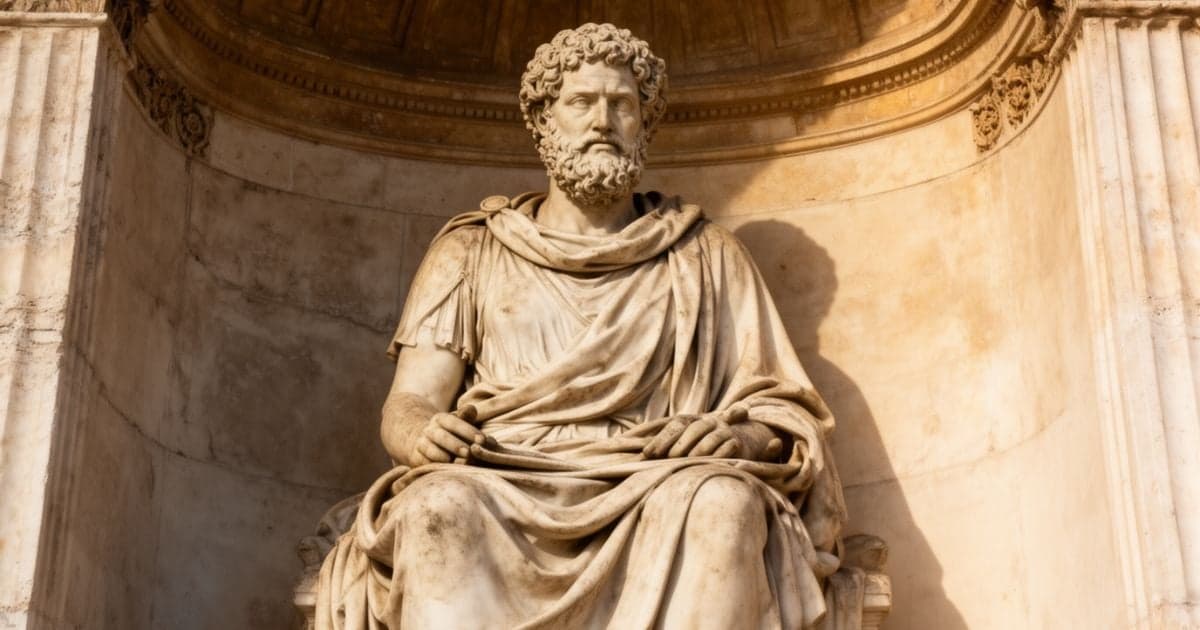
Marcus Aurelius
0:00 / 0:00
Before he writes a single victory, Marcus Aurelius lists the people who made him less vain. Grandfather Verus gets gentleness. Rusticus gets the copy of Epictetus. Antoninus Pius gets a ruler who works without a troop of guards. The notebook was written in Greek on the Danube frontier, late in the second century, while plague thinned the legions, and never meant for a reader. The emperor is trying to become a man he would still respect if the purple came off.
Marcus is Roman emperor from 161 to 180, last of the Five Good Emperors, writing notes he never meant anyone else to read. Antoninus Pius, his adoptive father, is the model of a ruler who works without vanity and never mistakes flattery for respect. Rusticus is the teacher who tells him his life needs correction, not performance, and hands him Epictetus. Grandfather Verus taught gentleness. His mother taught piety and a spare diet. Fronto showed him how envy and fraud run through courts. Each morning he prepares to meet the idle, the ungrateful, the envious, and the flatterers who want a show. The dead keep returning: Alexander and his mule-driver, Hippocrates, Socrates. Faustina is the wife he thanks the gods for. The only opponent who never leaves the page is himself.
Book One is a roll call: Verus, the tutors who kept him off circus factions, Rusticus giving him Epictetus and permission to stop playing the philosopher in a long robe, Antoninus governing with measure. At Granua he writes the morning drill: expect fools today; they act from ignorance; anger at them is as irrational as hating a stone for falling. Book Two asks how long he has already delayed the inner work. Book Four says the inner fortress is not a place you travel to: retreat into yourself if the principles are stored. Book Five is the warm-bed argument: you were born for a man's work; bees and ants already do theirs. Alexander and Pompey conquered towns and still died. The best revenge is not becoming like the people who wrong you. Waste no more time arguing what a good man should be. Be one. The last book asks what is the present estate of his understanding, and tells him to enjoy now whatever he keeps deferring.
Marcus never meant the notebook for an audience, and he never treats the repetition as failure. He writes the same pressures in different words: distraction, flattery, fear of death, rage at people who will not change, the temptation to dress virtue up instead of living it. Power does not exempt him from the morning argument. Philosophy composed for display fails. What remains is not a system. It is a picture of a man catching himself slipping and starting again, blunt and free of vanity, one day at a time.
Building Earned Authority starts on that Book One page: Verus, Rusticus handing him Epictetus, Antoninus working without a troop of guards, credit written before any victory. The day that follows spends it. Morning Preparation for Difficult People is the Granua drill before the idle and the envious arrive, and Separating What You Control is the ruling reason that will not become a slave to appetite, reputation, or other people's opinions once they do. Controlling the Inner Fortress is Book Four saying you do not need the seashore if the principles are already stored. Facing Mortality Without Panic sits with Hippocrates dying sick, Alexander and the mule-driver both gone, and time that will not return. Getting Up and Doing the Work is the warm bed in Book Five: bees already work, rest has a stint, and duty does not.
A warm bed on the Danube is still the first argument of the day. Bees are already at work while the emperor argues with a blanket no one else can see. Wide Reads puts summaries, quotes, and audio beside all twelve books, from the debts in Book One to a man talking himself onto his feet.
Lessons from Meditations
Theme-by-theme chapter breakdowns of the essential skills in this classic work.
Lessons from Meditations
Theme-by-theme chapter breakdowns of the essential skills in this classic work.Building Earned Authority
Credit Verus, Rusticus, and Antoninus by name: gentleness, Epictetus, and a ruler who never mistakes flattery for respect.
Of my grandfather Verus I have learned to be gentle and meek, and to refrain from all anger and passion.
Controlling the Inner Fortress
Retreat into the mind Book Four trains: obstacles feed a strong fire, and you do not need the seashore if the principles are already stored.
At what time soever thou wilt, it is in thy power to retire into thyself, and to be at rest, and free…
Deep dives
Chapter-by-chapter breakdowns
Morning Preparation for Difficult People
Use the Granua drill before the day begins: expect the idle and the envious, and refuse to hate a stone for falling.
Betimes in the morning say to thyself, This day I shalt have to do with an idle curious man, with an unthankful…
Separating What You Control
Keep ruling reason from becoming a slave to appetite, reputation, or other people's opinions, and release what is not yours.
Remember how long thou hast already put off these things, and how often a certain day and hour as it were, having…
Table of Contents
Lessons from Those Who Shaped Me
The most powerful man in the known world opens his private journal not with victories but with debts...
Time Is Running Out
You keep telling yourself you will get serious about inner life later. Marcus confronts himself with...
Time, Beauty, and Mental Discipline
Your mind has an expiration date separate from your body. Marcus confronts himself with a second urg...
Common Questions About Meditations
Trending search questions mapped to the six lessons in this journal—earned authority, the inner fortress, morning preparation, the dichotomy of control, mortality, and getting up to work—plus what readers actually ask Google about Marcus Aurelius, Stoicism, and the emperor's private notes on the Danube.
What is Meditations about?
Twelve books of private notes Marcus Aurelius wrote to himself in Greek while campaigning on the Danube frontier in the late second century. Book I is a roll call of teachers: Verus, Rusticus with Epictetus, Antoninus governing without vanity. Later books argue with a warm bed, name the inner fortress that needs no seashore, and return to Hippocrates dying sick and Alexander gone like his mule-driver. The journal was never meant for publication. It is a man catching himself slipping and starting again.
Explore Building Earned AuthorityWhat is Stoicism in Meditations?
Not a performance in a long robe. Marcus thanks Rusticus for telling him his life needed correction and for handing him Epictetus. The practice is ruling reason that will not become a slave to appetite, reputation, or other people's opinions; morning preparation before the idle and envious arrive; and the best revenge defined as not becoming like the people who wrong you. Power does not exempt him from the daily argument.
Explore Separating What You ControlWhat can you control according to Marcus Aurelius?
Your ruling reason, your judgments, and what you assent to. Book IV says the inner fortress is not a place you travel to: retreat into yourself if the principles are stored. Body, property, office, reputation, and other people's choices are not yours to command. Treat them as if they were and you will lament, find fault with gods and men, and spend the day on the wrong list.
Explore Separating What You ControlHow does Marcus Aurelius prepare for difficult people?
At Granua he writes the morning drill before the day begins: expect fools today; they act from ignorance; anger at them is as irrational as hating a stone for falling. Book I closes by naming the idle, the ungrateful, the envious, and the flatterers who want a show. The emperor does not pray for better company. He rehearses meeting them without rage.
Explore Morning Preparation for Difficult PeopleWhat does Marcus Aurelius say about death and mortality?
The dead keep returning: Hippocrates dies sick, Alexander and his mule-driver are both gone, Pompey and Caesar conquered towns and still died. Marcus does not use mortality as decoration. He uses it to shrink vanity, refuse panic, and ask what you keep deferring. The last book asks what is the present estate of your understanding and tells you to enjoy now whatever you have been putting off.
Explore Facing Mortality Without PanicWhat life lessons does Meditations teach?
Six lessons run through the journal: build earned authority by naming who shaped you; control the inner fortress without needing escape; prepare each morning for people who will fail you; separate what you control from what you cannot; face mortality without panic; and get up to do the work when the bed is warm and bees are already busy. Those drills, not a tidy philosophy lecture, are why the notebook still answers modern searches.
About Marcus Aurelius
Published 180
Marcus Aurelius (121-180 AD) was born Marcus Annius Verus in Rome, into a family already close to the imperial house. Antoninus Pius adopted him. He studied under Stoic teachers, including Rusticus, who introduced him to Epictetus, and he wrote the Meditations in Greek while campaigning on the Danube frontier during plague, war, and court intrigue.
He ruled from 161 to 180, the last of the Five Good Emperors. The journal was never meant for publication: twelve books of notes to himself on virtue, mortality, and staying sane when power demands performance. His reign was marked by constant military pressure and the death of many of his children. The pages show not serenity performed for others but a man arguing with himself about leaving the bed and meeting fools without rage.
His gift is refusing to write as if he had already arrived. He thanks teachers by name. He repeats himself because the day will ask the same thing tomorrow. He died on campaign. The notebook became one of the most used works of practical philosophy in the West, prized by readers who need discipline without theatre.
Why Marcus Aurelius Matters Today
Marcus speaks to the moment when authority is mistaken for peace of mind: the promotion that changes nothing about the argument with the alarm clock, the difficult colleague you still have to face without rehearsal, the fear of death dressed up as busy indifference. His answer is not a system to admire from a distance. It is a private notebook written by someone who never stopped catching himself slipping.
What makes him indispensable is that he had every excuse to stop checking himself and never took it. Emperor of Rome for nineteen years, commanding legions through plague and war, he still credits a grandfather for gentleness and a teacher for telling him his life needed correction, not performance. He never published a word of it. That is why the notebook reads as evidence rather than a lecture: distraction, flattery, rage at people who will not change, the temptation to dress virtue up instead of living it, argued out one morning at a time.
Stoicism is often mistaken for a mood, a flat calm performed for other people. Marcus is the correction. Business leaders and soldiers still carry his notebook for the same reason cognitive therapists still borrow its moves. If you have ever won the argument in your head and still could not get out of bed, this is the emperor who admits he lost that argument too, and got up anyway.
Wide Reads is different.
Plot, characters, and themes — plus audio, source text, and patterns you can use after class
Two ways in
Read & listen to the summary
Chapter by chapter, with audio. The meaning arrives because you experienced it — not because someone listed bullet points.
Start with this.
Read the original text
The actual words the author wrote, alongside every summary. Use the guide, then step into the source.
Then step into the source.
Either way, the door opens inward.
— and most of all, Why does this matter?
Get the Full Book
Purchase the complete book to access all chapters and support classic literature
Available in paperback, hardcover, and e-book formats
You Might Also Like



Free to read • No account required
