
The Collision · No. 2
Before The Obstacle Is the Way, an emperor wrote the same line — and refused the win.
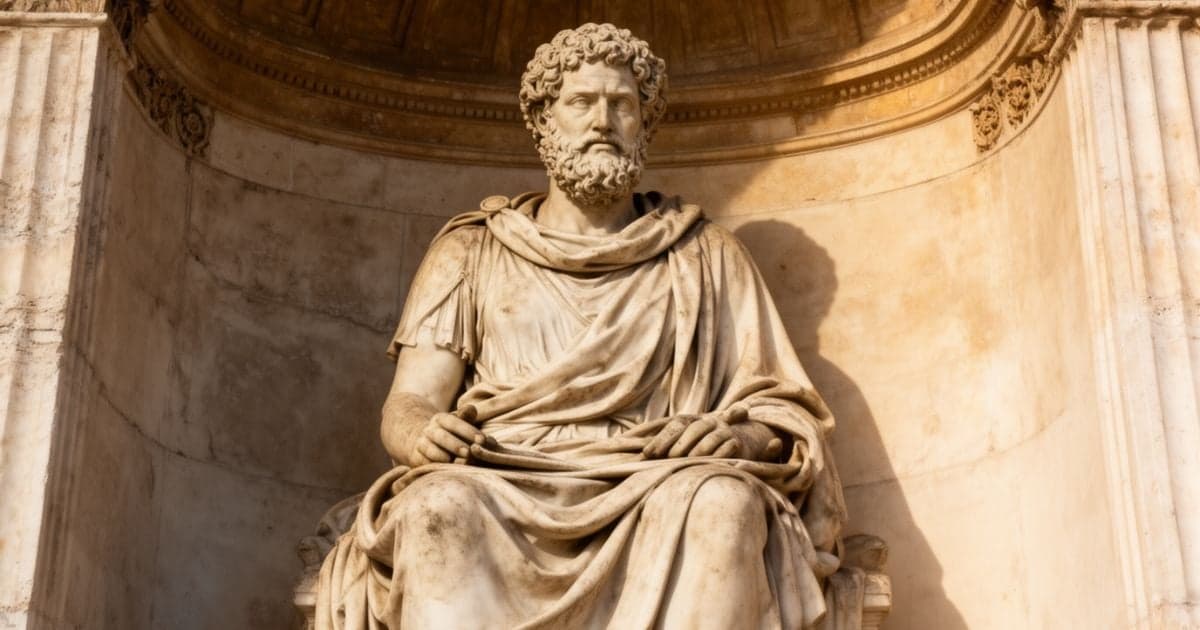
Marcus writes to himself on the Danube frontier, late in the second century, while plague thins the legions and court intrigue waits at home. The notebook was never meant for a reader. In the morning he finds himself unwilling to rise — and talks himself through it before the day's obstacles arrive. Not a brand. Not a keynote. A private order to a man who already wears the purple.
In Book V he states the move Holiday would sell eighteen centuries later: what before was the impediment becomes the principal object of the mind's work; what stood in the way is now the readiest way. In Book V, Marcus hands you the argument before anyone packages it as a win formula — the obstacle is not welcome, but virtue still has a job.
Ryan Holiday's The Obstacle Is the Way (2014) would arrive with a cleaner diagram: the obstacle in the path becomes the path; within every obstacle is an opportunity to improve your condition. Blocked plan, reframed advantage, better outcome. That insight sells because it is often true. Marcus had already staged the harder case: convert the impediment into the next fitting action — with no promise the empire, the court, or anyone else will applaud.
The book you bought
“The obstacle in the path becomes the path. Never forget, within every obstacle is an opportunity to improve our condition.”
The Obstacle Is the Way · Ryan Holiday · 2014
The book that beat it by ~1,830 years
What was the impediment becomes the principal object of the mind's work. What stood in the way is now the readiest way — not because the block was good, but because virtue still has a job.
Meditations · Marcus Aurelius · c. 170–180 AD
The modern version wants the obstacle to make you successful. The emperor's notebook wants the obstacle to make you just — whether anyone notices or not.
Holiday's move is useful — and it does not hold the notebook
Holiday does not pretend he invented Stoicism. He cites Marcus. He sells the lineage on purpose. That is why this collision is sharper than a plagiarism tip: the modern book already admits the source, then softens what the source demanded. Holiday names what millions of operators already feel: the blocked plan that could still pay you back if you reframe it hard enough — the wall that becomes fuel instead of defeat.
The Obstacle Is the Way is a performance manual. Blocked plan → reframed advantage → better athlete, founder, operator. The obstacle becomes fuel for an outcome you still want. That is useful. It is also not what an emperor writing to himself on the Danube frontier was protecting — and that is why the book keeps selling.
Map Marcus's notebook onto Holiday's grid and the fit refuses to sit in one bucket. Perception: Holiday reframes the block as opportunity to improve your condition. Marcus does not pretend the obstacle was welcome — he changes the object of work. Action: both convert impediment into the next move; Holiday's version still aims at a better scoreboard. Will: Marcus removes applause as proof — plague, war, court intrigue, and the morning bed all test whether you act justly when the first plan dies. The prize is not that the empire gets easier. The prize is that you do not abandon patience, clarity, or duty because the day refused your first draft.
 Read the chapter
The source · Book V, Meditations
“what before was the impediment, is now the principal object of her working; and that which before was in her way, is now her readiest way.”Marcus Aurelius, Meditations, Book V, trans. Meric Casaubon
Why the old one is harder than the new one
Holiday's version flatters the will to win. Meet the wall, convert it, improve your condition. The scoreboard is still in the room.
Marcus removes the scoreboard as the point. In Book V the mind does not pretend the obstacle was welcome. It changes the object: what blocked the first plan becomes the work now. In Book IV he uses fire — a small flame dies under what lands on it; a trained one consumes the same material and grows. The prize is not that the empire gets easier. The prize is that you do not abandon justice, patience, or clarity because the day refused your first draft.
That is the part the shelf softens. “The obstacle is the way” can sound like a guarantee that friction will pay you back. What Marcus actually practiced is closer to a standing order: when the path dies, the next fitting action is still required — and outcome applause is not the proof you did it.
That is the line the keynote deletes. Holiday makes obstacle conversion a success method — reframe hard enough and the block improves your condition. Marcus makes it a character order — wrong about the first plan, still required to act justly, still not entitled to applause. No scoreboard fixes that. Only the next fitting action, and a mind that cannot keep bargaining with the morning because the bed feels safer than the frontier.
Bring this to the table
If the obstacle becomes the way even when you never get the win you wanted — is Stoicism a success method, or a refusal to let blocked plans cancel your character?
Common Questions
Search questions this collision answers—what readers ask about the obstacle slogan vs. what Marcus Aurelius wrote in Meditations.
Did Marcus Aurelius say 'the obstacle is the way'?
Not in those exact modern words. In Meditations Book V he writes that what was the impediment becomes the principal object of the mind's working, and what was in the way becomes the readiest way. Ryan Holiday popularized the compressed English slogan; the Stoic claim is older and stricter.
Is The Obstacle Is the Way based on Meditations?
Yes in lineage. Holiday builds openly on Stoicism and cites Marcus. The collision is not theft — it is packaging. The modern book frames the obstacle as fuel for achievement. Marcus wrote private notes on converting blockage into the next fitting action, without guaranteeing worldly success.
What did Marcus Aurelius actually say about obstacles?
In Book V of Meditations, he argues that a trained mind turns obstruction into its new aim: the impediment becomes the principal object of its work, and the thing that blocked the first plan becomes the readiest route forward. Book IV's fire image makes the same point — a strong flame consumes what would quench a weak one.
Read the source, not the remix.
Meditations is twelve books of an emperor arguing with himself — duty, mortality, and what to do when the day refuses the first plan. We narrate it book by book, in plain language, so the argument lands instead of collapsing into a slogan. First chapter's audio is free. The rest is $2.99 a month, every book on the shelf.