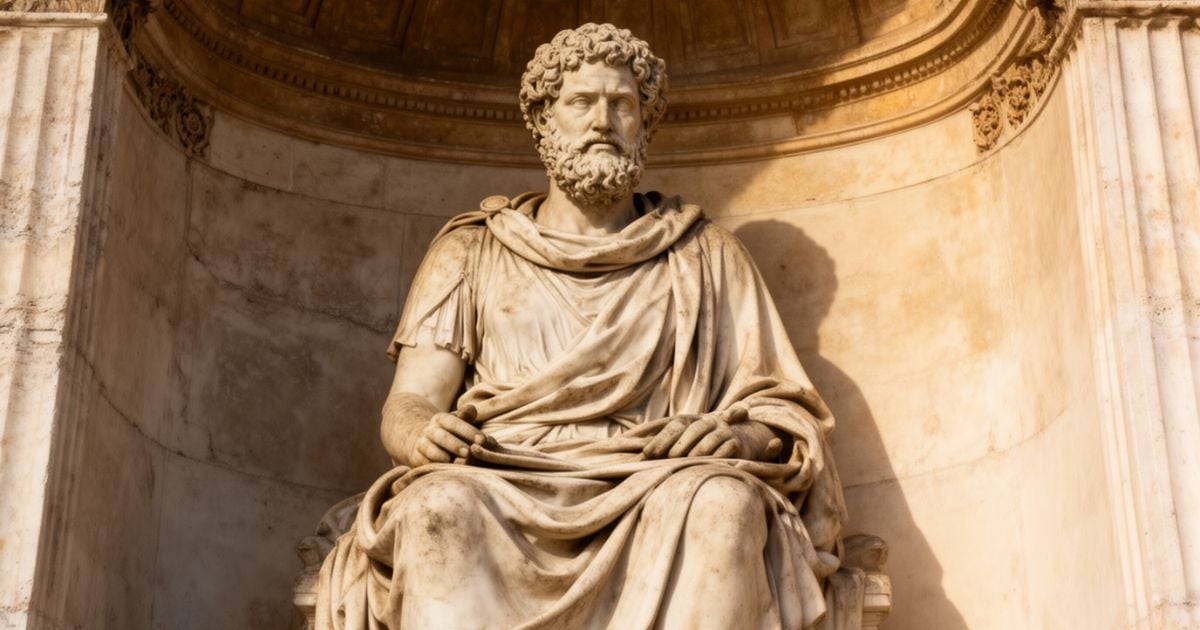
Chapter 02
Time Is Running Out
THE SECOND BOOK I. Remember how long thou hast already put off these things, and how often a certain day and hour as it were, having been set unto thee by the gods, thou hast neglected it. It is high time for thee to understand the true nature both of the world, whereof thou art a part; and of that Lord and Governor of the world, from whom, as a channel from the spring, thou thyself didst flow: and that there is but a certain limit of time appointed unto thee, which if thou shalt not make use of to…
Public-domain chapter text, formatted for reading.
Master this chapter. Complete your experience
Purchase the complete book to access all chapters and support classic literature
Available in paperback, hardcover, and e-book formats
Now let's explore the literary elements.
Key Quotes & Analysis
"Remember how long thou hast already put off these things, and how often a certain day and hour as it were, having been set unto thee by the gods, thou hast neglected it."
Context: Opening challenge about wasted chances to do inner work
Marcus does not soften the entry. He treats delay itself as the first moral failure, before any external crisis arrives.
In Today's Words:
You keep promising yourself you will get your life in order next month, after the project, once things calm down. Marcus strips that lie bare: how long have you already delayed, and how many chances the gods set have you already wasted without using them?
"that those sins are greater which are committed through lust, than those which are committed through anger."
Context: Section VII comparing failures of character by motivation
Marcus ranks sins by what they reveal about self-control: anger turns away from reason under injury, but lust chooses pleasure outright.
In Today's Words:
Anger often follows a felt injury and turns away from reason under grief. Lust and unchecked craving are worse because you chose the surrender outright, without anyone forcing your hand. Think of someone who cheats or overspends because pleasure was there, not because anyone wronged them first.
"man can part with no life properly, save with that little part of life, which he now lives"
Context: Section XII on mortality and the present moment
Death only takes what you actually have: this instant. Past and future were never possessions, which collapses the fear of losing a long life.
In Today's Words:
Past and future were never yours to keep. Death only claims the present instant you are actually living right now. Whether you survive ten years or ten thousand, you part with the same narrow slice of time, which makes hoarding life for later a misunderstanding.
"Our life is a warfare, and a mere pilgrimage. Fame after life is no better than oblivion. What is it then that will adhere and follow? Only one thing, philosophy."
Context: Section XV closing argument at Carnuntum
Marcus ends not with comfort but with a choice: everything external dissolves; only disciplined inner life can survive the journey.
In Today's Words:
Bodies stream away like water; reputations fade into oblivion no faster than smoke. Marcus calls life a warfare and a pilgrimage where fame after death equals being forgotten. Only disciplined philosophy preserves the inner spirit through the journey and outlasts applause, legacy, and public noise.
Thematic Threads
Time
In This Chapter
Marcus faces his mortality and wasted opportunities for growth, realizing time is running short for meaningful change
Development
Introduced here as urgent motivator for self-examination
In Your Life:
You might recognize this when health scares or relationship crises suddenly make you question how you've been spending your years.
Identity
In This Chapter
Marcus distinguishes between external reputation and internal character, arguing that only your soul's condition truly matters
Development
Introduced here as core philosophical foundation
In Your Life:
You see this when you realize you've been performing a version of yourself for others instead of developing who you actually want to be.
Social Expectations
In This Chapter
Marcus rejects the need for others' approval and sees external opinions as meaningless noise
Development
Introduced here as obstacle to authentic growth
In Your Life:
This shows up when you catch yourself making decisions based on what looks good rather than what feels right.
Personal Growth
In This Chapter
Marcus advocates for complete focus and integrity in every action, treating each moment as potentially your last
Development
Introduced here as urgent daily practice
In Your Life:
You might apply this when you realize you've been going through the motions instead of bringing full attention to your work and relationships.
You now have the context. Time to form your own thoughts.
Discussion Questions
This is not a test. Five prompts guide you through the chapter, from how it opens to how it closes, so you notice context and rhythm rather than facts to memorize. Sit with each question in your own words. When you see "One way to read it," treat it as a starting point, not the only answer.
- 1
Marcus opens Book II by asking how long you have already put off inner work and missed the deadlines the gods set. Why does he treat delay itself as the first moral failure rather than waiting for a crisis?
analysis • surfaceOne way to read it
Crisis only exposes a gap that was already there. Marcus says time to quiet the soul is finite; if you keep deferring, the chance passes and does not return. Delay is not neutral preparation but a choice against your own improvement.
- 2
Marcus says you should go about every action as if it were your last, free from vanity and hypocrisy. What would actually change in your day if you treated one ordinary task that way?
analysis • mediumOne way to read it
You would cut performance and approval-seeking and focus on gravity, justice, and sincerity. Petty friction and image management would drop away because there is no tomorrow to postpone the work of being decent.
- 3
Drawing on Theophrastus, Marcus ranks sins through lust as worse than sins through anger. Where do you see people today choose surrender to pleasure over reaction under injury, and what does each reveal about self-control?
application • mediumOne way to read it
Anger often follows a felt wrong and turns away from reason under grief. Lust and unchecked desire are chosen surrender. Think of revenge spirals versus scrolling, spending, or cheating because the pleasure was available, not because anyone injured you first.
- 4
Marcus argues that death only takes the present moment you are living, whether your life is long or short. How does that collapse the usual fear of losing a long future?
application • deepOne way to read it
Past and future were never possessions. You can only lose what you actually have: this instant. A ten-thousand-year life and a short one part with the same thing at the end, which makes hoarding time for later a misunderstanding of what time is.
- 5
Marcus closes at Carnuntum by saying life is a warfare and a pilgrimage, fame after death is no better than oblivion, and only philosophy endures. If an emperor on campaign needed that reminder, what does it suggest about what actually survives hard times?
reflection • deepOne way to read it
Titles, applause, and reputation dissolve as quickly as bodies. What holds is preserving the inner spirit: accepting what comes, acting with integrity, expecting death calmly. External achievement without that discipline does not travel with you.
Critical Thinking Exercise
Map Your Delayed Reckoning
Think of one area where you've been telling yourself you'll make changes 'later' - maybe it's your health, a relationship pattern, or a work habit. Write down what you've been avoiding and what wake-up call might force your hand if you keep delaying. Then identify one small action you could take today to start addressing it honestly.
Consider:
- •What story do you tell yourself about why 'now isn't the right time' to address this issue?
- •What crisis or external pressure might eventually force you to deal with this if you keep postponing?
- •What would someone who cares about you say about your pattern of delay in this area?
Journaling Prompt
Write about a time when you were forced to face something you'd been avoiding. What would have been different if you'd addressed it earlier by choice rather than waiting for circumstances to force your hand?
Coming Up Next...
Chapter 3: Time, Beauty, and Mental Discipline
Marcus turns from delay to decay: your body may outlive your mind, and the intellect that judges rightly weakens every day. Book Three hurries you to start before clarity fails and old age dulls judgment..