
Letters from a Stoic
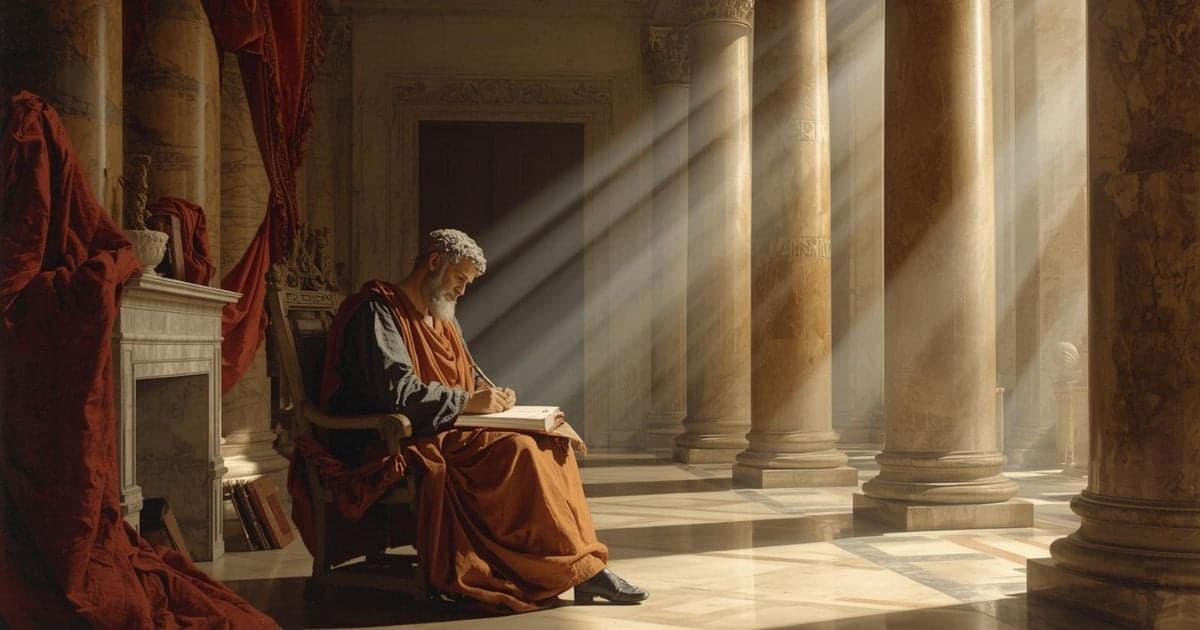
Seneca
0:00 / 0:00
Seneca opens the first letter by telling Lucilius to rescue himself for himself. Time is being stolen, and some of it Lucilius is handing over. The Moral Letters were written around 63 AD, from one of the richest households in Rome. A man who can buy anything still cannot buy back an hour.
Seneca is Lucilius's older friend: Stoic, dramatist, and for years the most powerful civilian in Nero's court. Gaius Lucilius Junior is a Roman knight serving as procurator of Sicily, younger, ambitious, and still deciding whether philosophy is a practice or a costume. Nero is the pupil Seneca once hoped to shape. Epicurus keeps arriving from the enemy's camp with a line worth stealing. The letters will not drop Senecio, healthy at dinner and dead by morning; Aufidius Bassus, dying with more composure than most men bring to inconvenience; Harpaste, the blind clown who keeps asking for a brighter room; or Vatia, who hid so well that neighbours called it living. The only opponent who never leaves the page is the gap between what Seneca praises and what he has done.
Letter 1 names three ways time dies: torn away, slipping, given. Letter 2 says everywhere means nowhere, and that the poor man is the one who always craves more. Letter 3 catches Lucilius sending a letter through a friend he immediately says not to trust. At the noon games Seneca expected light entertainment and found condemned men butchered for the lunch crowd, then admits he never comes home the same. Letter 13 says we suffer more in imagination than in reality. Letter 18 puts him in Saturnalia and tells Lucilius to practice poverty on purpose. Letter 20 says philosophy teaches us to act, not to speak. Bassus discusses death as if it were happening to someone else. An asthma attack becomes practising how to die. Senecio sits with a sick friend, goes home, and does not wake.
Seneca never treats the letters as a finished system, and he never pretends he has arrived. He writes the same pressures in different words: wasted hours, flattering crowds, fear of a death that has not happened, rage at people who will not listen, the temptation to lecture virtue instead of living it. Wealth does not exempt him from the morning argument. Philosophy composed for the lecture-room fails. What remains is not a saint. It is a picture of a man still working it out, blunt enough to admit he is not yet wise, and still writing to a friend while there is time.
Managing Time and Priorities is Letter 1: hours torn away, slipping, or given, some of them handed over, and Senecio healthy at dinner and gone by morning before the next plan lands. Emotional Regulation is Letter 13's warning that most suffering is rehearsal paid twice, and Harpaste asking for a brighter room while the blindness is already hers. Dealing with Adversity is the tax of a life: illness that almost ended him, exile, the father Seneca stayed alive for, a dead sea that is not tranquillity. Choosing Friendships Wisely is the courier Lucilius will not trust, then calls a friend, and the noon games that send you home worse than applause. Facing Mortality with Courage is Bassus on the leaky ship, the asthma that is already practice, a play that is not better for running long. Living According to Values is Letter 20 matching deed to word, and refusing Vatia's villa: hiding is not living, and the oath says you have already enlisted while there is still an hour left to spend.
Letter 1 asks Lucilius to rescue an hour he is still handing over. Senecio sits with a sick friend, goes home, and does not wake. The last notes are written while Nero's order is already coming. Wide Reads pairs summaries, quotes, and audio with all 124 letters, from the stolen hour to that last conversation.
Lessons from Letters from a Stoic
Theme-by-theme chapter breakdowns of the essential skills in this classic work.
Lessons from Letters from a Stoic
Theme-by-theme chapter breakdowns of the essential skills in this classic work.Deep dives
Chapter-by-chapter breakdowns
Dealing with Adversity
Pay the tax of life the way Letter 96 names it: illness, loss, and the father Seneca stayed alive for.
God is near you, he is with you, he is within you.
Choosing Friendships Wisely
Do not call a courier a friend if you will not trust him, and stay out of the noon games that send you home worse.
You have in the same letter affirmed and denied that he is your friend.
Table of Contents
Your Time Is Being Stolen
Focus Your Reading, Focus Your Mind
There's a trap hiding inside ambition: the belief that more is always better. More books, more trave...
Testing Your Inner Circle
Lucilius sends a letter through someone he calls a friend, then in the very next sentence warns Sene...
Facing Death Without Fear
Most people spend their lives trying to extend life while doing very little actual living. That's th...
Finding Your Authentic Middle Ground
Becoming a better person is one thing. Performing it for an audience is another. Letter 5 draws that...
The Power of Sharing Knowledge
Letter 6 opens with something rare in philosophy: a confession. 'I feel that I am being not only ref...
Why Crowds Can Corrupt You
Every crowd has a cost. Letter 7 opens with Seneca's admission that he never returns from a gatherin...
The Power of Strategic Withdrawal
When someone accuses Seneca of hiding from the world, his answer surprises. He isn't hiding, he's wo...
The Art of True Friendship
If a wise man is truly self-sufficient, why does he need friends at all? Letter 9 is Seneca's carefu...
The Art of Being Alone
Solitude and wisdom aren't the same thing, and confusing them can be dangerous. Letter 10 opens with...
The Blush of Modesty and Finding Your Moral Compass
Even the wisest person blushes. Letter 11 begins with Seneca observing a young man's face redden dur...
Finding Joy in Life's Final Season
A visit to his country estate hits Seneca with the same message everywhere he looks: he is old. The ...
Fear Is Usually Worse Than Reality
Most of the suffering we endure hasn't happened yet, and may never happen at all. Letter 13 opens wi...
Strategic Withdrawal from Dangerous People
The body is entrusted to us. We are not slaves to it. Letter 14 opens with that distinction and buil...
Mind Over Muscle: True Strength
The old Roman greeting was 'If you are well, it is well.' Seneca suggests a better version: 'If you ...
Philosophy as Life's GPS
No one lives well without wisdom. Not happily, and barely supportably. Letter 16 takes that as its s...
Money Won't Buy You Wisdom
Stop waiting until you have enough money to start living wisely. That moment will not come. Letter 1...
Holiday Wisdom and Practice Poverty
It is December in Rome, the city in full Saturnalia fever, merrymaking everywhere, license given to ...
Breaking Free from the Success Trap
The higher you climb, the harder it becomes to get off. Letter 19 urges Lucilius, who has risen to p...
Walk the Walk, Don't Just Talk
Philosophy is tested in behaviour, not in words. Letter 20 makes that demand plainly. Progress isn't...
True Wealth Comes from Within
The obstacle, it turns out, is not other people. Letter 21 opens by redirecting Lucilius's frustrati...
Half-Measures Won't Set You Free
There is no gradual, comfortable exit from a life built on ambition. Letter 22 addresses Lucilius's ...
Finding Joy That Actually Lasts
Most of what people call joy is borrowed. Letter 23 opens with Seneca refusing to write small talk, ...
Facing Your Worst Fears
Lucilius is anxious about a lawsuit. Seneca's response is the whole letter. Don't spend now on a suf...
Choosing Your Inner Circle Wisely
Two friends, two different problems, two different prescriptions. Letter 25 opens with Seneca and Lu...
Preparing for Life's Final Test
Old age, Seneca writes, may already be behind him. The word that applies now is something closer to ...
The Good That Lasts Forever
Seneca opens by disarming an obvious objection: who is he to give advice when he hasn't finished cor...
Why Running Away Never Works
Travel doesn't fix what's wrong with you. You take it with you. Letter 28 addresses Lucilius's restl...
When Friends Won't Listen to Truth
Marcellinus avoids Seneca because he is afraid to hear the truth. Letter 29 opens with that observat...
Facing Death with Grace
Letter 30 is a visit to a dying man who is handling it better than most people handle inconvenience....
Common Questions About Letters from a Stoic
Trending search questions mapped to the lessons in these letters—what readers actually ask Google about wasted time, imagined fear, testing friendships, and facing death.
What are the three ways Seneca says we lose time in Letters from a Stoic?
Letter 1 names them directly: time is torn from us by force, it quietly slips away while we are not paying attention, and some of it we simply hand over ourselves through carelessness. Seneca tells Lucilius that the last kind is the most shameful, because no one forced that hour out of his hands. The letter ends with a demand to audit exactly where the day went, since most of it turns out to be already gone.
Explore Managing Time and PrioritiesWhat does Seneca mean by "we suffer more in imagination than in reality"?
Letter 13 opens by praising Lucilius for surviving real contests with misfortune, then turns to the fears that have not actually happened yet. Seneca argues most of what wears people down is rehearsal: a disaster imagined so many times it costs more than the disaster itself ever would. He does not tell Lucilius to stop feeling fear. He tells him to stop paying for it twice.
Explore Emotional RegulationWhy does Seneca say crowds can corrupt you in Letters from a Stoic?
Letter 7 opens with Seneca admitting he never comes home from a gathering the same person who left it, always a little greedier, cruder, or more susceptible to whatever the mob is cheering. He describes going to the noon games expecting light entertainment and instead watching condemned men butchered for an audience that treats it as lunchtime amusement. The lesson is not misanthropy. It is a warning to choose your crowd on purpose.
Explore Choosing Friendships WiselyWhat is Seneca's advice about testing friendships in Letters from a Stoic?
In Letter 3, Lucilius sends Seneca a letter through a courier, then in the very next line warns Seneca not to trust that same man with anything important. Seneca will not let the contradiction pass. If you would not trust someone with what actually matters, he argues, stop calling them a friend, since the word has been cheapened into a greeting used on strangers.
Explore Choosing Friendships WiselyWhat does Seneca teach about facing death in Letters from a Stoic?
Letter 54 is written after a severe asthma attack that Seneca calls "practising how to die." Rather than treating the episode as heroic, he describes staying steady by asking one plain question: what is death, actually? His answer is non-existence, the same state that came before birth, which strips the fear of most of its power once you stop dressing it up as some unknown horror.
Explore Facing Mortality with CourageWhat life lessons does Letters from a Stoic teach?
Six lessons repeat across the 124 letters: managing time and priorities, since Letter 1 treats every wasted hour as theft you allowed; emotional regulation, learned by refusing to pay twice for a fear that has not arrived; dealing with adversity, treated as a tax every life eventually owes; choosing friendships wisely, tested by whether you would trust someone with what actually matters; facing mortality with courage, practised in small doses long before the real thing arrives; and living according to values, meaning deed has to match word or the philosophy is only talk. Seneca never claims to have mastered any of them himself, which is why the letters still read like a friend working it out in real time rather than a finished lecture.
About Seneca
Published 65
Lucius Annaeus Seneca (c. 4 BC to 65 AD) was born in Corduba, Spain, and educated in Rome. He studied under Stoic teachers, wrote tragedies, and rose as tutor and later advisor to Nero. The court made him rich. Politics sent him to Corsica for eight years on charges that were almost certainly a pretext.
He wrote the Moral Letters to Lucilius in Latin late in life, while Nero grew more dangerous. The 124 notes to a younger friend keep the tension visible: he preached indifference to wealth while holding one of the largest fortunes in Rome, and advised an emperor he could not control. In 65 Nero accused him of conspiracy and ordered him to die. He opened his veins.
His gift is refusing to write as if he had already arrived. He quotes Epicurus from the enemy's camp. He admits the crowd sends him home worse. He repeats himself because Lucilius will face the same hour tomorrow. The letters became the most used practical Stoicism in the Latin West, prized by readers who need a teacher still arguing with himself.
Why Seneca Matters Today
Seneca speaks to the moment when you already know what matters and still cannot make yourself live accordingly: the overtime you keep accepting, the friend who drags you down, the fear of death you postpone until it owns you. His answer is not a system to admire from a distance. It is a letter from someone still working it out, written to a real person with a real schedule and real compromises.
What makes him indispensable is the honesty of his biography. Exiled, enriched, entangled with power, ordered to die by the pupil he had tried to civilise. He never pretends to be a saint. That is why the letters land. Each one begins with something ordinary, a walk, a show, a crowd, a delayed message, then turns into instruction you can use before lunch. Time, friendship, grief, wealth, mortality: the themes are modern because the failures are modern.
Stoicism is often reduced to slogans on coffee mugs. Seneca is the correction. He writes with warmth, urgency, and self-accusation. Montaigne kept him close. Cognitive therapy keeps rediscovering his moves. If you want philosophy that reads like a mentor who will not let you lie to yourself, these 124 letters are where Stoicism becomes personal.
Wide Reads is different.
Plot, characters, and themes — plus audio, source text, and patterns you can use after class
Two ways in
Read & listen to the summary
Chapter by chapter, with audio. The meaning arrives because you experienced it — not because someone listed bullet points.
Start with this.
Read the original text
The actual words the author wrote, alongside every summary. Use the guide, then step into the source.
Then step into the source.
Either way, the door opens inward.
— and most of all, Why does this matter?
Get the Full Book
Purchase the complete book to access all chapters and support classic literature

Available in paperback, hardcover, and e-book formats
You Might Also Like



Free to read • No account required