Wide Reads
Literature MattersLife IndexEducators
Sign in
Where to Begin

The Strange Period — Crime and Punishment

Crime and Punishment - The Strange Period

Fyodor Dostoevsky

Crime and Punishment

The Strange Period

Home›Books›Crime and Punishment›Chapter 32: The Strange Period
Previous
32 of 41
Next

Analysis by the Wide Reads editorial team·Reviewed against the source text·Updated November 28, 2025

Summary

The Strange Period

Crime and Punishment by Fyodor Dostoevsky

0:000:00
Listen to Next Chapter

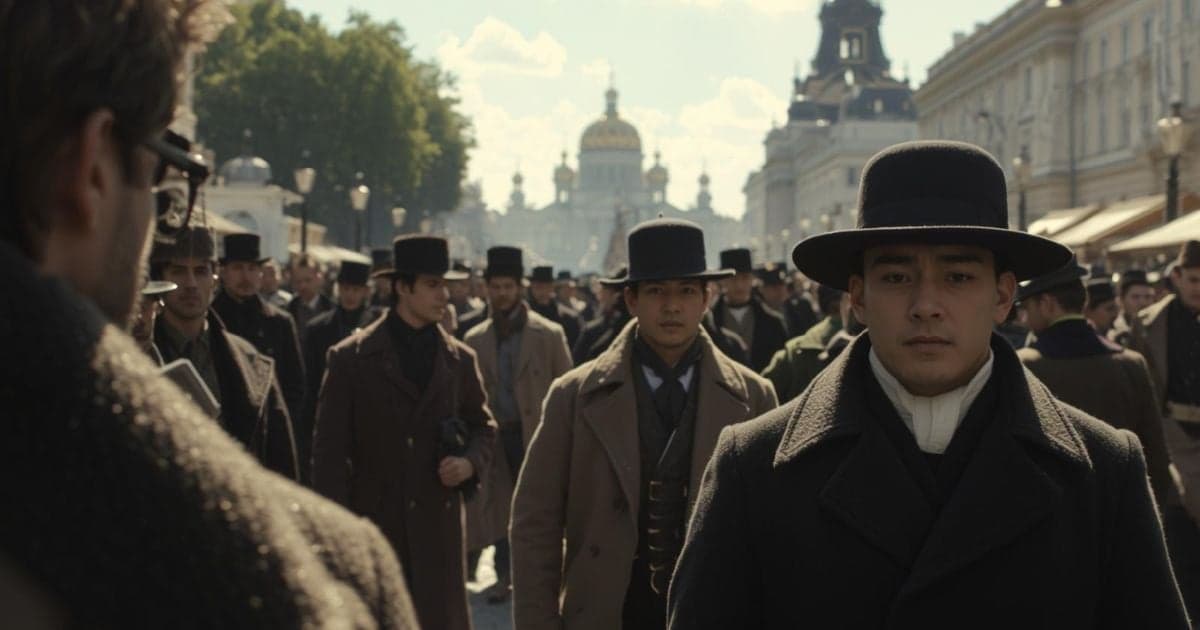
Part VI Chapter I opens in retrospective fog: Raskolnikov’s mind clouds after Katerina Ivanovna’s death, dates blur, and he is permanently thinking of Svidrigailov after those menacing words in Sonia’s room. He wanders taverns, wakes on Krestovsky Island in fever, and drifts through apathy like a dying man's insensibility, unable to face what he owes Sonia, his family, or the law.

Svidrigailov arranges the funeral and orphan placements; they meet on the stairs and avoid the vital subject, though both know it waits. He urges fresh air and promises a talk soon while priests climb for the requiem. Raskolnikov follows the priest into Sonia’s room for the requiem, Give rest, oh Lord, while Polenka weeps and Sonia prays. These last two days she hasn’t said a word to him; her hand on his shoulder shows no disgust, only exhausted charity. He leaves more miserable than before.

He skips the funeral, eats greedily after fever, and receives Razumihin, who swears he is not mad though his conduct looks monstrous. Mother is in bed with fever after waiting at his door; Razumihin saw the coffin and mourning children at Sonia’s. Raskolnikov entrusts mother and sister to him, praises his love for Dounia, and sends him toward Svidrigailov and fresh air instead of drink. Dounia’s letter has upset her; Razumihin guesses political conspirator nonsense yet stays loyal.

Crowds and taverns only sharpen his sense of someone near him; loneliness in company replaces solitude. He remembers the corridor lamp scene and fears even Razumihin has begun to suspect.

Then Razumihin drops the bomb: the murderer has been found, Nikolay the painter confessed with cunning staging on the stairs. He heard it from Porfiry, who explained it psychologically. Raskolnikov’s panic returns: if Porfiry pushed that story on Razumihin, what is his design? A means of escape had come, yet the tangle tightens. He resolves we shall see, we shall see, and sets out to settle Svidrigailov.

He opens the door onto Porfiry in the passage. Porfiry laughs that he did not expect a visitor, asks for a cigarette, and Raskolnikov, with false warmth, says Sit down, Porfiry Petrovitch. Terror becomes numb readiness; the last drops must be drained. Porfiry lights up; Raskolnikov’s heart seems to cry Speak, speak, while the chapter ends before a word of the interview. Razumihin runs off to Dounia still parsing letters, fresh air, and secrets.

This is not Svidrigailov’s suicide or Porfiry’s gentle confession offer. It is post-funeral fog, requiem silence, family crisis, Nikolay’s false closure, and the detective’s sudden arrival on the threshold of Part VI Chapter II, where the long interview finally begins.

In this chapter: Terms Characters Key Quotes Themes Modern Story

Why This Matters

Connect literature to life

Skill: Reading False Relief After a Confession

Another person's guilty plea can feel like air returning when it actually tightens the case. In the fog after Katerina's death, Razumihin tells Raskolnikov that Nikolay confessed and that Porfiry explained it, then Raskolnikov opens his door onto Porfiry asking for a cigarette. When you hear someone else took the blame, ask who planted that story and who is still waiting inside your room.

Coming Up in Chapter 33

Porfiry finally speaks in Sonia's stairwell interview, probing Raskolnikov while Nikolay's confession hangs over them both.

Share it with friends

PreviousPrevious ChapterNextNext Chapter
Original text
3,796 wordscomplete

Chapter 32

The Strange Period

PART VI CHAPTER I A strange period began for Raskolnikov: it was as though a fog had fallen upon him and wrapped him in a dreary solitude from which there was no escape. Recalling that period long after, he believed that his mind had been clouded at times, and that it had continued so, with intervals, till the final catastrophe. He was convinced that he had been mistaken about many things at that time, for instance as to the date of certain events. Anyway, when he tried later on to piece his recollections together, he learnt a great deal about…

Public-domain chapter text, formatted for reading.

Master this chapter. Complete your experience

Purchase the complete book to access all chapters and support classic literature

Buy at Powell'sBuy on Amazon

Available in paperback, hardcover, and e-book formats

Now let's explore the literary elements.

Key Quotes & Analysis

"hasn’t said a word to me"

— Raskolnikov (thought)

Context: At Katerina's requiem in Sonia's room

Sonia's silence after his confession hurts more than rejection would.

In Today's Words:

At the funeral service Raskolnikov notices Sonia has not said a word to him in two days and barely looked at him. After his confession, her silence is not disgust but exhaustion, and that quiet distance cuts him anyway. When you finally tell the truth, the other person's silence can feel like its own verdict.

"murderer has been found"

— Razumihin

Context: Leaving Raskolnikov's room after the mad-or-not speech

Nikolay's confession reaches Raskolnikov through Porfiry's channel.

In Today's Words:

Razumihin tells Raskolnikov the murderer has been found and that Nikolay the painter confessed with staged tricks on the stairs. He heard it from Porfiry, who gave a psychological explanation. News that should free an innocent suspect instead terrifies a guilty man who hears the detective shaping the story.

"means of escape had come"

— Narrator (Raskolnikov)

Context: After Razumihin leaves and Nikolay news sinks in

False hope and renewed struggle before Porfiry appears.

In Today's Words:

After Razumihin leaves, Raskolnikov feels a means of escape had come, then realizes the burden is still stifling. Nikolay's confession should open air, but Porfiry's psychology and Svidrigailov still trap him. Escape and trap can arrive in the same minute when someone else confesses for your crime.

"Speak, speak"

— Narrator (Raskolnikov)

Context: Chapter's last line as Porfiry sits to smoke

Cliffhanger: confrontation begins but dialogue is withheld.

In Today's Words:

Porfiry sits down to smoke and Raskolnikov's heart seems to burst with Speak, speak, yet the chapter ends before the interview begins. The silence before the detective speaks is its own torture. You know the conversation will decide everything, and still neither man starts the clock on mercy or prison.

Thematic Threads

Fog

In This Chapter

Apathy, wrong dates, wandering

Development

Post-catastrophe numbness

Svidrigailov

In This Chapter

Fresh air, funeral, wall

Development

Unresolved menace

Sonia

In This Chapter

Silence at requiem

Development

Charity without words

Family

In This Chapter

Mother ill, Dounia's letter

Development

Entrusted to Razumihin

Porfiry

In This Chapter

Nikolay story, visit

Development

Interview imminent

You now have the context. Time to form your own thoughts.

Discussion Questions

This is not a test. Five prompts guide you through the chapter, from how it opens to how it closes, so you notice context and rhythm rather than facts to memorize. Sit with each question in your own words. When you see "One way to read it," treat it as a starting point, not the only answer.

  1. 1

    After confessing to Sonia, why does Raskolnikov's mind fog and dates blur?

    ▶One way to read it

    Katerina's death and Svidrigailov's presence overload him. He drifts taverns and fever while avoiding the next obligations: family, Sonia, Porfiry.

    analysis • surface
  2. 2

    At the requiem Sonia prays but has not spoken to him for two days. What does her silence mean?

    ▶One way to read it

    She is not fleeing in disgust; she is absorbing horror and planning his path. Her hand on his shoulder is exhausted charity, not absolution.

    analysis • medium
  3. 3

    He entrusts mother and sister to Razumihin with money and future plans. Why now?

    ▶One way to read it

    He expects prison or death and needs someone honest to replace him. Razumihin becomes family protector while Rodya prepares surrender.

    application • medium
  4. 4

    Nikolay's false confession still hangs over the case. How does it affect Rodya's sense of escape?

    ▶One way to read it

    Brief hope that another man will be the official killer wars with knowledge it cannot last. The fog is partly willful delay before Porfiry's final move.

    analysis • deep
  5. 5

    The chapter ends as Porfiry is about to speak. Why stop before the accusation lands?

    ▶One way to read it

    Suspense shifts from crime to reckoning: readers feel the door opening on open truth. Rodya's inner fog contrasts with the investigator's clarity coming next.

    reflection • deep

Critical Thinking Exercise

Map False Closure

Describe a time you heard that a problem was solved or blamed on someone else while you knew more of the truth. Who delivered the news, what relief did you feel, and what made the relief unreliable?

Consider:

  • •Who controlled the story you were told
  • •Whether silence after truth-telling changed a relationship
  • •What confrontation you still had to face

Coming Up Next...

Chapter 33: Porfiry Names the Murderer

Porfiry finally speaks in Sonia's stairwell interview, probing Raskolnikov while Nikolay's confession hangs over them both.

Continue to Chapter 33
Previous
Katerina's Death
Contents
Next
Porfiry Names the Murderer
Keep exploring

Continue Exploring

Study guides, teaching tools, themes, and the full library.More ways to read Crime and Punishment: study guides, teaching tools, and the wider library.

  • Crime and Punishment Study Guide
  • Teaching Resources
  • Essential Life Index
  • Browse by Theme
  • All Books

Life-skill deep dives in Crime and Punishment

  • Recognizing Dangerous RationalizationExplore recognizing dangerous rationalization through Crime and Punishment by Dostoevsky. Timeless wisdom for modern life.
  • The Path to Redemption Through TruthDiscover why authentic transformation requires confronting reality and confessing truth—not constructing better excuses in Crime and Punishment.
  • Understanding Guilt and ConscienceSee how conscience operates through lived experience, not intellectual principles—and why you can
Moral Dilemmas & EthicsIdentity & Self-Discovery

You Might Also Like

The Idiot cover

The Idiot

Fyodor Dostoevsky

Also by Fyodor Dostoevsky

The Brothers Karamazov cover

The Brothers Karamazov

Fyodor Dostoevsky

Also by Fyodor Dostoevsky

The Gambler cover

The Gambler

Fyodor Dostoevsky

Also by Fyodor Dostoevsky

The Picture of Dorian Gray cover

The Picture of Dorian Gray

Oscar Wilde

Explores morality & ethics

Browse all 106+ books

Share This Chapter

Know someone who'd enjoy this? Spread the wisdom!

TwitterFacebookLinkedInEmail

Go further with Prestige

Unlock study guides and downloads, early access, and exclusive content — and support free access for everyone.

Subscribe to PrestigeCreate free account
Intelligence Amplifier
Intelligence Amplifier™Powering Wide Reads

Exploring human-AI collaboration through books, essays, and philosophical dialogues. Classic literature transformed into navigational maps for modern life.

2025 Books

→ The Amplified Human Spirit→ The Alarming Rise of Stupidity Amplified→ San Francisco: The AI Capital of the World
Visit intelligenceamplifier.org
hello@widereads.com

WideReads Originals

→ You Are Not Lost→ The Last Chapter First→ The Lit of Love→ Wealth and Poverty→ Wisdom for the Wounded
Arvintech
arvintechAmplify your Mind
Visit at arvintech.com

Navigate

  • Home
  • Library
  • Essential Life Index
  • How It Works
  • Subscribe
  • Account
  • About
  • Contact
  • Authors
  • Suggest a Book
  • Landings

Made For You

  • Trending
  • Students
  • Educators
  • Families
  • Readers
  • Literary Analysis
  • Finding Purpose
  • Letting Go
  • Recovering from a Breakup
  • Corruption
  • Gaslighting in the Classics

Newsletter

Weekly insights from the classics. Amplify Your Mind.

Legal

  • Privacy Policy
  • Terms of Service
  • Editorial Standards
  • Cookie Policy
  • Accessibility

Why Public Domain?

We focus on public domain classics because these timeless works belong to everyone. No paywalls, no restrictions—just wisdom that has stood the test of centuries, freely accessible to all readers.

Public domain books have shaped humanity's understanding of love, justice, ambition, and the human condition. By amplifying these works, we help preserve and share literature that truly belongs to the world.

A Pilgrimage

Powell's City of Books

Portland, Oregon

If you ever find yourself in Portland, walk to the corner of Burnside and 10th. The building takes up an entire city block. Inside is over a million books, new and used on the same shelf, organized by color-coded rooms with names like the Rose Room and the Pearl Room. You can lose an afternoon. You can lose a weekend. You will find a book you have been looking for your whole life, and three you did not know existed.

It is a pilgrimage. We cannot find a bookstore like it anywhere on earth. If you read the classics, and you ever get the chance, go. It belongs on every reader's bucket list.

Visit powells.com

We are not in any way affiliated with Powell's. We are just a very big fan.

© 2026 Wide Reads™. All Rights Reserved.

Intelligence Amplifier™ and Wide Reads™ are proprietary trademarks of Arvin Lioanag.

Copyright Protection: All original content, analyses, discussion questions, pedagogical frameworks, and methodology are protected by U.S. and international copyright law. Unauthorized reproduction, distribution, web scraping, or use for AI training is strictly prohibited. See our Copyright Notice for details.

Disclaimer: The information provided on this website is for general informational and educational purposes only and does not constitute professional, legal, financial, or technical advice. While we strive to ensure accuracy and relevance, we make no warranties regarding completeness, reliability, or suitability. Any reliance on such information is at your own risk. We are not liable for any losses or damages arising from use of this site. By using this site, you agree to these terms.