
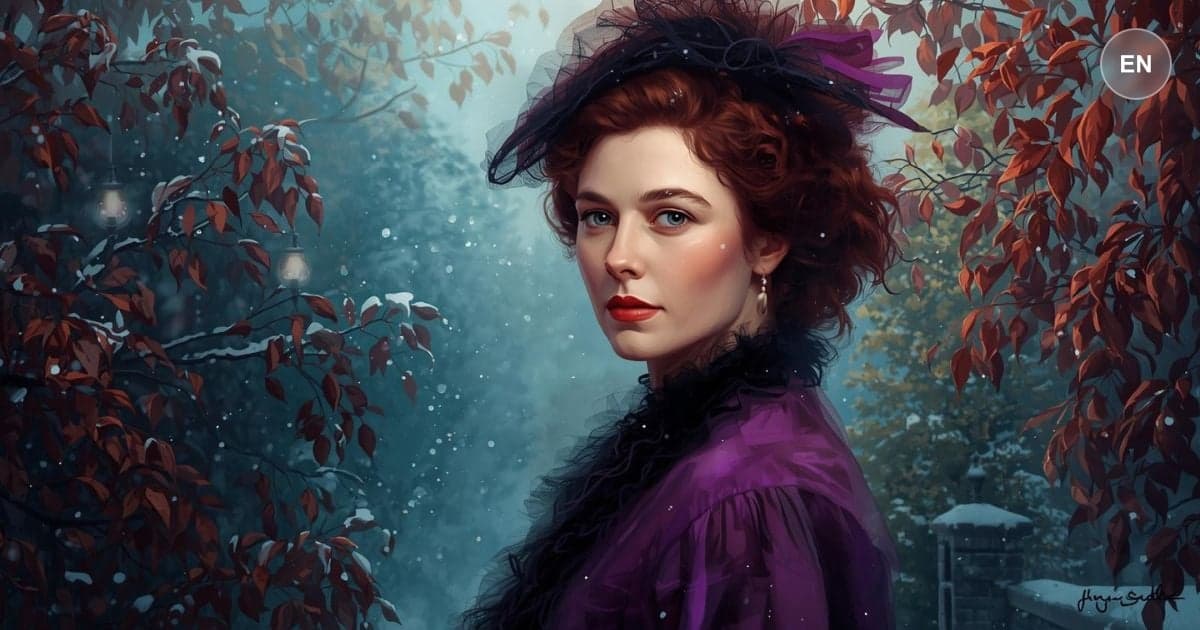
At the Moscow station a watchman's death and a pair of gray eyes arrive in the same hour. Anna calls it an omen of evil. Leo Tolstoy serialized Anna Karenina from 1875 to 1877 and never treats the central crisis as a cautionary romance. Anna is not a lesson. Vronsky is not a villain with a mustache. The passion is real, and it starts eating rooms that were already occupied.
At the ball Kitty saves the mazurka and loses it to Anna. On the snow platform Vronsky says he has come to be where she is. He rides Frou-Frou and breaks the mare's back. Anna tells Karenin the truth. Italy cannot hold them. After the birthday visit she is again alone, asking whether he has changed. Jealousy starts reading his face for a verdict. At the station the red bag delays her, and she steps under the next carriage.
Levin, in the other plot, mows, marries, and stands in a field after a storm still asking what his life is for. Tolstoy's contrast is not purity versus sin. It is a love that has to be the whole world set beside a life that keeps other rooms. The skill is to see when intensity has started contracting a life, while there is still a room left to keep.
The Central Lesson
Recognizing consuming passion, in Anna Karenina, is an omen at a station, a mazurka stolen from Kitty, a mare ruined in public, and a woman who has to ask whether the one remaining room still wants her. Tolstoy does not forbid intensity. He shows what happens when a feeling that promised more life eats every other room in it. The lesson is to keep one room the passion is not allowed to bill.
Applying This to Your Life
Watch Which Rooms Go Dark
Anna loses the salon, then the son, then any interest that is not Vronsky. If a relationship has started making friends, work, and sleep feel pointless, the intensity is not proof. It is a contraction. Name the last ordinary hour you enjoyed without them.
Do Not Treat Fate as a Permit
The omen, the snow, the sentence I have come to be where you are — all of it feels like destiny. Destiny is a story that skips the bill. Ask who else is already standing on the platform: a child, a partner, a friend who thought the mazurka was theirs.
Hear the Mare
Vronsky's unpardonable mistake is speed plus display plus a living thing that cannot consent to the finish. When a plan requires someone else to break so the feeling can stay at a gallop, you are already in the race Tolstoy wrote.
Other lessons in this book
More life-skill deep dives from the same classic.
Balancing Passion and Responsibility
Follow Seryozha's birthday visit, Karenin's public face, and the divorce that never arrives, and count what desire costs other people.
6 chapters·Explore AnalysisFinding Authentic Meaning
Walk the mowing with Levin, then sit through Kitty's imperfect household, and see a life that does not need an audience.
6 chapters·Explore AnalysisManaging Jealousy
Stay with Anna as late trains and distracted looks become evidence, until she creates the distance she is trying to prevent.
6 chapters·Explore AnalysisSurviving Social Judgment
Enter the opera box with Anna after the return from Italy, when the salon has already decided she is finished.
6 chapters·Explore AnalysisUnderstanding Social Double Standards
Put Stiva's forgiven letter next to Anna's exile, and watch Vronsky keep his invitations while she loses the room.
6 chapters·Explore Analysis
Continue exploring
Explore this theme
The same lessons in other books
See how other books teach the same life skills.
The Idiot
Maintaining Goodness Without NaivetySit with Myshkin on the train in chapter 1: honesty with no angle, and a city that can only call it idiocy.
Northanger Abbey
Separating Fiction from RealityStop letting Gothic plots supply the story: laundry bills become clues, an old abbey becomes a crime scene, and real cruelty arrives without a villain's mask.
The Blue Castle
Building a Life of Your OwnLeave Elm Street for Mistawis, lock a house that is yours, and keep the Blue Castle after the excuse to live is withdrawn.
Where the lesson lives in the book
An Omen at the Carriage Door
At the Moscow station Vronsky steps aside for a lady and has to look again. Gray eyes rest on his face as if she already knows him. A man is crushed behind them. Driving away, Anna calls it an omen of evil. Stiva says nonsense. Tolstoy puts the look and the death on the same platform.
Key Insight:
Consuming passion announces itself as fate. Anna feels chosen and marked in the same hour. The omen is not superstition. It is the book telling you the look will cost a life.
“It's an omen of evil,”
The Mazurka That Decides
Kitty has refused five partners. She believes the mazurka will settle everything. Vronsky asks Anna before her. Kitty watches Anna in the crowd and names what she sees: uncanny, devilish, fascinating. The dance that was supposed to be Kitty's becomes the first public room the passion takes.
Key Insight:
Intensity that feels like destiny to two people is already a theft from a third. Kitty goes home sick. The passion has started spending other evenings.
“She fancied that in the mazurka everything must be decided.”
I Have Come to Be Where You Are
On a storm-lashed platform Anna breathes snow until a man in a military overcoat steps between her and the lamplight. Vronsky says he has come to be where she is. He cannot help it. The wind throws snow off the carriage roofs. She is still going home to Seryozha and Karenin. He has already made the journey the only map.
Key Insight:
The sentence that sounds like devotion is also a claim. Where you are becomes the whole geography. Other stations drop off the timetable.
“You know that I have come to be where you are”
The Ruined Mare
Seventeen officers line up. Frou-Frou loses the first instant from nerves, then Vronsky settles her and locks into the race. He makes an unpardonable mistake recovering his seat. The mare is ruined. He knows, for the first time, a misfortune beyond remedy caused by his own fault. Anna has already told Karenin the truth.
Key Insight:
The steeplechase is the passion in one image: speed, display, a living thing broken under a rider who wanted to win. Vronsky's fault on the course is the same habit that will not leave room for anything else to stay whole.
“The race lost! And my fault! shameful, unpardonable! And the poor darling, ruined mare! Ah! what have I done!”
Again Alone
After the stolen birthday hour with Seryozha, Anna sits in the hotel with her hat still on. Yes, it is all over, and I am again alone. The baby does not go deep to her heart. She asks Vronsky whether he has changed to her. The passion that took the son now has to be the whole world, and she is already afraid it is not.
Key Insight:
When a feeling has eaten the other rooms, it must answer for everything. That is the moment it starts to fail. Anna needs Vronsky to justify the empty nursery.
“Yes, it's all over, and I am again alone,”
The Red Bag
On the platform men quiet as she passes. She thinks it is all falsehood, all lying. The red bag delays her at the first carriage. She waits for the next. A peasant works at the iron above her. Lord, forgive me all. The light by which she had read is quenched forever.
Key Insight:
Tolstoy does not make the train a moral. He makes it the last room the passion left her. When a love has to be the whole life, losing it, or fearing the loss, leaves nowhere to stand.
“Lord, forgive me all!”