
The Reframe · No. 32
Richard III is not a story about discontent. Shakespeare never wrote one.
Most readers arrive with the winter already diagnosed: a hard season, a gloomy duke, and a line that makes discontent the theme. That is the cliché. It is not what William Shakespeare put on the stage.
Shakespeare staged Richard III in the early 1590s. The first speech says the winter of discontent has been made glorious summer by this son of York. England has peace. Richard cannot live in it. He is determined to prove a villain.
The reframe is not that the body is missing. He names it. The reframe is that discontent is not the verdict the line hands you. The winter is over. He hates the summer.
What most readers assume
“A gloomy history: the famous line means hard times, the crooked body explains the villain, and the horse at the end is the point of the play.”
The quotation · the hunchback · “I know this one”
What Shakespeare actually stages
Not a mood called discontent. A peace already made. A widow at a coffin. A prayer book between two bishops. A horse cried for after the kingdom is already spent.
Richard III · William Shakespeare · early 1590s
The popular summary sells a gloomy winter. The play sells a peace already made, and a man who will not live in it.
The winter is already over
In the opening speech, bruised arms are hung up for monuments. War capers to a lute. Richard says he is not shaped for courtship. He calls himself deformed, unfinished, sent before his time. Dogs bark as he halts by. Then he says the sentence the quotation usually drops: since he cannot prove a lover, he is determined to prove a villain.
The plots are already laid. A drunken prophecy says G will murder the king's heirs, and Clarence, whose name is George, arrives that same day under guard. Richard performs wounded brotherhood, blames the queen's faction, and promises to free him. The moment Clarence leaves, Richard says he will send that soul to heaven. The famous line is the setup for a refusal, not a sigh.
 Read the opening
The guide · Chapter 1, Richard III
The winter has been made summer. Richard names the villainy before Clarence can hear it. The line is not a mood.
Wide Reads chapter guide. Shakespeare's verse stays in the book.The coffin is an experiment
In the next scene, Anne follows Henry VI's coffin and curses the killer with deformed children and a miserable widow. Richard stops the bearers beside the corpse. She calls him devil. The wounds bleed afresh. He weeps, bares his chest, and lends her the sword. She drops it. He offers a ring and a meeting at Crosby House, and sends the corpse to White Friars instead of Chertsey.
Alone, he marvels that he won a widow at the bier with God, conscience, and the bleeding body against him. He calls the conquest an experiment, not love, and says he will not keep her long. Then he jokes that he needs a mirror, because she has convinced him he is handsome. The popular summary files this as charm. The play files it as a test he narrates.
The prayer book takes the crown
By the Guildhall, Hastings is dead. Richard and Buckingham enter in rotten armour and coach each other to tremble. Richard weeps over the head, then says law forced the execution. A scrivener has the indictment, written while Hastings was still free. Buckingham reports that the citizens stood like statues and would not cry out until his own plants hurled their caps.
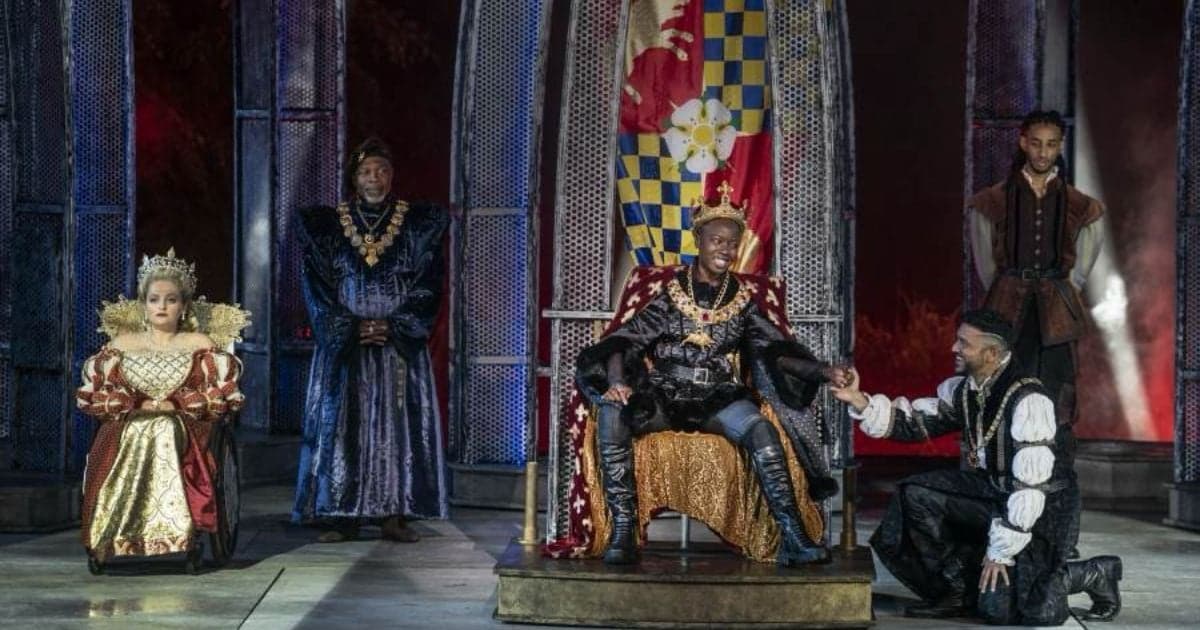
The next instruction is costume. Take a prayer book. Stand between two churchmen. Play the maid, and still answer no. In the scene that follows, Richard kneels, pleads poverty of spirit, and says the royal tree still bears Edward's fruit. Buckingham threatens to plant another king and walks out. Richard calls them back and yields because they enforced it. Coronation is tomorrow. He says let us to our holy work again.
Read the prayer bookThe guide · Chapter 13, Richard III
Two bishops, a book of prayer, and a refusal that lasts until the room starts to leave. The piety is the costume. The crown is the point.
Wide Reads chapter guide. No long quotation from the play is reproduced here.The horse is the last tally
The night before Bosworth, in the ghost parade, the dead arrive in order and tell Richard to despair and die. He starts up crying for another horse, then asks whether he fears himself, and whether Richard loves Richard. He answers yes. No creature loves him, and he finds no pity in himself. Shadows, he tells Ratcliffe, have struck more terror than ten thousand soldiers.
In the battle he cries a horse, a horse, my kingdom for a horse. Catesby offers to withdraw and help him to one. Richard calls him slave. He has set his life upon a cast and will stand the hazard of the die. He thinks there are six Richmonds in the field. He repeats the line, fights, and is slain. No speech follows the blow. Richmond enters with the crown.
That is the reframe. Same opening line, same body, same twenty-five scenes. Different verdict. Shakespeare is not asking you to feel a gloomy winter. He is counting what a man does after he has already told you the peace will not stand, and leaving the kingdom with the man who takes it off a corpse.
Bring this to the table
The popular summary ends on a sad quotation. If the winter is already summer when he speaks, what is he actually refusing?
Common Questions
Search questions this reframe answers: the winter line, the body, Lady Anne, the prayer book, and the horse.
Is "now is the winter of our discontent" a sad line?
No. Richard says the winter of discontent has already been made glorious summer by this son of York. England has peace under his brother Edward IV. Bruised arms are hung up. War capers to a lute. Richard cannot live in that peace. The line names a season that is over, then refuses it.
Is Richard III a story about a crooked body?
The body is in the speech. It is not the play. Richard calls himself deformed, unfinished, and unfit for courtship, then says that since he cannot prove a lover he is determined to prove a villain. The popular summary stops on the shape and calls it the cause. The speech keeps going. The cause he acts on is the peace.
Why does Richard woo Lady Anne in Richard III?
Anne walks beside Henry VI's coffin and curses the man who killed her husband and the king. Richard stops the procession, lends her his sword, and offers a ring. She drops the blade and takes the ring. Alone, he calls the conquest an experiment, not love, and says he will not keep her long. The scene is a test he narrates, not a romance the play believes.
What is the prayer book between two bishops doing in Richard III?
After Hastings is dead and the Guildhall will not cry for him, Buckingham tells Richard to take a prayer book, stand between two churchmen, and still answer no. Richard kneels, refuses the crown, lets Buckingham walk out, then yields because they enforced it. Coronation is set for tomorrow. The piety is the last costume. The crown is the point.
What does "a horse, a horse, my kingdom for a horse" mean in Richard III?
At Bosworth, Richard cries for a horse. Catesby offers to withdraw and help him to one. Richard calls him slave, says he has set his life upon a cast, and will stand the hazard of the die. He repeats the line, fights Richmond, and is slain. The horse is not the theme. It is the last thing a man asks for after he has already spent the kingdom.
What is Richard III really about?
A man who tells you the plan before anyone else can. Peace has arrived and he will not keep it. He turns Edward against Clarence, wins Anne at a coffin, and plays the reluctant king between two bishops. The night before Bosworth the ghosts tell him to despair and die. He still will not withdraw. Richmond takes the crown from a peace Richard refused.
Read what Shakespeare actually staged.
Richard III is twenty-five scenes on a peace he will not keep, a coffin, and a prayer book. We guide it scene by scene in plain language. The original verse stays in the book you buy. The first scene's audio is free. The rest is $2.99 a month, every book on the shelf.