
On the Shortness of Life

On the Shortness of Life
A Brief Description
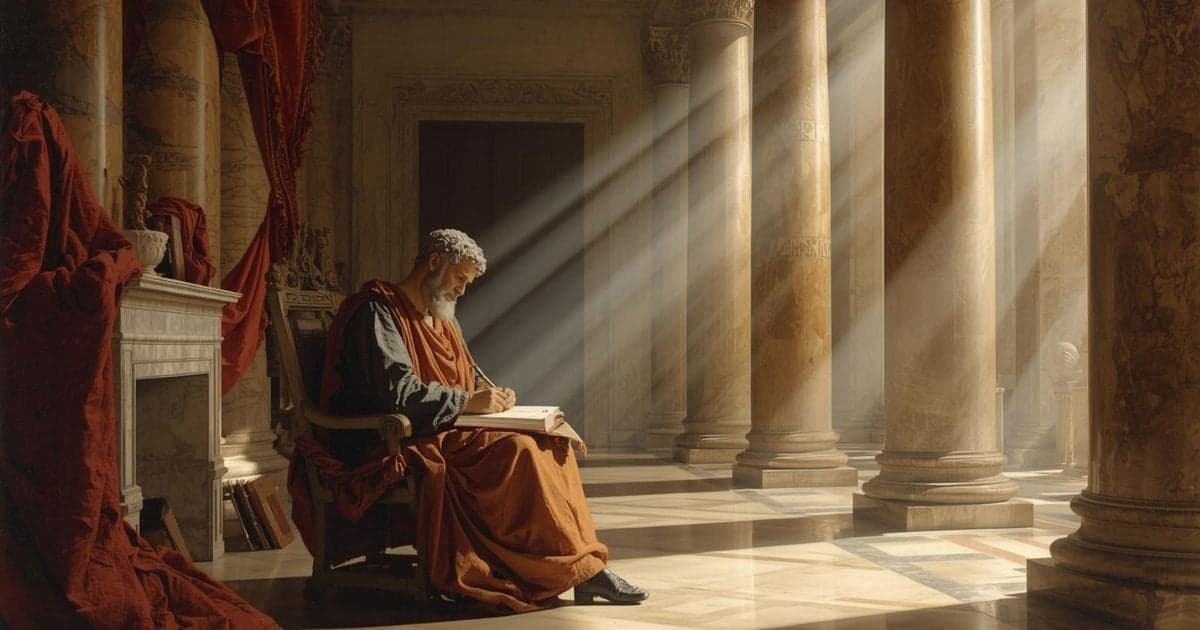
Around 49 AD, Seneca wrote De Brevitate Vitae, On the Shortness of Life, as a moral letter to his friend Pompeius Paulinus, who held one of Rome's most stressful offices: overseeing the empire's grain supply. It is not a treatise on productivity. It is a reckoning with how we spend the only life we are given.
Everyone knows the complaint: life is too short, time runs out, there are never enough hours for what matters. Seneca takes this universal lament and flips it inside out. The problem isn't scarcity, he argues. The problem is waste. We don't lack time; we squander it. We postpone living while we prepare to live, handing over our days to whoever demands them loudest.
The distinction Seneca draws cuts deep: there's a difference between being busy and being alive. The busiest people often live the shortest lives because they never actually possess their own time. They exist at the mercy of the crowd, the court, the next urgent thing that isn't urgent at all. Their calendars overflow with obligations that serve everyone except themselves.
Real leisure isn't scrolling or binge-watching, though Seneca doesn't moralize about relaxation. True otium means the disciplined freedom to engage with what enlarges the soul: serious reading, reflection, conversation with worthy friends, study that connects you to the great minds across centuries. Those who live this way, he suggests, annex every age to their own. The past belongs to them through books; the future through wisdom. Everyone else just runs through their years without inhabiting them.
Paulinus has served the Roman state faithfully, climbing the ladder of imperial honors. Seneca urges him to reclaim some discretionary hours for himself before it's too late. The letter carries gentle urgency: you've given your prime years to public service, but what about the person behind the office? What about the inner life that waits patiently while you manage external affairs?
The patterns Seneca describes will sound familiar to anyone drowning in meetings, notifications, and the performance of productivity. We defer real life until after the next promotion, the next milestone, the next busy season that never ends. We measure worth by how much we juggle rather than how deeply we live. The retirement fantasy looms as the great postponement: someday we'll read those books, take those trips, have those conversations. Meanwhile, we hand our attention to whatever algorithm or authority figure shouts loudest.
Seneca isn't offering productivity hacks or time management tricks. He's asking a moral question: who owns your days? The answer reveals everything about how you'll look back on the life you're building right now. Most people, he observes, live as if they'll exist forever while treating their time as if it's worthless.
This isn't a book about getting more hours. It's about recognizing that the hours you have are already enough, if you stop giving them away carelessly. Seneca guides readers through a practical audit of where attention goes and why, helping you distinguish between the urgent and the important, the impressive and the meaningful. The goal isn't perfect scheduling but conscious choice about what deserves your irreplaceable days.
The promise here is both simple and revolutionary: you can take ownership of your calendar and, through it, your life. Time becomes abundant when you stop letting others dictate its use.
Wide Reads tracks all 20 sections with Jordan, a hospice social worker who helps others face the end of life while questioning whether they are truly living their own. You will learn to audit where your days go, distinguish busyness from being alive, and reclaim time before regret arrives.
Written two thousand years ago, it reads like it was addressed to your inbox this morning.
Essential Life Skills Deep Dive
Explore chapter-by-chapter breakdowns of the essential skills taught in this classic work.
Owning Your Time
5 sections on Seneca's central claim: we do not lack time, we lose it, and life is long enough if you stop squandering hours.
Distinguishing Busy from Alive
4 sections on businessmen, luxury, and success anxiety: full calendars can still mean empty lives.
Living Now Instead of Postponing
4 sections on postponement as life's greatest waste, from emperors who dream of rest to careers built on tomorrow.
Facing Mortality with Clarity
4 sections on memento mori without panic: how death exposes waste and ends the illusion of endless deferral.
Choosing What Deserves Your Days
4 sections on Paulinus, ambition, and the life audit: who owns your days reveals who you are becoming.
Intellectual Leisure Over Distraction
4 sections on true otium: philosophy, reading, and chosen intellectual family versus busy leisure and useless knowledge.
Table of Contents
We Don't Have Short Lives, We Waste Them
Seneca opens his famous essay by addressing a complaint we all recognize: life feels too short. Ever...
The Ways We Waste Our Lives
Seneca cuts straight to the heart of why we feel like life is too short: we're not actually living i...
The Life Audit That Changes Everything
Seneca delivers a wake-up call that hits like cold water. He asks us to imagine confronting an elder...
Even Emperors Dream of Rest
Seneca uses Emperor Augustus as his prime example of how even the most powerful people long for simp...
When Success Becomes a Prison
Seneca uses the great Roman orator Cicero as a cautionary tale about how success can become its own ...
When Ambition Becomes a Prison
Seneca tells the cautionary tale of Livius Drusus, a Roman politician who complained that he'd never...
The Business of Being Too Busy
Seneca takes aim at two types of people who waste their lives: those lost in pleasure-seeking and th...
The Time We Give Away
Seneca exposes one of humanity's strangest contradictions: we freely give away our time while desper...
Stop Waiting for Tomorrow
Seneca attacks one of our most destructive habits: living for tomorrow instead of today. He calls ou...
The Three Parts of Time
Seneca breaks down a hard truth about how busy people actually experience time. He divides life into...
The Terror of Wasted Time
Seneca delivers a brutal observation about how people who waste their lives react when death approac...
The Busy Idleness of Luxury
Seneca exposes the absurdity of people who think they're living well but are actually wasting their ...
The Trap of Useless Knowledge
Seneca takes aim at people who waste their precious time on trivia that makes them feel intellectual...
The Philosophers Are Always Home
Seneca makes a powerful case for why reading philosophy is the ultimate use of time. While most peop...
Choosing Your Intellectual Family
Seneca reveals one of philosophy's most powerful secrets: you can choose your intellectual family. W...
The Restless Chase for Tomorrow
Seneca delivers a brutal truth about the most miserable people he knows: those who spend their lives...
The Anxiety of Success
Seneca reveals a brutal truth about success: the higher we climb, the more anxious we become about f...
Choosing Your Own Path Over Public Duty
Seneca writes directly to his friend Paulinus, who holds a high-ranking government position managing...
The Better Path
Seneca draws a stark comparison between two ways of spending your life: managing grain warehouses ve...
The Trap of Dying in Harness
Seneca delivers his final warning about the ultimate cost of misplaced priorities. He paints vivid p...
About Lucius Annaeus Seneca
Published 49
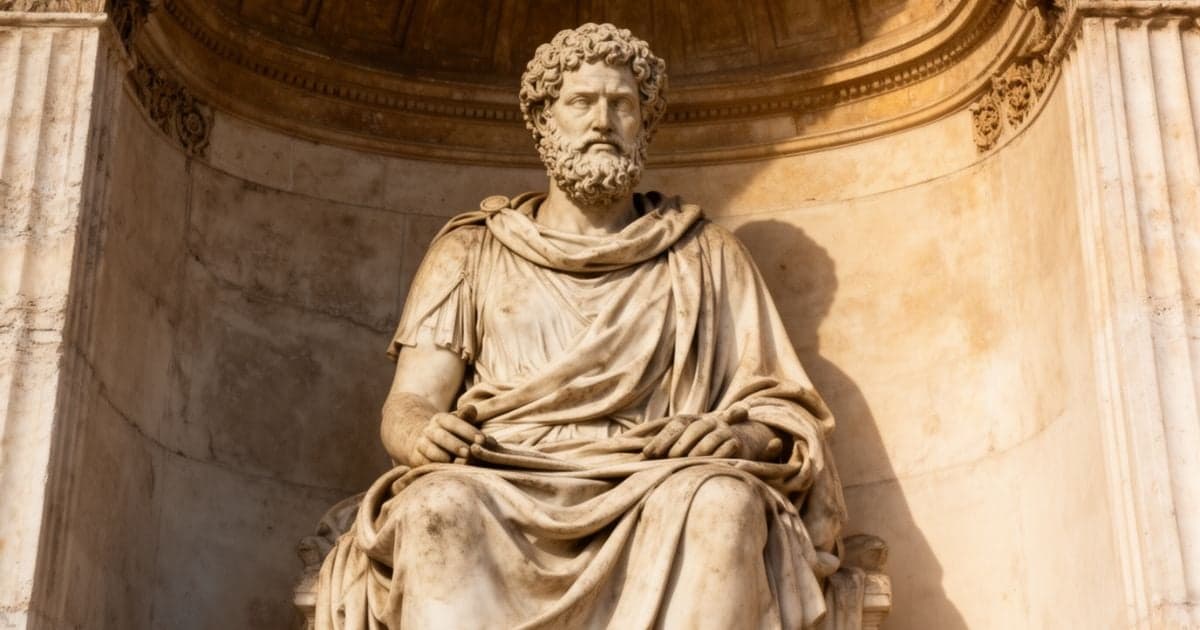
Lucius Annaeus Seneca (c. 4 BC to 65 AD) was a Roman Stoic philosopher, statesman, and dramatist who lived one of history's most turbulent lives. Born in Spain and educated in Rome, he rose to become one of the most powerful men in the Roman Empire as tutor and later advisor to Emperor Nero. Yet his life was marked by dramatic reversals: he was exiled to Corsica for eight years on politically motivated charges, recalled to become Nero's mentor, accumulated vast wealth while writing about the irrelevance of wealth, and ultimately was forced to commit suicide in 65 AD when Nero accused him of conspiracy.
On the Shortness of Life belongs to his most direct moral writing: a single sustained letter that asks how a capable person can give years to public duty and still fail to live. That tension between Seneca's philosophy and his biography makes the essay trustworthy. He did not write as someone who had solved time. He wrote as someone still negotiating with it.
Why This Author Matters Today
Reading Lucius Annaeus Seneca is an act of self-discovery — one that tends to be more unsettling, and more rewarding, than you expect. Their work doesn't offer easy answers. It offers something rarer: the right questions. Questions about what we owe each other, what we owe ourselves, and what kind of person we are quietly becoming through the choices we make every day.
What makes Lucius Annaeus Seneca indispensable isn't just their insight into human nature — it's their honesty about its contradictions. They understood that people are capable of extraordinary courage and ordinary cowardice, often in the same breath. That we can hold convictions firmly and abandon them the moment they cost us something. That the gap between who we think we are and who we actually are is where most of life's real drama lives.
In an age of noise, distraction, and the constant pressure to perform certainty we don't feel,Lucius Annaeus Seneca is a corrective. Their pages slow you down and ask you to look more carefully — at the world, yes, but especially at yourself. Few writers have done more to show us that thinking well is not an academic exercise but a survival skill, and that the examined life is not a luxury but the only honest way to live.
Wide Reads is different.
not a sparknotes, nor a cliffnotes
Two ways in
Read & listen to the summary
Walk with the characters. Hear the story told completely — chapter by chapter, with audio. Feel what they feel. The meaning arrives because you experienced it, not because someone listed bullet points. Every chapter has a summary that speaks.
Start with this.
Read the original text
The manuscript. The actual words the author wrote. Every book on Wide Reads includes the original text alongside the summary — so you can read Austen as Austen wrote her, Dostoevsky as he wrote his. Use the summary as a guide, then step into the source.
Then step into the source.
Either way, the door opens inward.
As you enter the realm — each chapter goes deeper
— and most of all, Why does this matter?
Get the Full Book
Purchase the complete book to access all chapters and support classic literature
Available in paperback, hardcover, and e-book formats
You Might Also Like


Free to read • No account required