Master this chapter. Complete your experience
Purchase the complete book to access all chapters and support classic literature
As an Amazon Associate, we earn a small commission from qualifying purchases at no additional cost to you.
Available in paperback, hardcover, and e-book formats
Why This Matters
Connect literature to life
This chapter teaches how to identify when your strengths become shackles that prevent personal growth.
Practice This Today
This week, notice when you stay in situations primarily because you're good at them, not because they fulfill you.
Now let's explore the literary elements.
Key Quotes & Analysis
"It is better to understand your own mind than to understand the corn-market"
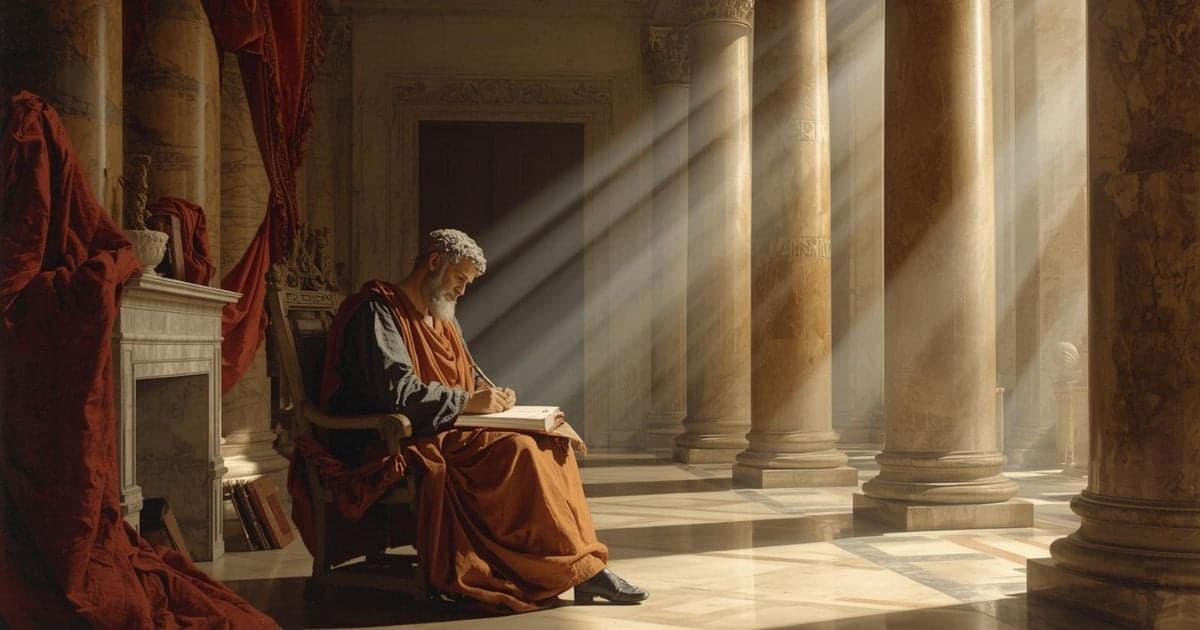
Context: Seneca is trying to convince Paulinus that self-knowledge is more valuable than technical expertise in his government job
This captures the central tension between external achievement and internal development. Seneca argues that knowing yourself - your values, potential, and purpose - matters more than being really good at logistics or management.
In Today's Words:
Figuring out who you really are is more important than being the best at your job
"You manage the revenues of the entire world, as unselfishly as though they belonged to another, as laboriously as if they were your own, as scrupulously as though they belonged to the public"
Context: Seneca acknowledges how well and ethically Paulinus does his demanding job
This shows Seneca recognizes his friend's integrity and competence. Paulinus works with the dedication of an owner, the honesty of a public servant, and the care of someone handling others' money - a rare combination in any era.
In Today's Words:
You handle this massive responsibility like it's your own money, but with the ethics of serving everyone else
"Take away that keen intellect of yours, so well capable of grappling with the greatest subjects, from a post which may be dignified, but which is not suitable to your abilities"
Context: Seneca argues that Paulinus is intellectually overqualified for his current position
This reveals the frustration of watching talented people stuck in roles that don't challenge their full potential. Even prestigious jobs can be limiting if they don't engage your best qualities or allow for growth.
In Today's Words:
You're way too smart to be stuck doing this job, even if it looks impressive on paper
Thematic Threads
Duty vs. Self
In This Chapter
Paulinus stays in his government role because it's important, not because it fulfills him
Development
Builds on earlier themes about wasted time, now showing how duty can become a prison
In Your Life:
You might stay in relationships, jobs, or roles because others need you, even when you're dying inside.
Social Expectations
In This Chapter
Paulinus can't leave his prestigious position without seeming ungrateful or irresponsible
Development
Expands the theme of living for others' approval into career and identity choices
In Your Life:
You might avoid making changes because of what family, coworkers, or community would think.
Competence as Trap
In This Chapter
Being good at managing grain supply makes Paulinus indispensable, therefore stuck
Development
New theme: how excellence can become imprisonment
In Your Life:
You might find yourself trapped in roles simply because you're the only one who can do them well.
Unfulfilled Potential
In This Chapter
Paulinus received excellent education to pursue knowledge, not warehouse management
Development
Connects to earlier themes about wasting intellectual gifts on trivial pursuits
In Your Life:
You might be using your talents for survival instead of pursuing what you were meant to do.
Courage to Change
In This Chapter
Seneca advocates for the brave choice to walk away from what others expect
Development
New theme: redefining courage as choosing authenticity over security
In Your Life:
You might need to find courage to disappoint others in order to honor yourself.
You now have the context. Time to form your own thoughts.
Discussion Questions
- 1
Why does Seneca think his friend Paulinus should leave his important government job managing Rome's grain supply?
analysis • surface - 2
What makes it so hard for competent people to walk away from roles they've outgrown, even when the work no longer fulfills them?
analysis • medium - 3
Where do you see people today staying in jobs or roles because they're good at them, not because they're happy doing them?
application • medium - 4
How would you advise someone who feels trapped by their own competence - valued for what they do but yearning for something different?
application • deep - 5
What does this chapter reveal about the difference between being useful to others and being true to yourself?
reflection • deep
Critical Thinking Exercise
Map Your Golden Handcuffs
Think of a role or responsibility you currently have that others depend on you for. Draw two columns: one listing why you're good at it and why others need you to stay, and another listing what you'd pursue if this role didn't exist. Notice the tension between competence and fulfillment in your own life.
Consider:
- •Consider how your skills might transfer to something more personally meaningful
- •Think about what you'd tell a friend in the same situation
- •Notice whether fear of disappointing others is stronger than desire for personal growth
Journaling Prompt
Write about a time when you stayed in a situation longer than you should have because you were good at it or because others needed you. What would you do differently now?
Coming Up Next...
Chapter 19: The Better Path
Seneca contrasts the mundane work of managing grain supplies with the profound study of divine knowledge and the nature of the gods themselves. He's about to reveal what truly worthy pursuits await those brave enough to choose wisdom over worldly success.