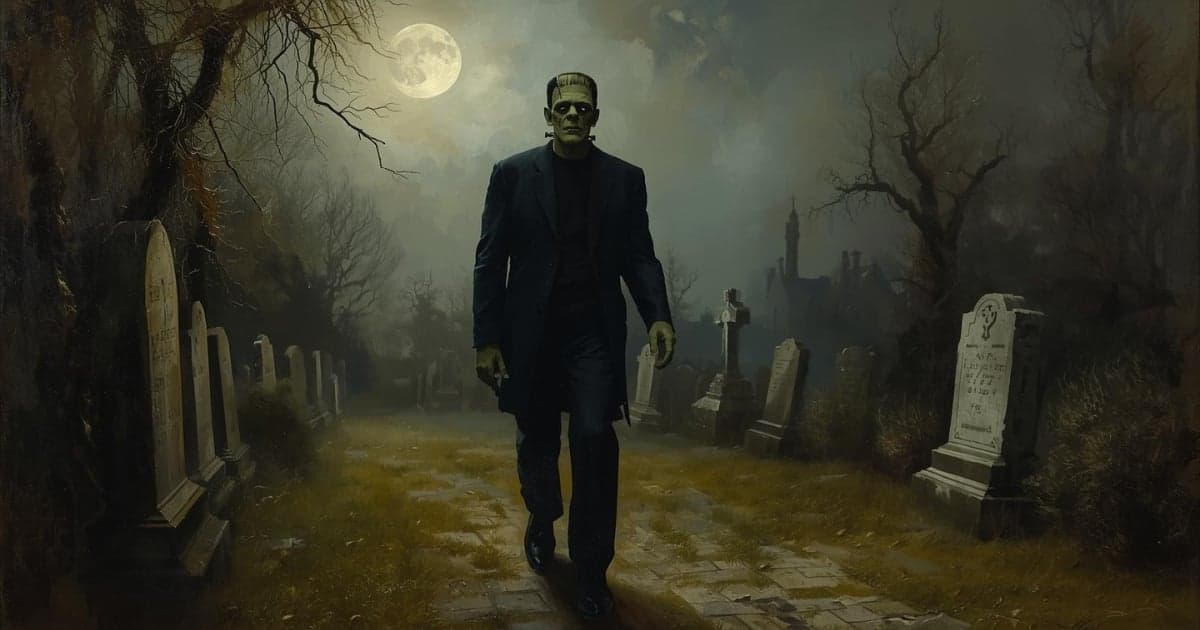
Teaching The Strange Case of Dr Jekyll and Mr Hyde
by Robert Louis Stevenson (1886)
Teaching Map
This guide is not only for literature teachers. Parents, tutors, book clubs, and anyone reading The Strange Case of Dr Jekyll and Mr Hyde together can use it to open conversation — not just recap plot. Each Why it matters note is a question-starter: ask toward a Collision (two views meet and something shifts), a Reframe (the same facts suddenly mean something different), or a Recognition (what was always there finally becomes visible). The map shows how the book breaks into stages, which anchor scenes to lean on, and where each Lesson fits — whether you are planning a term or a single evening.
Opening
Chapters 1–3
The trampling and the door
“Mr. Utterson the lawyer was a man of a rugged countenance that was never lighted by a smile; cold, scanty…”
Why it matters
Ask a question — toward Collision, Reframe, or Recognition.
Respectable people often split their lives in two until the hidden half starts making decisions for them. During his weekly walk with his cousin Enfield, they pass a sinister, neglected door that triggers a disturbing story. This week, notice when you perform wholeness in public while feeding a habit you refuse to name in private.
Integrating Your Shadow Self
“Mr. Utterson the lawyer was a man of a rugged countenance that was never lighted by a smile; cold, scanty…”
Why it matters
Ask a question — toward Collision, Reframe, or Recognition.
Respectable people often split their lives in two until the hidden half starts making decisions for them. During his weekly walk with his cousin Enfield, they pass a sinister, neglected door that triggers a disturbing story. This week, notice when you perform wholeness in public while feeding a habit you refuse to name in private.
Reading Public Persona vs Private Truth
“Mr. Utterson the lawyer was a man of a rugged countenance that was never lighted by a smile; cold, scanty…”
Why it matters
Ask a question — toward Collision, Reframe, or Recognition.
Respectable people often split their lives in two until the hidden half starts making decisions for them. During his weekly walk with his cousin Enfield, they pass a sinister, neglected door that triggers a disturbing story. This week, notice when you perform wholeness in public while feeding a habit you refuse to name in private.
Recognizing the Cost of Perfectionism
“Mr. Utterson the lawyer was a man of a rugged countenance that was never lighted by a smile; cold, scanty…”
Why it matters
Ask a question — toward Collision, Reframe, or Recognition.
Respectable people often split their lives in two until the hidden half starts making decisions for them. During his weekly walk with his cousin Enfield, they pass a sinister, neglected door that triggers a disturbing story. This week, notice when you perform wholeness in public while feeding a habit you refuse to name in private.
Seeing How Suppressed Impulses Escalate
“Mr. Utterson the lawyer was a man of a rugged countenance that was never lighted by a smile; cold, scanty…”
Why it matters
Ask a question — toward Collision, Reframe, or Recognition.
Respectable people often split their lives in two until the hidden half starts making decisions for them. During his weekly walk with his cousin Enfield, they pass a sinister, neglected door that triggers a disturbing story. This week, notice when you perform wholeness in public while feeding a habit you refuse to name in private.
Understanding Compartmentalized Lives
“Mr. Utterson the lawyer was a man of a rugged countenance that was never lighted by a smile; cold, scanty…”
Why it matters
Ask a question — toward Collision, Reframe, or Recognition.
Respectable people often split their lives in two until the hidden half starts making decisions for them. During his weekly walk with his cousin Enfield, they pass a sinister, neglected door that triggers a disturbing story. This week, notice when you perform wholeness in public while feeding a habit you refuse to name in private.
Choosing Integration Over Splitting
“That evening Mr. Utterson came home to his bachelor house in sombre spirits and sat down to dinner without relish.…”
Why it matters
Ask a question — toward Collision, Reframe, or Recognition.
Respectable people often split their lives in two until the hidden half starts making decisions for them. Lanyon, hoping to learn more about Hyde, but discovers that Lanyon and Jekyll had a bitter falling out over Jekyll's 'unscientific' pursuits ten years ago. This week, notice when you perform wholeness in public while feeding a habit you refuse to name in private.
Jekyll refuses to discuss the will
“A fortnight later, by excellent good fortune, the doctor gave one of his pleasant dinners to some five or six…”
Why it matters
Ask a question — toward Collision, Reframe, or Recognition.
Respectable people often split their lives in two until the hidden half starts making decisions for them. What starts as a pleasant evening between old friends quickly turns tense when Utterson brings up Jekyll's troubling will that leaves everything to the mysterious Hyde. This week, notice when you perform wholeness in public while feeding a habit you refuse to name in private.
Middle
Chapters 4–7
The murder of Sir Danvers Carew
“Nearly a year later, in the month of October, 18—, London was startled by a crime of singular ferocity and…”
Why it matters
Ask a question — toward Collision, Reframe, or Recognition.
Respectable people often split their lives in two until the hidden half starts making decisions for them. A maid witnesses the entire attack from her window - she sees an elderly, distinguished gentleman politely asking directions from a small, unpleasant man. This week, notice when you perform wholeness in public while feeding a habit you refuse to name in private.
Closing
Chapters 8–10
Lanyon's letter: the midnight transformation
“On the ninth of January, now four days ago, I received by the evening delivery a registered envelope, addressed in…”
Why it matters
Ask a question — toward Collision, Reframe, or Recognition.
Respectable people often split their lives in two until the hidden half starts making decisions for them. Though he thinks Jekyll has lost his mind, Lanyon feels obligated to help. Next time someone asks for help but demands you not ask questions or think too hard about it, pause and ask yourself why they need your blindness along with your loyalty.
Jekyll's confession
“I was born in the year 18— to a large fortune, endowed besides with excellent parts, inclined by nature to…”
Why it matters
Ask a question — toward Collision, Reframe, or Recognition.
Respectable people often split their lives in two until the hidden half starts making decisions for them. Born into privilege with high moral standards, Jekyll became tormented by the gap between his public respectability and private desires. This week, notice when you perform wholeness in public while feeding a habit you refuse to name in private.
Why Teach The Strange Case of Dr Jekyll and Mr Hyde?
Lawyer Gabriel Utterson hears about a man named Hyde who trampled a child and paid the witnesses with a cheque signed by his friend, the respectable Dr Jekyll. Utterson's quiet investigation, a will that hands Jekyll's whole estate to Hyde, a murder on a London street, and a friend who dies of what he is forced to watch, all build toward the same door: the cabinet Jekyll has locked himself inside. Poole and Utterson finally break it down and find Hyde dead in Jekyll's clothes, with a written confession already on the desk. The last chapter is that confession: man is not truly one, but truly two, and the worse half learned to stay.
Lessons from The Strange Case of Dr Jekyll and Mr Hyde
Six named pressures the book tests, each tied to a chapter and a deeper lesson page. Send students to one when a theme hooks them, then back to the scene that proves it.
Choosing Integration Over Splitting
Hear the confession: the split was the crime, not the cure, and the worse half learned to stay.
Integrating Your Shadow Self
Watch Hyde's face, the will, and the trampling: what you deny does not stay small.
Reading Public Persona vs Private Truth
Read Utterson's Sunday walk, Lanyon's midnight visitor, and the handwriting that matches the public man.
Recognizing the Cost of Perfectionism
Follow Jekyll's grave public face to the potion that felt like mercy: impossible standards create the secret.
Seeing How Suppressed Impulses Escalate
See the cane that kills Carew, the window that will not open, and the salt that will not work twice.
Understanding Compartmentalized Lives
Stay with the laboratory hours, the forged letter, and the two months of reform: a second life is still an addiction.
Suggested Teaching Approach
1Before class: map the setup
Read chapters 1 through 3 for Enfield's trampling story, the will that leaves everything to Hyde, and Jekyll's refusal to discuss it further. Utterson does not yet have proof, only a pattern he cannot make himself ignore.
2Discussion starter: name the mechanism
Skip plot recall. Ask where students see this book's pressures play out in their own lives, from The trampling and the door (Ch. 1) to Jekyll's confession (Ch. 10). Tie every answer to a chapter number, not a theme label alone.
3Modern connections: use the six lessons
Six patterns the case traces from the first trampling to the final confession: what gets denied does not stay small, a grave public face that makes secrecy feel like mercy, a second life that runs on its own calendar until it is still an addiction, suppressed impulses that escalate once nothing is left to check them, a public persona that friends are forced to read against a private truth, and a last chapter that chooses integration over splitting only after the split has already cost everything. Each spoke ties named chapters to the proof.
4Assessment: application, not recall
Essay prompts that work: compare The trampling and the door (Ch. 1) to The murder of Sir Danvers Carew (Ch. 4); trace how it pays off by the ending. Pair with a current-events angle, then require a scene from the book as counterweight. Assess application, not recall. AI cannot help with lived experience.
Chapter-by-Chapter Resources
The Mysterious Door and Mr. Hyde
Why it matters: Respectable people often split their lives in two until the hidden half starts making decisions for them. During his weekly walk with…
The Lawyer's Obsession
Why it matters: Respectable people often split their lives in two until the hidden half starts making decisions for them. Lanyon, hoping to learn more…
The Friend's Intervention
Why it matters: Respectable people often split their lives in two until the hidden half starts making decisions for them. What starts as a pleasant…
The Murder of Sir Danvers Carew
Why it matters: Respectable people often split their lives in two until the hidden half starts making decisions for them. A maid witnesses the entire…
The Forged Letter's Secret
Why it matters: Respectable people often split their lives in two until the hidden half starts making decisions for them. Jekyll swears he's done with…
When Friends Fall Apart
Why it matters: Respectable people often split their lives in two until the hidden half starts making decisions for them. But this peace shatters when…
The Window and the Horror
Why it matters: Respectable people often split their lives in two until the hidden half starts making decisions for them. They decide to check on…
Breaking Down the Door
Why it matters: Respectable people often split their lives in two until the hidden half starts making decisions for them. For a week, he's been…
The Midnight Revelation
Why it matters: Respectable people often split their lives in two until the hidden half starts making decisions for them. Though he thinks Jekyll has…
Jekyll's Final Confession
Why it matters: Respectable people often split their lives in two until the hidden half starts making decisions for them. Born into privilege with high…
Start with one chapter
Assign Chapter 1 with the summary and audio, then open discussion with a life-skill question instead of a plot question. Expand chapter by chapter from there.