Teaching A Tale of Two Cities
by Charles Dickens (1859)
Teaching Map
This guide is not only for literature teachers. Parents, tutors, book clubs, and anyone reading A Tale of Two Cities together can use it to open conversation — not just recap plot. Each Why it matters note is a question-starter: ask toward a Collision (two views meet and something shifts), a Reframe (the same facts suddenly mean something different), or a Recognition (what was always there finally becomes visible). The map shows how the book breaks into stages, which anchor scenes to lean on, and where each Lesson fits — whether you are planning a term or a single evening.
Book the First
Chapters 1–6 · Recalled to Life
Wine shop and BLOOD
“A large cask of wine had been dropped and broken, in the street. The accident had happened in getting it…”
Why it matters
Ask a question — toward Collision, Reframe, or Recognition.
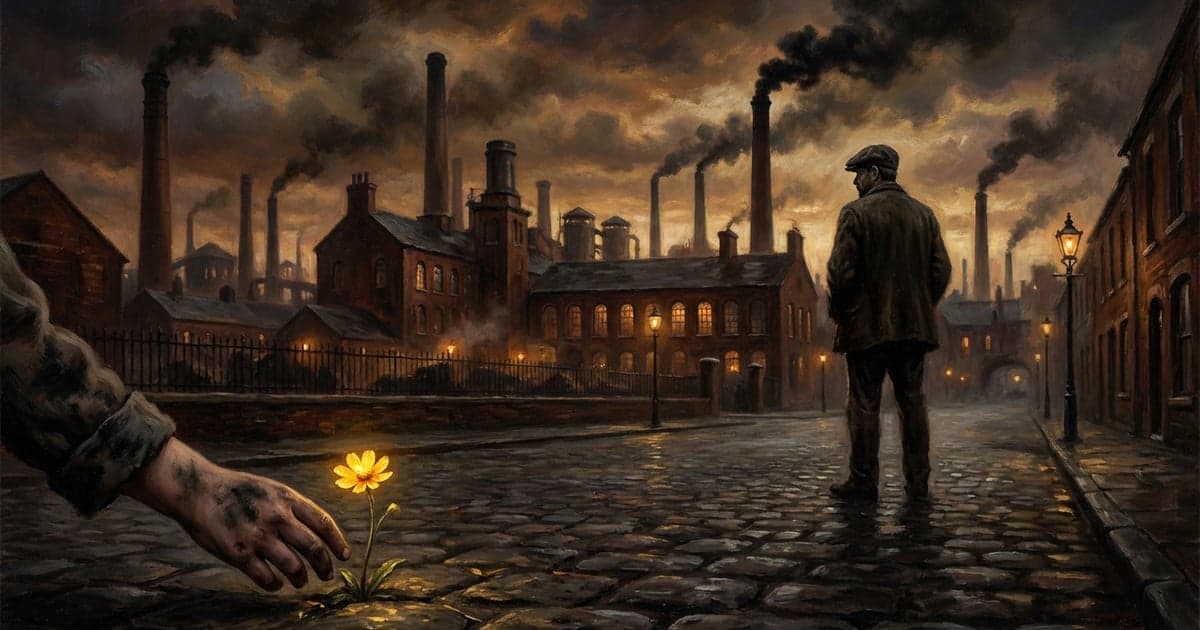
People often become numb to suffering around them until a dramatic moment forces them to truly see it. When Dickens shows us the desperate residents of Saint Antoine scrambling for spilled wine in muddy streets, their hunger literally staining their hands and faces red like blood, he creates an unforgettable image of systemic inequality. This scene challenges readers to look beyond surface appearances and recognize the human cost of social injustice in their own communities.
Recalled to Life
“Good day!” said Monsieur Defarge, looking down at the white head that bent low over the shoemaking. It was raised…”
Why it matters
Ask a question — toward Collision, Reframe, or Recognition.
When a person survives something that stripped them of everything, they often grip the smallest remaining identity as if it were the only thing keeping them present. Dr. Manette, freed after eighteen years in the Bastille, still answers only to his cell number and cannot put down the cobbler's bench where the shoe-making kept him from dissolving completely. When someone clings to a routine or title that seems too small for their circumstances, ask what larger self it is holding the place of.
Book the Second
Chapters 7–30 · The Golden Thread
Old Bailey treason trial
“Mr. Attorney-General had to inform the jury, that the prisoner before them, though young in years, was old in the…”
Why it matters
Ask a question — toward Collision, Reframe, or Recognition.
People today still witness how skilled lawyers can manipulate weak evidence through emotional appeals and leading questions. The Attorney-General's grandiose rhetoric about Darnay's patriotism barely conceals a lack of solid proof, and when cross-examination exposes the prosecution's star witnesses as scoundrels with questionable motives, the courtroom tips on the testimony of one man who resembles the accused closely enough to shake the whole case. When you are being persuaded by an authority figure, separate the emotional register of the argument from the quality of the evidence it is presenting.
Finding Purpose After Wasting Years
“Mr. Attorney-General had to inform the jury, that the prisoner before them, though young in years, was old in the…”
Why it matters
Ask a question — toward Collision, Reframe, or Recognition.
People today still witness how skilled lawyers can manipulate weak evidence through emotional appeals and leading questions. The Attorney-General's grandiose rhetoric about Darnay's patriotism barely conceals a lack of solid proof, and when cross-examination exposes the prosecution's star witnesses as scoundrels with questionable motives, the courtroom tips on the testimony of one man who resembles the accused closely enough to shake the whole case. When you are being persuaded by an authority figure, separate the emotional register of the argument from the quality of the evidence it is presenting.
Marquis's coin
“Monseigneur, one of the great lords in power at the Court, held his fortnightly reception in his grand hotel in…”
Why it matters
Ask a question — toward Collision, Reframe, or Recognition.
People in power often lose touch with the human cost of their decisions, creating dangerous bubbles of privilege. Dickens shows us Monseigneur's elaborate chocolate ceremony followed immediately by his associate's carriage crushing a child in the street, revealing how aristocratic excess and common suffering are two sides of the same coin. This forces us to examine how wealth and power in our own time might be insulating decision-makers from the consequences of their choices.
Understanding How Oppression Breeds Violence
“Monseigneur, one of the great lords in power at the Court, held his fortnightly reception in his grand hotel in…”
Why it matters
Ask a question — toward Collision, Reframe, or Recognition.
People in power often lose touch with the human cost of their decisions, creating dangerous bubbles of privilege. Dickens shows us Monseigneur's elaborate chocolate ceremony followed immediately by his associate's carriage crushing a child in the street, revealing how aristocratic excess and common suffering are two sides of the same coin. This forces us to examine how wealth and power in our own time might be insulating decision-makers from the consequences of their choices.
Carton's promise to Lucie
“If Sydney Carton ever shone anywhere, he certainly never shone in the house of Doctor Manette. He had been there…”
Why it matters
Ask a question — toward Collision, Reframe, or Recognition.
We all know people who seem determined to see themselves as failures despite evidence to the contrary. When Carton confesses his love to Lucie while insisting he's beyond redemption, he shows how self-hatred can coexist with the deepest capacity for love. This reminds us to look beyond people's harsh self-assessments and recognize the worth they cannot see in themselves.
Loving Without Possession
“If Sydney Carton ever shone anywhere, he certainly never shone in the house of Doctor Manette. He had been there…”
Why it matters
Ask a question — toward Collision, Reframe, or Recognition.
We all know people who seem determined to see themselves as failures despite evidence to the contrary. When Carton confesses his love to Lucie while insisting he's beyond redemption, he shows how self-hatred can coexist with the deepest capacity for love. This reminds us to look beyond people's harsh self-assessments and recognize the worth they cannot see in themselves.
Bastille falls
“A wonderful corner for echoes, it has been remarked, that corner where the Doctor lived. Ever busily winding the golden…”
Why it matters
Ask a question — toward Collision, Reframe, or Recognition.
We all live with the illusion that our peaceful moments will last forever, weaving threads that seem to bind our loved ones safely together. While Lucie counts the years of domestic calm in the Soho corner, the footsteps she hears in the street below have a quality she has learned to distinguish from the ordinary sound of the city, and news from France is getting louder by the season. When you recognise that the quiet period you are in has an edge to it, map the path between the distant trouble and where you are standing before you need to.
Book the Third
Chapters 31–45 · The Track of a Storm
Manette's Bastille letter
“I, Alexandre Manette, unfortunate physician, native of Beauvais, and afterwards resident in Paris, write this melancholy paper in my doleful…”
Why it matters
Ask a question — toward Collision, Reframe, or Recognition.
Actions taken by people long before us can define the choices available to their descendants, whether or not those descendants know what was done in their name. Manette's letter, scratched in blood and soot and hidden in the Bastille cell wall for ten years, reads aloud the Evrémonde crimes that condemned their nephew before he was born into knowing what his family owed. When you begin to understand the history of the institution or family you were born into, ask which of its debts are still accruing interest, and whether you have the power to close any of them.
Recognizing Mob Mentality
“I, Alexandre Manette, unfortunate physician, native of Beauvais, and afterwards resident in Paris, write this melancholy paper in my doleful…”
Why it matters
Ask a question — toward Collision, Reframe, or Recognition.
Actions taken by people long before us can define the choices available to their descendants, whether or not those descendants know what was done in their name. Manette's letter, scratched in blood and soot and hidden in the Bastille cell wall for ten years, reads aloud the Evrémonde crimes that condemned their nephew before he was born into knowing what his family owed. When you begin to understand the history of the institution or family you were born into, ask which of its debts are still accruing interest, and whether you have the power to close any of them.
Breaking Cycles of Revenge
“Sydney Carton paused in the street, not quite decided where to go. “At Tellson’s banking-house at nine,” he said, with…”
Why it matters
Ask a question — toward Collision, Reframe, or Recognition.
People often discover their true character only when facing impossible choices between self-preservation and sacrifice. Carton's methodical preparation for his substitution plan, from staying sober to gathering intelligence at the wine shop, shows how crisis can transform the most unlikely person into a strategic hero. When you face moments that demand everything of you, remember that courage often begins with small, deliberate steps toward doing what must be done.
The swap on the cart
“Along the Paris streets, the death-carts rumble, hollow and harsh. Six tumbrils carry the day’s wine to La Guillotine. All…”
Why it matters
Ask a question — toward Collision, Reframe, or Recognition.
People often wonder whether their individual choices matter in the face of massive social problems and institutional failures. In this climactic scene, a man who has lived as a cynical drunk finds profound meaning by taking another's place at the guillotine, comforting a frightened girl and envisioning a better future for those he loves. His transformation suggests that even when we cannot change the world's cruelty, we can choose how we respond to it, creating ripples of compassion that outlast our own lives.
Sacrifice and Meaning
“Along the Paris streets, the death-carts rumble, hollow and harsh. Six tumbrils carry the day’s wine to La Guillotine. All…”
Why it matters
Ask a question — toward Collision, Reframe, or Recognition.
People often wonder whether their individual choices matter in the face of massive social problems and institutional failures. In this climactic scene, a man who has lived as a cynical drunk finds profound meaning by taking another's place at the guillotine, comforting a frightened girl and envisioning a better future for those he loves. His transformation suggests that even when we cannot change the world's cruelty, we can choose how we respond to it, creating ripples of compassion that outlast our own lives.
Why Teach A Tale of Two Cities?
A wine cask breaks in Saint Antoine and someone writes BLOOD on the wall, naming the debt London and Paris will spend the whole novel collecting. A recalled prisoner, a condemned husband, a wasted lawyer, and a knitting register converge through the French Revolution until Sydney Carton takes Charles Darnay's place in the Conciergerie and rides the last cart so Lucie Manette's family can leave Paris alive.
Lessons from A Tale of Two Cities
Six named pressures the book tests, each tied to a chapter and a deeper lesson page. Send students to one when a theme hooks them, then back to the scene that proves it.
Understanding How Oppression Breeds Violence
Watch the Marquis toss a coin after his coach kills a child, then stand at the grindstone once the Bastille has fallen.
Finding Purpose After Wasting Years
Do Stryver's work at the Old Bailey, then finish a purpose in the Conciergerie that wasted evenings can still pay for.
Loving Without Possession
Tell Lucie you would give your life to keep a life she loves, after you already know she will marry Darnay.
Recognizing Mob Mentality
Hear the roar after the Bastille letter is read, then watch a crowd treat Lucie's child as the next name on a list.
Breaking Cycles of Revenge
Follow Madame Defarge from the knitted register to Lucie's daughter, revenge that will not stop at the man who did the harm.
Sacrifice and Meaning
Drug Darnay in the Conciergerie, then ride the tumbril with a seamstress who does not know the swap.
Suggested Teaching Approach
1Before class: map the debt
Assign Book the First (Chapters 1–6) plus our chapter summaries before discussion. Students need the wine shop, BLOOD on the wall, and Dr Manette as cobbler before the Old Bailey trial makes sense. Point them to the reading guide anchor chapters if they are reading selectively.
2Discussion starter: name the mechanism
Skip plot recall. Ask where they see oppression answered with violence (the Marquis's coin), wasted years waiting for one act (Carton at the Old Bailey), or a crowd treating a register as a sentence (after Manette's Bastille letter). Tie answers to a chapter number, not a theme label alone.
3Modern connections: use the six lessons
Each lesson spoke links named scenes to a life skill: mob mentality in Madame Defarge's knitting, revenge that will not stop at Lucie's child, love that keeps its distance so a house can stand. Send students to one spoke, then back to the chapter proof.
4Assessment: application, not costume drama
Essay prompts that work: compare Carton's promise (Chapter 19) to his act on the cart (Chapter 45); trace one tossed coin from the Marquis's coach to the grindstone in Saint Antoine; argue whether Dickens excuses or warns about revolution. Pair with a current-events clip on crowd justice or inherited guilt, then require a scene from the novel as counterweight.
Chapter-by-Chapter Resources
The Best and Worst of Times
Why it matters: Comfortable leaders often miss warning signs until a crisis hits them directly. In 1775, French rulers punished a young man with torture…
The Dover Mail
Why it matters: We all navigate situations where we must decide whether to trust strangers, especially when stakes feel high and information is limited. In…
The Mystery of Hidden Lives
Why it matters: We often assume we know the people around us, but everyone carries invisible burdens and secret histories that a brief acquaintance cannot…
Crossing Thresholds of Truth
Why it matters: We all face moments when we must deliver news that will shatter someone's understanding of their world, whether it's a medical diagnosis,…
The Wine-Shop
Why it matters: People often become numb to suffering around them until a dramatic moment forces them to truly see it. When Dickens shows us…
The Broken Man
Why it matters: When a person survives something that stripped them of everything, they often grip the smallest remaining identity as if it were the…
The Honest Tradesman's Secret
Why it matters: People under financial pressure often make moral compromises they can't openly acknowledge, then blame family members for their resulting guilt and stress.
Inside the Courtroom of Death
Why it matters: We all face moments when systems demand our participation in something that feels morally wrong. Jerry Cruncher's reluctant entry into the Old…
Justice on Trial
Why it matters: People today still witness how skilled lawyers can manipulate weak evidence through emotional appeals and leading questions. The Attorney-General's grandiose rhetoric about…
After the Storm
Why it matters: We all encounter people who remind us of paths not taken, triggering uncomfortable self-reflection about our choices. When Carton stares at his…
The Lion and the Jackal
Why it matters: Many talented people find themselves doing the heavy lifting while others take the credit and advancement. In Dickens' late-night legal chambers, we…
The Calm Before the Storm
Why it matters: Healing rarely announces itself as finished; it tends to run quietly while the things that could undo it wait inside everyday routine.
The Aristocrat's Chocolate and a Child's Death
Why it matters: People in power often lose touch with the human cost of their decisions, creating dangerous bubbles of privilege. Dickens shows us Monseigneur's…
The Marquis Meets His People
Why it matters: People in positions of power often become dangerously disconnected from the reality of those they govern, focusing on trivial concerns while real…
The Gorgon's Head
Why it matters: People often inherit systems they did not create but feel powerless to change, whether family businesses with questionable practices or social structures…
Love Requires Courage and Honesty
Why it matters: The person who reacts to your good intentions with unexpected pain is often protecting someone, not attacking you. When Darnay invokes old…
When Friends Give Terrible Advice
Why it matters: We all know someone who disguises their need to feel superior as helpful advice, turning conversations into opportunities to highlight their own…
When Confidence Meets Reality
Why it matters: We all face moments when our confident self-image crashes against someone else's reality, forcing a choice between honest reckoning and a more…
Sydney Carton's Confession
Why it matters: We all know people who seem determined to see themselves as failures despite evidence to the contrary. When Carton confesses his love…
The Honest Tradesman's Dark Business
Why it matters: People often compartmentalise their lives, maintaining respectable public personas while engaging in questionable private activities. Jerry Cruncher works respectably at Tellson's Bank…
The Revolutionary Network Revealed
Why it matters: People often wonder how ordinary individuals get drawn into radical movements and violent political change. A road mender who once watched a…
The Spy in the Wine Shop
Why it matters: People in every era must navigate the tension between speaking truth and protecting themselves from those in power. Madame Defarge's careful responses…
Father and Daughter's Final Night
Why it matters: There are moments when admitting what frightens you is the most generous thing you can offer someone who has always needed to…
When the Past Returns
Why it matters: Recovery rarely announces itself as finished; it tends to hold until one conversation or one word opens the door back to the…
Breaking the Chains of Memory
Why it matters: Sometimes love requires overriding someone's choice when trauma has attached them to what now harms them. The doctor cannot let go of…
The Plea for Friendship
Why it matters: We often seek connection while simultaneously pushing people away through self-deprecation and low expectations. Carton's awkward plea for friendship, describing himself as…
When the Past Comes Calling
Why it matters: We all live with the illusion that our peaceful moments will last forever, weaving threads that seem to bind our loved ones…
When Rage Becomes Justice
Why it matters: We live in times when inequality breeds rage that can explode into violence when power structures suddenly shift. Dickens shows us Foulon's…
When Revolution Ignites
Why it matters: People often wonder when quiet discontent transforms into active resistance and what role they might play in that transformation. When the Marquis's…
The Pull of Duty and Danger
Why it matters: We all face moments when unfinished responsibilities create persistent guilt that demands resolution. When Darnay learns that Gabelle faces the guillotine for…
Crossing Into Danger
Why it matters: We all face moments when good intentions lead us into situations beyond our control, where the rules change while we're still playing…
The Grindstone of Revolution
Why it matters: A disadvantage held in the right context can become the only credential that opens a door no other argument would move. When…
The Shadow Falls
Why it matters: We all face moments when personal loyalty conflicts with professional duty, forcing impossible choices between protecting individuals and serving institutions. When Madame…
Finding Purpose in Crisis
Why it matters: The suffering you cannot yet explain sometimes turns out to be the only preparation that made a later act possible. Manette returns…
Waiting in the Shadow of Death
Why it matters: We all face periods when someone we love is beyond our reach, whether through illness, distance, or circumstances beyond our control. Lucie…
Darnay's Trial and Unexpected Freedom
Why it matters: We all face moments when our reputation, career, or relationships hang in the balance based on how others judge us. Darnay's trial…
When Safety Becomes Illusion
Why it matters: We often believe that surviving one crisis means we're safe from future ones, but security under unstable systems remains perpetually fragile. When…
The Spy's Dangerous Game
Why it matters: People often find themselves caught between conflicting loyalties, forced to choose between personal safety and family bonds. Miss Pross's tearful reunion with…
The Pieces Fall Into Place
Why it matters: We all face moments when we must decide whether to act on our deepest convictions or remain safely passive. Carton walks the…
The Shadow's Terrible Truth
Why it matters: Actions taken by people long before us can define the choices available to their descendants, whether or not those descendants know what…
Love in the Face of Loss
Why it matters: Real forgiveness can look like choosing not to name the weight a person laid on you, especially when naming it would give…
The Final Gambit
Why it matters: People often discover their true character only when facing impossible choices between self-preservation and sacrifice. Carton's methodical preparation for his substitution plan,…
The Ultimate Sacrifice
Why it matters: We all face moments when we must choose between self-preservation and sacrifice for others. While Darnay writes farewell letters in his cell,…
The Final Confrontation
Why it matters: People often wonder whether they would stand up to something dangerous when it directly threatens those they love. Miss Pross plants herself…
The Ultimate Sacrifice
Why it matters: People often wonder whether their individual choices matter in the face of massive social problems and institutional failures. In this climactic scene,…
Start with one chapter
Assign Chapter 1 with the summary and audio, then open discussion with a life-skill question instead of a plot question. Expand chapter by chapter from there.