Master this chapter. Complete your experience
Purchase the complete book to access all chapters and support classic literature
As an Amazon Associate, we earn a small commission from qualifying purchases at no additional cost to you.
Available in paperback, hardcover, and e-book formats
Why This Matters
Connect literature to life
This chapter teaches how to identify when people in authority positions have lost touch with the reality their decisions create for others.
Practice This Today
This week, notice when supervisors or officials dismiss complaints as 'isolated incidents'—that's usually willful blindness, not ignorance.
Now let's explore the literary elements.
Key Quotes & Analysis
"It was the best of times, it was the worst of times"
Context: The famous opening line describing the contradictions of 1775
This paradox captures how the same historical moment can be experienced completely differently depending on your social class. For the wealthy, it was a golden age. For the poor, it was a nightmare of poverty and injustice.
In Today's Words:
Some people were living their best life while others were barely surviving
"things in general were settled for ever"
Context: Describing what the rulers believed about their power
This shows the dangerous arrogance of those in power who assume their advantages will last forever. They can't imagine that oppressed people might eventually fight back or that systems can change.
In Today's Words:
The people at the top thought they had it made and nothing would ever change
"the period was so far like the present period"
Context: Comparing 1775 to Dickens' own time in the 1850s
Dickens is telling his readers that the same patterns of inequality and social tension exist in every era. He's warning that the conditions that led to revolution in France could happen again anywhere.
In Today's Words:
The problems back then are the same problems we're dealing with now
Thematic Threads
Class
In This Chapter
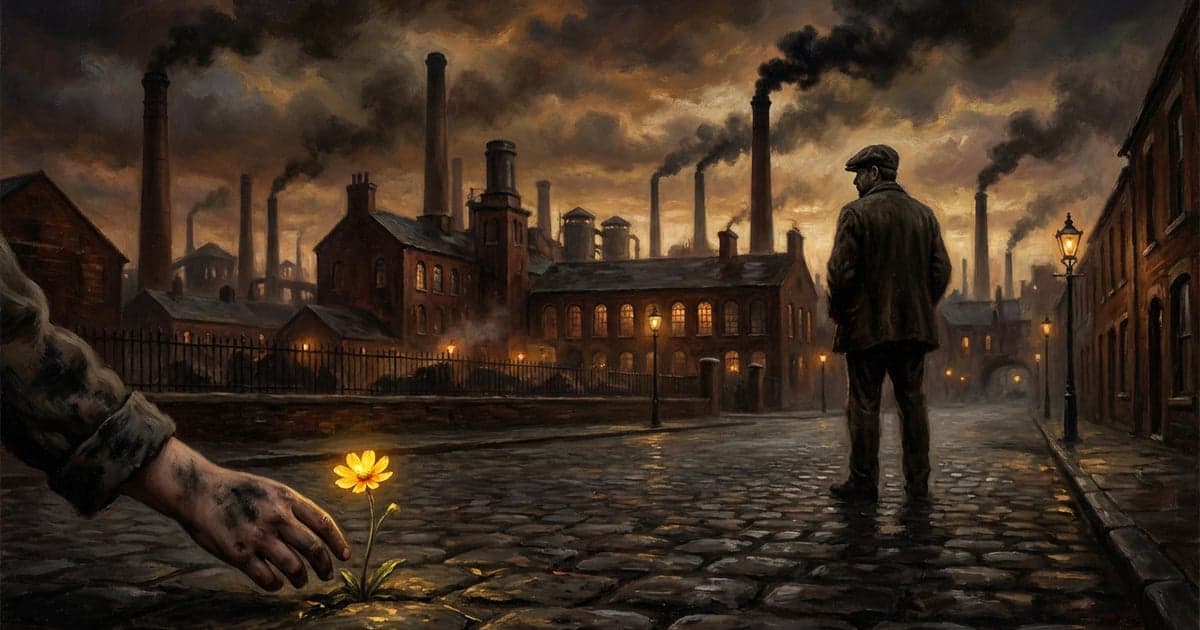
Extreme wealth existing alongside extreme poverty, with the wealthy completely disconnected from the suffering of the poor
Development
Introduced here
In Your Life:
You might see this in how management treats frontline workers, or how some families ignore struggling members.
Justice
In This Chapter
Brutal punishments for minor offenses while real crimes go unpunished, showing how 'justice' serves power rather than fairness
Development
Introduced here
In Your Life:
This appears when workplace rules are enforced differently for different people, or when complaints go nowhere while favoritism thrives.
Social Expectations
In This Chapter
People expected to bow to authority regardless of that authority's worth or behavior
Development
Introduced here
In Your Life:
You see this in toxic workplaces where questioning anything is seen as insubordination, even when leadership is clearly wrong.
Change
In This Chapter
Revolutionary forces already in motion while those in power remain oblivious to the coming transformation
Development
Introduced here
In Your Life:
This happens when you sense major changes coming in your industry or relationship while others act like everything will stay the same forever.
You now have the context. Time to form your own thoughts.
Discussion Questions
- 1
What specific examples does Dickens give to show that both England and France were struggling with crime and injustice?
analysis • surface - 2
Why do you think the rulers in both countries couldn't see the warning signs of coming trouble, even when problems were happening right in front of them?
analysis • medium - 3
Where do you see this same pattern today - people in power missing obvious warning signs because they're comfortable or isolated?
application • medium - 4
If you were trying to warn someone in authority about a serious problem they're not seeing, how would you get their attention without being dismissed?
application • deep - 5
What does this chapter suggest about how power changes people's ability to see reality clearly?
reflection • deep
Critical Thinking Exercise
Map the Warning Signs
Think of a situation in your life where you've seen warning signs that others missed or ignored - maybe at work, in your family, or in your community. Create a simple timeline showing the early signs, the escalating problems, and what finally forced people to pay attention. Then identify what made the warning signs invisible to those in charge.
Consider:
- •Consider whether the people missing the signs were genuinely unaware or choosing not to see
- •Think about what incentives they had to ignore the problems
- •Reflect on whether you've ever been the person missing obvious warning signs
Journaling Prompt
Write about a time when you tried to warn someone about a problem they couldn't or wouldn't see. What happened? What would you do differently now?
Coming Up Next...
Chapter 2: The Dover Mail
A mysterious mail coach travels through the dangerous English countryside on a foggy November night, carrying secrets that will change everything. Who is the passenger, and what message awaits him in the darkness?